Buying Iberian in Switzerland: a gourmet exile's guide
Finding worthy Iberian jamón in Switzerland sometimes amounts to detective work. An exiled gourmet shares his honest landmarks: where to look, what to avoid, and why the supermarket does not suffice.
There are mornings when you open a Swiss fridge and realize, with an almost painful precision, that the vacuum-sealed chorizo from Migros is not chorizo. It is a product that bears the name. The distinction matters, and it structures everything that follows.
What the supermarket cannot give you
Swiss supermarkets do what they can, and sometimes do it well. But their model imposes compromises that the lover of Iberian cuisine always ends up sensing — literally. An industrial jamón serrano sliced in a tray has lost, the moment you open it, the essence of what made it worthwhile. The fat has oxidized. The salt has migrated. The aroma, fleeting by nature, has vanished under the plastic film.
It is not a matter of snobbery. It is chemistry and logistics. Iberian products — charcuterie, preserves, oils, rice — are fragile. They demand a short supply chain, thoughtful storage, and often an importer who knows the producer. The mass distribution circuit crushes these constraints in service of volume.
Here is what you find with difficulty in Switzerland outside specialized channels:
- Iberian jamón de bellota in whole pieces or sliced to order, with its certificate of origin.
- Galician preserves — pulpo, berberechos, navajas — from houses like Paco Lafuente or Real Conservera Española.
- Bomba rice from Calasparra or the D.O. Valencia, different in texture and water absorption from generic short-grain rice.
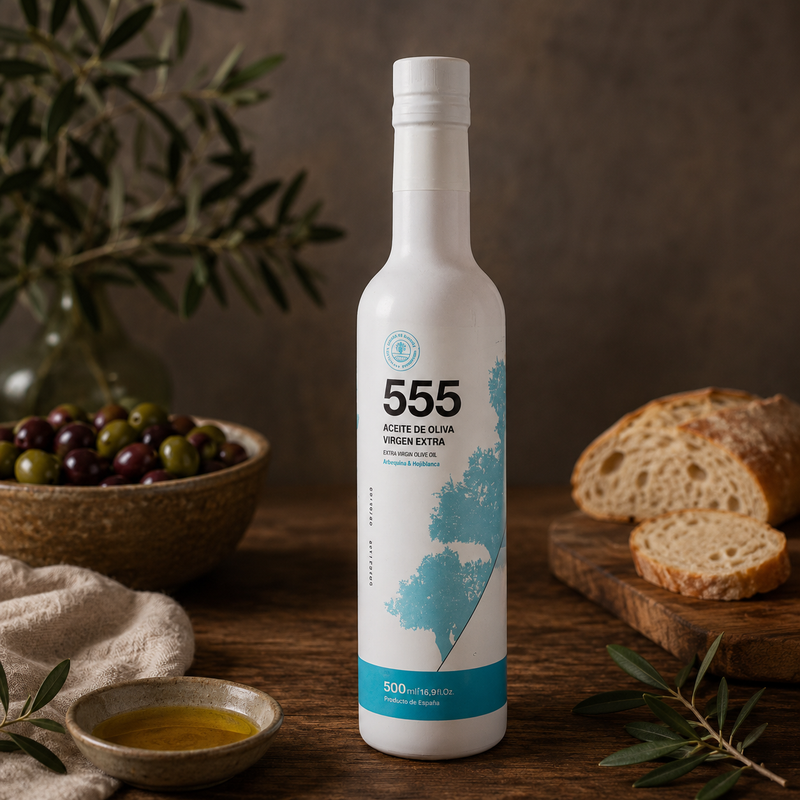
- Spanish and Portuguese monovarietal olive oils from recent harvest, with traceable acidity.
- Aged Jerez vinegars, essential to certain Andalusian preparations.
Conversely, sliced chorizo, Spanish mozzarella, or standardized manchego are accessible everywhere. They get you by. They tell nothing.
Trazabilidad — traceability — is to Iberian jamón what vintage is to wine. Without it, you are buying a category, not a product.Denominación de Origen Dehesa de Extremadura, consumer guide
How to source seriously from Switzerland
The honest answer is there is no dense network of Spanish or Portuguese shops in Switzerland. Geneva, Zurich, and Berne have a few neighborhood grocers — often run by expatriates — that offer correct products, sometimes excellent ones, but rarely with the consistency or breadth of range needed. Lausanne and the Vaud Riviera are even more barren.
The Christmas market or a trip through Spain remain options, but they assume time, a car, and tolerance for the random. Bringing a jamón back in the trunk from Barcelona is possible. Doing it every month is not.
It is in this void that I founded Orígenes, from Clarens, on the shores of Lake Léman. Not to sell Spain in kit form, but to import products I wanted myself to have in my kitchen — with the traceability, freshness, and sense I was after. The online shop delivers throughout Switzerland in 2 to 4 working days. No pitch, just products selected at the source.
A few practical landmarks to guide your Iberian purchases in Switzerland, whatever the channel:
- For Iberian charcuterie, demand the mention «ibérico de bellota» and the black precinto number — the only superior classification.
- For preserves, verify the box states the fishing ground and the canning house, not merely the country of origin.
- For olive oil, prefer a harvest dated less than 18 months ago. Beyond that, the oil remains edible, but it loses its green aromas.
- For paella rice, the bomba grain must be opaque, short, and slightly powdered — neither shiny nor translucent.
If you buy a whole piece, remove it from the refrigerator at least an hour before slicing. The blade must be long, thin, and glide with light pressure. A thick slice is not more generous — it is simply less melt-in-mouth. Cover the exposed surface with a thin layer of trimmed fat, never plastic film. Jamón breathes.
What to remember
Iberian cuisine accessible in Switzerland exists, but it demands looking beyond the international aisle of supermarkets. The products that truly matter — bellota charcuterie, Galician preserves, Calasparra rice, fresh harvest oils — travel well only through short and traceable supply chains. Origin statements and harvest dates are not details: they are the only reliable indicators. A serious Spanish or Portuguese shop, physical or online, must be able to answer your questions about the producer. If it cannot, move on.
To explore the products mentioned in this guide, you will find our full selection in our catalogue — Iberian charcuterie, preserves, oils and rice sorted by origin and producer. Switzerland delivery 2 to 4 days, free returns 14 days.