Une paella, ça commence par une histoire
La paella n'est pas née dans un restaurant au bord de la mer. Elle est née dans les champs, à l'heure du déjeuner, allumée sur du bois de branches d'oranger. Les travailleurs agricoles de la Albufera — cette lagune d'eau douce au sud de Valence — cuisaient dans une poêle plate ce qu'ils avaient sous la main: du poulet, du lapin, des haricots blancs, du riz des rizières voisines, et quelques brins de romarin cueillis au passage.
Ce plat-là, ce n'est pas une recette de grand restaurant. C'est une recette de nécessité et d'intelligence. Une recette qui transforme peu en beaucoup, et qui demande, avant tout, de comprendre ce qui se passe dans la poêle.
Je viens d'une famille valencienne, et la première chose qu'on m'a transmise, ce n'est pas une liste d'ingrédients: c'est une attitude. La paella ne se touille pas, ne se couvre pas, ne se presse pas. On la regarde cuire. Tout le reste — le riz Bomba, le sofrito long, le safran torréfié — découle de cette patience. Si vous retenez une seule chose de ce guide: une fois le riz dans le bouillon, posez la cuillère et ne la reprenez que pour servir.
Le problème, aujourd'hui, c'est que la paella a voyagé. Elle a traversé les frontières, les océans, les menus de brasserie et les rayons de supermarché. Elle est revenue déformée, aplatie, trahie: riz gluant, absence de fond, colorant orange clinquant, fruits de mer sur du riz blanc sans âme. Ce que l'on vous présente comme une paella n'en est souvent que le fantôme.
Ce guide existe pour corriger ça. Pas avec condescendance — les Valenciens eux-mêmes se disputent férocement sur les ingrédients légitimes — mais avec précision, avec méthode, et avec ce respect fondamental pour un plat qui mérite mieux que l'approximation.
Que vous soyez en Suisse, à Villeneuve, à Genève ou à Zurich, que vous ayez accès à une cuisinière à gaz ou à une plaque vitrocéramique, vous pouvez faire une vraie paella. Pas identique à celle de la Albufera par un dimanche de mars — mais honnête, maîtrisée, et profondément bonne.
Les variantes: valenciana, mixta, marisco, vegetariana
Avant de parler de recette, il faut parler de terminologie. Parce que dire "paella" sans préciser, c'est comme dire "fromage" en Suisse: ça ne dit rien.
La paella valenciana
C'est l'originale. La seule qui bénéficie d'une définition quasi-officielle, soutenue par la Communauté valencienne. Ses ingrédients sont immuables: poulet, lapin, haricots verts plats (bajoqueta), haricots blancs (garrofó), tomate, huile d'olive, safran, paprika doux, romarin, sel. Rien d'autre. Pas de chorizo — cette hérésie irrite profondément les Valenciens. Pas de petits pois. Pas de fruits de mer. Le poulet et le lapin se font dorer longuement jusqu'à former une croûte brune qui va parfumer tout le bouillon.
La paella de marisco
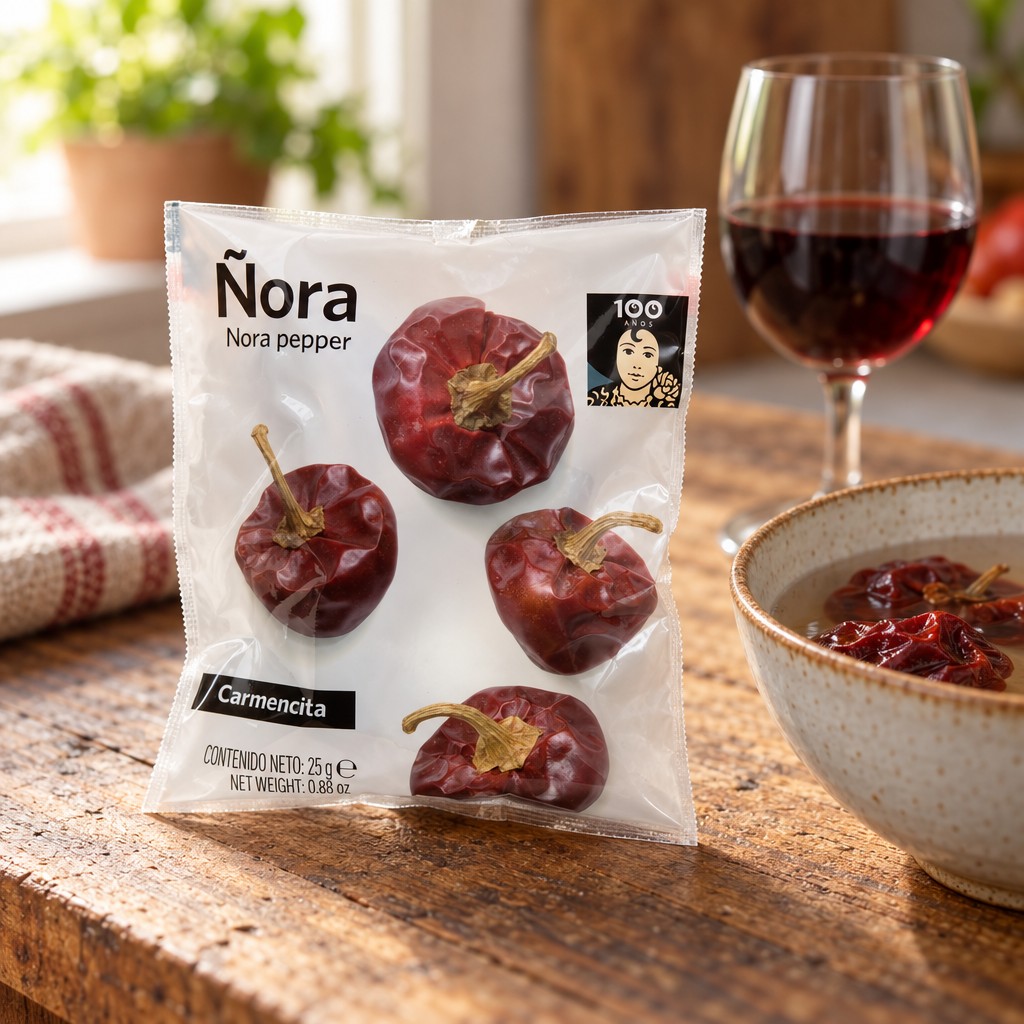
Populaire sur la côte, notamment dans les restaurants de bord de mer, elle repose sur des crevettes, moules, coques, langoustines, calamars. Elle n'est pas moins noble — elle est différente. Son fond est à base de bouillon de poisson ou de crustacés, et le sofrito intègre souvent du ñora (piment rouge séché, sans piquant) pour une profondeur fumée.
La paella mixta
C'est la plus répandue en dehors de l'Espagne. Elle mélange viande et fruits de mer. Les puristes valenciens la regardent avec suspicion — les temps de cuisson des viandes et des fruits de mer étant radicalement différents, l'exercice est techniquement périlleux. Mais bien exécutée, avec les bonnes étapes, elle peut être excellente.
La paella vegetariana
Moins connue, souvent sous-estimée, elle peut être extraordinaire. Artichaut, poivron, tomate, haricots, champignons, parfois œufs. L'absence de viande oblige à soigner davantage le sofrito et le bouillon de légumes. C'est souvent celle qui révèle le mieux la qualité du riz et la maîtrise du cuisinier.
Quelle que soit la variante choisie, les fondamentaux restent identiques: un bon riz, un sofrito construit avec patience, un bouillon qui a du goût, et un feu maîtrisé.
Quatre paellas
Laquelle cuisinez-vous ?
Touchez une carte : ingrédients, bouillon et vin, sans quitter l'article.
Le riz: pourquoi le Bomba change tout
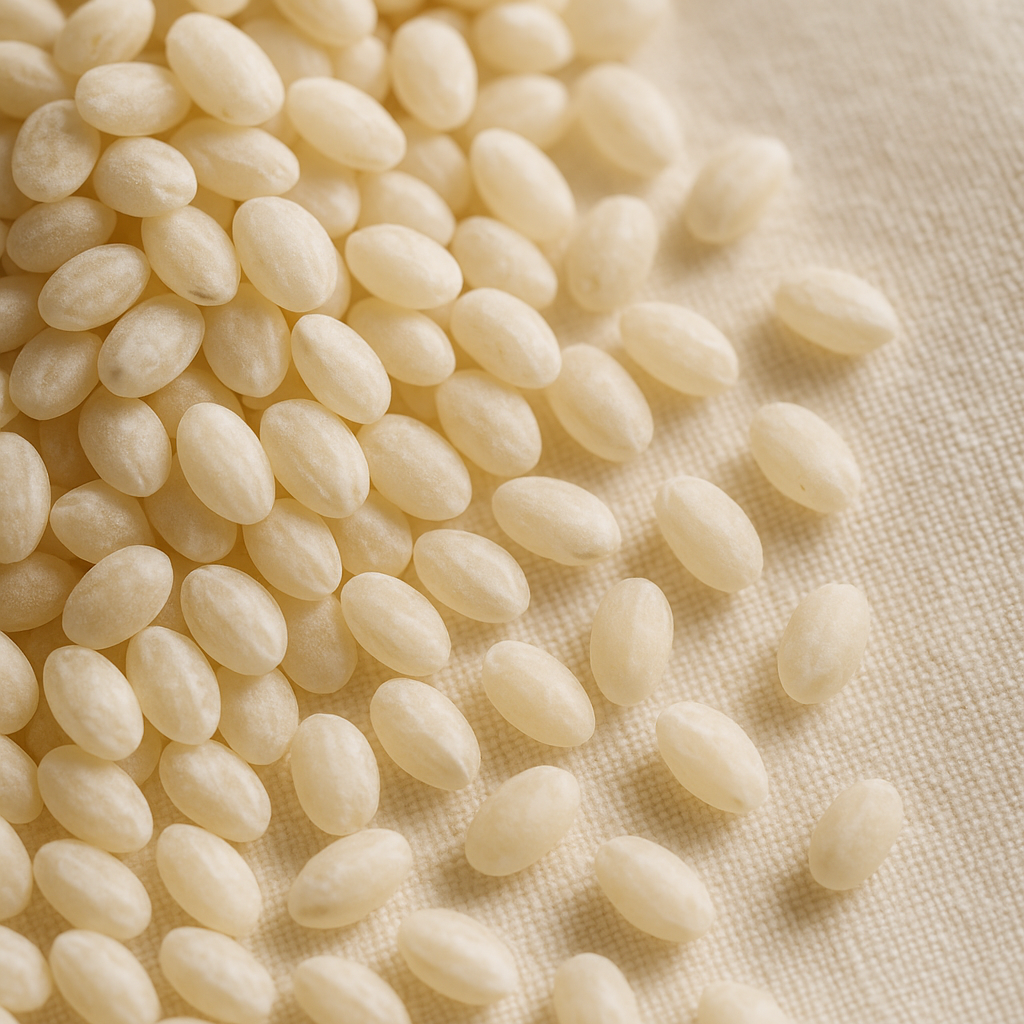
Si vous ne deviez retenir qu'une chose de ce guide, ce serait celle-ci: le riz n'est pas interchangeable. Utiliser du riz long grain, du basmati ou du riz à risotto dans une paella, c'est partir avec un handicap structurel dont on ne revient pas.
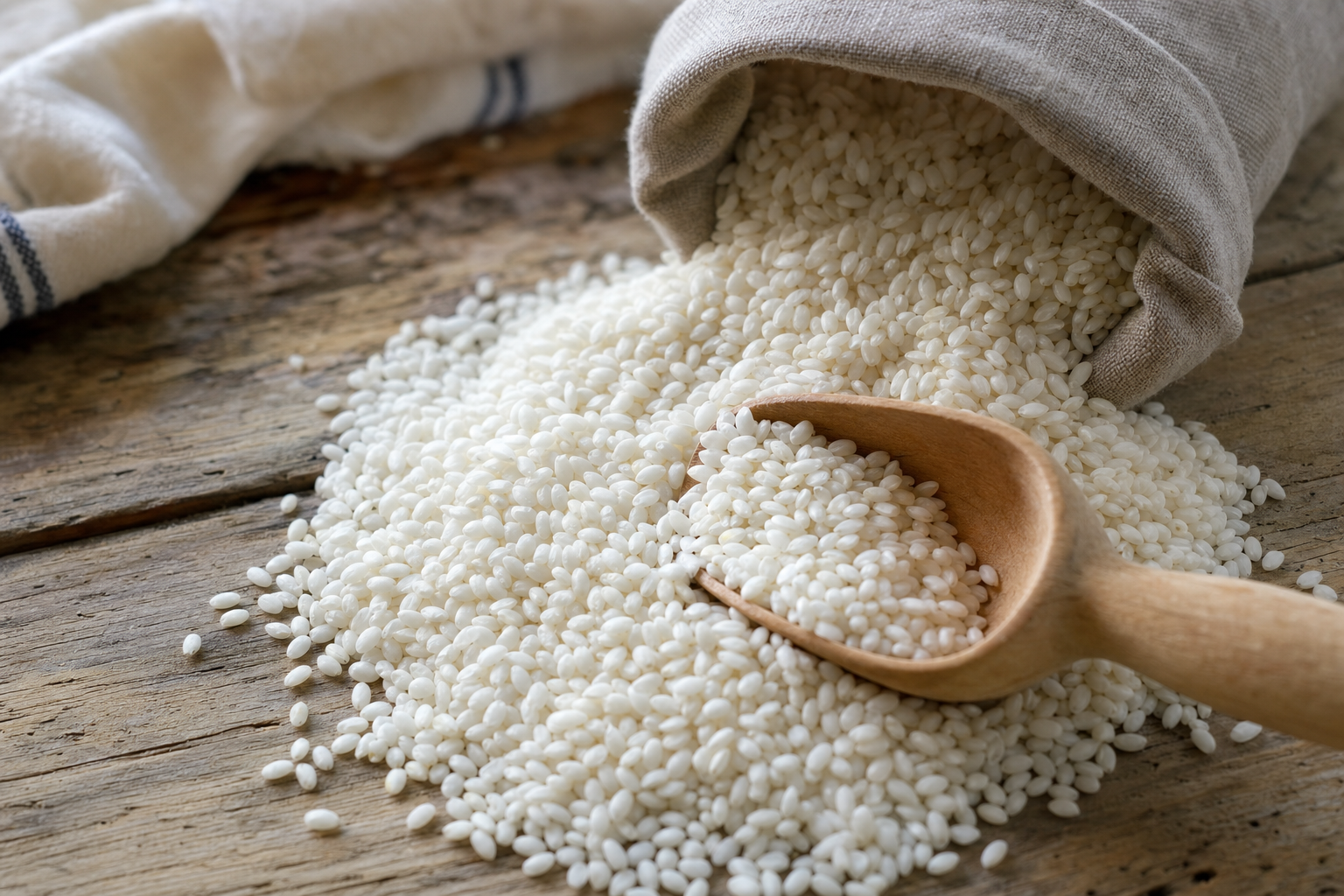
Le riz pour paella doit être un riz rond à grain court, riche en amidon résistant, capable d'absorber beaucoup de liquide tout en restant ferme au centre. Et parmi ces riz, le Bomba est le standard.
Pourquoi le Bomba?
Le riz Bomba (Oryza sativa var. japonica) est cultivé principalement dans la zone de la Albufera, au cœur de la Denomination d'Origine Arroz de Valencia. Sa particularité physique est remarquable: quand il cuit et absorbe le liquide, il gonfle en accordéon — il s'élargit plutôt qu'il ne s'allonge — ce qui lui permet de ne pas éclater et de rester al dente même avec une cuisson un peu prolongée. Il absorbe en moyenne 30 à 40 % de liquide de plus que les autres riz ronds, ce qui signifie qu'il absorbe plus de saveur. Chaque grain devient un concentré du bouillon qui l'entoure.
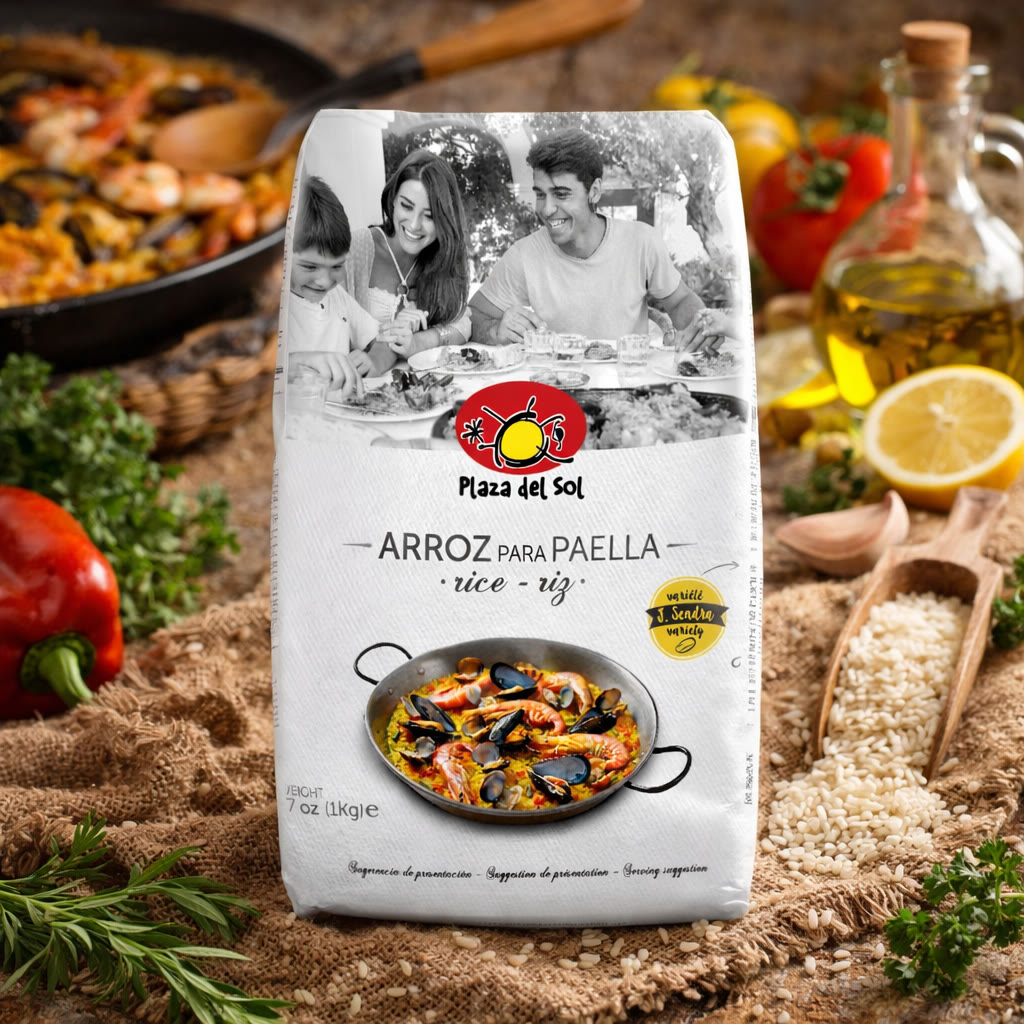
Chez Orígenes, vous trouverez le riz Albufera D.O. de Tartana et le riz spécial paella de variété J. Sendra (Plaza del Sol), deux riz ronds faits pour la paella.
Les proportions
Pour le riz Bomba, le ratio bouillon/riz est de 3 volumes de bouillon pour 1 volume de riz. C'est plus élevé que pour un riz ordinaire, et c'est précisément ce qui rend le Bomba si intéressant: plus de bouillon absorbé, plus de goût dans le grain. Comptez 80 à 100 g de riz Bomba par personne.
Le timing d'ajout du riz
Le riz s'ajoute directement dans la poêle, sur le sofrito et les ingrédients déjà cuits, puis on verse le bouillon chaud dessus. Il ne faut jamais remuer le riz une fois qu'il est en place — c'est la règle cardinale. Remuer libère l'amidon en surface et crée une texture crémeuse, ce qu'on recherche dans un risotto, mais qui est l'ennemi d'une paella.
Le vocabulaire
Six mots pour parler paella
Ceux que vous entendrez à Valence.
Le sofrito: la base invisible
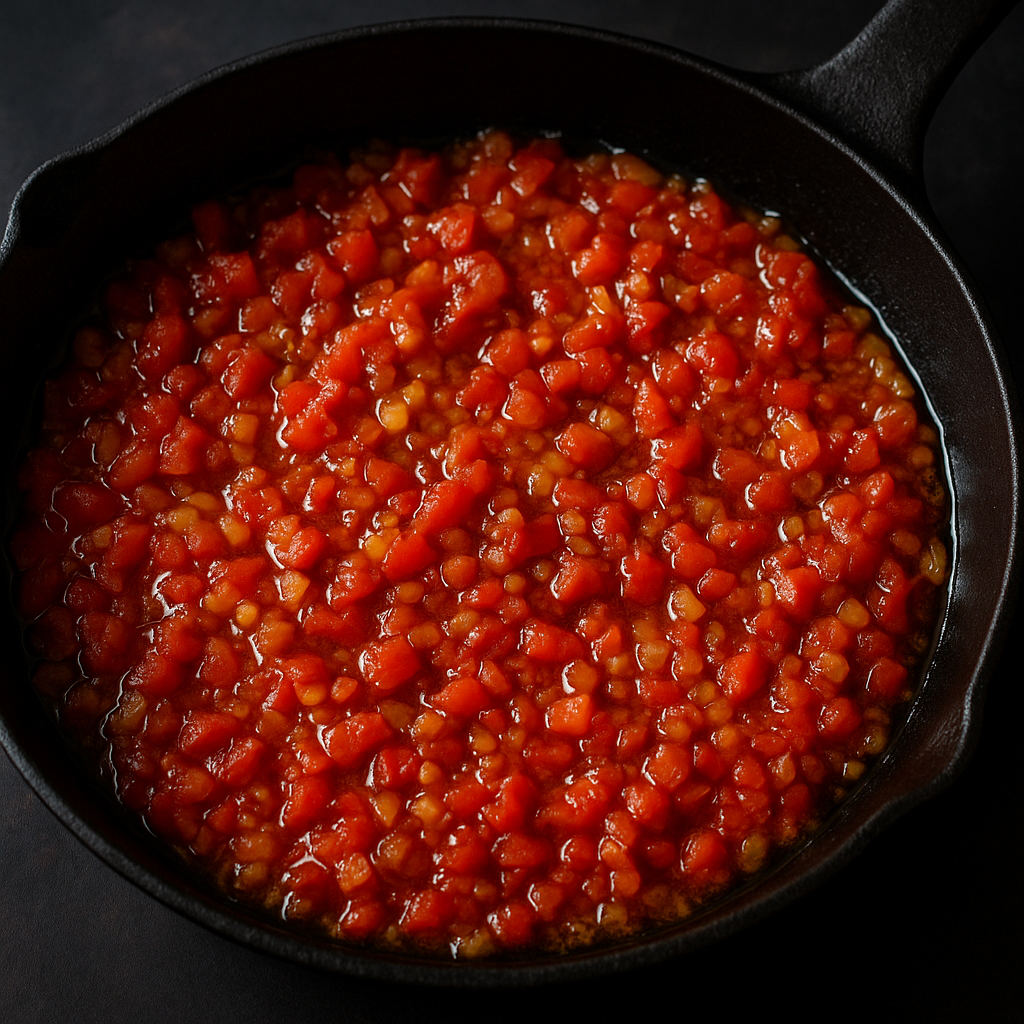
Le sofrito, dans une paella, c'est l'âme cachée. La plupart des gens qui ratent leur paella ne ratent pas le riz — ils ratent le sofrito. Ou plutôt, ils le bâclent, ils le précipitent, ils lui refusent le temps qu'il réclame.
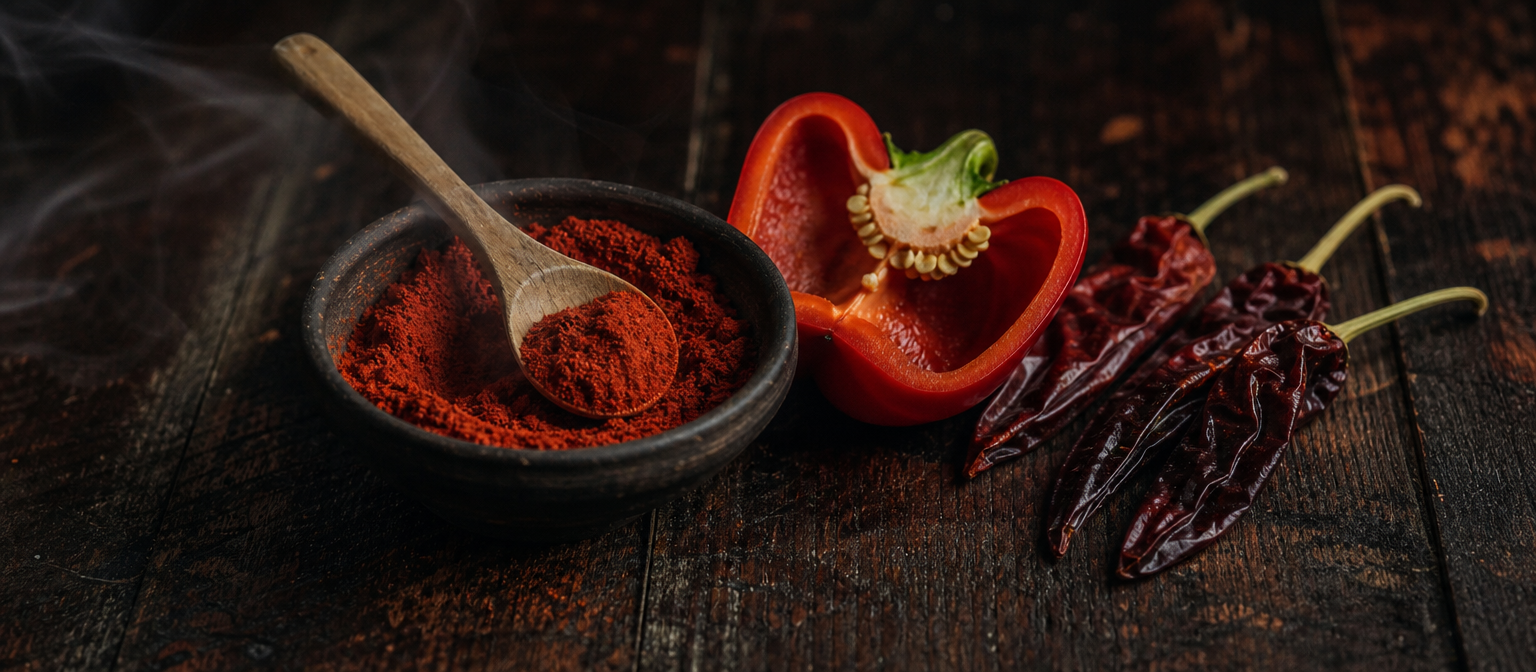
Le sofrito pour paella valenciana est simple dans sa composition mais exigeant dans son exécution: tomate fraîche râpée (ou concassée très finement), ail, et paprika fumé ou doux (pimentón). Dans les variantes côtières, on ajoute parfois du poivron rouge confit ou de la pâte de ñora.
La technique
Une fois la viande dorée et les haricots revenues dans l'huile d'olive, on dégage le centre de la poêle. On ajoute la tomate directement sur le métal chaud. Elle doit grésiller immédiatement. Puis on laisse réduire — pas trois minutes, pas cinq minutes, mais dix à quinze minutes à feu moyen-doux, en remuant régulièrement, jusqu'à ce que la tomate perde presque toute son eau et commence à "caraméliser" légèrement sur les bords. La couleur passe du rouge vif au rouge brique sombre. C'est à ce moment-là seulement que l'on ajoute le paprika, hors du feu ou à feu très doux — le paprika brûle en quelques secondes et devient amer si la poêle est trop chaude.
Ce sofrito concentré, collant, légèrement caramélisé, va se dissoudre dans le bouillon et en imprégner chaque grain de riz. C'est lui qui donne cette profondeur de goût que l'on ne sait pas toujours nommer mais que l'on reconnaît immédiatement: ce fond umami, légèrement sucré, légèrement fumé, qui différencie une vraie paella d'une assiette de riz avec des garnitures posées dessus.
Retrouvez du paprika de qualité — fumé ou doux — dans notre collection d'épices et assaisonnements, notamment les références Carmencita, une marque valencienne dont la rigueur de sélection est reconnue en Espagne depuis des décennies.
Safran et colorant: qui, quand, pourquoi
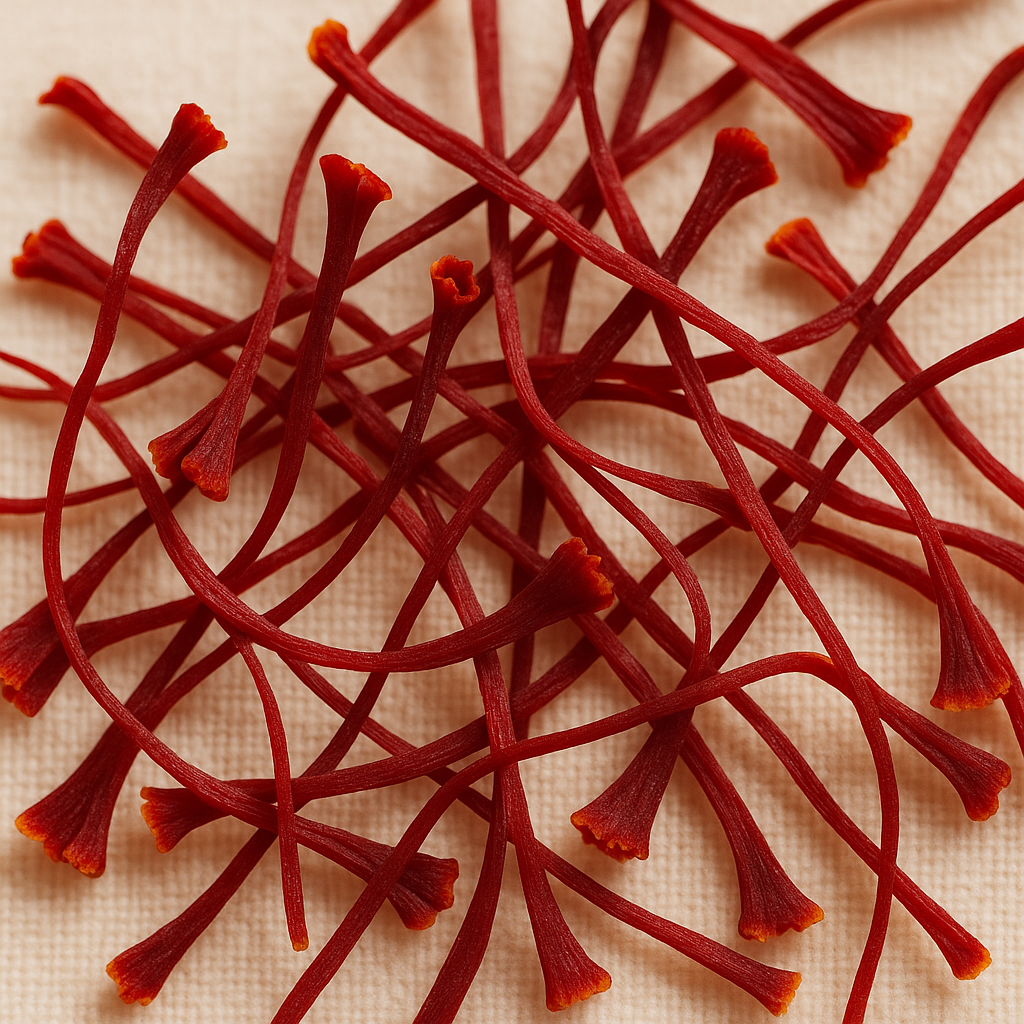
C'est ici que les choses deviennent sensibles. Le safran et le colorant alimentaire pour paella (colorante alimentario) sont deux produits distincts, avec des rôles distincts, et les confondre — ou les opposer sans nuance — est une erreur courante.
Le safran
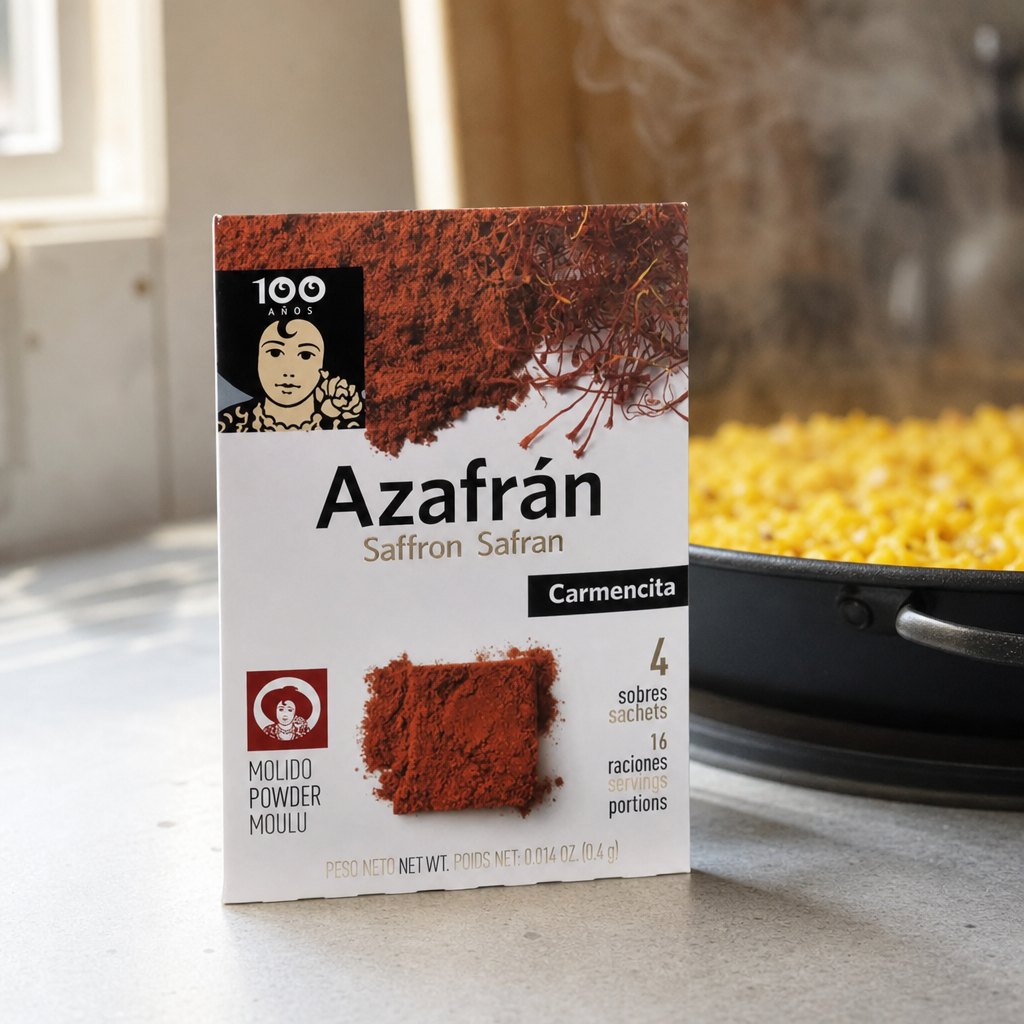
Le safran (Crocus sativus) est l'épice la plus chère du monde, et avec raison: il faut environ 150 000 fleurs pour produire 1 kg de filaments. En paella traditionnelle valenciana, quelques filaments suffisent — 0,1 à 0,2 g pour 4 personnes — mais leur impact aromatique est irremplaçable. Le safran apporte une note florale, légèrement iodée, presque médicinale dans le bon sens du terme, et une couleur jaune dorée d'une élégance incomparable.
La bonne méthode: torréfier légèrement les filaments dans une cuillère à café en les chauffant quelques secondes à sec, puis les écraser et les diluer dans un peu de bouillon chaud avant d'ajouter le tout à la poêle. Cette étape déverrouille les molécules aromatiques — safranal et crocine — qui autrement resteraient partiellement inactives.
Orígenes propose du safran espagnol de qualité supérieure, sélectionné avec soin pour garantir une teneur en crocine élevée et une provenance traçable. C'est l'un des ingrédients sur lesquels il ne faut pas transiger.
Le colorant alimentaire pour paella
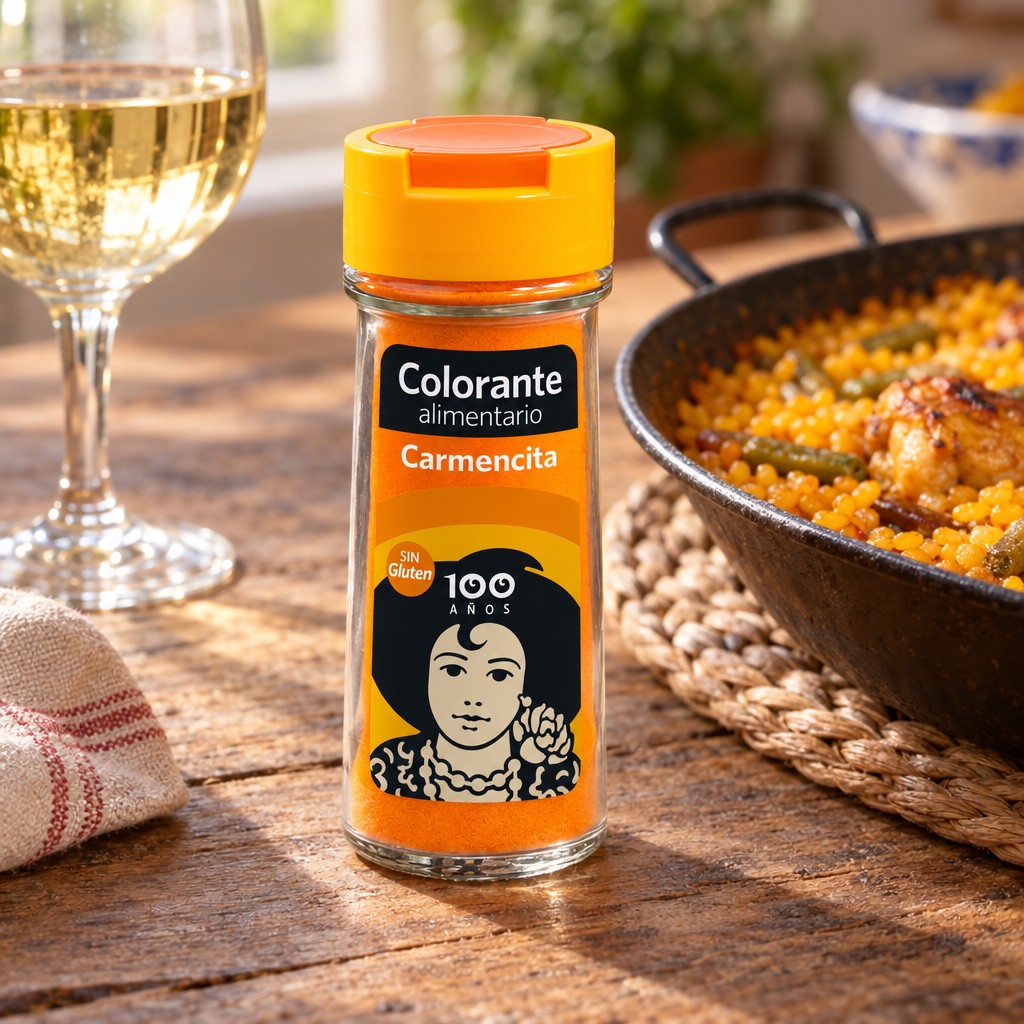
Le colorante alimentario — souvent à base de curcuma, de cartame ou de tartrazine — n'est pas un substitut au safran. C'est un produit complémentaire, utile pour renforcer la couleur sans alourdir le budget ou sans risquer de sur-doser le safran (qui en excès peut donner une amertume désagréable). Dans de nombreux foyers espagnols, on utilise les deux: quelques filaments de safran pour l'arôme, une pincée de colorant pour la couleur.
Il n'y a aucune honte à utiliser du colorant alimentaire dans une paella maison. Ce qui serait une erreur, c'est d'utiliser du colorant seul et de penser que cela suffit à reproduire le goût du safran — ce n'est pas le cas. Les deux produits ont des fonctions différentes et peuvent coexister sans contradiction.
La paella valenciana traditionnelle, étape par étape
Pour 4 personnes
Ingrédients
- 400 g de riz rond pour paella (type Bomba)
- 500 g de poulet (cuisses ou hauts de cuisse, avec os)
- 300 g de lapin découpé
- 150 g de haricots verts plats (bajoqueta)
- 100 g de haricots blancs cuits (ou garrofó si disponible)
- 2 tomates mûres râpées (ou 4 c. à soupe de tomate concassée concentrée)
- 4 gousses d'ail
- 1 c. à café de paprika doux Carmencita
- 0,15 g de filaments de safran
- 1,2 litre de bouillon de volaille chaud
- Huile d'olive extra vierge
- Sel, romarin frais
Étape 1 — Faire dorer les viandes (15 min)
Chauffer la poêle à feu vif avec une bonne couche d'huile d'olive (4 à 5 c. à soupe). Saler les morceaux de poulet et de lapin. Les disposer peau vers le bas, sans les bouger. Laisser dorer 6 à 8 minutes d'un côté, puis retourner. La couleur doit être brun foncé, presque acajou. Cette réaction de Maillard est fondamentale — c'est elle qui construit les arômes du fond.
Étape 2 — Faire revenir les légumes (5 min)
Ajouter les haricots verts coupés en tronçons et les haricots blancs. Faire revenir 4 à 5 minutes avec les viandes, en remuant. Ils doivent légèrement colorer.
Étape 3 — Construire le sofrito (12 min)
Dégager le centre de la poêle. Ajouter la tomate râpée et l'ail haché. Laisser réduire à feu moyen sans précipitation — 10 à 12 minutes — jusqu'à obtenir une pâte sombre et concentrée. Baisser le feu, ajouter le paprika Carmencita, mélanger rapidement et immédiatement verser le bouillon chaud pour stopper la cuisson du paprika.
Étape 4 — Infuser le safran
Torréfier les filaments de safran, les diluer dans une louche de bouillon chaud. Verser dans la poêle. Rectifier le sel. Le bouillon doit être légèrement trop salé à ce stade — il va réduire.
Étape 5 — Ajouter le riz (18 min de cuisson)
Porter le bouillon à ébullition vive. Ajouter le riz Bomba en le répartissant en croix ou en pluie uniforme. Ne plus jamais remuer. Cuire à feu vif les 8 premières minutes, puis baisser à feu moyen pour les 10 minutes suivantes. Poser quelques branches de romarin sur le dessus.
Étape 6 — Le socarrat et le repos
Les 2 dernières minutes: augmenter le feu à vif pour créer le socarrat (voir section suivante). Retirer du feu, couvrir d'un torchon propre et laisser reposer 3 à 5 minutes.
Calculateur
Les quantités pour votre tablée
Glissez le curseur : la recette valenciana de l'article s'adapte.
| Riz rond (type Bomba) | 400 g |
| Bouillon de volaille chaud | 1,2 L |
| Poulet (avec os) | 500 g |
| Lapin | 300 g |
| Haricots verts plats | 150 g |
| Haricots blancs cuits | 100 g |
| Tomates mûres | 2 |
| Gousses d'ail | 4 |
| Paprika doux (c. à café) | 1 |
| Filaments de safran | 0,15 g |
Proportions de la recette de cet article, ramenées à votre tablée.
La poêle, le feu et le socarrat
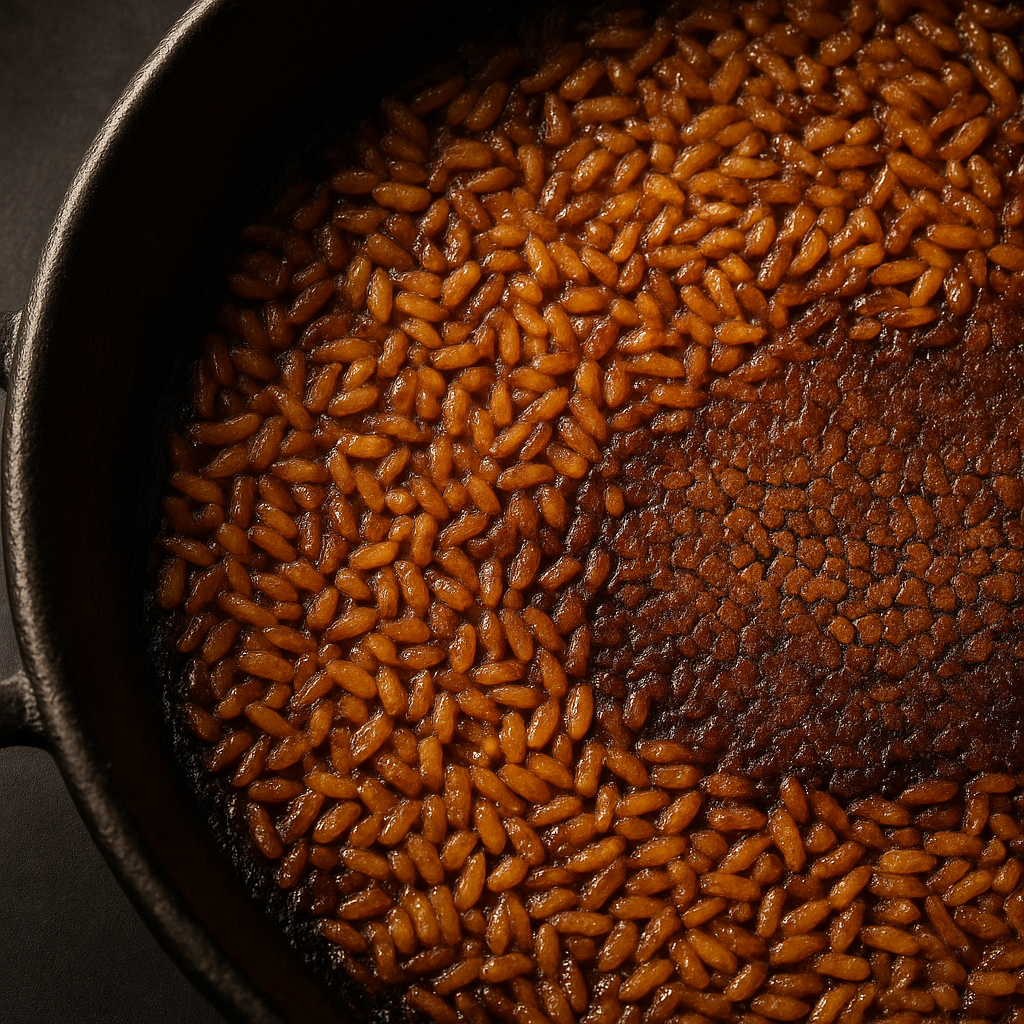
La paella tire son nom de la poêle qui la contient — la paella, en valencien, désigne simplement le récipient. En castillan, on dit paellera, mais à Valence, on dit paella pour les deux. Cette poêle n'est pas un détail: c'est un outil de cuisson précis.
La poêle idéale
Acier carbone de 36 à 40 cm pour 4 personnes. Le fond doit être mince — l'acier carbone conduit la chaleur rapidement et permet une belle caramélisation au fond. Les poêles à revêtement antiadhésif ne permettent pas d'obtenir un socarrat correct. Les poêles en inox épais retiennent trop la chaleur de façon uniforme. L'acier carbone non traité, légèrement huilé avant usage, est le standard valencien.
Le feu
Le feu de bois reste l'idéal, surtout du bois d'oranger qui donne une légère touche aromatique fumée. En cuisine domestique, le gaz est meilleur que la vitrocéramique car il permet des ajustements instantanés. Sur induction, c'est possible mais il faut une paella compatible et une maîtrise accrue des transitions de puissance.
Le socarrat
Le socarrat est la couche de riz légèrement croustillante, caramélisée, qui se forme au fond de la poêle dans les dernières minutes de cuisson. En valencien, socarrat signifie littéralement "légèrement brûlé". C'est l'aboutissement de la paella, son signe de maîtrise. Un socarrat bien réussi croque légèrement sous la spatule, dégage un parfum de noisette grillée, et libère la partie supérieure du riz sans l'abîmer.
Pour l'obtenir: quand le riz a absorbé presque tout le bouillon (vers la 16e ou 17e minute), augmenter le feu à vif pendant 90 secondes à 2 minutes. Écouter la poêle — un léger crépitement est bon signe. Sentir — si ça commence à sentir le brûlé franc, retirer immédiatement. La limite entre socarrat et catastrophe se joue en une vingtaine de secondes.
Les 5 erreurs qui tuent une paella
1. Remuer le riz pendant la cuisson
C'est l'erreur la plus répandue. Une paella n'est pas un risotto. Le riz ne se touche pas une fois versé dans le bouillon. Remuer libère l'amidon en surface, colle les grains entre eux et détruit la texture individuelle de chaque grain. Une fois le riz dans la poêle, posez votre spatule et ne la reprenez que pour servir.
2. Utiliser un bouillon sans goût
Un cube de bouillon dilué dans de l'eau chaude peut dépanner, mais ne peut pas porter une paella. Le bouillon doit avoir été fait maison, ou à défaut, être d'une qualité sérieuse. Pour une paella de marisco, un bouillon de crevettes fait en 20 minutes avec les carapaces est infiniment supérieur à n'importe quel produit industriel. Retrouvez dans notre sélection de condiments et bases de cuisine des références espagnoles qui peuvent soutenir la préparation.
3. Bâcler le sofrito
Comme expliqué plus haut, un sofrito insuffisamment réduit donne une paella aqueuse, sans fond. Prenez le temps. Si vous avez 12 minutes à donner au sofrito, votre paella en sera transformée.
4. Utiliser le mauvais riz
Riz basmati, riz long grain, riz à sushi: non. Le riz Bomba ou, à défaut, un riz Senia ou Calasparra (aussi DO Valencia) sont les seules options sérieuses. La différence n'est pas cosmétique — elle est structurelle et gustative.
5. Couvrir la poêle pendant la cuisson
Couvrir une paella pendant la cuisson du riz, c'est emprisonner la vapeur et cuire le riz à l'étouffée plutôt que par absorption directe. Le résultat est mou, uniforme, sans socarrat possible. La paella cuit à découvert, toujours. Le torchon posé en fin de cuisson, pendant le repos, est la seule exception — et il ne dure que 3 à 5 minutes.
Quel vin servir avec une paella
La question mérite réflexion. La paella est un plat riche en saveurs umami, légèrement fumée, avec des notes de safran et de sofrito concentré. Elle supporte mal les vins trop légers qui se feraient écraser, et les vins trop tanniques qui entreraient en collision avec le riz.
Pour une paella valenciana (viande)
Un rosé sec et structuré de la Communauté valencienne — un Utiel-Requena à base de Bobal — est le compagnon traditionnel et logique. Frais, fruité sans être sucré, avec suffisamment de corps pour tenir face à la viande. Un blanc sec et minéral, comme un Verdejo de Rueda ou un Albariño de Galice, fonctionne également très bien.
Pour une paella de marisco
Un blanc sec avec de la fraîcheur et une belle acidité: Albariño, Txakoli, ou un Cava Brut Nature. La bulle du Cava nettoie le palais entre chaque bouchée et rappelle les origines méditerranéennes du plat.
Pour une paella mixta
Un rosé de Navarre ou de la Rioja — suffisamment ample pour la viande, suffisamment frais pour les fruits de mer.
La règle générale: rester dans les vins espagnols. Ce n'est pas du chauvinisme gastronomique, c'est du bon sens: les vins d'une région ont évolué avec sa cuisine, et l'accord est souvent naturellement juste.
FAQ
Peut-on faire une paella sans paellera en acier carbone?
Oui, avec des compromis. Une grande poêle large à fond plat peut fonctionner, à condition que le fond soit suffisamment fin pour permettre la caramélisation. Évitez les casseroles à bords hauts — la surface d'évaporation est réduite et le riz risque de cuire à la vapeur plutôt que par absorption.
Combien de temps à l'avance peut-on préparer une paella?
La paella se mange immédiatement après cuisson. Le riz continue d'absorber le liquide résiduel et ramollit rapidement. On peut préparer le sofrito et le bouillon la veille, mais la cuisson finale doit se faire au dernier moment, idéalement devant les convives.
Peut-on remplacer le lapin dans la paella valenciana?
Les puristes valenciens diront non. En pratique, certains substituent le lapin par du poulet supplémentaire. Le goût change — le lapin apporte une note sauvage, légèrement fermentée, très différente du poulet — mais le résultat reste honnête. Ce qui ne se substitue pas, en revanche, c'est le type de riz et la qualité du sofrito.
Le safran est-il vraiment indispensable?
Oui, dans une paella valenciana traditionnelle. On peut réduire les quantités, on peut le compléter avec du colorant alimentaire pour renforcer la couleur, mais l'omettre complètement prive le plat d'une dimension aromatique que rien d'autre ne reproduit. Notre safran espagnol disponible chez Orígenes est sélectionné pour son rapport qualité/teneur aromatique.
Pourquoi mon riz est-il mou et collant?
Trois causes possibles: trop de bouillon (ratio mal respecté), riz de mauvaise qualité (grain qui éclate en absorbant), ou le riz a été remué pendant la cuisson. Avec du riz Bomba et le bon ratio (3:1 bouillon/riz), ce problème disparaît presque mécaniquement.
Peut-on faire une paella sur induction?
Oui, mais c'est le mode de cuisson le plus délicat pour ce plat. Il faut une paella compatible induction, et il faut anticiper les transitions de puissance (l'induction n'a pas l'inertie du gaz). Le socarrat est possible mais demande une surveillance plus attentive dans les dernières minutes.
Quelle est la différence entre le colorant alimentaire et le safran pour paella?
Le safran apporte couleur et arôme. Le colorant alimentaire pour paella apporte uniquement la couleur (et parfois une légère note de curcuma). Ce sont deux produits complémentaires, non interchangeables. L'un peut amplifier l'autre, mais aucun ne remplace l'autre.
Peut-on congeler une paella?
Techniquement oui, mais le résultat à la décongélation sera décevant: le riz perd sa texture al dente et devient pâteux. Il vaut mieux ajuster les quantités pour ne pas avoir de restes, ou utiliser d'éventuels restes le lendemain en arroz al horno (riz au four) — une excellente façon de recycler une paella sans dégrader l'expérience.
Pour aller plus loin
- Le safran espagnol en Suisse — Tout ce qu'il faut savoir sur l'achat, la conservation et l'utilisation du safran dans la cuisine méditerranéenne. Lire l'article
- Colorant alimentaire pour paella: mode d'emploi — Quand l'utiliser, comment le doser, et pourquoi il n'est pas l'ennemi du safran. Lire l'article
- Les épices espagnoles indispensables dans une cuisine — Paprika, cumin, ñora, safran: le guide des épices de base pour cuisiner espagnol en Suisse. Découvrir la sélection
- Riz Bomba et variétés espagnoles: guide d'achat — Bomba, Senia, Calasparra, Arroz negro: comment choisir le bon riz pour chaque plat. Explorer notre sélection
Petit test
Prêt à allumer le feu ?
Cinq questions, les réponses sont dans l'article.