The story of this house
Carmencita (Jesús Navarro, S.A.) is a Spanish house founded in 1923 in Novelda (Alicante). Its Pimentón de la Vera comes from the La Vera district of Extremadura — the historic cradle of pimentón. This region, crossed by the Tagus river and characterized by a dry continental climate, has developed over centuries a unique expertise around the cultivation and transformation of peppers. La Vera, an enclosed valley in the province of Cáceres, concentrates this tradition with a geography and humidity that favor the slow drying of fruit.
Pimentón de la Vera is slowly dried over oak wood, and the Protected Designation of Origin seals this rigor. The house is not a mere producer, but a guardian of a process that refuses haste — respecting the rhythm of fire, wood, and patience.
The vocabulary
Four words to read it
Tap a card: what the label tells you.
What made this product singular
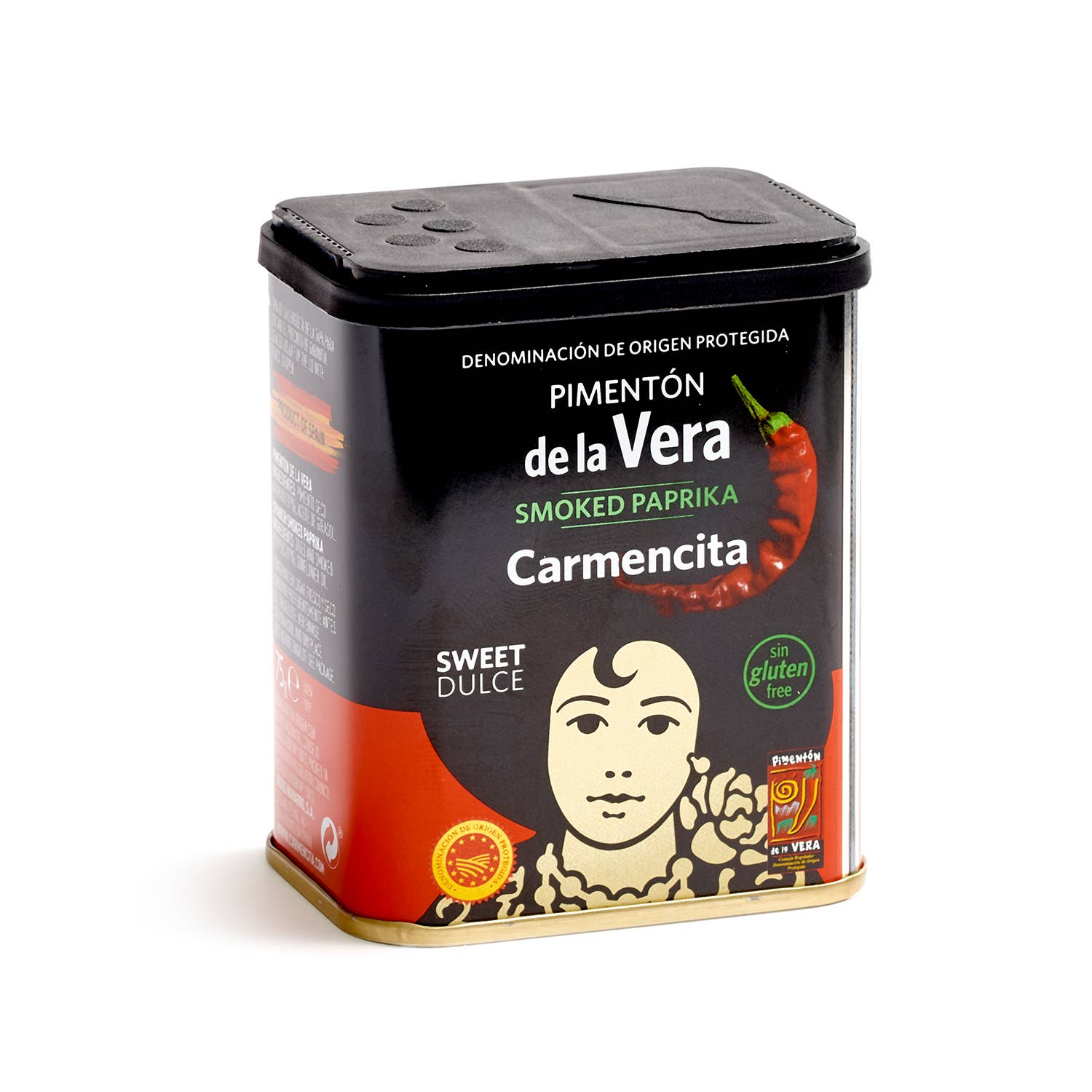
Carmencita's sweet smoked Pimentón de la Vera D.O.P. possessed a very distinctive olfactory identity. During drying with oak wood — for 10 to 15 days depending on climatic conditions — the pepper absorbs the volatile compounds from the wood, creating this signature sweet smoke, almost powdery quality. Unlike other smoked spices that dominate loudly, this one lingered in the background of taste: a deep voice rather than a shout.
On the palate, the flavor was smooth, slightly sweet, with a lingering woody note without aggression. The deep brick-red color, fine granulometry, and absence of additives (97% paprika, 3% sunflower oil) spoke of purity. This was not a spectacular spice, but a spice for thoughtful cooking — the kind that appears in family stews across three generations.
How we served it
Pimentón de la Vera naturally finds its place in braised and slow-cooked dishes: homemade chorizo, callos à la madrileña, or simply a beef stew where it slowly releases its smoked flavor. We incorporated it at the start of cooking, over a soffritto of onion and garlic, letting the gentle heat awaken its aromas.
For a lighter approach, it dusted huevos rotos or a squash soup, adding depth without heaviness. Some customers sprinkled it on patatas bravas or a platter of hard cheeses. The square metal tin — a gesture of respect toward the product — protected it from light and allowed consumption over several months, with the flavor remaining stable.
In terms of storage, the 75 g format was ideal for home kitchens: neither too little nor too abundant for regular family use.
In the kitchen
Where to use it
Uses from our Cellier, from slow stews to a pinch.
Why it left our Cellier
The natural rotation of Le Cellier led us to explore other producers and variants of Spanish pimentón. This house remains a reference, but we wished to offer our visitors broader geographical diversity within this smoked spices category. The departure of this product is not a judgment: it is the rhythm of an itinerant cellar that breathes, temporarily forgets, and returns.
To learn more
Those seeking this smoked profile will find in our spices other Spanish paprikas, including other Vera D.O.P.s under different brands, as well as smoked alternatives (such as peppers and smoked spices from other regions). Our Spices section also offers sweet unsmoked peppers for those wishing to explore different facets of Iberian terroir. Do not hesitate to consult us: the rotation of Le Cellier often conceals a beautiful discovery waiting to be found.
Le Cellier is a living journal: we archive out of respect but the active catalog evolves. See our current selection in this category → · or browse the complete Cellier.
Quick quiz
Have you mastered the slow fire?
Four questions, the answers are in the article.