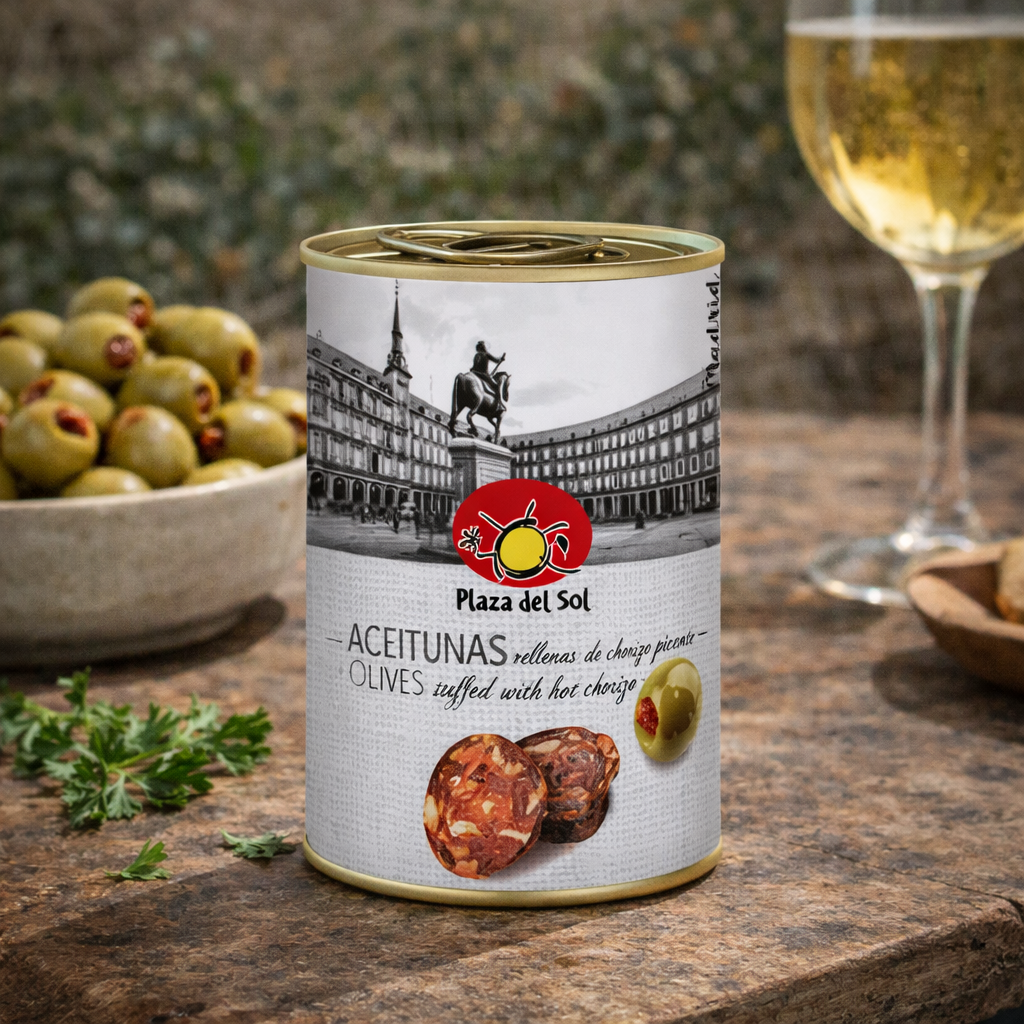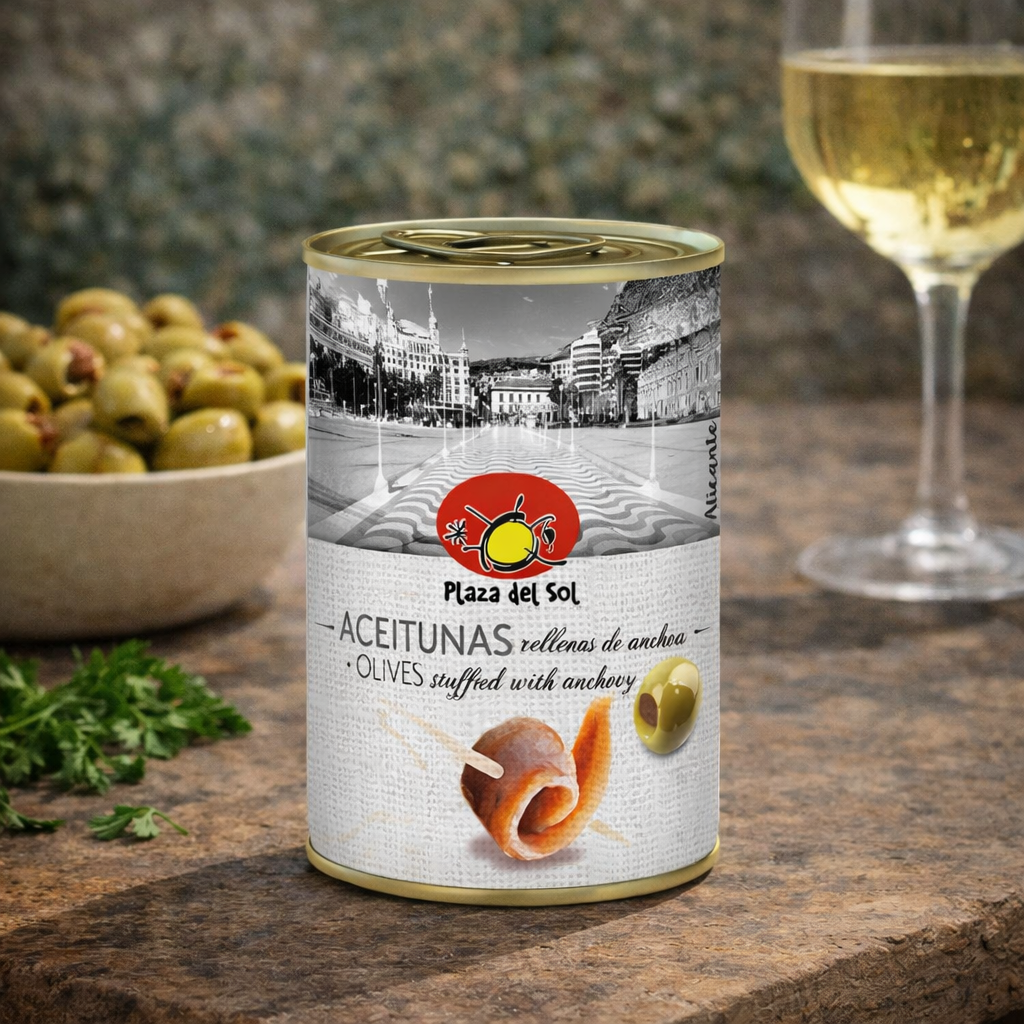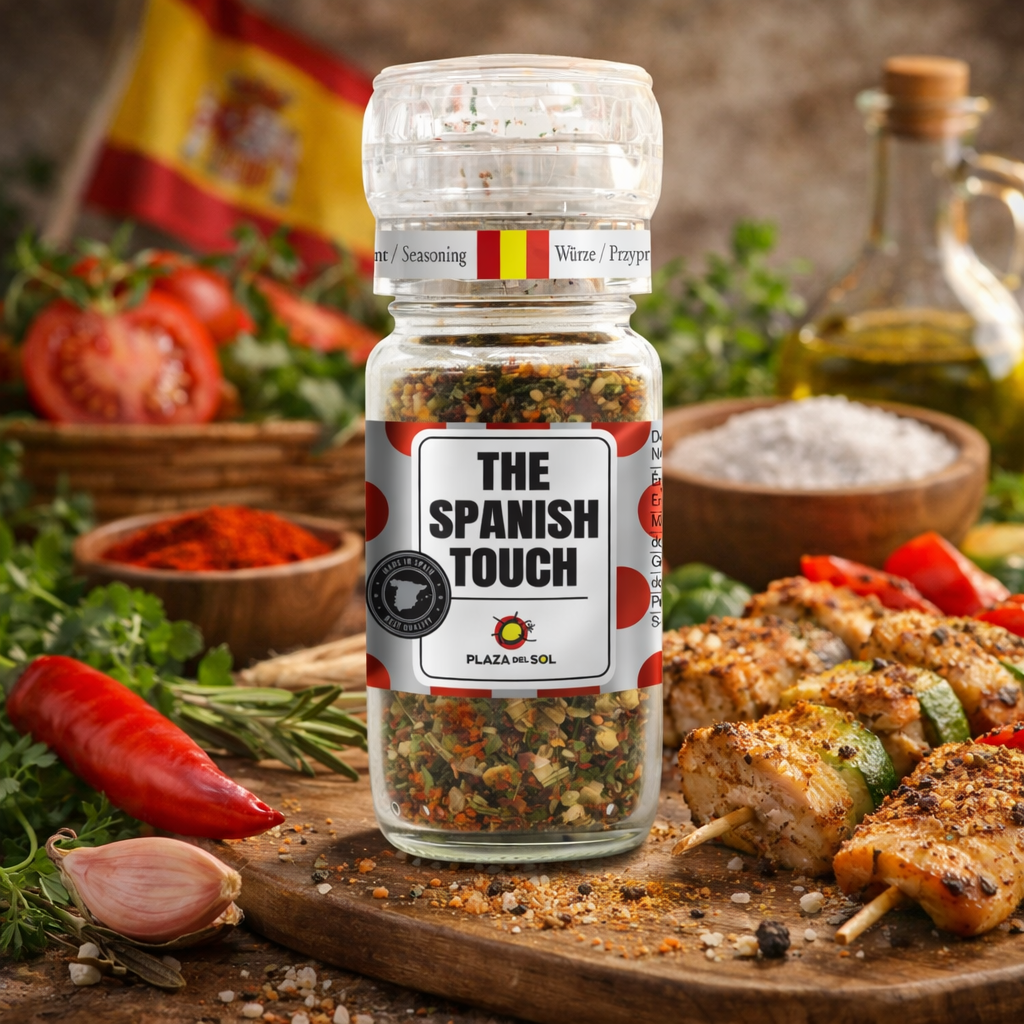
In the quiet rotation of Le Cellier, certain products remind us that fine groceries are not just a quest for rarity. Sometimes, it is loyalty to everyday Spanish life that slips away.
The story of this house
Plaza del Sol is a house from the Mediterranean lands of southeastern Spain, born from the will to preserve the simple and generous recipes of the Spanish culinary repertoire. Established in San Vicente del Raspeig, near Alicante, it embodies this discreet philosophy of the local house: neither avant-garde, nor nostalgic, but simply faithful to what works, what nourishes, what brings people together.
The brand never sought to revolutionize the Spanish aperitif. Instead, it made it its mission to democratize it with honesty — by selecting the fruits, by controlling the dosage of the filling, by respecting the balance that the Iberian palate has known for a long time.
What made this product unique
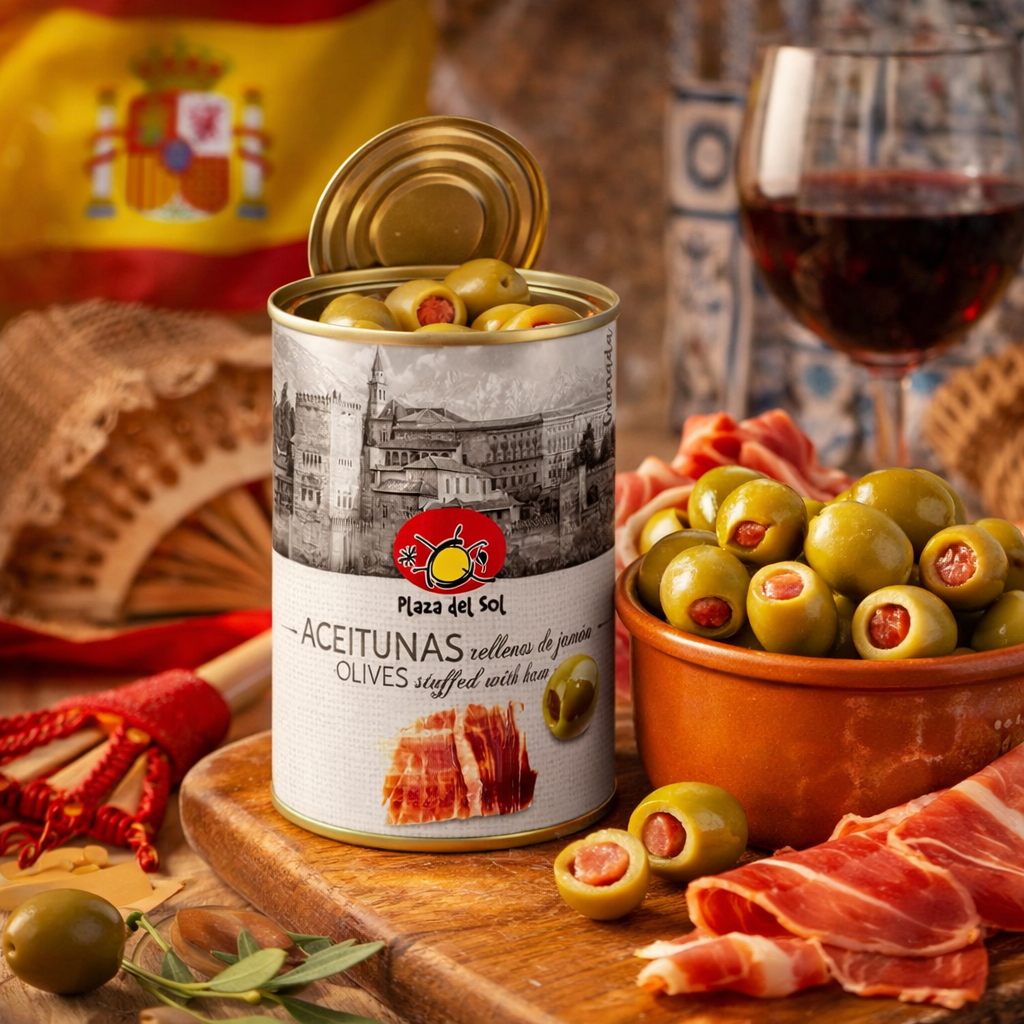
The green olive stuffed with ham occupies a very particular place in Spanish gastronomy: it is neither a noble product, nor a simple snack. It is an interface — the meeting point between the raw (the olive) and the refined (the ham paste), between the quick appetizer and the taste intention. Plaza del Sol had understood this geometry. The selection of green olives, for their firm and juicy flesh, guaranteed a texture that did not soften under the filling. And this ham paste — salty, full-bodied, without detour — refused any sweet or softened indulgence.
It was a product without displayed pretension, but with remarkable consistency. Each bite restored this classic balance: the tartness of the olive against the deep salinity of, the textural contrast that holds the entire architecture of Spanish tapas. Neither sophisticated, nor basic — just just right.
Anatomy
What's inside a stuffed olive
Tap a card: the fruit, the filling, the contrast and the format.
How we served it
These olives naturally found their place among friends, in the early afternoon or at the end of the day. No need for staging: poured into a small bowl, with wholemeal bread on the side, they opened the conversation around a cold beer or a glass of Tempranillo.
They could also be integrated into a homemade tapas board, alongside aged cheeses and cured meats: they played the role of the salty and firm reminder, the moment when the tongue returned to the Mediterranean olive. A few roughly crushed, mixed with a little olive oil, formed an improvised paste to spread on toasted bread.
Finally, they accompanied blue cheeses or blue-veined cheeses, where the contrast added an extra dimension to the natural bitterness of the cheese.
At the table
Four ways to serve it
From the evening bowl to the cheese board.
Why it left our Cellier
After its natural rotation, Plaza del Sol left its place on our shelves. Not due to lack of quality, but because the itinerant Cellier must continue its march: discovering other producers, other interpretations of tapas. It is the very logic of the cellar — to be a place of passage, not of permanent storage.
To go further
If this archive is missed by you, the world of olives and Spanish appetizers continues to live in our catalog. We invite you to explore other houses in the sector: some offer olives nature of different varieties, others offer revisited stuffed versions or artisanal preparations that continue this conversation with Mediterranean tradition.
Le Cellier is a living journal: we archive out of respect but the active catalog evolves. See our current selection in this category → · or browse the complete Cellier.
Quick quiz
Do you know the stuffed olive?
Three questions, answers in the article.