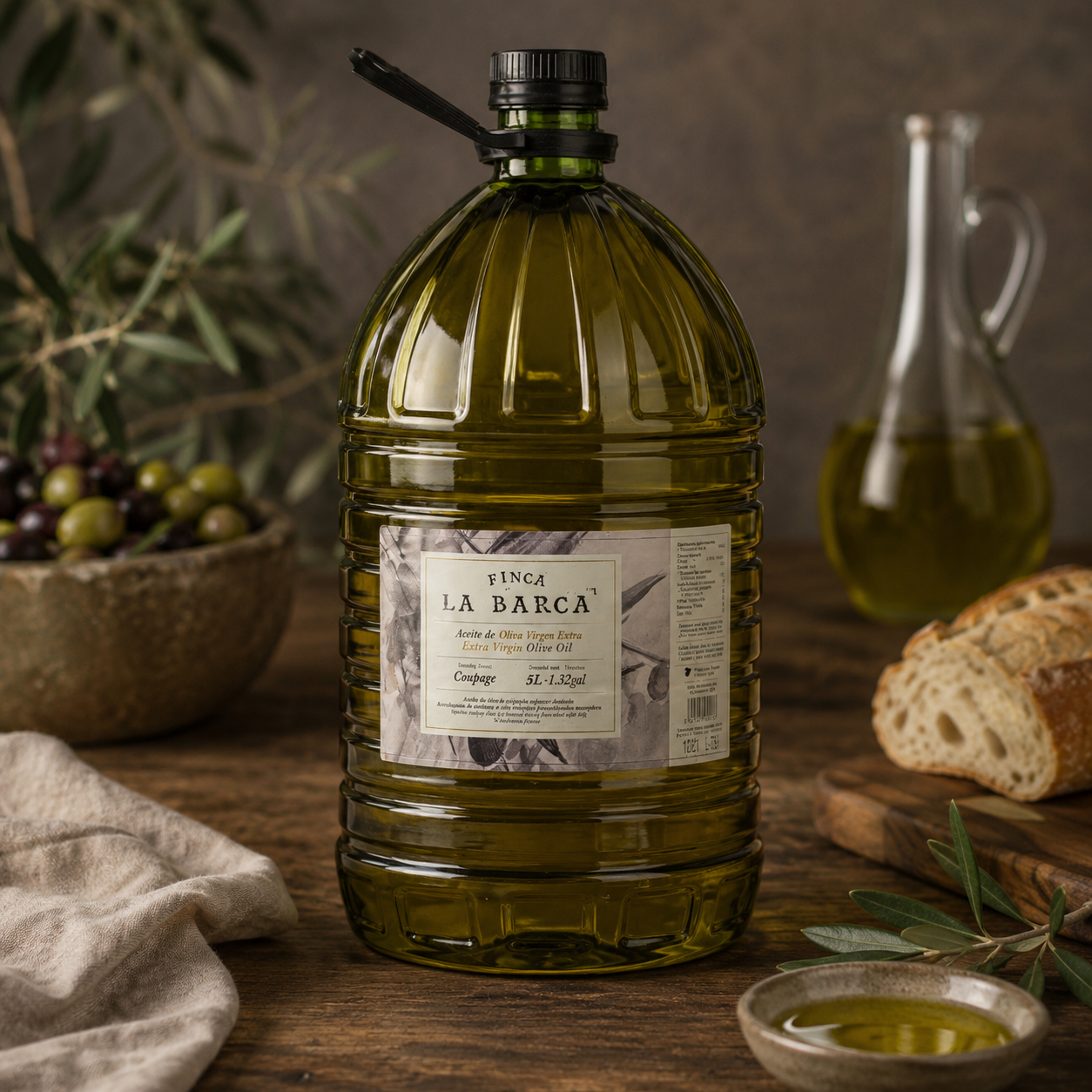
In the La Vera district of Extremadura, the land has for centuries borne two crops that have shaped Iberian cooking: the olive tree and the pepper. Finca La Barca, the brand of the Oliva González family (La Chinata group; its parent company, NETASA, was founded in 1975), works with both. And does both the old way — the one that demands time, not yield.
Extremadura is a little-known olive-growing region. Andalusia has volume, La Mancha regularity, Catalonia marketing. Extremadura has something different: a harsh continental climate, century-old olives on poor soils, and a culture of the long term. This is where pimentón de La Vera is born — the signature spice of all Spanish cuisine — and one of the most balanced olive oils in the country.
Why this house is a reference
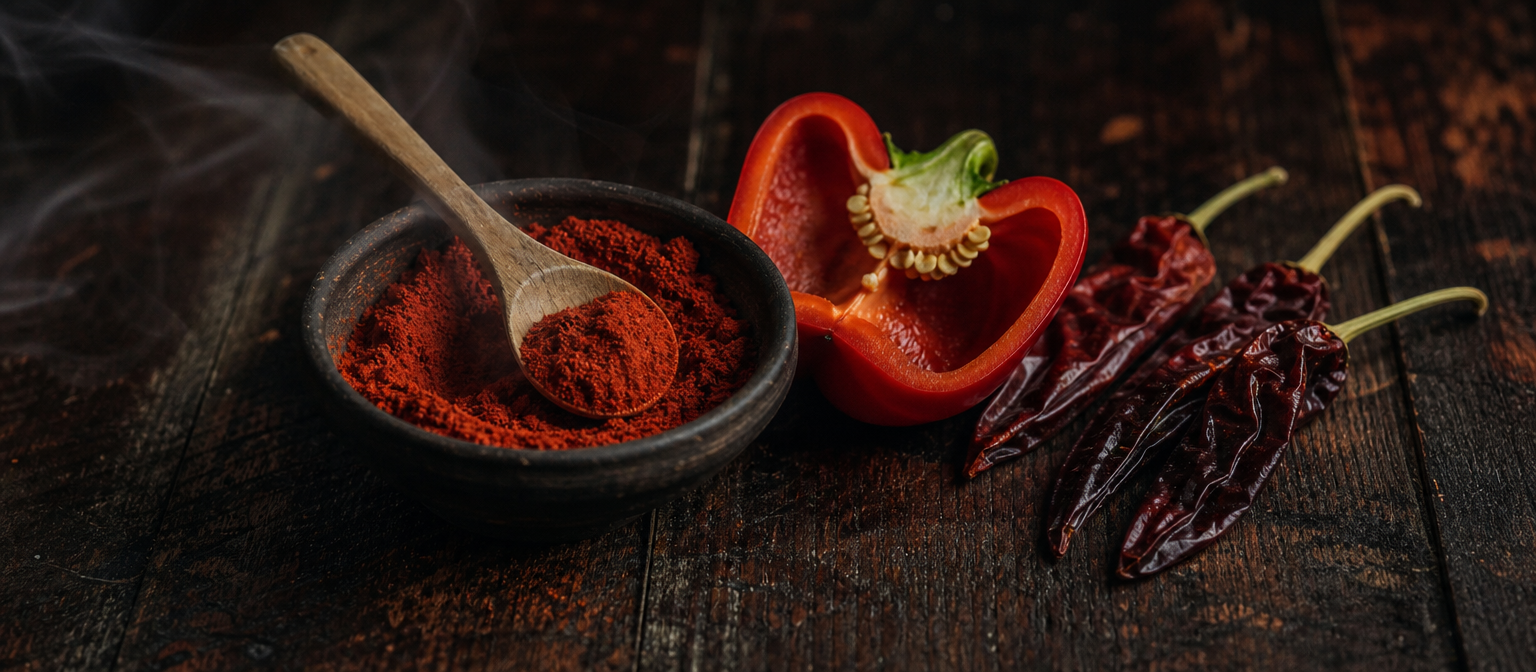
- Pimenton de La Vera AOP, dried over oak fire for fifteen days. The smoky aroma of pimentón de La Vera is not an additive: it is the result of long, slow drying over oak embers, in traditional secaderos. Fifteen days during which each pepper is hand-turned to dry evenly. No other paprika in the world is produced this way. The AOP protects this method.
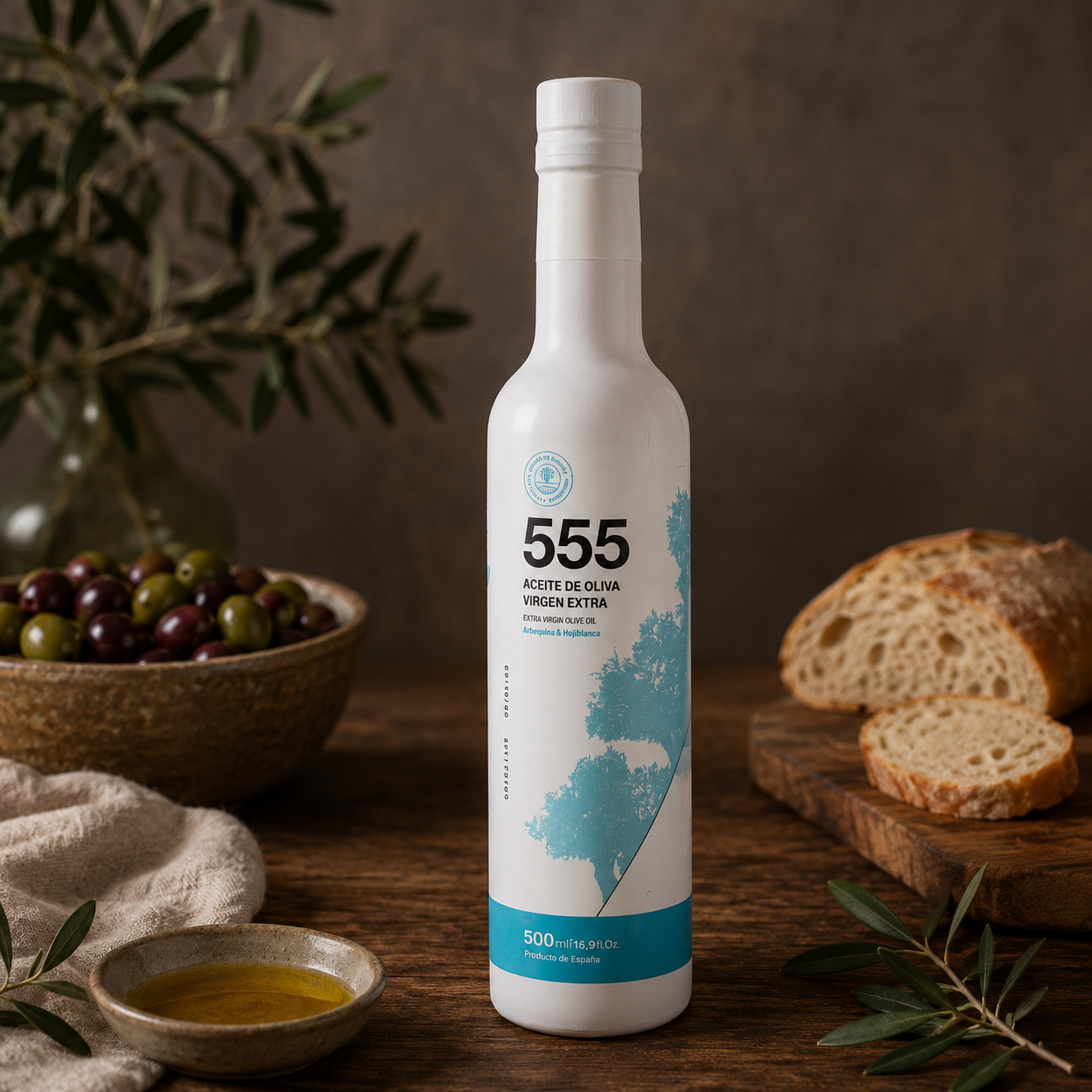
- Mechanical cold extraction. The olives are pressed soon after harvest, by a strictly mechanical process, to preserve the aroma. The house's oil is a blend of olives from Extremadura and Toledo, with a mild, fresh, aromatic profile.
- Two products from the same terroir. Pimentón and olive oil are the two pillars of everyday Spanish cooking. Having both from the same Extremaduran estate is having an entire terroir's coherence in the pantry.
The classic mistake with pimentón is adding it to the hot pan like ordinary paprika. In 30 seconds, it turns bitter and black. The rule: add pimentón off the heat, right after extinguishing the sofrito flame. A few seconds to let it release its aromas in the hot oil, then pour the broth immediately to stop cooking. That is what distinguishes a successful paella sofrito from a failed one.
Pimentón
Four words to understand it
Tap a card: where the smoke comes from, and how not to spoil it.
The references in the Orígenes catalogue
- Mild Smoked Pimentón de La Vera AOP — 70 g Tin. The mild (dulce), no piquancy, just pure smoky aroma. The reference for paellas, patatas bravas, marinades, eggs en cocotte. 4.90 CHF.
How to serve an Extremaduran cuisine
- Signature patatas bravas. Potatoes cut in cubes, mixed with 2 tablespoons Finca La Barca olive oil + 1 teaspoon mild pimentón + salt. Oven 200°C 30 minutes. Brava sauce alongside.
- Spanish eggs en cocotte. Buttered ramekins, egg + cream + pinch of pimentón + salt. Oven 180°C bain-marie 10 minutes. With garlic-grilled bread soldiers.
- Authentic paella. Sofrito: Finca La Barca oil (4 tablespoons), grated tomato, garlic, and pimentón added off the heat. It is the soul of paella valenciana — without smoked pimentón, no paella.
Pimentón is not a spice. It is an act of cooking.Extremaduran saying
Three recipes
Extremaduran cooking at home
The article's three dishes, with their gestures.
What to remember
Extremadura is not touristy Andalusia or media-darling Catalonia — it's the Spain of the long term, of stone secaderos and family almazaras. Finca La Barca embodies this continuity: respect for the AOP method for the pimentón, mechanical cold extraction for the oil, packaging that protects the product. The Extremaduran terroir's coherence in its entirety.
Finca La Barca's mild smoked pimentón de la Vera PDO has its page in our shop: check availability.
Quick test
Have you mastered pimentón?
Four questions, the answers are in the article.