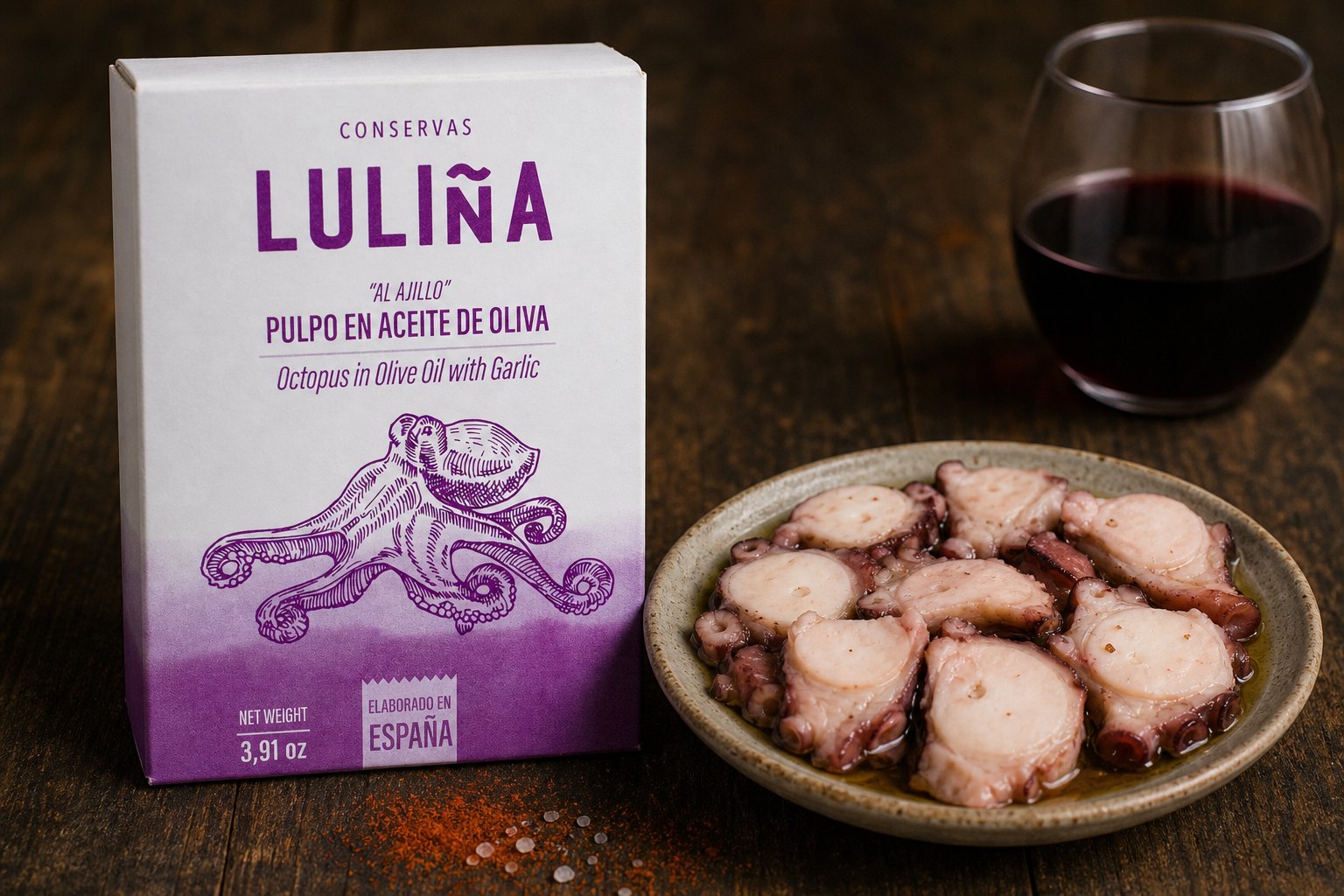
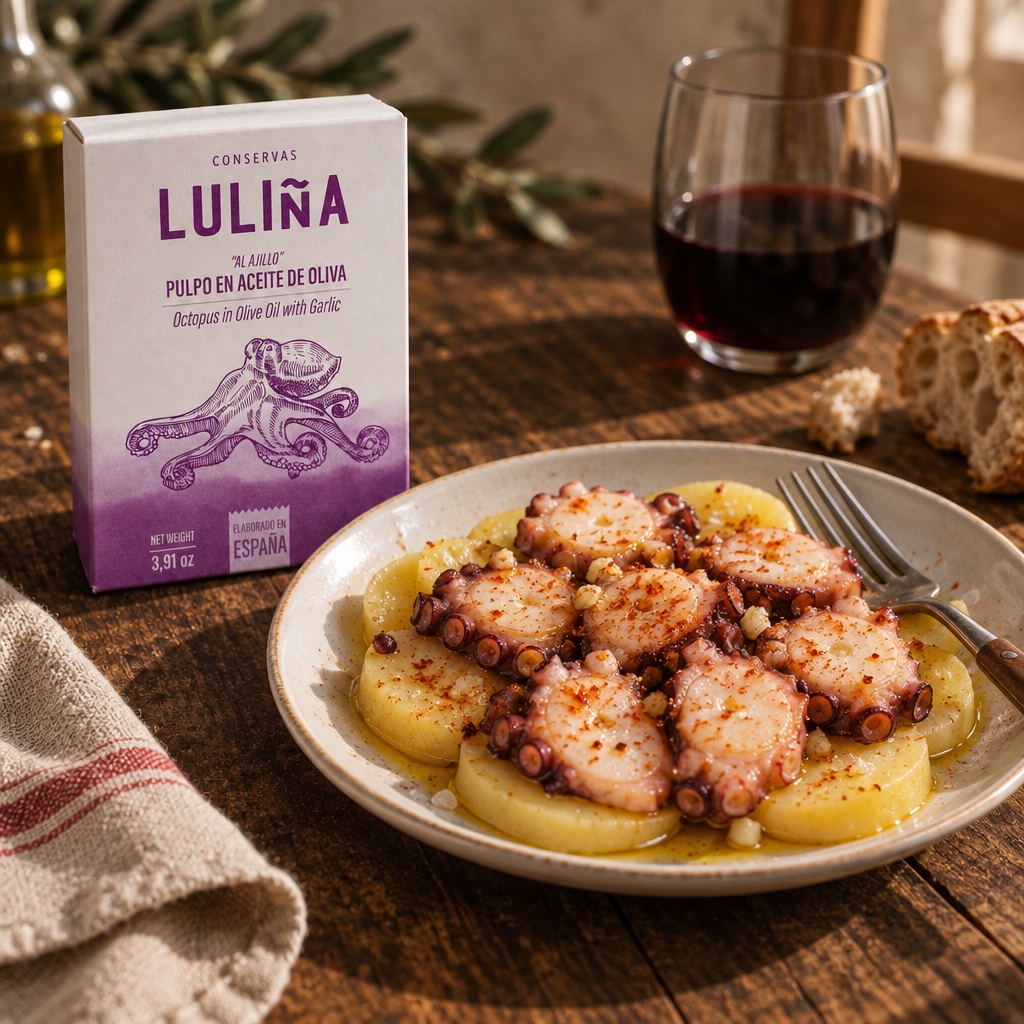
Some tapas take a whole day. This one takes a pan of salted water and a tin to open. The octopus is not cooked: it arrives ready, in its olive oil and garlic. Your only job is to give it a bed of warm potato and a little attention at the moment of serving.
Octopus and potato are a classic pairing in Galician cooking. Here it is scaled down to a December aperitif, for when you are entertaining but do not want to spend the evening at the stove. It takes three products, one precise gesture with the oil, and the right moment to serve.
Three products, and why these ones
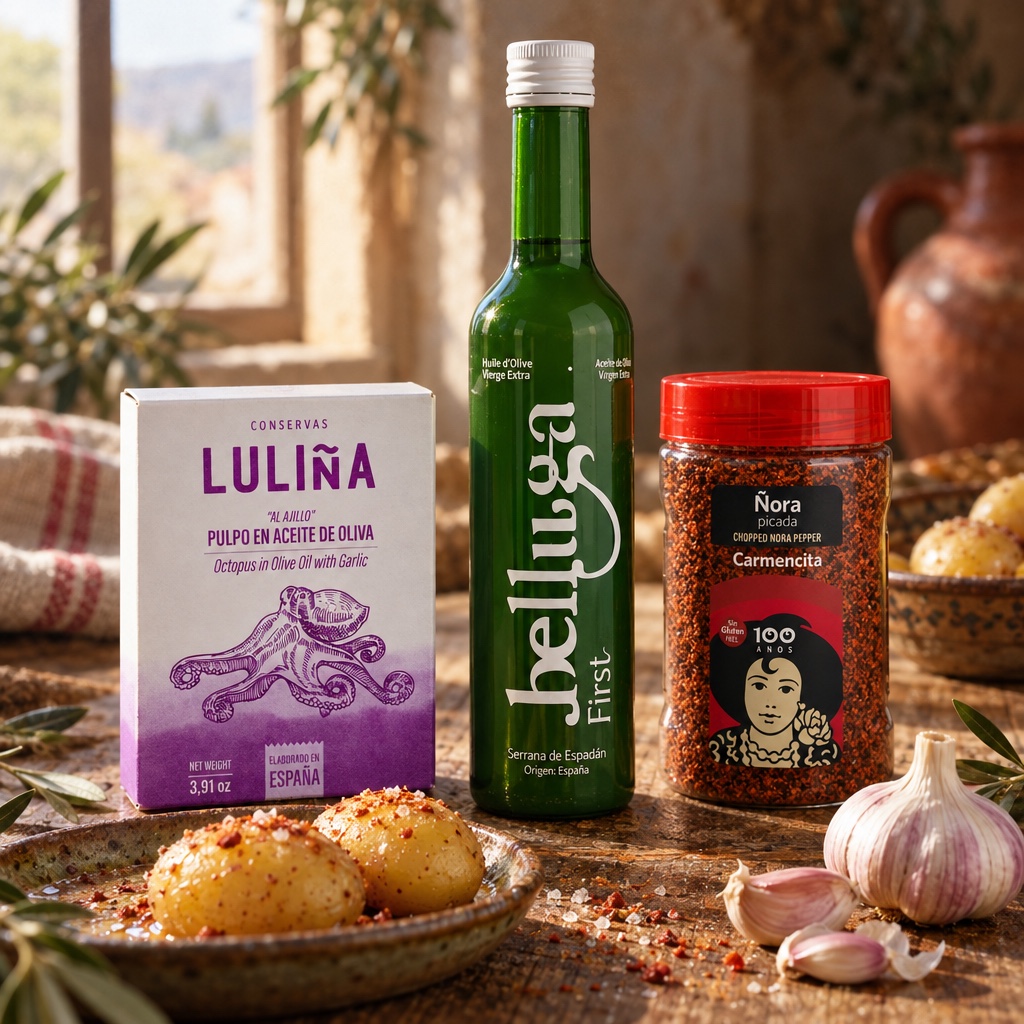
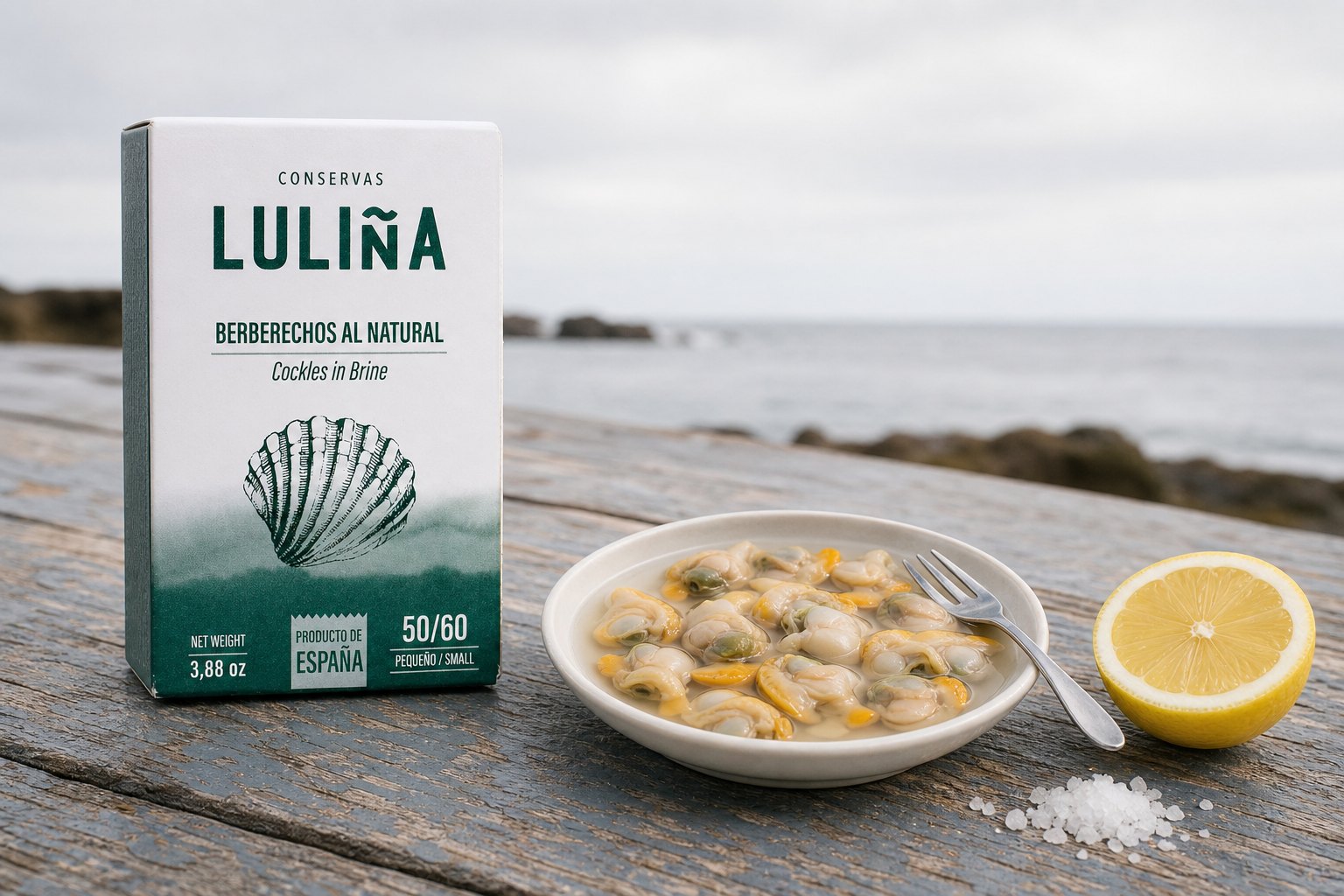
At the centre, the garlic and olive oil octopus from Conservas Luliña. It contains four ingredients: octopus (Octopus vulgaris), olive oil, garlic and salt. There is no fifth. The garlic perfumes the oil, the oil carries the octopus, and nothing masks anything else. These tinned products are made on the shores of the Ría de Arousa, in Galicia. For every tin sold, the company makes a contribution to the Fundación Ecomar for its coastal clean-up project. The tin holds 120 ml, with 72 g of drained octopus: enough to fill a small plate for sharing.
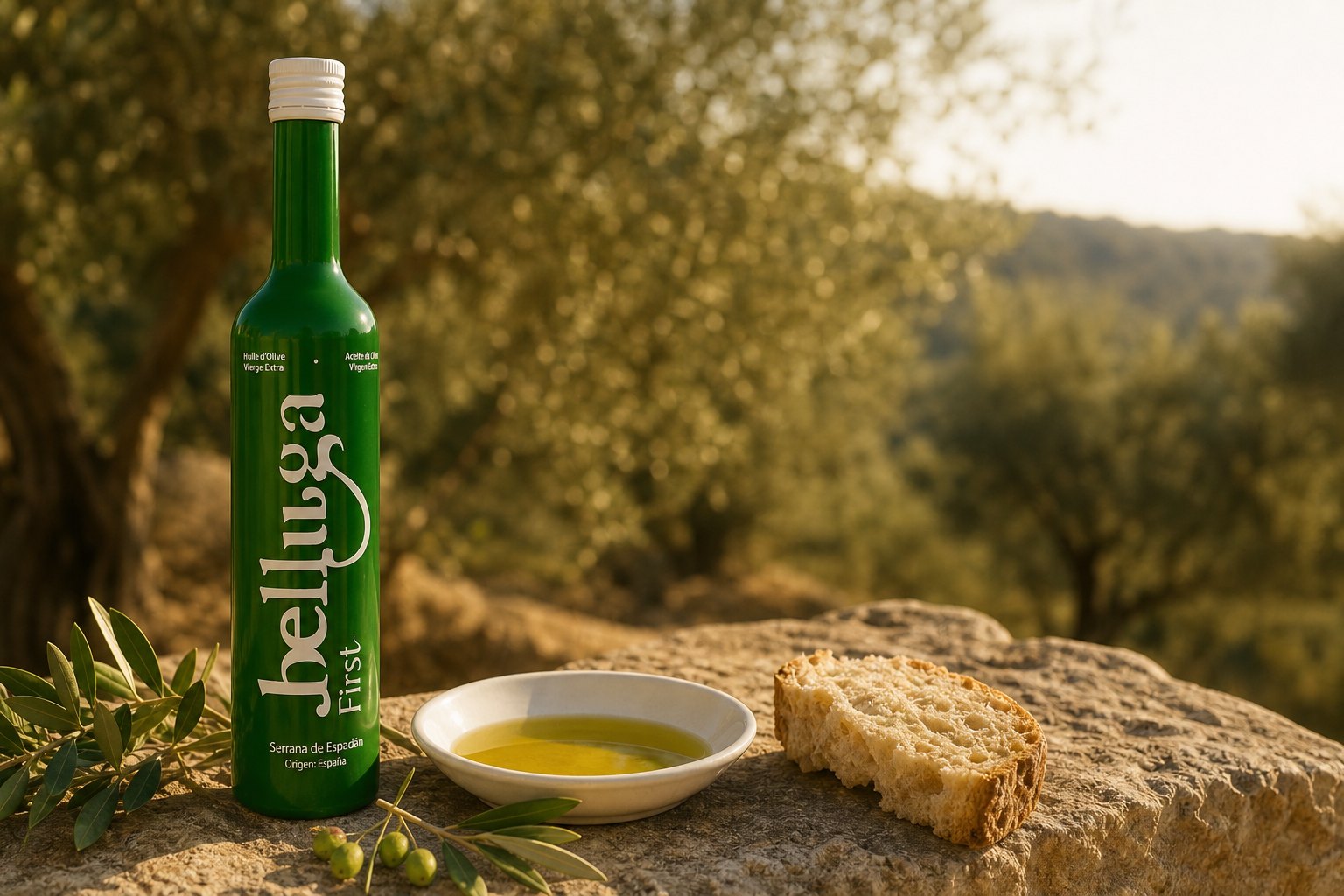
To finish the dish, you need an oil to use raw. Belluga First is an extra virgin olive oil made from the Serrana de Espadán olive. This native variety from the Alto Palancia and the Alto Mijares is almost impossible to find outside those mountains. Belluga Gourmet is based in Segorbe (Castellón), and its shop is inside the town's Olive Oil Museum. This oil has no place in a frying pan: it is poured over the plate, at the last moment.
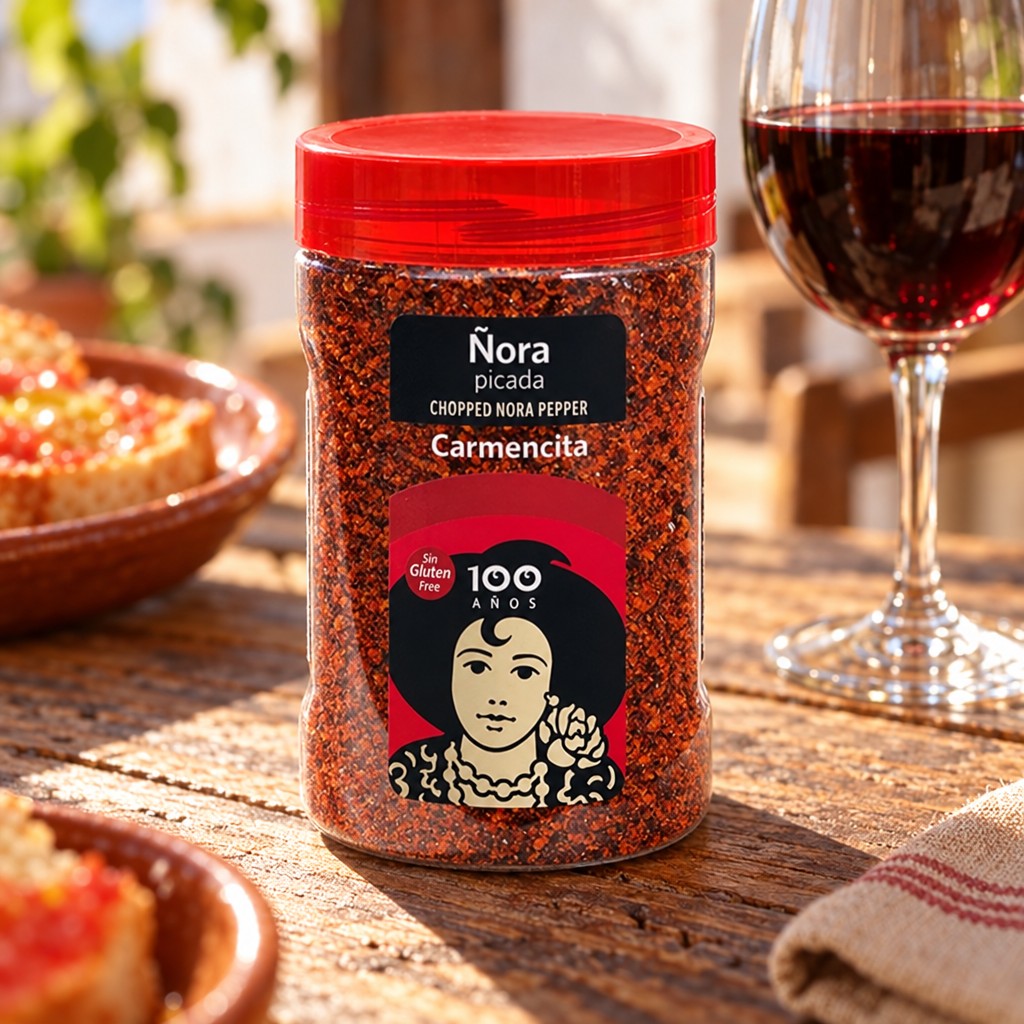
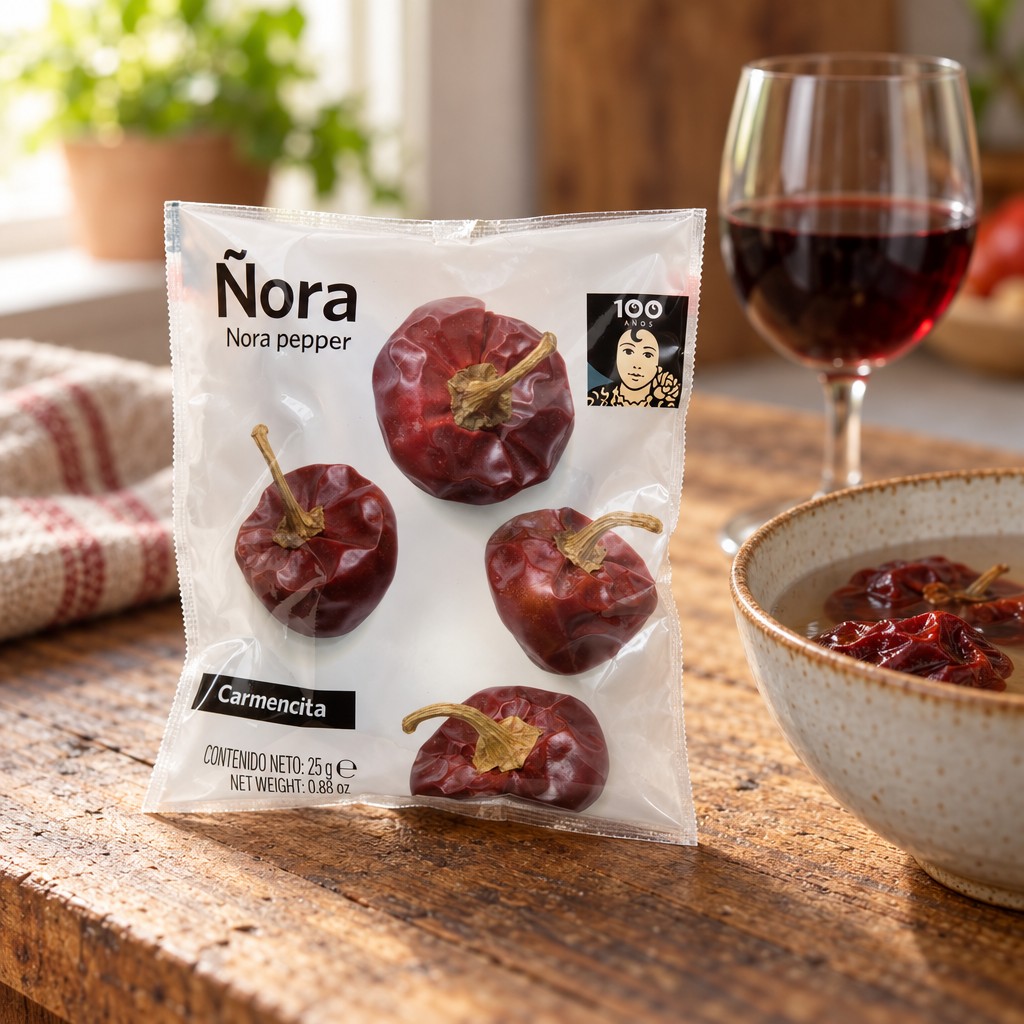
The final touch comes from the minced ñora pepper from Carmencita. The ñora is a small, round pepper from the Spanish Mediterranean coast, dried and then chopped. Its aroma is smoky and its flavour powerful. Carmencita was founded in 1923 in Novelda (Alicante). In the Galician tradition, octopus is finished with pimentón. Here, the ñora plays that role, with a more Mediterranean accent.
For the rest, all you need is firm-fleshed potatoes, coarse salt for the water and, if you like, a pinch of fleur de sel.
Three products
What is on the plate
Tap a card: what each product does and how to use it.
Step by step
- The potatoes. Wash them without peeling. Put them in a pan of generously salted cold water, then bring to a gentle simmer. Cook slowly until the tip of a knife slides in without resistance. The time depends on their size: check rather than trust the clock.
- The tin. While the potatoes finish cooking, open the tin of octopus and leave it at room temperature. Those few minutes give the garlic time to open up. Do not heat it.
- The rest. Drain the potatoes and leave them to rest for a few minutes. Peel them if you prefer, then cut them into thick slices, about a finger's width. If they are too thin, they break under the octopus.
- The first drizzle. Arrange the slices on a dish. Spoon over part of the oil from the tin. The still-warm potato drinks it in.
- The octopus. Place the pieces of octopus and the garlic on the slices.
- The finish. Just before serving, add a few drops of Belluga First, a small pinch of ñora and a few grains of fleur de sel if you have it.
Two oils, two roles
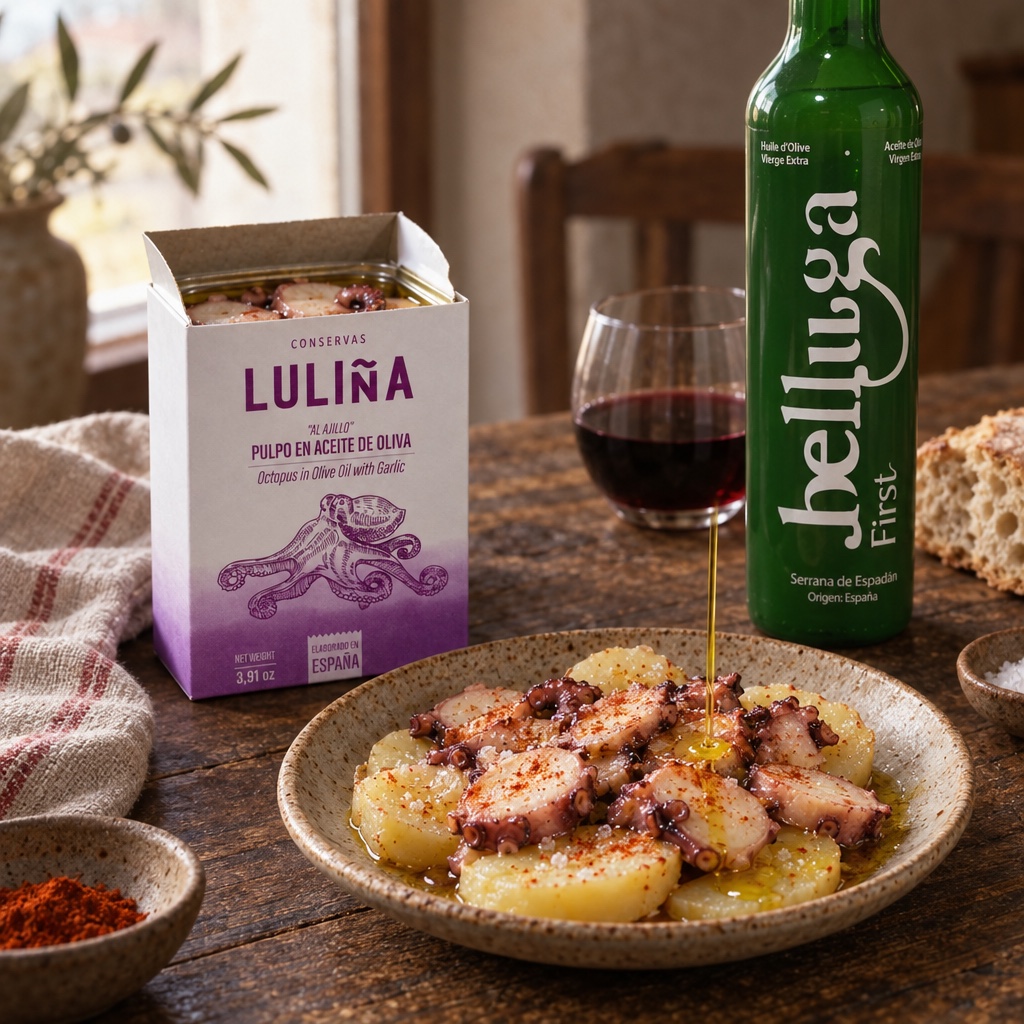
Everything depends on the proportions. The two oils do not do the same job, and adding them together without thought drowns the plate.
The oil from the tin: the binder
It has spent time with the garlic and the octopus and carries their flavour. It is what seasons the potato. Pour it first, over the warm slices, when they absorb it best. There is no need to use all of it: keep what is left at the bottom for dipping bread, so it will not go to waste.
The finishing oil: freshness
The Belluga comes last. It brings what the tinned oil cannot give: an oil poured raw, at the last moment, that has not sat with the octopus. A few drops are enough, in the spot where the fork will land.
A simple rule: the more generous the oil from the tin, the more discreet the finishing oil should be. If the potato glistens, that is enough.
Warm, not hot: the right moment
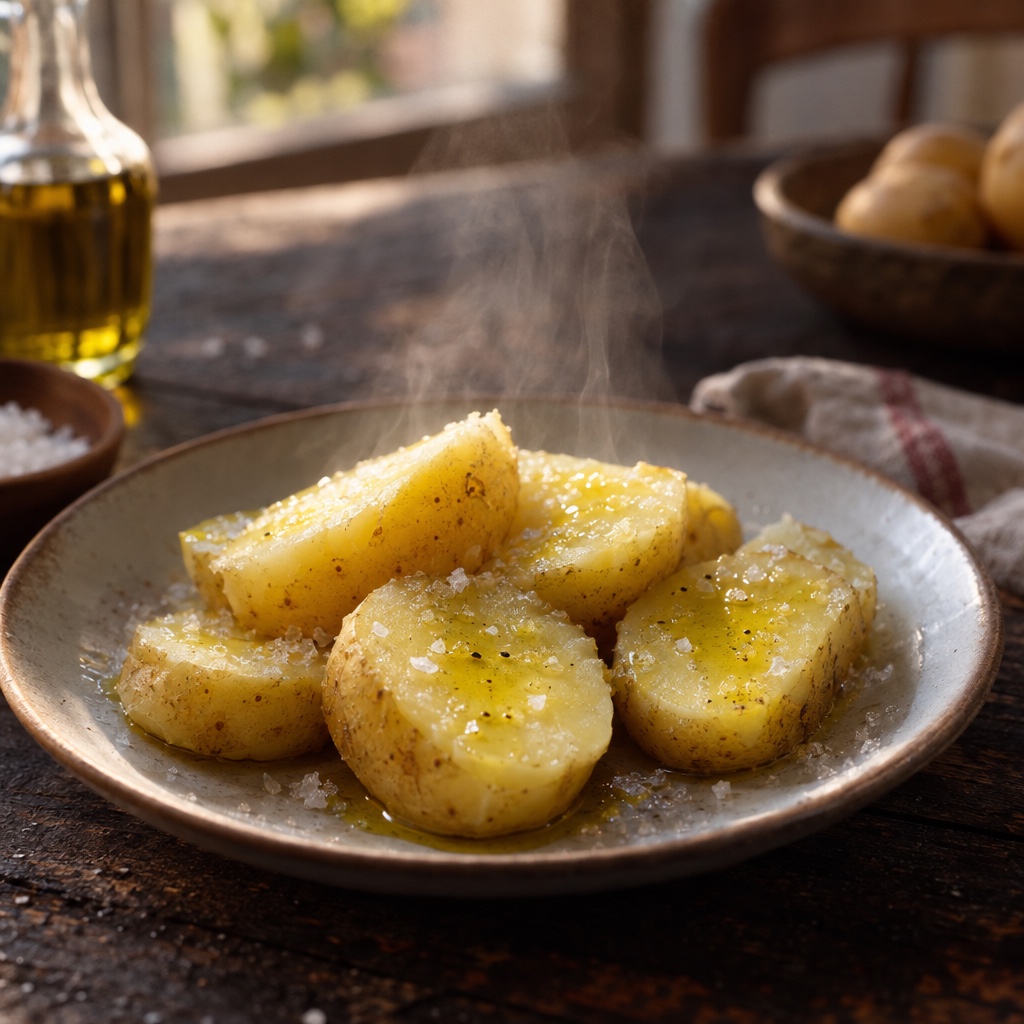
This is the classic trap. The potatoes come out of the water and are served straight away. On a scalding potato, the oil flattens, the garlic goes quiet and the octopus loses its hold. Conversely, a cold potato stays firm and no longer takes up the oil.
The right moment comes when you can hold a slice between your fingers without burning them. At this stage, the flesh is still soft. It absorbs the oil from the tin and brings out the finishing oil without cooking it. The octopus, at room temperature, keeps its texture.
If your guests are late, leave the potatoes whole in their water, off the heat, and slice them only at the last moment. If they have cooled too much, plunge them back into hot water for a moment before cutting. The octopus, for its part, waits without complaint.
True or false
Four myths about this tapa
Open a card: the answer, and the move that goes with it.
For a December aperitif: a few variations
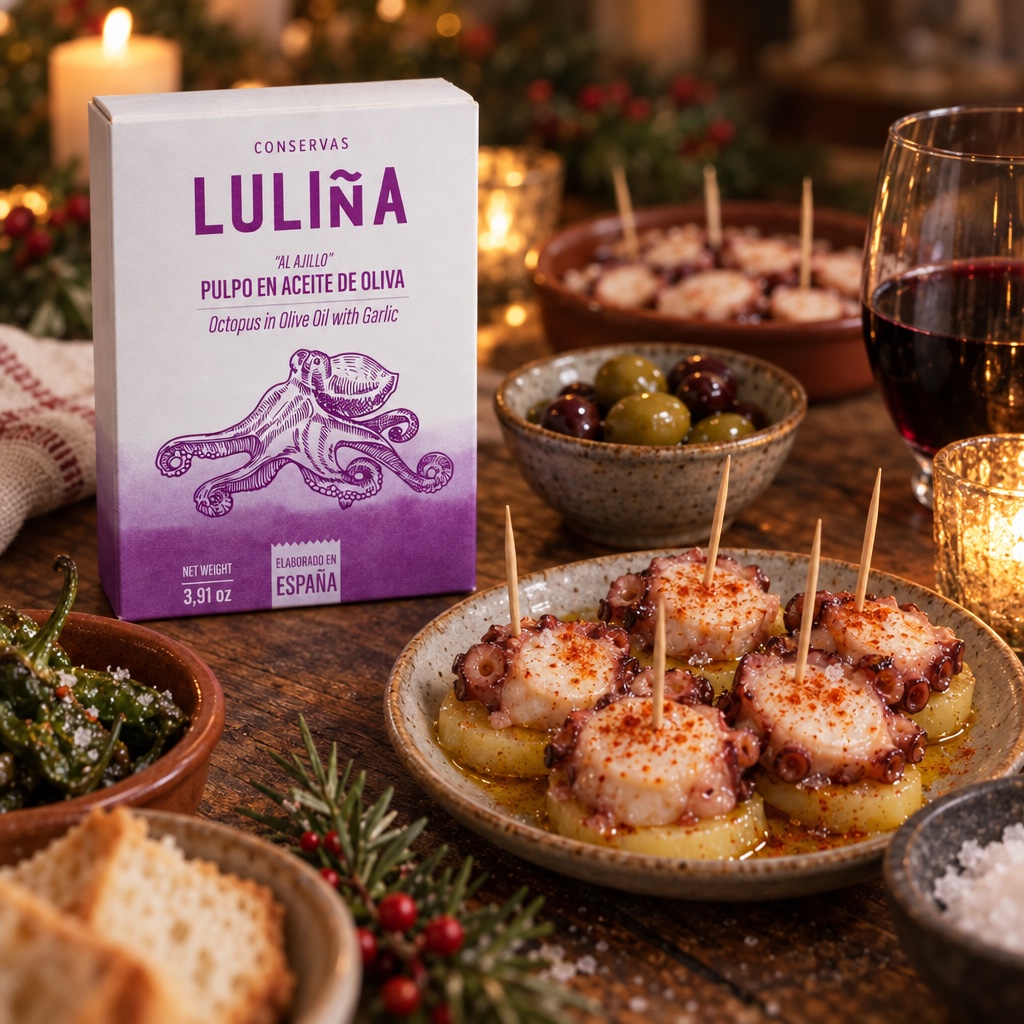
- As bite-sized pieces. A slice, a piece of octopus, a sliver of garlic, a wooden cocktail stick. They are eaten standing up, glass in hand.
- On toast. For a crunchier version, replace the potato with a slice of toasted bread, rubbed with garlic or not. The bread soaks up the oil from the tin like a sponge.
- On a spoon. A small cube of potato, the octopus on top, a drop of oil, a flake of ñora. It looks pretty on a platter and is eaten in a single mouthful.
- Green version. Add a little chopped flat-leaf parsley and a touch of lemon zest at the finishing stage. They bring freshness between richer dishes.
- In the centre of the table. One large dish, the slices overlapping, the octopus scattered over and forks for everyone. It is the most convivial version, and the most Galician in spirit.
In every case, the ñora goes on last. Added too early, it drowns in the oil and loses its brightness.
Practical notes: what to buy, mistakes to avoid
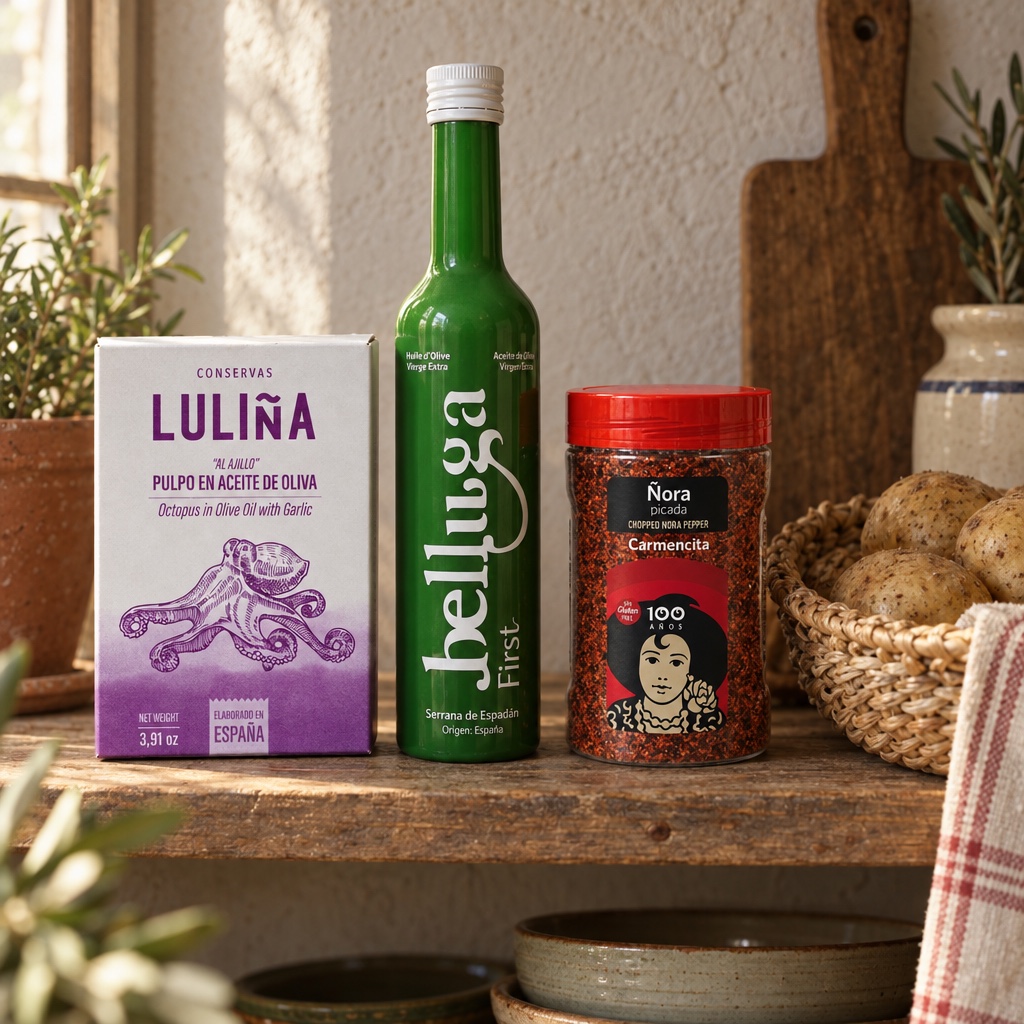
What you need
- Garlic and olive oil octopus – Conservas Luliña: the base, ready to serve.
- Belluga First, extra virgin olive oil: for the raw finish. Store it somewhere cool and dry, away from the heat and the window. Once opened, it is best finished within a few months.
- Minced ñora pepper – Carmencita: the large jar will also serve for rice dishes, salmorreta, romesco or patatas bravas.
- Firm-fleshed potatoes, coarse salt and, optionally, fleur de sel, parsley or a lemon.
Mistakes to avoid
- Heating the tin. The octopus is already ready. The frying pan toughens it and browns the garlic.
- Serving scalding. Warm, always. That is what holds the tapa together.
- Doubling up the oils. The oil from the tin seasons, the Belluga finishes. You do not pour both with a heavy hand.
- Being heavy-handed with the ñora. Its flavour is powerful. A pinch is enough for the whole dish.
- Forgetting to salt the water. A bland potato cannot be rescued on the surface.
- Choosing a floury potato. It crumbles when cut and turns pasty under the oil.
- Forgetting allergies. The tin contains molluscs and may contain traces of fish and crustaceans. Warn your guests.
The rest comes down to very little: open the tin a little beforehand, slice at the last moment and let the products speak.
Quick test
Ready for your guests?
Five questions; the answers are in the article.