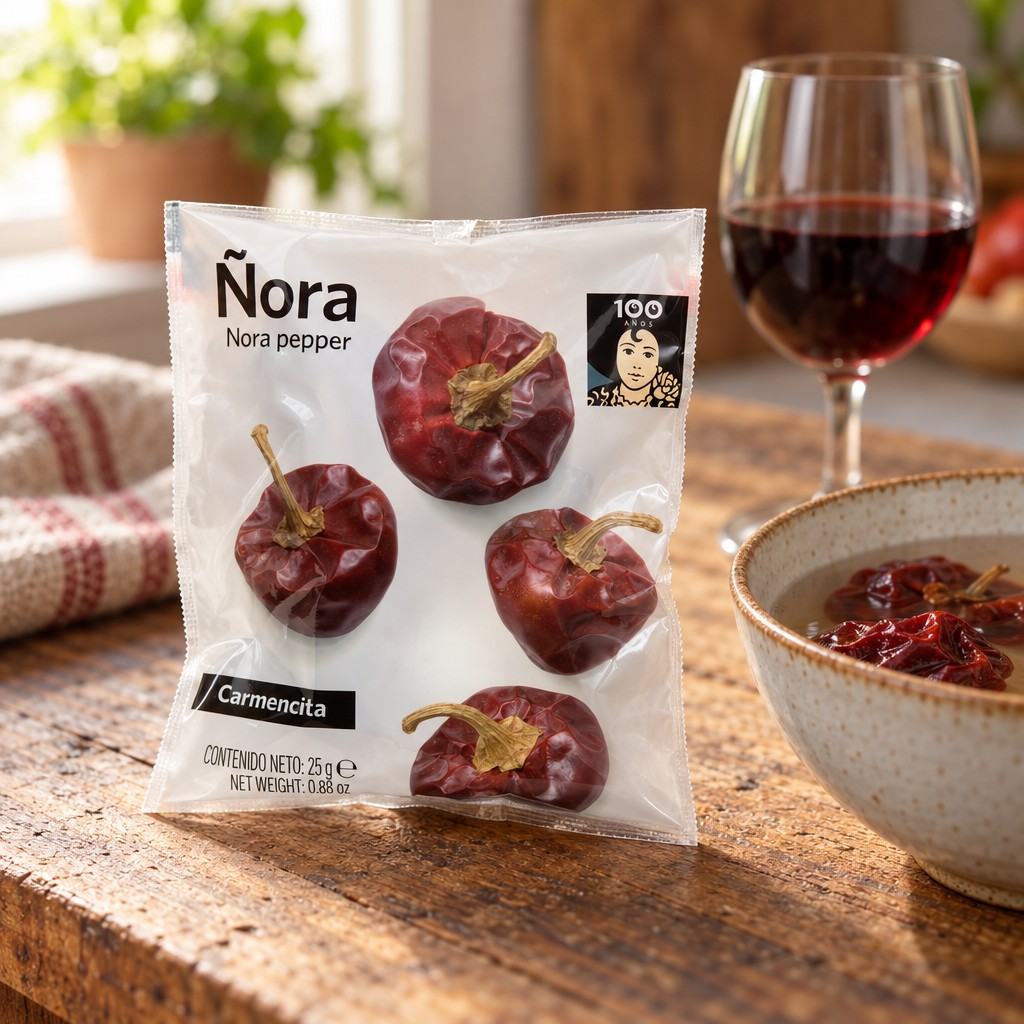
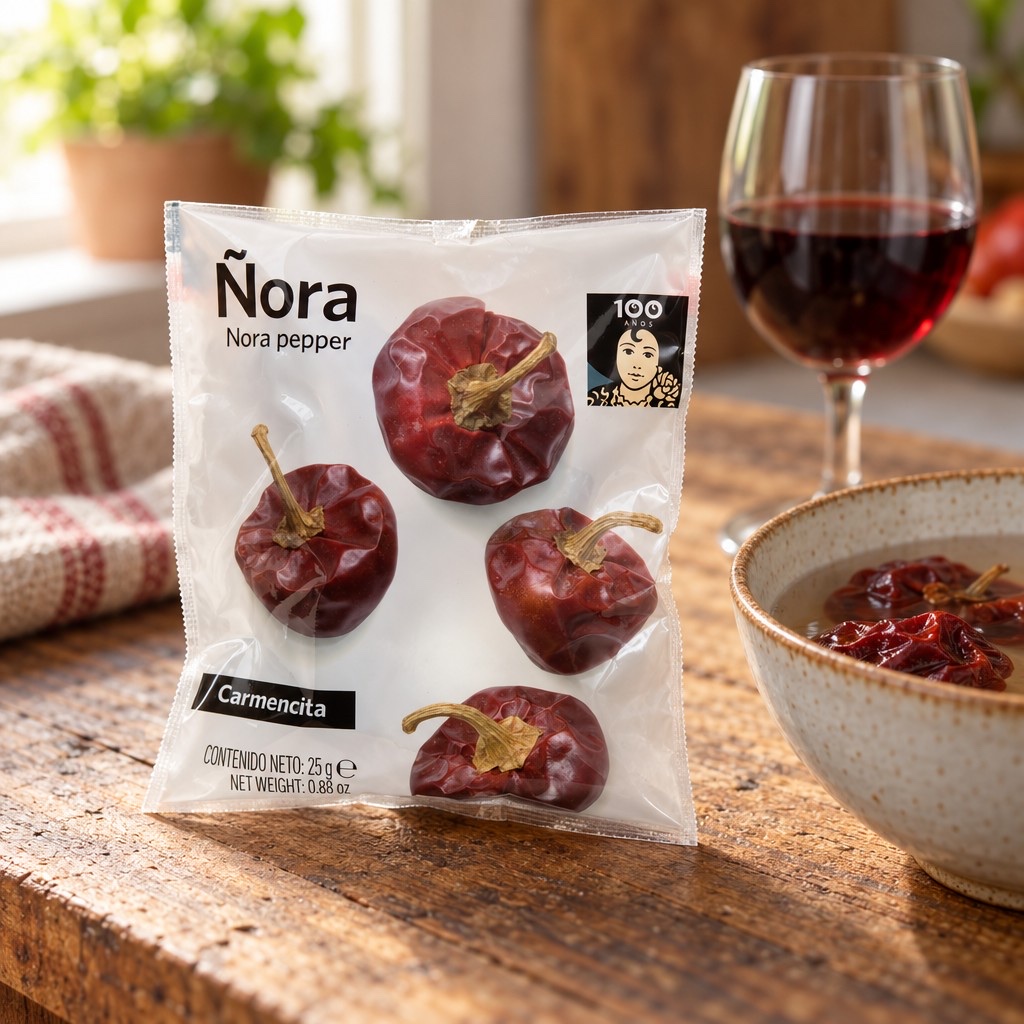
The ñora is unlike anything you usually find on the spice shelf. It is a small, round, dark red pepper, dried until brittle. It isn't hot. It brings a deep, slightly earthy sweetness that gives the rice dishes and sauces of Spain's Mediterranean coast their colour and their base. Anyone who has tasted a well-made seafood rice knows this flavour, even if they cannot always name it.
It comes in two forms, which are not handled in the same way. The whole ñora takes a little time: you rinse it, soak it and scrape out the pulp. The chopped ñora goes straight into the pan. This guide explains which to choose according to the dish, how to prepare it and how to measure it so that it flavours without burning.
Two formats, one pepper
Both ñoras in our selection come from Carmencita, a Spanish company founded in 1923 in Novelda, in the province of Alicante, by Jesús Navarro Jover and Carmen Valero. It was the first Spanish company to package spices in glass jars.
- Whole Ñora Peppers – 25 g Sachet: the dried peppers, whole. The format for everyday cooking.
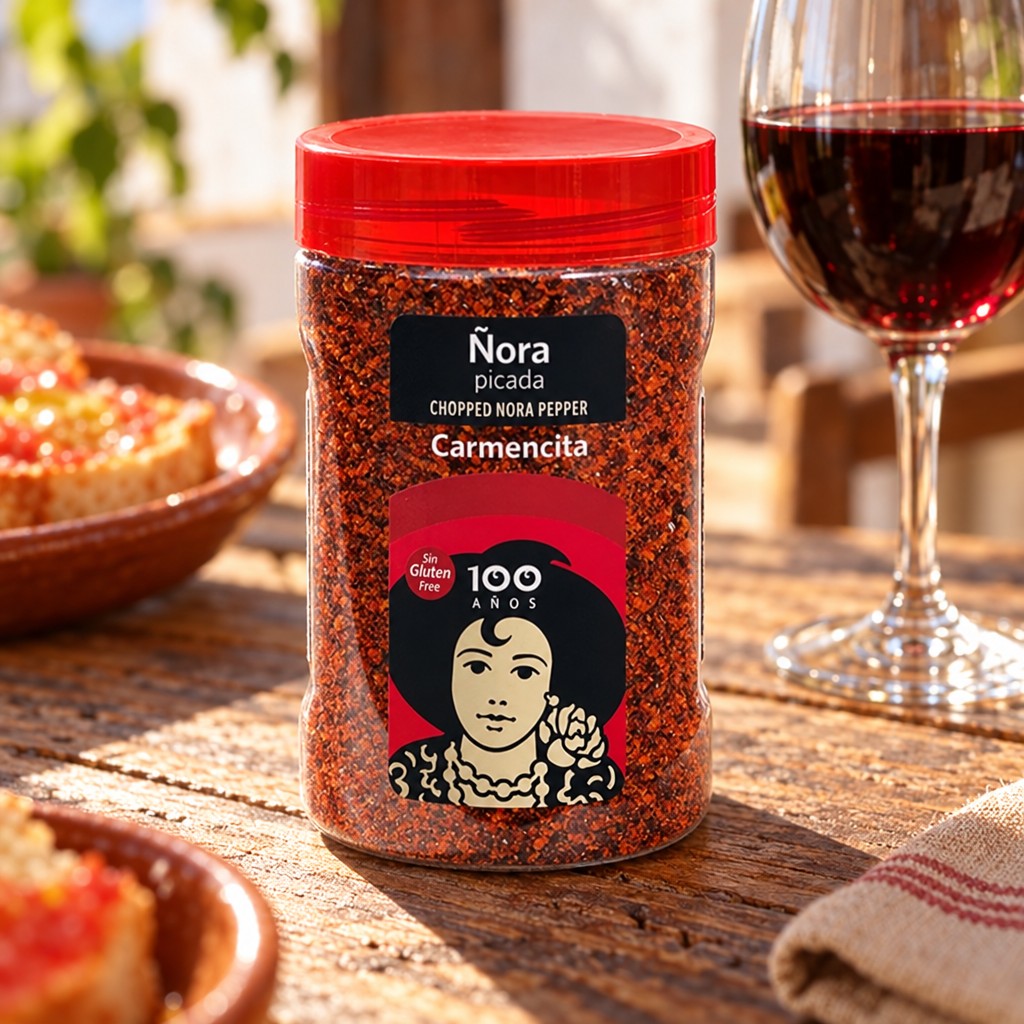
- Chopped Ñora Pepper – 400 g Catering Jar: dried, chopped ñora with a smoky aroma and a powerful flavour, in a large format.
The difference lies mostly in the technique. The whole pepper yields a soft pulp, almost a paste, which melts into a sauce. The chopped pepper behaves like a spice: it infuses in hot oil within seconds, and that is where you need to pay attention.
The whole ñora: rinse, soak, scrape
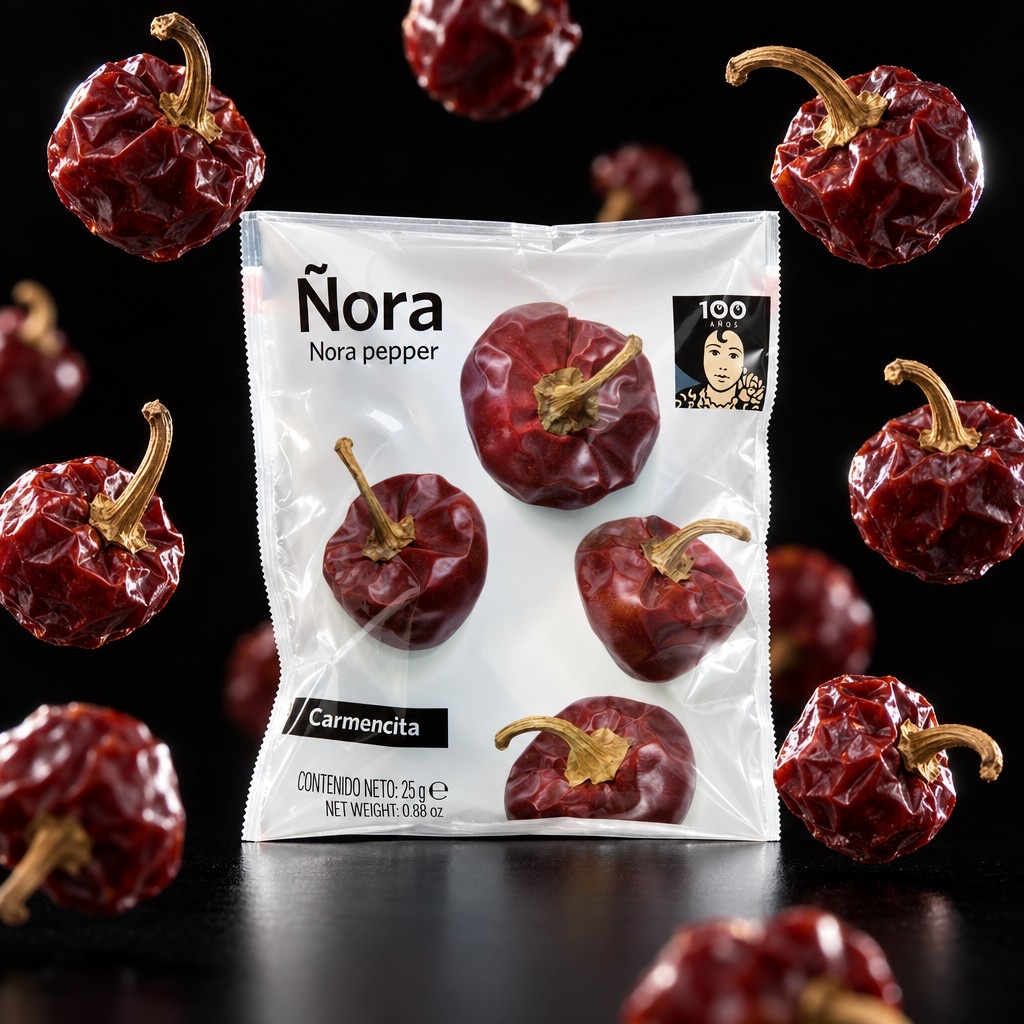
This is the classic method, and the one the product page gives as well: rinse, soak in lukewarm water, collect the pulp. It takes a little time, but nothing is complicated.
- Rinse. Run the ñoras under cold water to remove the dust from drying.
- Open. Remove the stalk, open the pepper and shake out the seeds. They add nothing and can make the dish bitter.
- Soak. Put the ñoras in a bowl of lukewarm water. Leave them until the skin feels supple to the touch. They should no longer crack when bent.
- Scrape. Lay each half flat, inner side up, and scrape out the flesh with the back of a knife or a small spoon. You get a dark red pulp. The tough skin is discarded.
Keep a little of the soaking water. It has taken on the colour and some of the flavour of the pepper, and can loosen a sauce or moisten a sofrito.
The fried variant
For some rice dishes, you proceed differently: the deseeded ñora goes into the hot oil of the paella for a few moments, just long enough to change colour, and is then removed. The oil keeps the aroma. Once cool, the pepper is pounded in a mortar with garlic and returns to the dish. The step must be brief: a ñora that turns black is ruined.
The whole ñora
Four steps before the pan
Tap a card: the reason behind each step.
The chopped ñora: straight into the pan
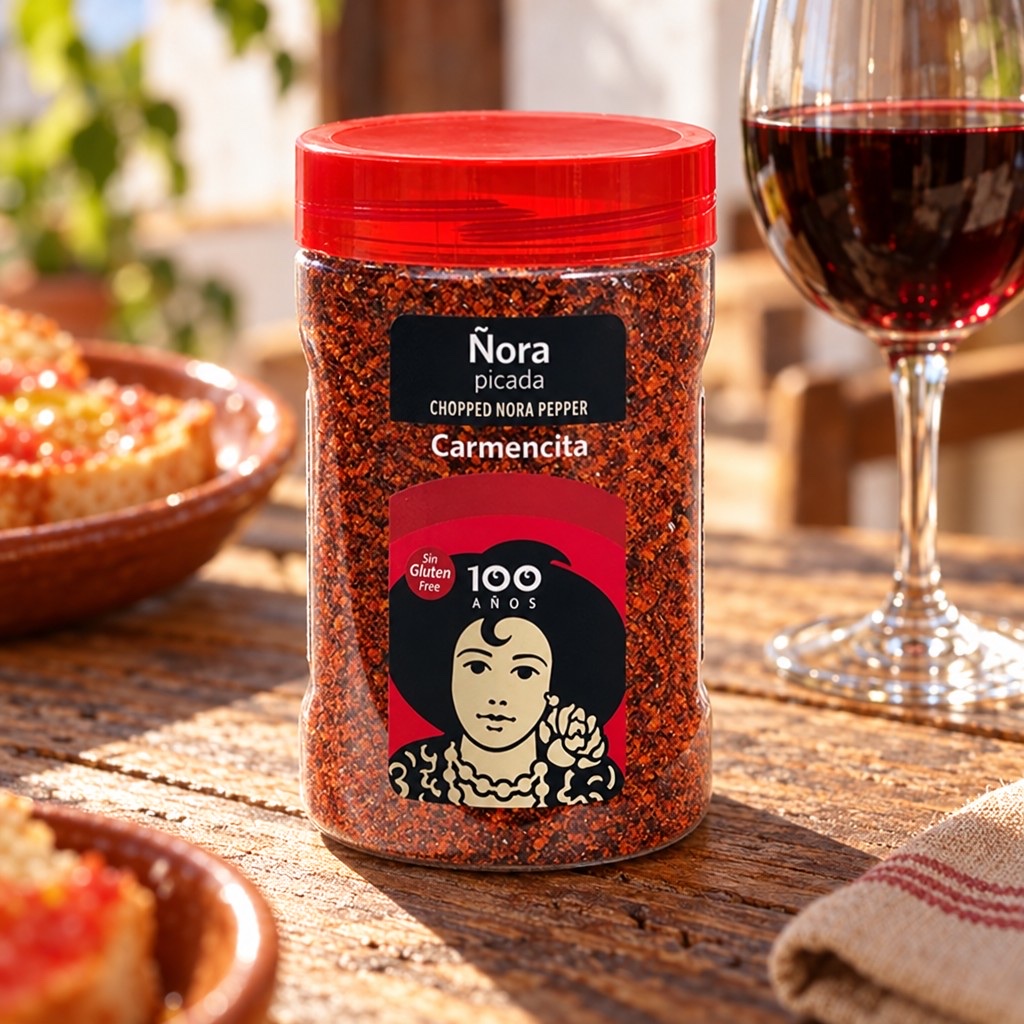
Here, no soaking. The ñora is already chopped and ready to infuse. You add it to the oil of the sofrito, stir, and the aroma rises almost immediately.
This is both its strength and its trap. In small pieces and very dry, it colours in an instant and burns right after. The rule is simple:
- lower the heat before adding it;
- stir constantly for a few seconds;
- immediately add something moist (grated tomato, stock, cooking water) to stop the cooking.
It has other uses, raw or nearly so. Our product page suggests sprinkling it over patatas bravas. It also goes well with fish: over a grilled fish drizzled with olive oil, at the moment of serving.
Which to choose, dish by dish
The sofrito
Both work. The chopped ñora is the more practical: you add it after the garlic, just before the tomato, and the tomato protects it. The whole one, scraped, is better added with the tomato, its pulp melting into the reduction. For an everyday sofrito, the chopped ñora saves time.
Seafood rice
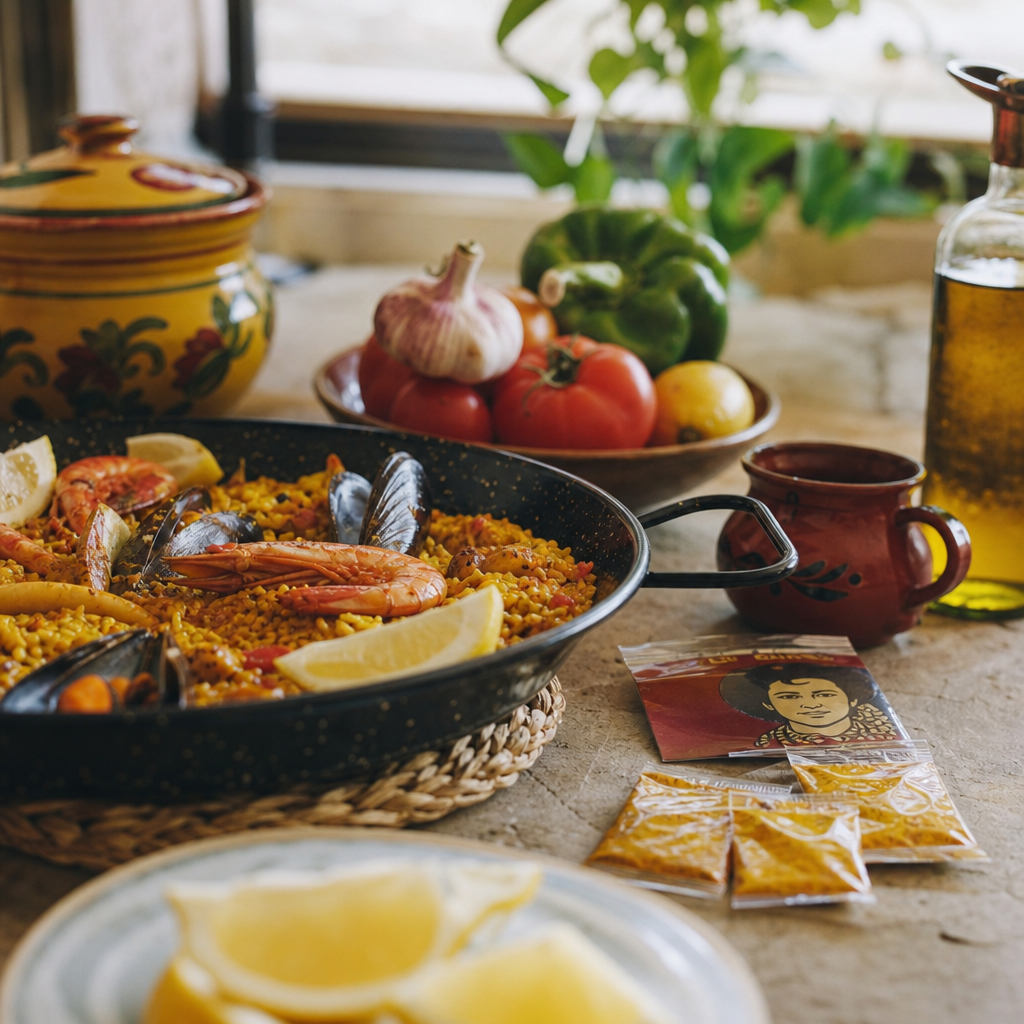
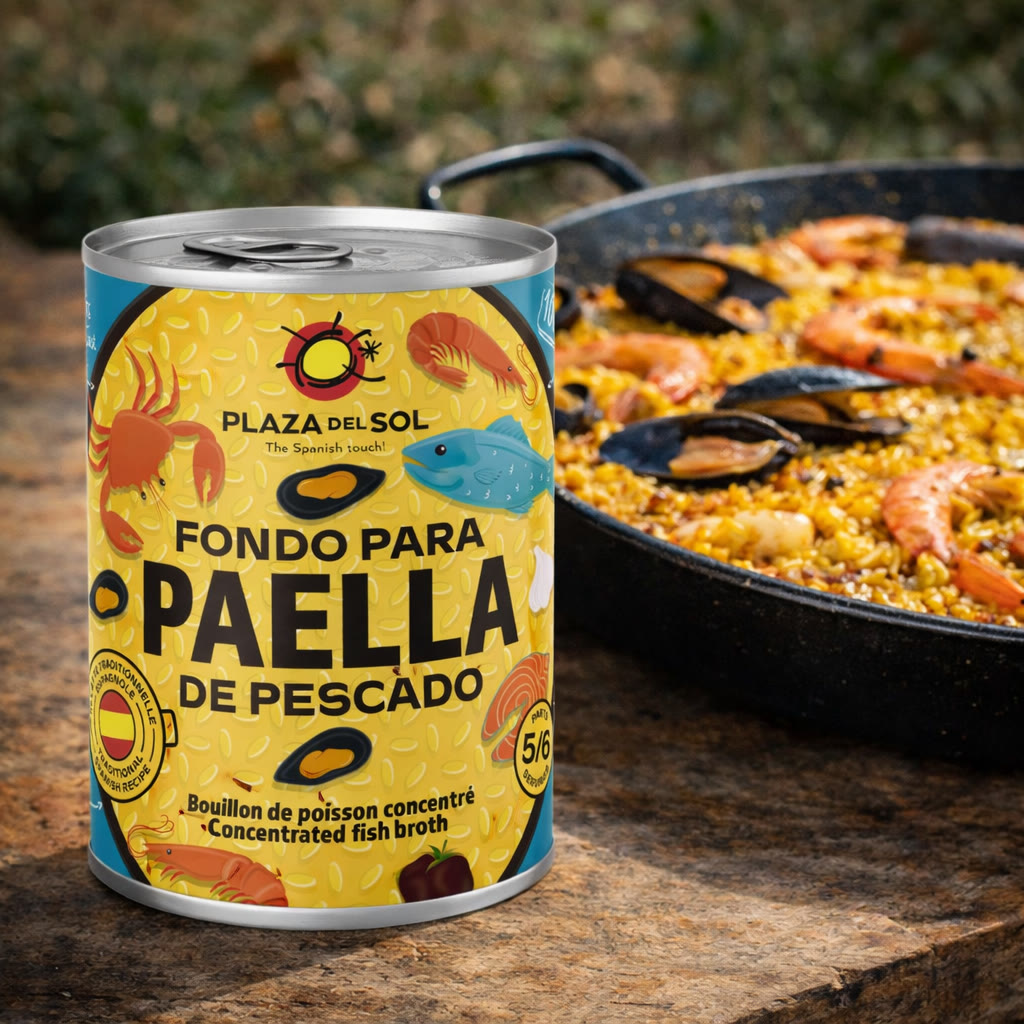
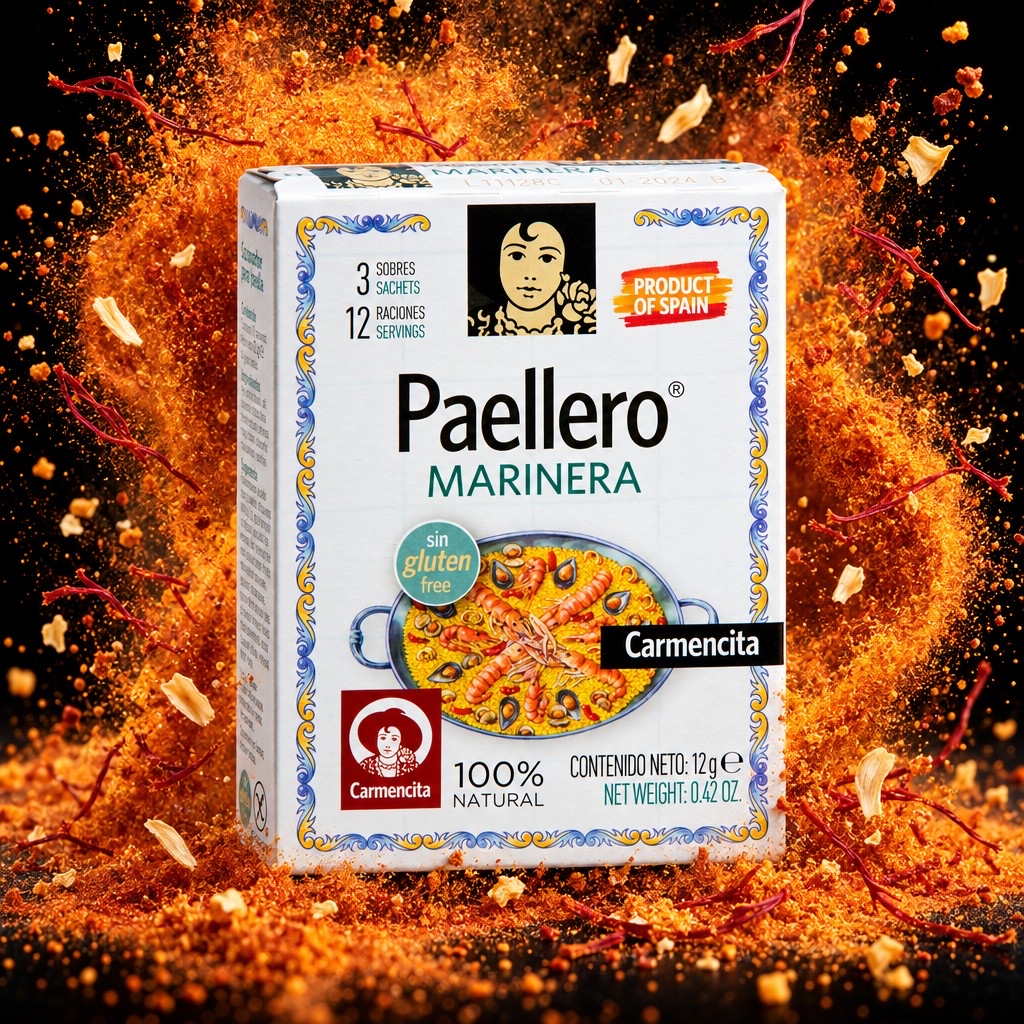
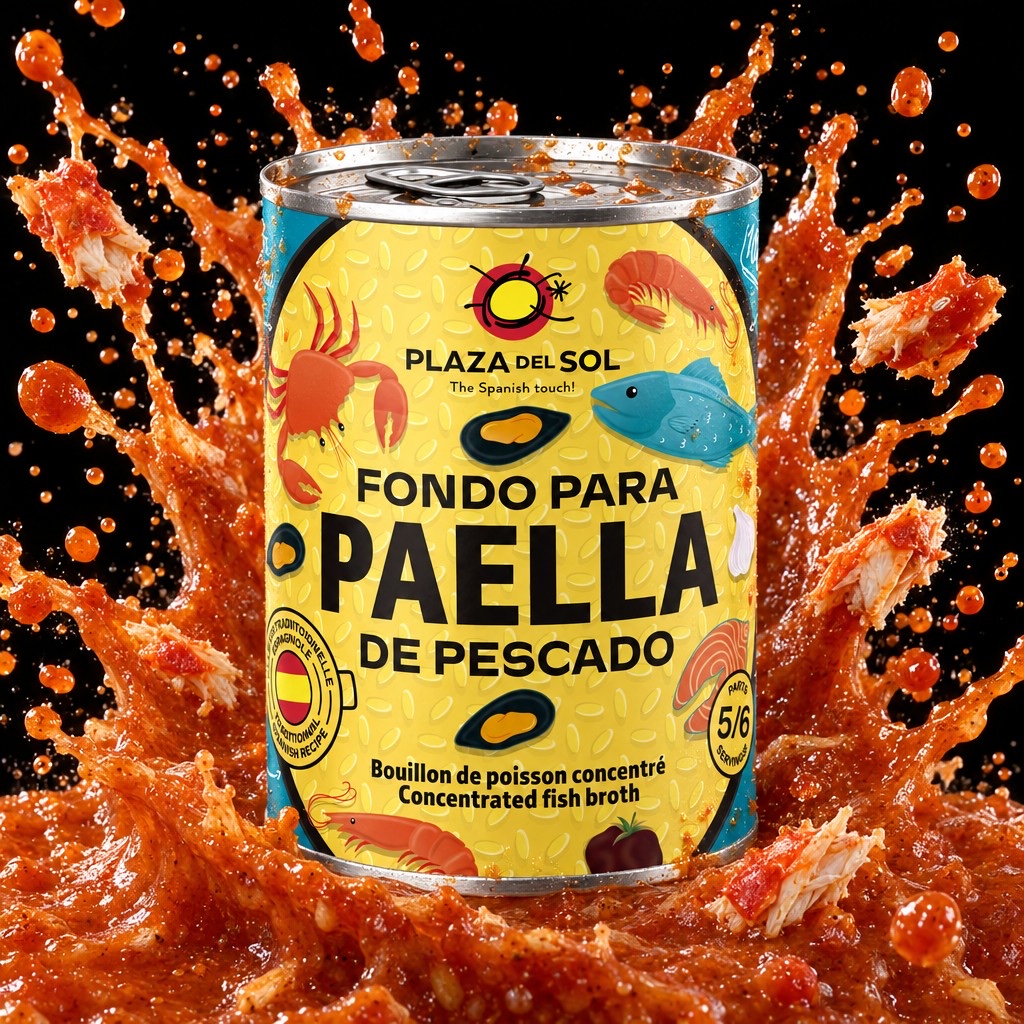
Arroz a banda, caldero, seafood paella: this is the ñora's natural territory. The whole pepper, fried then pounded with garlic, gives the roundest result. The chopped one, added to the sofrito, does the job very well. For the stock, the Concentrated Fish Stock for Paella – Plaza del Sol (410 g) already contains dried pepper: one tin plus three tins of water makes about 1.6 litres, enough to cook 500 g of rice for 4 to 5 people. If you use the Paellero Marinera, be aware that it also contains ñora, along with saffron, sweet paprika and garlic: go lightly on the ñora you add.
The salmorreta
This paste from Alicante cooking, made from ñora, tomato, garlic, parsley and olive oil, is the base for seafood rice dishes. Our page for the chopped ñora calls it indispensable. With the whole pepper, you get a smoother paste, since the scraped pulp blends without fibres. With the chopped pepper, first fry it gently in the oil, then blend everything.
The romesco
A Catalan sauce of toasted nuts, roasted tomato and garlic, bread and olive oil, romesco takes its colour from the ñora. The pulp of the whole ñora is the classic solution here: it gives the velvety texture you expect. The chopped one works too, provided you briefly fry it in a little oil before blending, so that it doesn't stay grainy.
Dish by dish
Whole or chopped?
Four uses, and the right format for each.
Measuring it to flavour without burning
The ñora is mild, but it is not discreet. Use too much, and the dish takes on a dried-pepper taste that overpowers the fish. A few guidelines:
- Start small. For a family rice dish, one or two whole ñoras are often enough. With the chopped one, start with a level teaspoon and taste the sofrito before adding more.
- Take the rest into account. A paellero or a salmorreta already contains ñora, and the Plaza del Sol stock contains dried pepper. Taste before adding any.
- Watch the colour. The oil should turn orange-red. If it browns, or if an acrid smell appears, it is too late: it is better to start the sofrito again than to try to rescue a bitter base.
- Protect it. The tomato, the stock or the soaking water stop the cooking. Have them within reach before adding the ñora.
The right instinct: low heat, a few seconds, then the tomato. The ñora gives everything it has before it burns.
In practice: what to buy, which mistakes to avoid
What to buy
- You are making a romesco, a homemade salmorreta or a traditional rice dish, and you enjoy the process: the whole ñoras.
- You want ñora in every sofrito without thinking about it, or you cook often and for many people: the chopped ñora in the catering jar.
- For a complete seafood rice: the ñora of your choice, the Plaza del Sol concentrated fish stock and, if you want a ready-measured seasoning, the Paellero Marinera, to be added before the rice, adjusting the salt at the end.
Mistakes to avoid
- Forgetting to rinse the whole ñora. The dust from drying ends up in the sauce.
- Keeping the seeds. They can make the dish bitter.
- Soaking in boiling water. Lukewarm water is enough: that is what the product page advises.
- Adding the chopped ñora to smoking oil. It blackens before it has flavoured anything.
- Doubling up without realising. Paellero and salmorreta already contain ñora, and the stock contains dried pepper: taste before adding.
- Storing it badly. Keep it in a cool, dry place, in a tightly closed container. Humidity is its enemy.
Quick test
Have you mastered the ñora?
Five questions; the answers are in the article.