On réveillon night, the aperitif stretches on. People stand about, talk, and wait for the oven to do its work. This is where tinned seafood finds its place: a tin to open, some bread, a plate going round. But before you pull the ring-pull, the same questions come back every year. Chilled or not? Opened ahead of time or at the last moment? And that liquor, that oil, that black sauce: what do you do with it?
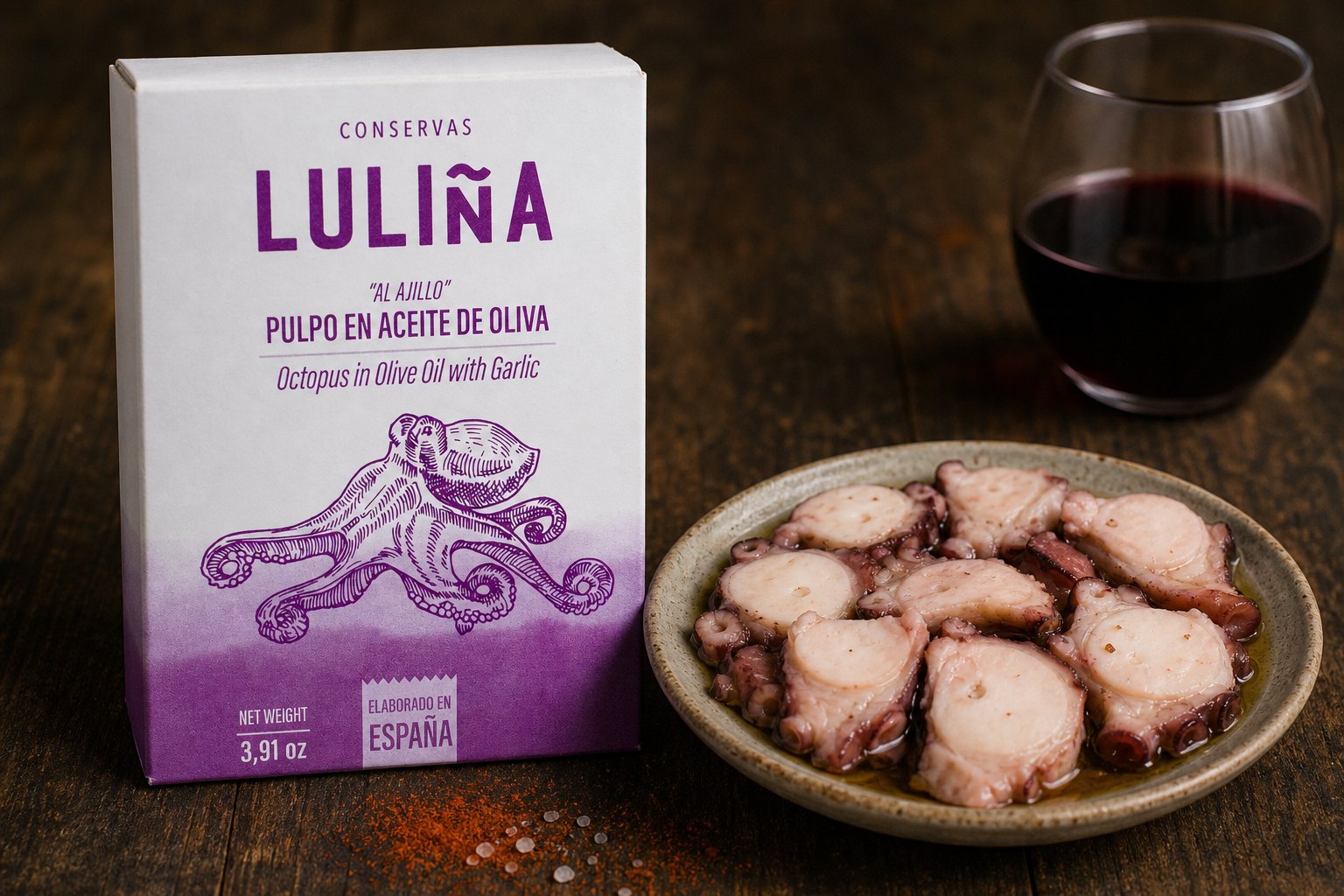
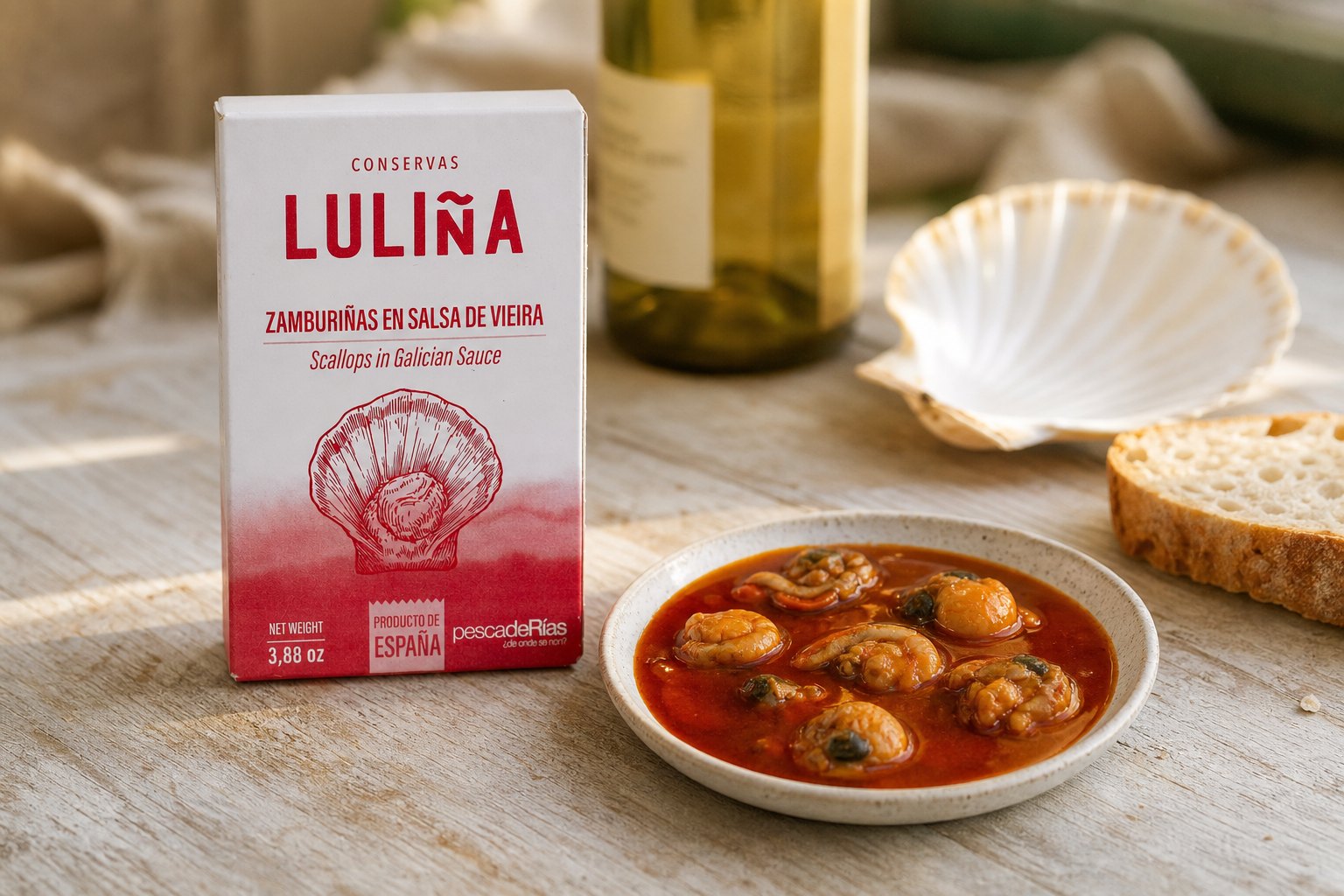
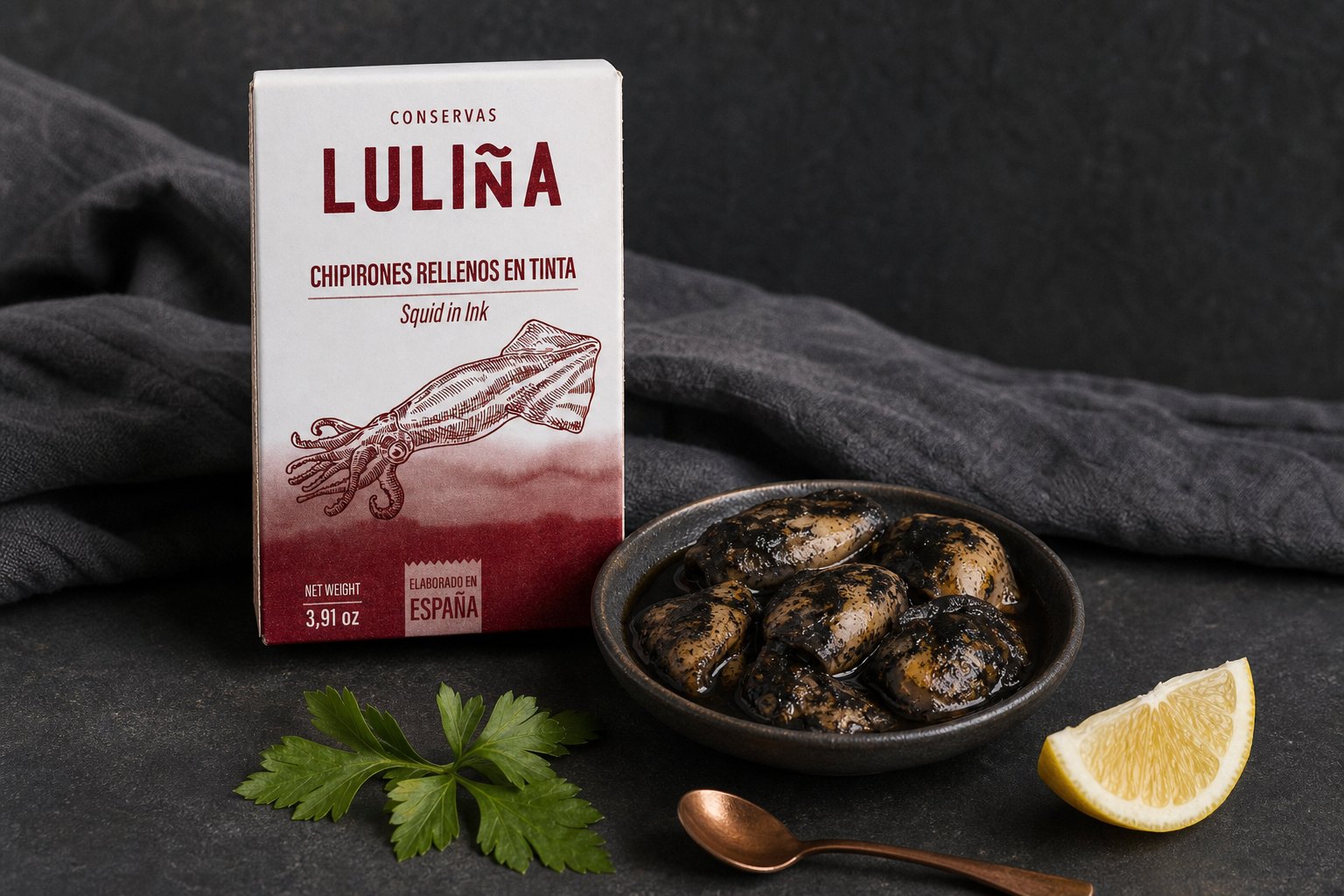
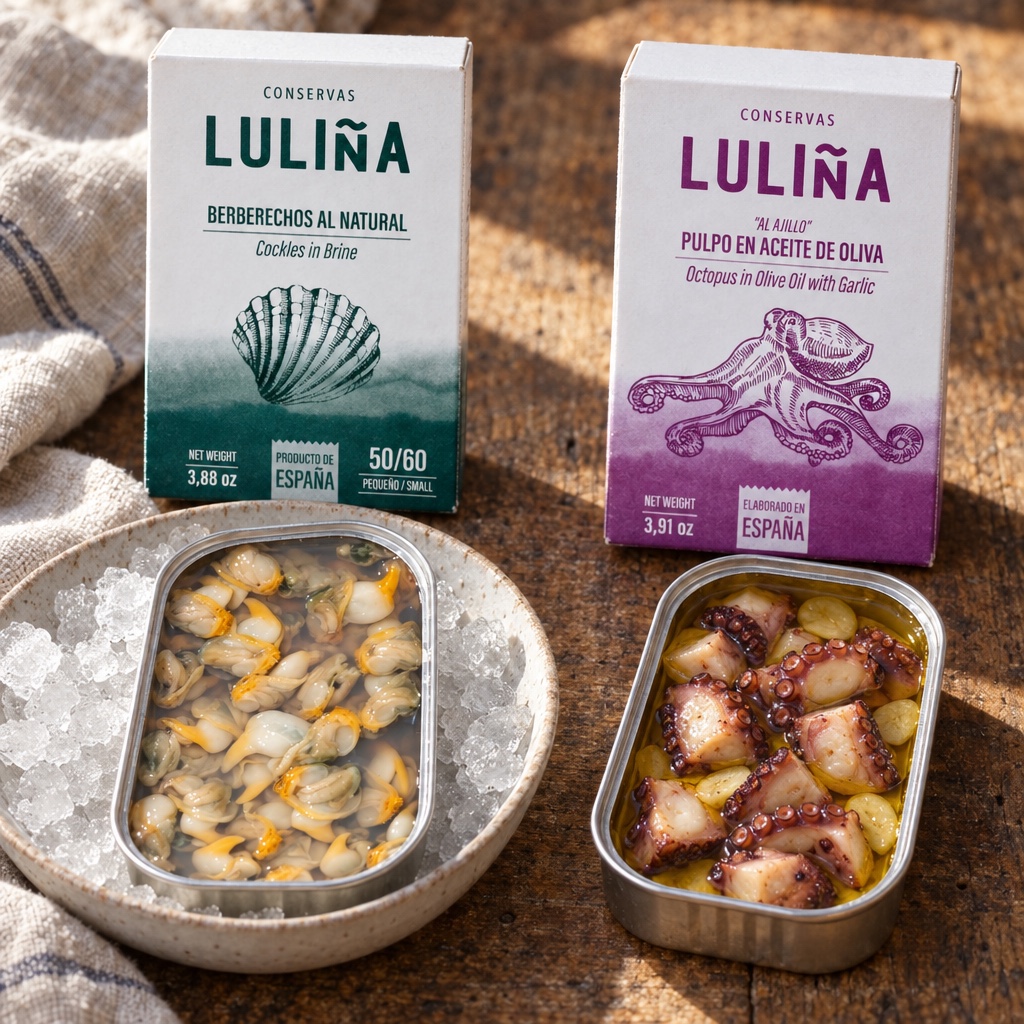
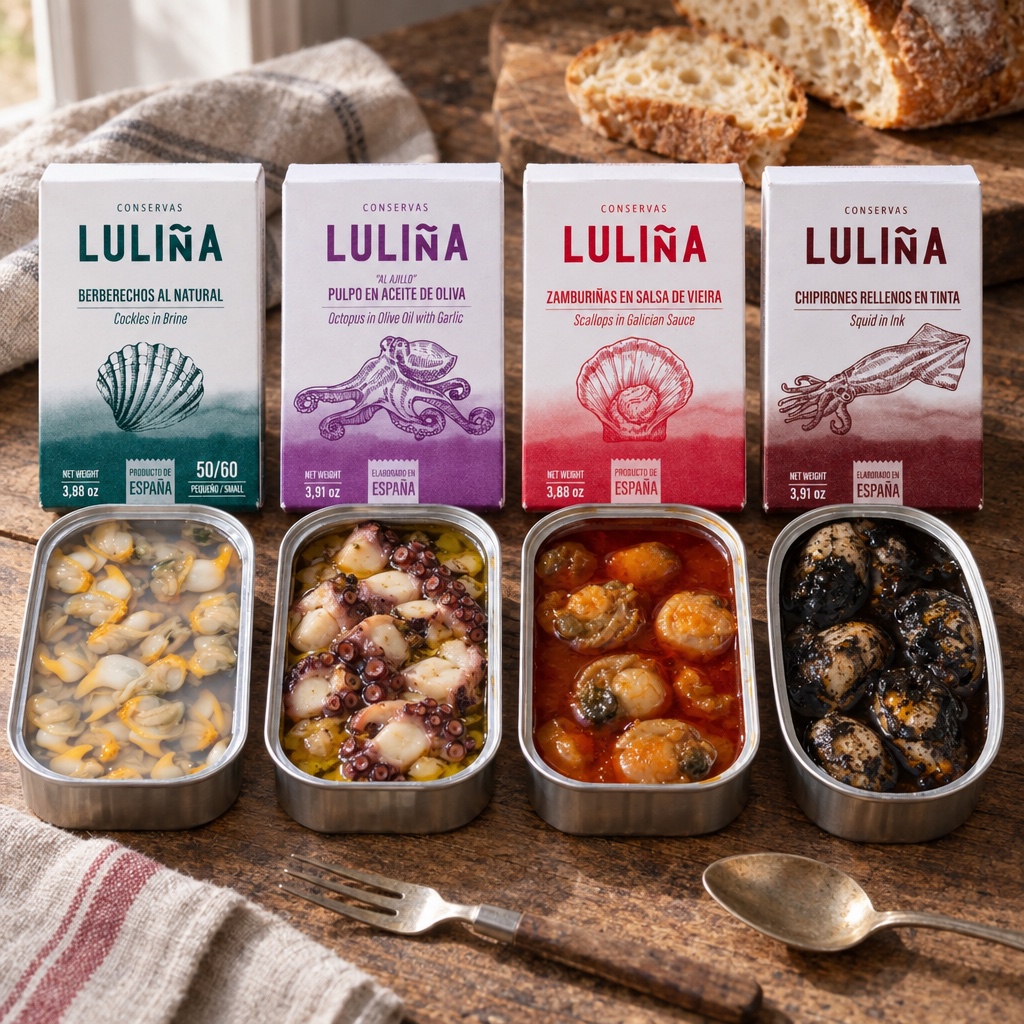
Our answers start from the product sheets of four tins from Conservas Luliña, a Galician house whose conservas are made near the ría de Arousa: the cockles in brine, the octopus in garlic and olive oil, the zamburiñas in vieira sauce and the chipirones stuffed and cooked in their ink. Four tins, four ways of serving. They are not all treated the same way.
Chilled or at room temperature?
It depends on what is in the tin. Our rule of thumb: what is in water is served cold, and what is in oil or sauce is served at room temperature.
The cockles: properly chilled
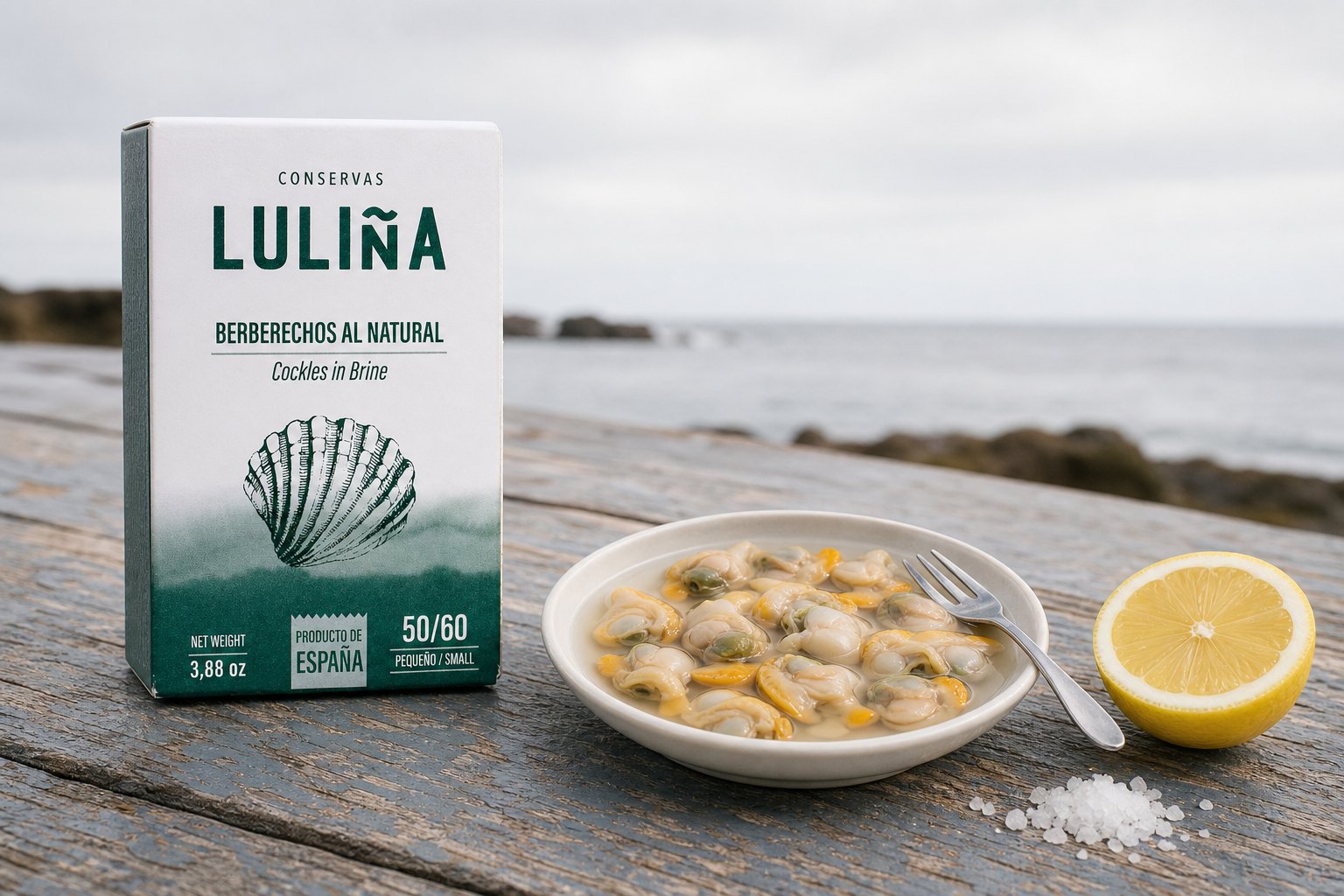
The cockles in brine contain just three things: cockle, water and salt. Nothing softens their taste of the sea, and that is all to the good. Cold tightens it. Put the tin in the fridge a few hours beforehand, like a bottle of white wine.
The octopus: straight from the cupboard, not the fridge
The octopus in garlic sits in olive oil. In the cold, olive oil turns cloudy and sets, and the garlic goes quiet. Keep the tin in a cupboard, away from the radiator, and serve it as it is.
The zamburiñas and the chipirones
The zamburiñas are served at room temperature: their sauce, made with tomato and wine vinegar, is livelier when it is not ice-cold. The same goes for the chipirones. If you are putting them on hot rice, you can warm them gently in a small saucepan over a very low heat, without letting them boil. It is not compulsory: the product sheet says so, there is nothing to cook.
The vocabulary
Four words on the labels
The ones you will read on the Luliña tins.
When should you open the tin?
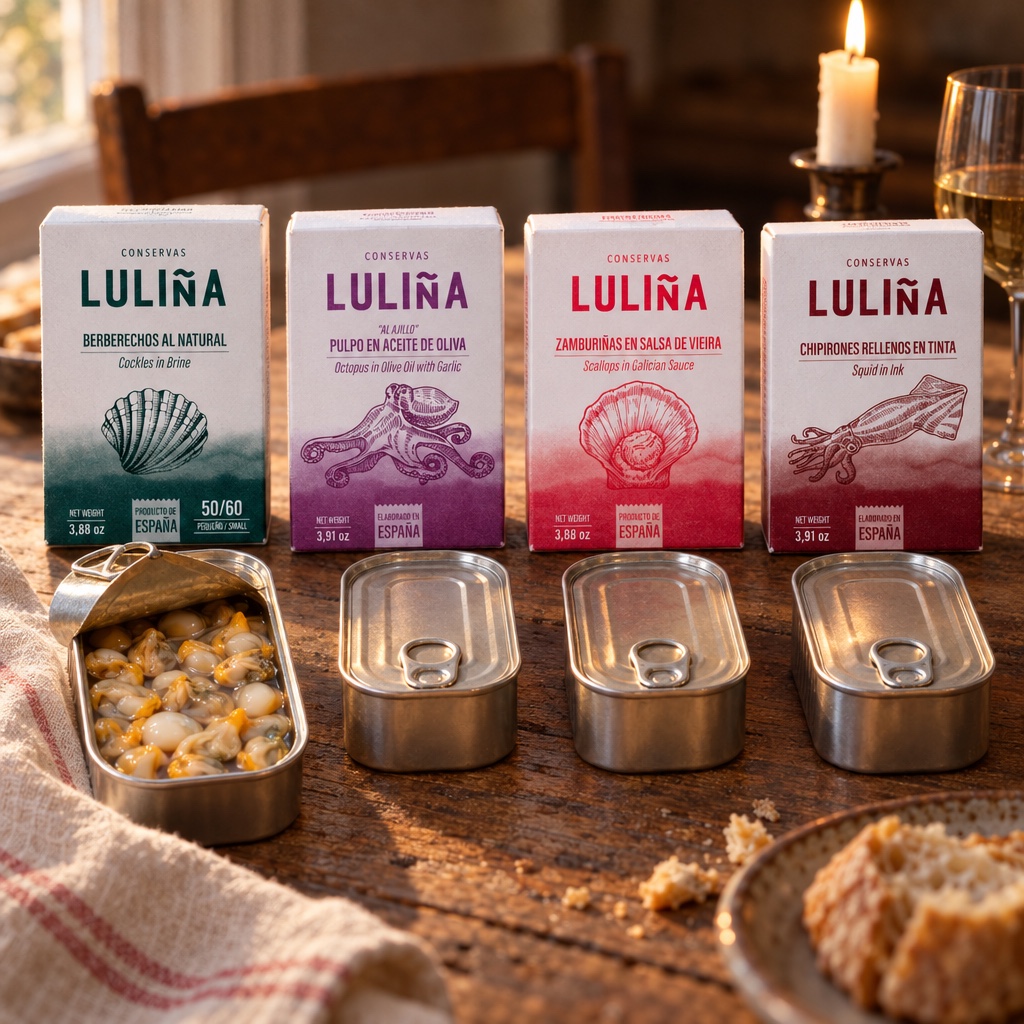
Here again, each tin has its moment.
- The octopus: a few minutes before serving, so the garlic has time to open up in the oil. It is the only tin that benefits from being opened a little ahead.
- The cockles: just before you sit down at the table. They are small and bare; in the air, they quickly lose their freshness.
- The zamburiñas and the chipirones: when you put them on the table, or just before warming them.
What is left after the aperitif should not stay in the open tin: transfer it to a small lidded container and keep it in the fridge.
What should you do with the oil, the water or the sauce?
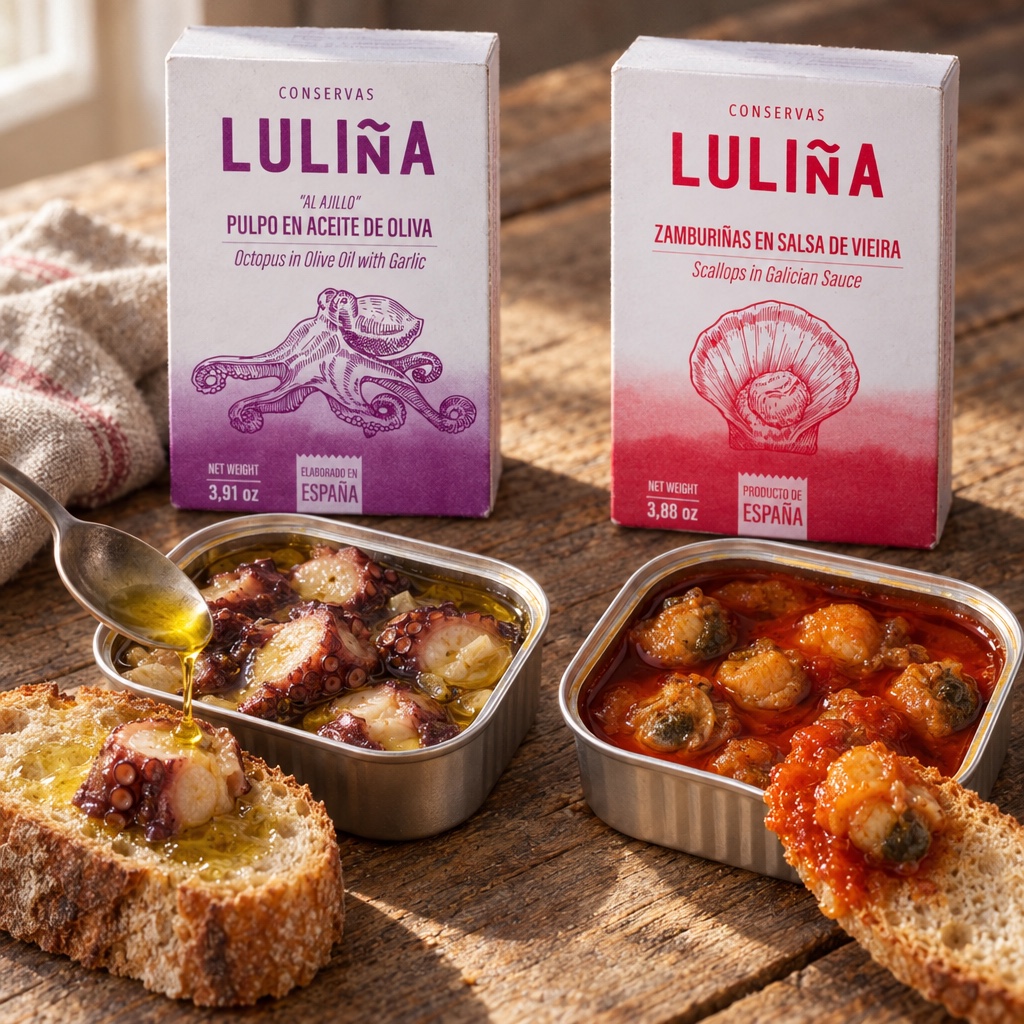
Keep it. In a conserva like these, the liquid is part of the product.
The octopus oil
It carries everything. The garlic has scented it, and the octopus has given it its flavour. Spoon it over toasted bread with the octopus, or over a warm potato. What is left at the bottom can be finished by dipping in a piece of bread.
The cockle water
It is salty and tastes of the sea. Do not pour it onto the serving plate, or the cockles will drown. But a spoonful in a rice dish, a fish sauce or the next day's stock, and it finds its place.
The vieira sauce of the zamburiñas
Tomato, wine vinegar, bay leaf, spices. A lively, piquant sauce, the kind you mop up with bread right down to the bottom of the tin. Do not drain it: serve zamburiñas and sauce together.
The black sauce of the chipirones
Built on onion, tomato purée and wine, with cuttlefish ink giving it depth. It is dense and slightly sweet from the tomato. Over white rice, it does the work of a sauce that has been left to reduce for a long time.
What do you put alongside each tin?
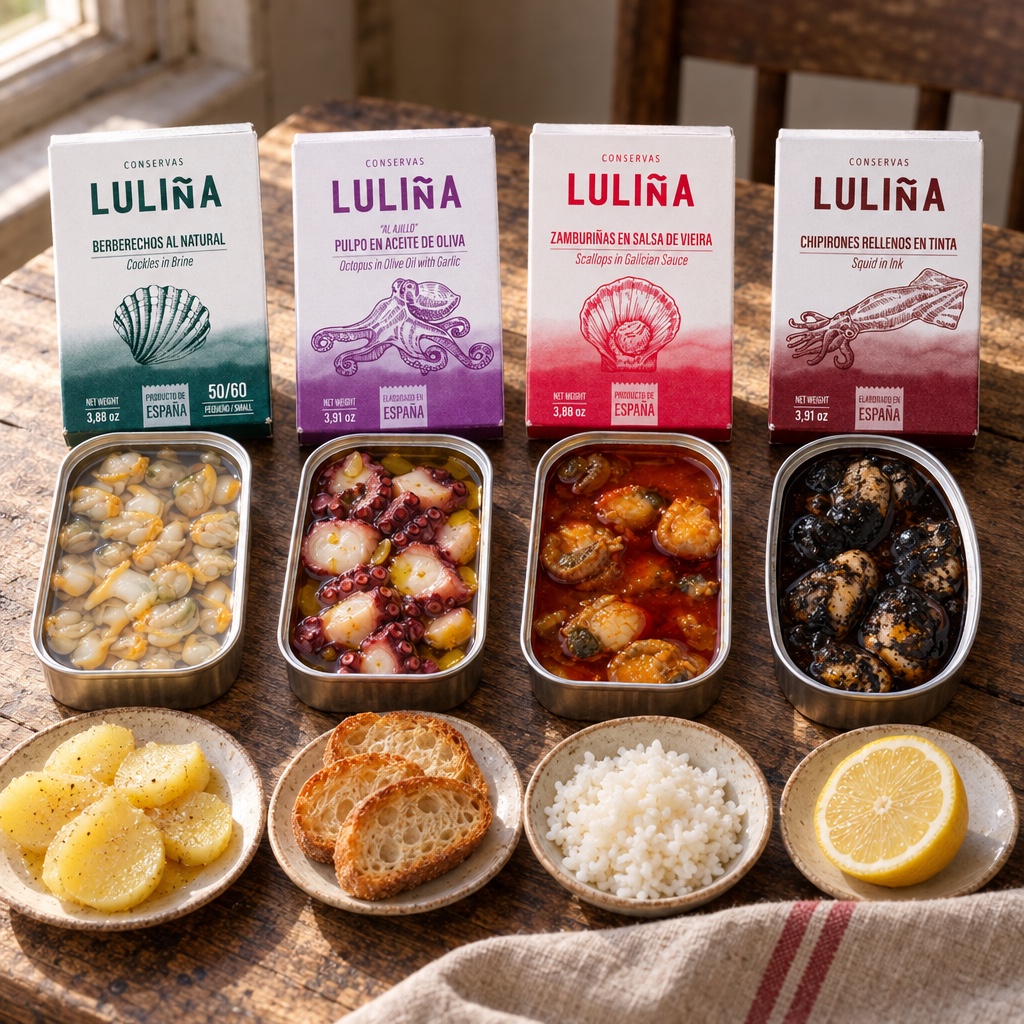
Very little. Each tin calls for one or two touches, no more.
- Cockles: a few lemon wedges, small cocktail sticks or oyster forks. A few drops of lemon are enough; the aim is to wake them up, not to cover them.
- Octopus in garlic: toasted bread, or slices of potato boiled in water, still warm.
- Zamburiñas: small spoons and bread. The zamburiña is the little cousin of the scallop; it is eaten with a spoon, without ceremony.
- Chipirones: a bowl of white rice, or toasted bread over which you spoon the squid and sauce.
Should you serve straight from the tin? In Spain, people often do, and an open tin on the table has its charm. For the chipirones and their sauce, a small shallow bowl is more practical. For the rest, do as you prefer.
Tin by tin
Your réveillon cheat sheet
Tap a tin: temperature, when to open, the liquid and what goes alongside.
How many tins for a table?
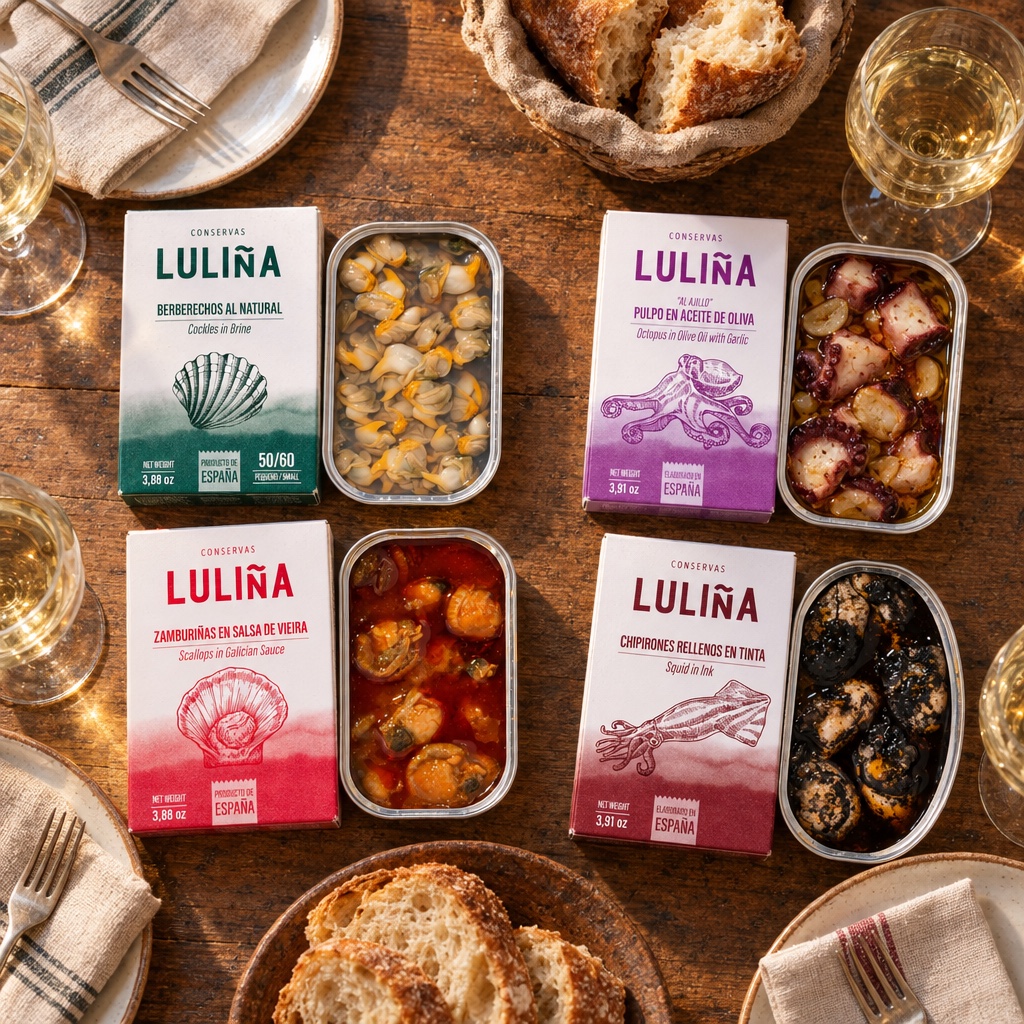
It all depends on what comes after. If the aperitif is followed by a proper festive meal, the conservas are nibbles, not a course.
- For four to six people: one tin of each. A tin of cockles holds between fifty and sixty pieces: enough for several rounds of the table.
- For eight to ten people: double the cockles and the zamburiñas, which go quickly because people pick at them. One tin of octopus and one of chipirones can be enough if the bread keeps coming.
- If the aperitif replaces dinner: allow roughly one tin per person in total, all varieties together, with rice and plenty of bread.
All these tins are the same size, 120 ml. The octopus and the chipirones yield a little more once drained than the cockles or the zamburiñas; they fill the plate more.
In practice: the order, the gestures, the mistakes
What order to serve in
From the cleanest to the densest. First the cockles, chilled, with lemon. Then the zamburiñas, lively and piquant. Next the octopus and its garlic oil. The chipirones in ink come last: they are almost a dish in themselves, and after them the palate struggles to go back.
The mistakes we often see
- Taking everything out of the fridge at the same time. Only the cockles belong there.
- Opening the cockles an hour ahead. They are opened as you sit down at the table.
- Tipping the oil or the sauce down the sink. It is half the flavour.
- Drowning the cockles in lemon. A few drops, not a whole wedge squeezed over them.
- Forgetting the bread. Without it, half the tin is left at the bottom.
- Forgetting to ask. All four tins contain molluscs and may contain traces of fish and crustaceans. They are gluten-free, but ask your guests before serving.
What you need to have to hand
A lemon, some country bread to toast, two or three potatoes, a little white rice. The rest is in the tins.
One last thing: for every tin sold, Luliña donates an amount to the Fundación Ecomar for its coastal clean-up project. We like the idea that a tin opened at the aperitif also does a little for the coastline.
Quick test
Ready for the aperitif?
Five questions; the answers are in the article.