The story of this house
Real Conservera Española has perpetuated the art of preservation for generations in Galicia, a region where the Atlantic Ocean shapes every working gesture. Established at the heart of a tradition dating back to the earliest canning industries of the nineteenth century, this house specialized in the most delicate seafood: barnacles, glass eels, sea urchin, and of course the cockles from the renowned Rías.
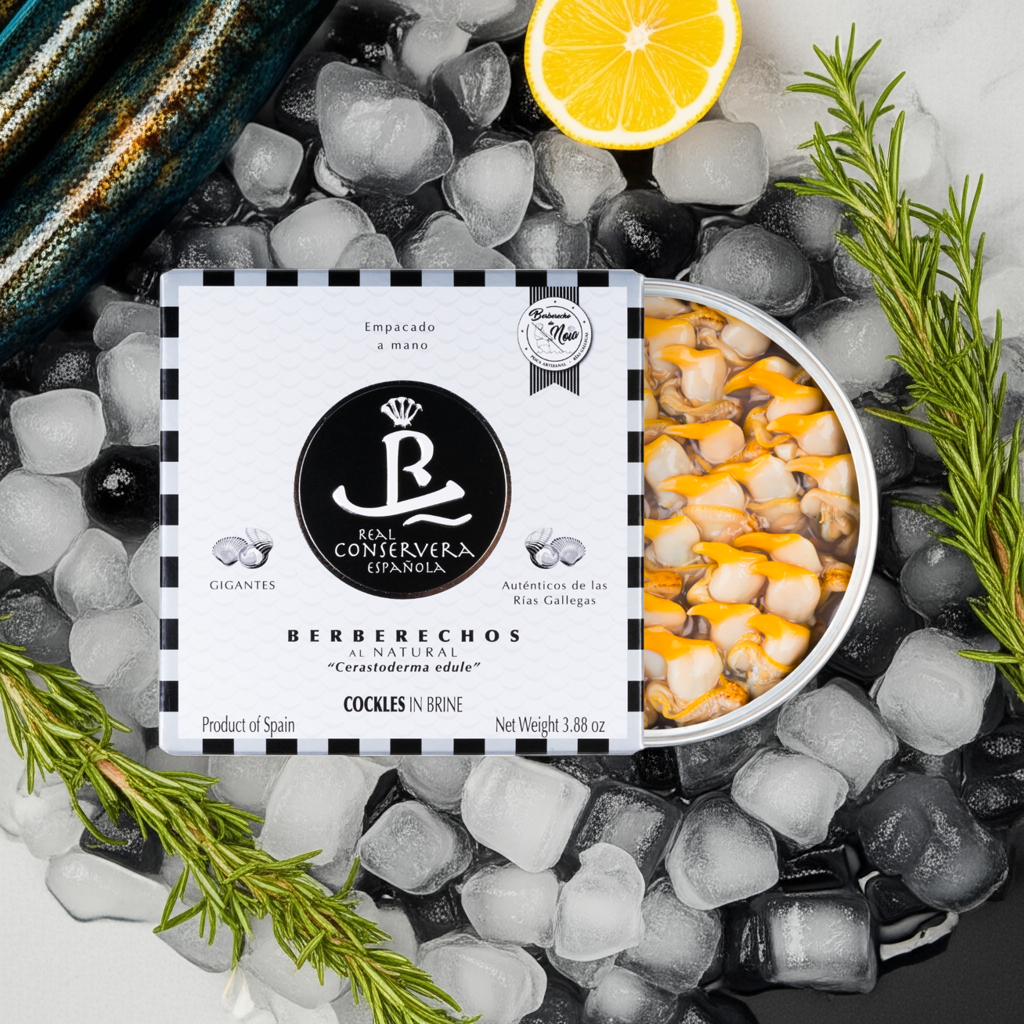
These molluscs came from the Galician Rías; the house worked them in its workshop in Cambados, on the Ría de Arousa. The hydrographic conditions of this Galician bay — a mixture of fresh and salt water, nutrient-rich currents — create a unique ecosystem where cockles develop flesh of remarkable delicacy. Real Conservera never sought to industrialize this process: every step remains manual, from purging in seawater to arranging the mollusks one by one in the tin.
What made this product singular
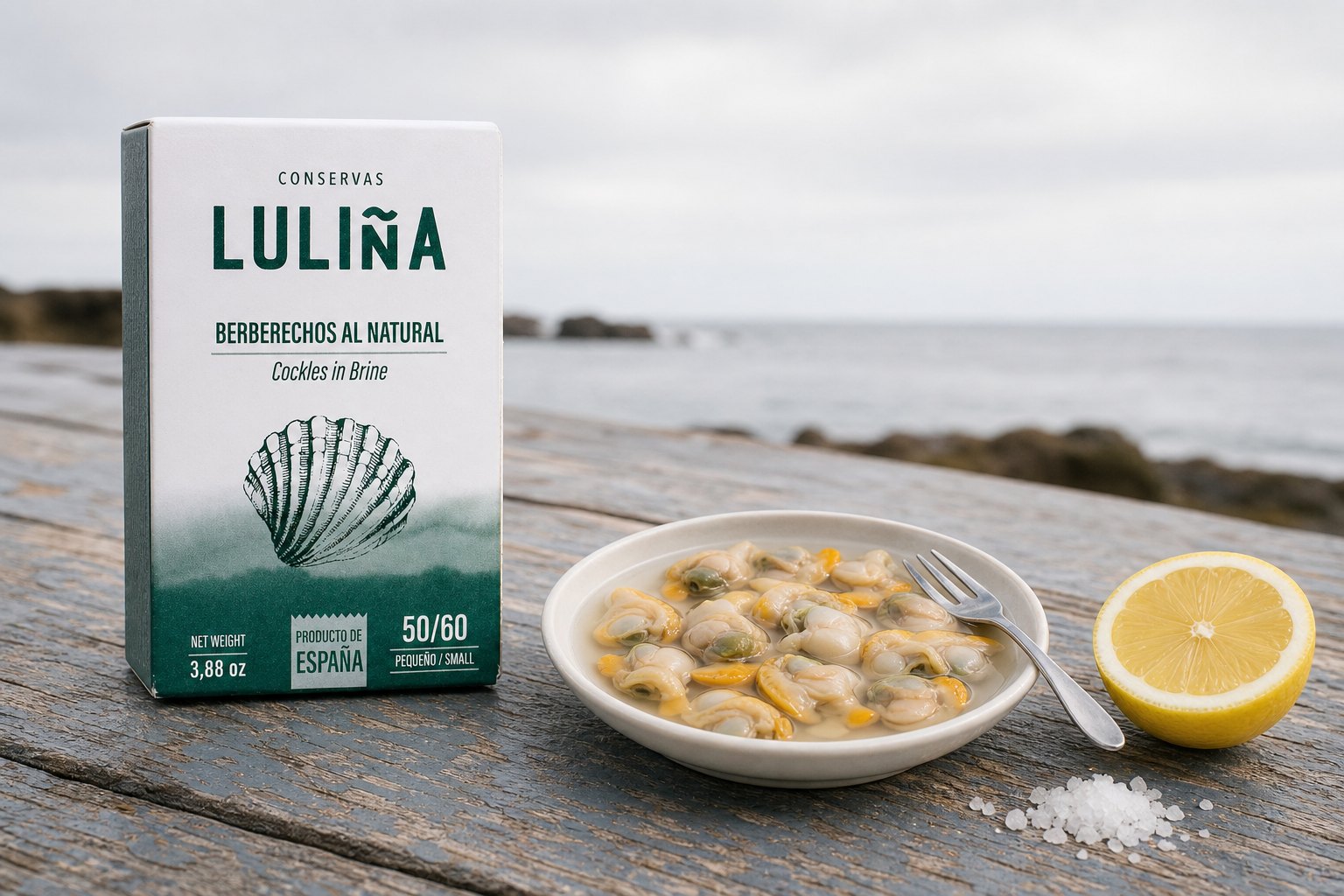
Cockles, Cerastoderma edule, are tiny yet intense marine creatures. Their white, gleaming flesh offers a texture that wavers between delicate firmness and tenderness, a happy contradiction that only a carefully handled mollusk can deliver. The aroma that escapes when opening the tin is unmistakable: pure iodine, crystalline salt, the raw minerality of the North Atlantic.
What distinguished this preserve was the preparation protocol: 16 hours of purging in seawater to eliminate every grain of sand, then manual shucking. The covering broth — composed solely of cooking water, salt, lemon, and bay leaf — was not a neutral addition but a natural elixir, the concentrated essence of terroir. On the palate, the experience was sensory: a genuine salty explosion, balanced by the subtle citrus notes and the light bitterness of bay leaf. The liquid itself, often overlooked by hurried consumers, was worthy of being savored like a nectar.
The vocabulary
Four words to open the tin
What the label says, and what it doesn't.
How we served it
At Le Cellier, we first recommended the most refined consumption: directly with a spoon, from the opened tin, accompanied by a glass of Albariño or Godello, the Galician whites that magnify this minerality without competing with it. This approach revealed the quality of the artisanal work — no theatrics needed.
But the cockles also knew how to blend into more composed dishes. Poured over a white fish carpaccio, they brought an umami flavor and a texture that contrasted with the delicacy of the raw. As a garnish on a fresh salad of lettuce and radish, with a drizzle of olive oil, they became a surprising taste at every bite. And for the more adventurous, their natural essence could enrich a risotto or a fish pasta sauce, adding this marine depth without fanfare.
Finally, they found their place on a mixed seafood platter — alongside other Spanish preserves or fresh mussels — where they played the role of the underappreciated jewel, the discovery that attentive gastronomes never failed to notice.
At the table
Four ways to serve them
From the spoon to the risotto: tap a card.
Why it left our Cellier
This preserve followed its natural arc: a seasonal product in limited edition, since cockle harvesting responds to marine cycles and sustainable quotas. After a good run, we opened our palette to other houses and other equally remarkable seafood, remaining faithful to our philosophy of continuous discovery.
To go further
If you miss this window onto coastal Galicia, other Spanish seafood preserves await in our catalog: al natural mussels from other Galician producers, percebes from Asturias, or canned sea urchins that offer comparable minerality. Each embodies a different facet of this Iberian maritime heritage that we continue to explore and respect.
Le Cellier is a living journal: we archive out of respect but the active catalog evolves. See our current selection in this category → · or browse the complete Cellier.
Quick test
Ready to open the tin?
Four questions, the answers are in the article.