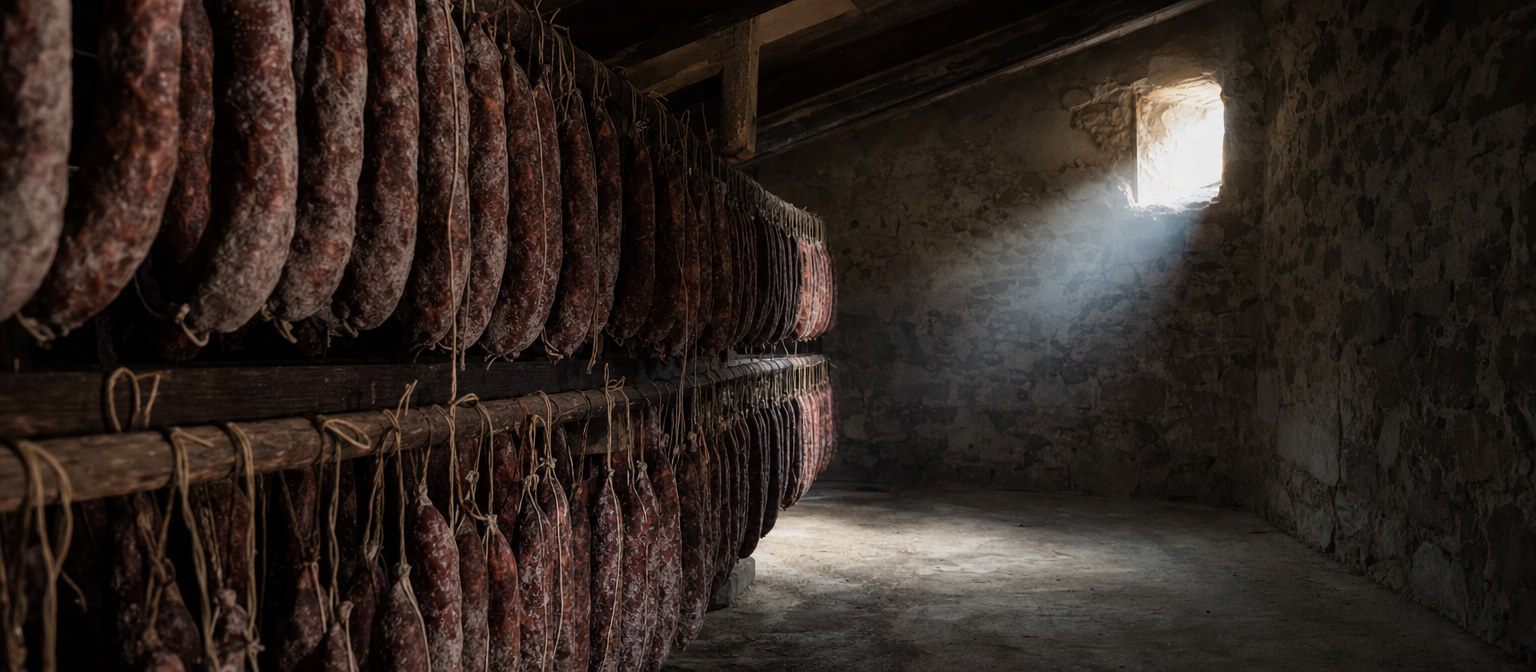
There are two ways to understand Iberian charcuterie. The first is anatomical: cut, weigh, label. The second is a landscape: a black pig with slender legs walks beneath the oaks, eats acorns all autumn long and ends up, after twenty-four to thirty-six months of drying, as almost transparent slices laid on a plate. It is this second version we stand for here.
The magic word is Bellota, Spanish for "acorn". It is the highest grade. It guarantees that a pure-bred Iberian pig has spent autumn and winter in the dehesa — the open holm-oak woodlands of Extremadura and Andalusia — feeding almost exclusively on acorns. This diet is what gives rise to the aromas of hazelnut, olive, humus and dry wood that make this charcuterie so complex.
The four grades every enthusiast should know
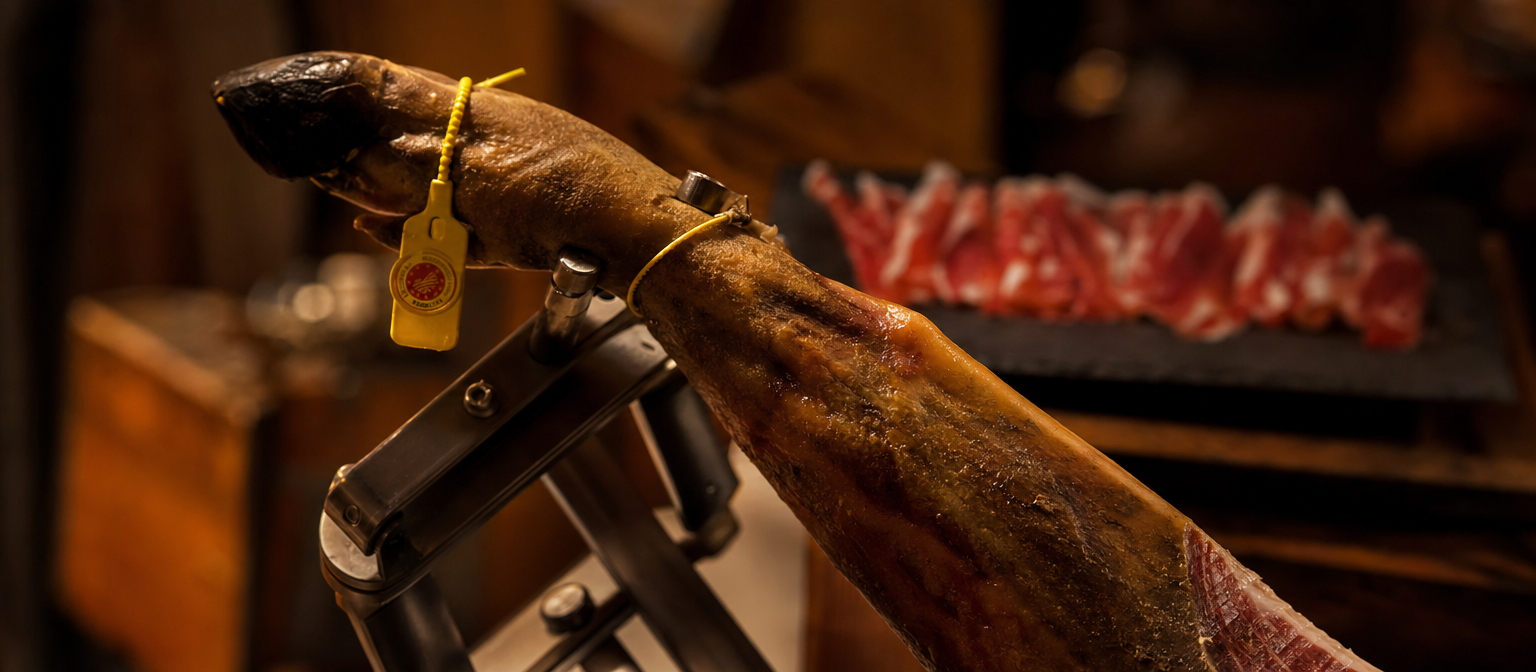
Spain regulates the name in four tiers, from the most prestigious to the most standard. Before buying, look at the coloured label on the leg of the ham: it is compulsory and it does not lie.
- Bellota 100% ibérico — black label. Pure breed, fed exclusively on acorns during the montanera. The absolute summit. This is what is commonly called pata negra.
- Bellota ibérico — red label. 50% or 75% Iberian breed, but a genuine acorn diet. Excellent value for money.
- Cebo de campo ibérico — green label. Raised outdoors, fed on cereals and grasses. Refined, but without the aromatic complexity of the acorn.
- Cebo ibérico — white label. Intensive farming, industrial feed. Best avoided if you are looking for the real thing.
Never serve Iberian ham straight from the fridge. The fat, rich in oleic acid, sets and the palate no longer picks up anything. Take the slices out at least fifteen minutes beforehand. Lay them on a warmed plate under a tea towel. The fat turns translucent, melts slightly, and that is when — exactly then — the aromas of acorn, hazelnut and wood come through.
The vocabulary
Six words for reading an Iberian label
The ones you will come across in Spain, and what they guarantee.
The three pillars of an Iberian meal
Beyond ham, Spain produces two other cured meats that belong on any good board. All three should be there together for a complete tasting:
- Jamón ibérico de bellota. The king. Cut into thin, almost transparent slices and served just warm.
- Lomo ibérico. The cured loin, marinated in sweet pimentón and garlic. Denser, meatier, perfect with a glass of red wine.
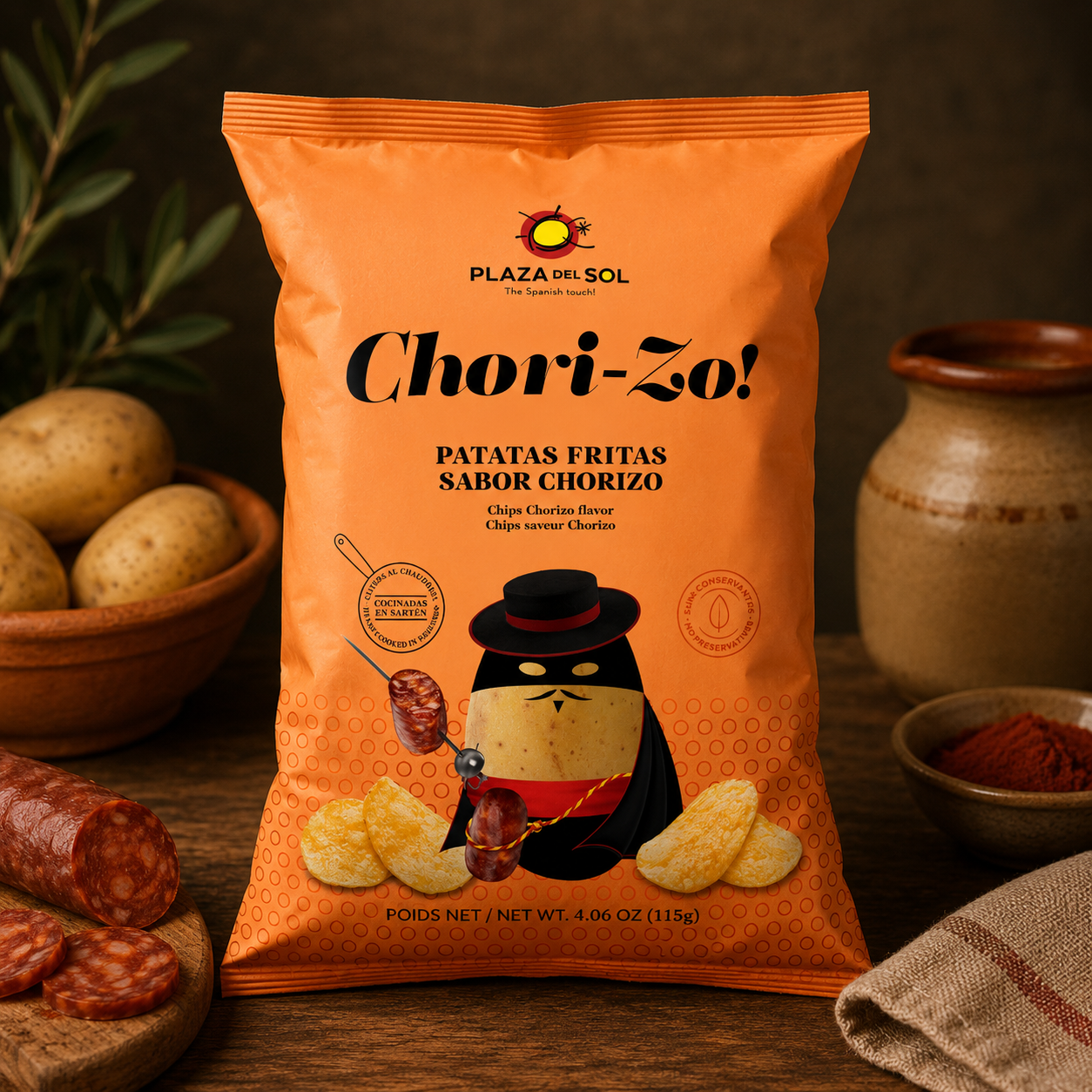
- Chorizo ibérico de bellota. Cured for at least three months, scented with smoked pimentón de la Vera. Never to be confused with industrial chorizo.
How to choose without getting it wrong
Three criteria are enough to tell marketing from the real thing:
- The coloured label. Black or red if you want genuine bellota. Everything else is a compromise.
- The fat. It should be glossy, slightly translucent, almost golden yellow. White, firm fat betrays a cereal diet, not acorns.
- The origin. PDO Jabugo, Guijuelo, Dehesa de Extremadura or Los Pedroches. If nothing is stated, be wary.
The art of plating
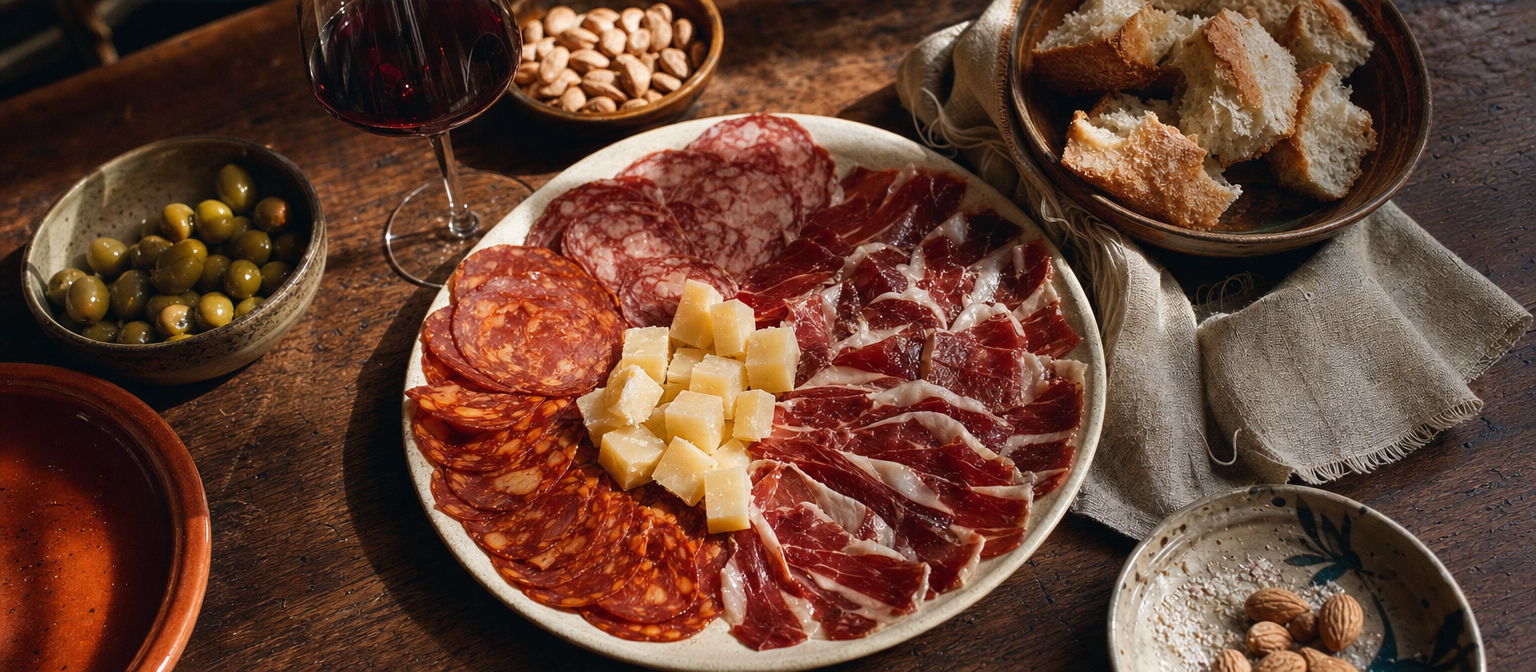
An Iberian board is built in triangles: three or four slices of ham fanned out, two or three slices of lomo, two or three of chorizo. Always apart, never mixed. Alongside, a piece of rustic bread, toasted Marcona almonds, perhaps a few slices of Manzano or Manchego cheese. No olives in vinegar: vinegar kills the notes of the acorn.
Good ham is not a product. It is a landscape you taste.Saying from Extremadura
To find out whether Iberian charcuterie is the real thing, I run the flat of the knife blade over the slice. If the fat marks the metal and melts slightly at the warmth of a finger, it is genuine bellota. If the fat stays firm and crisp, the animal was fed on cereals. The hand does not lie — and neither does the fat.
On the board
Building an Iberian board
Three cured meats, always apart, never mixed.
What to remember
Iberian charcuterie is not fast food. It is a slow product — slow to raise, slow to dry, and meant to be savoured slowly. A well-built board, taken out of the fridge in time, served with a structured red wine (Ribera del Duero, Priorat) and good bread: that is the essence of an Iberian meal. The rest is decoration.
You will find our Spanish charcuterie in our charcuterie section. All products are selected in Spain and delivered in Switzerland in 3 to 7 working days. Returns are free within 14 days.
Quick quiz
Can you read a ham?
Four questions, the answers are in the article.