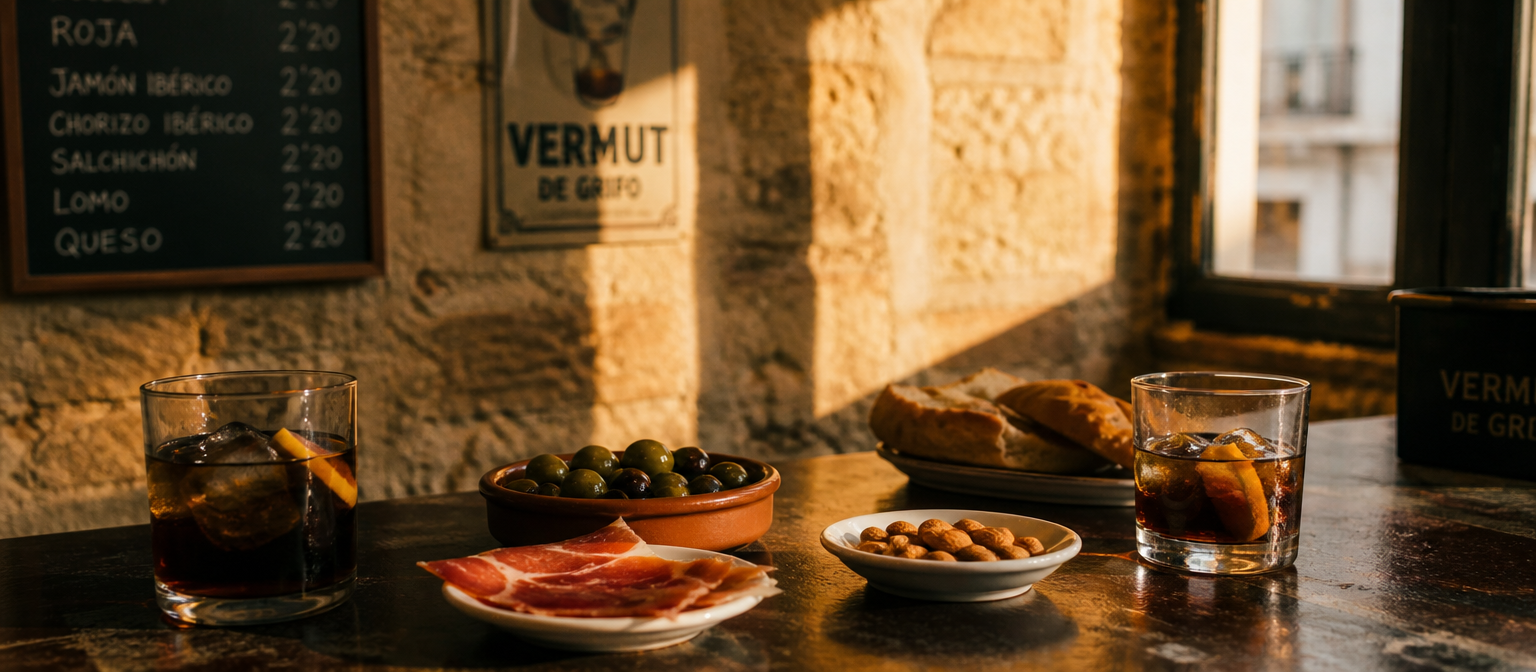
Six people around a table on a Sunday. No appetite for cooking, appetite for eating well. The Iberian board is perhaps the only thing you can assemble in twenty minutes and make it look like you've been working all morning. But a failed board—too loaded, badly balanced, ham pulled from the fridge too cold—shows and tastes immediately. Here's how to avoid it.
Proportions and elements, in order
For six people as a starter or shared lunch, the basic calculation is simple: count roughly 150 to 180 grams of cured meat per person in total, split between two or three pieces. Beyond that, flavours pile on top of each other and cancel out. Below that, the table looks stingy.
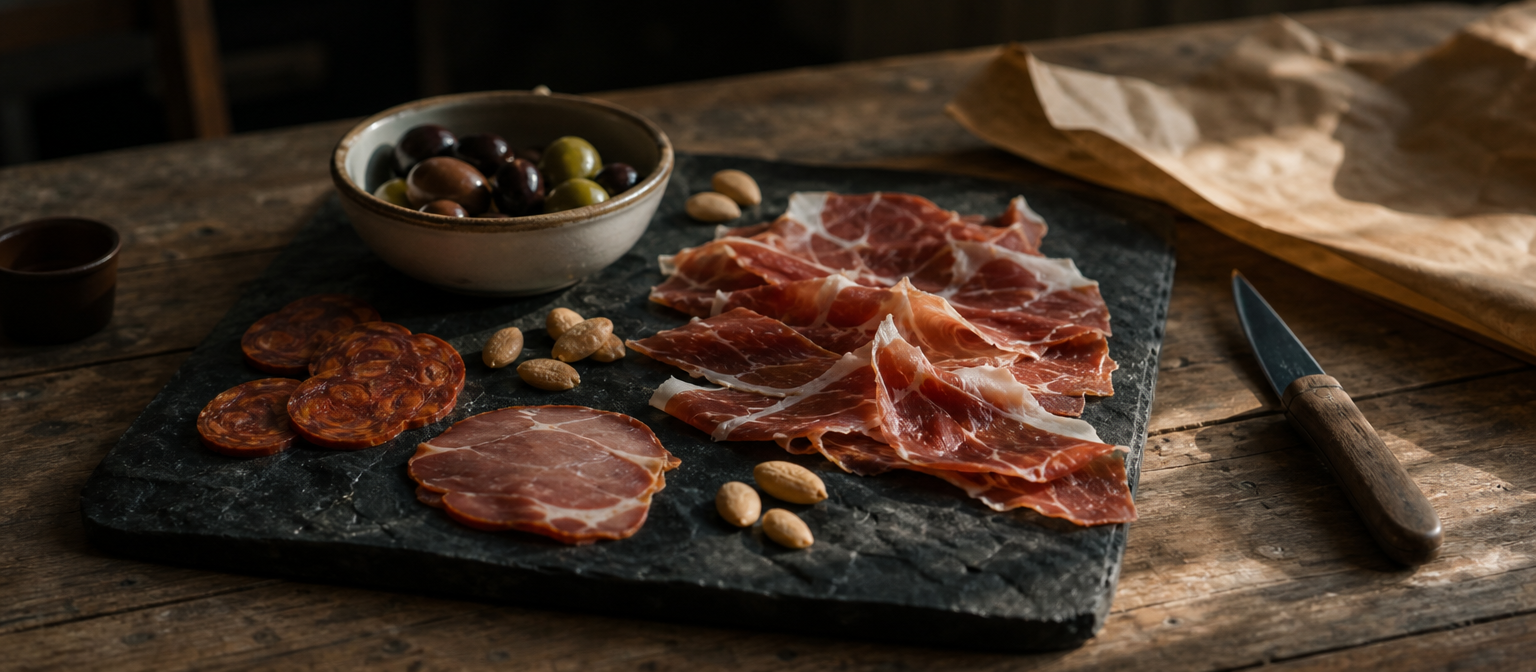
The backbone of the board is ham. A jamón ibérico de bellota DOP Jabugo—from pigs fed exclusively on acorns in the Andalusian dehesa—makes up half the cured meat quota on its own. It is fatty, long on the palate, lightly sweet. It needs nothing else on the slice. You lay it down alone, in slightly crumpled rosettes, never flat like a sheet of paper.
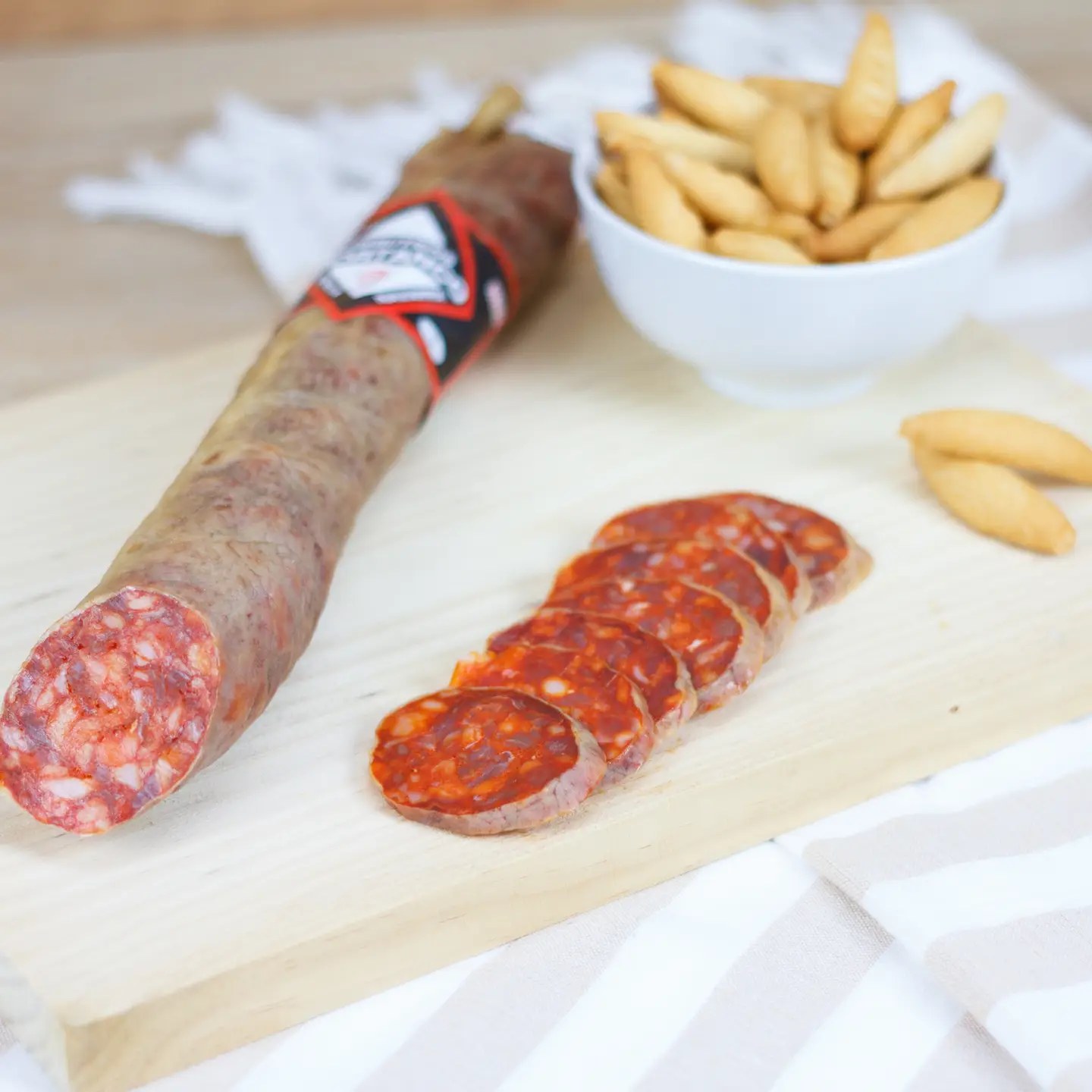
Then comes the lomo ibérico—dried pork loin, firmer, more discreet—and a quality chorizo, preferably mild rather than hot so it doesn't overwhelm everything else. These two pieces form the base of the cured meats. No fuet, no extra salchichón: three cured meats is already a board. Four is a charcuterie counter.
Cheese. One is enough, chosen frank and assertive. Manchego curado—protected designation of origin, manchega sheep's milk—fills this role without question. Cut it into thin triangles, not cubes. Cubes are practical for corporate buffets. An Iberian board is not a corporate buffet.
The accompaniments structure the visual composition as much as they balance the flavours:
- Gordal or manzanilla olives in a small bowl, with their brine—never drained dry.
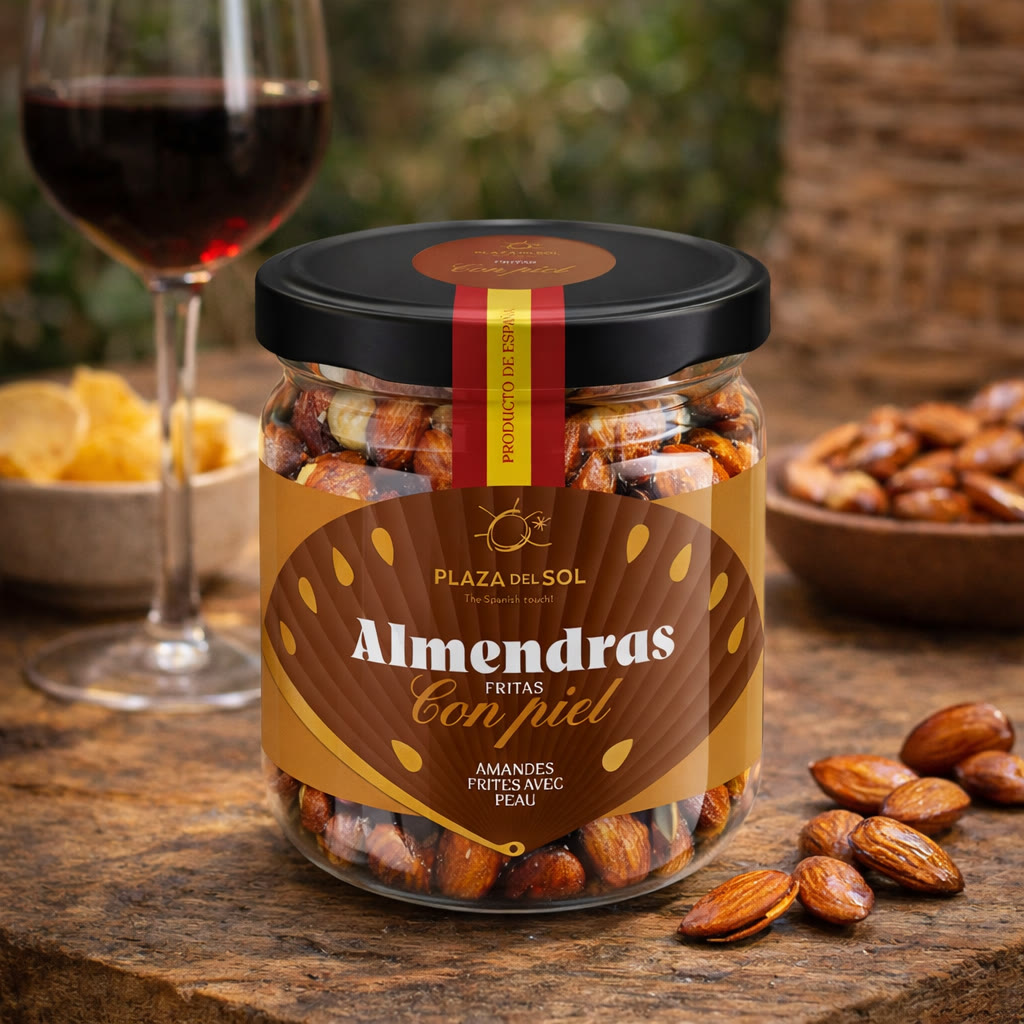
- Marcona almonds roasted with sea salt, in one corner of the board, not scattered everywhere.
- Crusty bread lightly toasted, served separately or on an adjacent board—it should not soften under the cured meat.
- A few slices of quince paste laid against the manchego: the classic pairing, sweetness against fat.
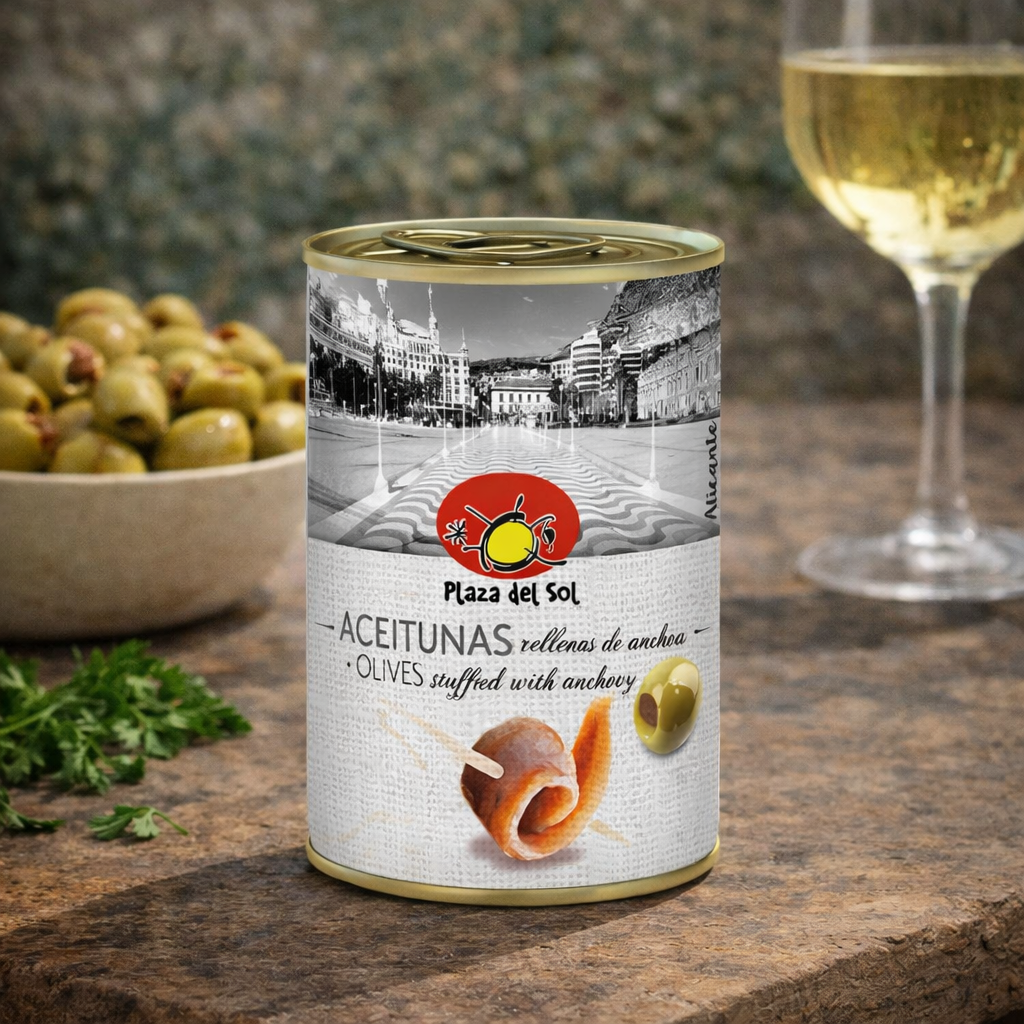
A quality tinned product can complete without weighing it down. Quality Spanish anchovies—aged in salt for eighteen months—laid on a slice of bread rubbed with tomato make an iodised counterpoint that wakes the palate between mouthfuls of fat. It's not essential. But once you've done it, you don't forget it.
A successful board reads clearly. An Iberian board must breathe.Orígenes
On the board
The six elements of the board
Tap a card: amount, cut and place for each element.
Visual composition and common mistakes
A successful board reads clearly. You should be able to identify each element at a glance without lifting a slice to see what's underneath. The most common mistake is piling: everything heaped in the centre, in layers, with the cheese hidden under the ham and the almonds lost in a forgotten corner.
The basic rule is to work in zones. The ham takes up a third of the board, rather on one side. The lomo and chorizo share another zone, without touching. The manchego forms an angle. Small elements—olives, almonds, quince paste—fill the remaining spaces without completely filling them. An Iberian board must breathe.
Other common mistakes:
- Taking the cured meat straight from the fridge: the fat stays solid, the aromas don't release. Forty-five minutes at room temperature is the minimum.
- Using a board that's too small: elements pile up, reading is impossible, serving becomes awkward.
- Placing warm bread directly on the board: it gives off moisture that softens everything it touches.
- Adding gherkins, mustards or sauces: they belong elsewhere, not here.
- Forgetting small spoons or tongs: nobody wants to dip their fingers into a communal bowl of olives.
For pairings, a fino or manzanilla served very cold remains the reference with bellota ham. For those who prefer still wine, a white from Rueda (verdejo) or a light red from Rioja—not too oaky—lets the ham speak without competition. La Chinata extra virgin olive oil, from the Manzanilla Cacereña variety, drizzled over the anchovies or bread, adds a gentle note that ties the elements together.
When you lay a slice of bellota ham in your palm for a few seconds before eating it, the heat of your hand gently melts the intramuscular fat. The slice becomes silky, the taste of acorn and hazelnut rises. This is not affectation—it's how professional cortadores serve ham in Spain. On a board, this isn't done in advance, but you can point it out to your guests.
Avoid
Six mistakes that ruin a board
You can see them, and you can taste them.
What to remember
An Iberian board for six people comes down to two or three cured meats, one cheese, and four or five accompaniments chosen with restraint. The quality of the pieces matters more than their variety. Bellota ham—ideally under DOP Jabugo—structures the whole and must remain visible on the board, not covered. Temperature is a technical detail few respect and that changes everything: take the pieces out forty-five minutes before serving. Visual composition follows a logic of zones, not piling. A well-built board is eaten in whatever order each person decides, but it shows that order before anyone even touches it.
Olives, almonds, chorizo and olive oil to build your board are available in our tapas and Iberian board section. Delivery in Switzerland in 3 to 7 working days, free returns within 14 days.
Quick quiz
Does your board pass the test?
Four questions, the answers are in the article.