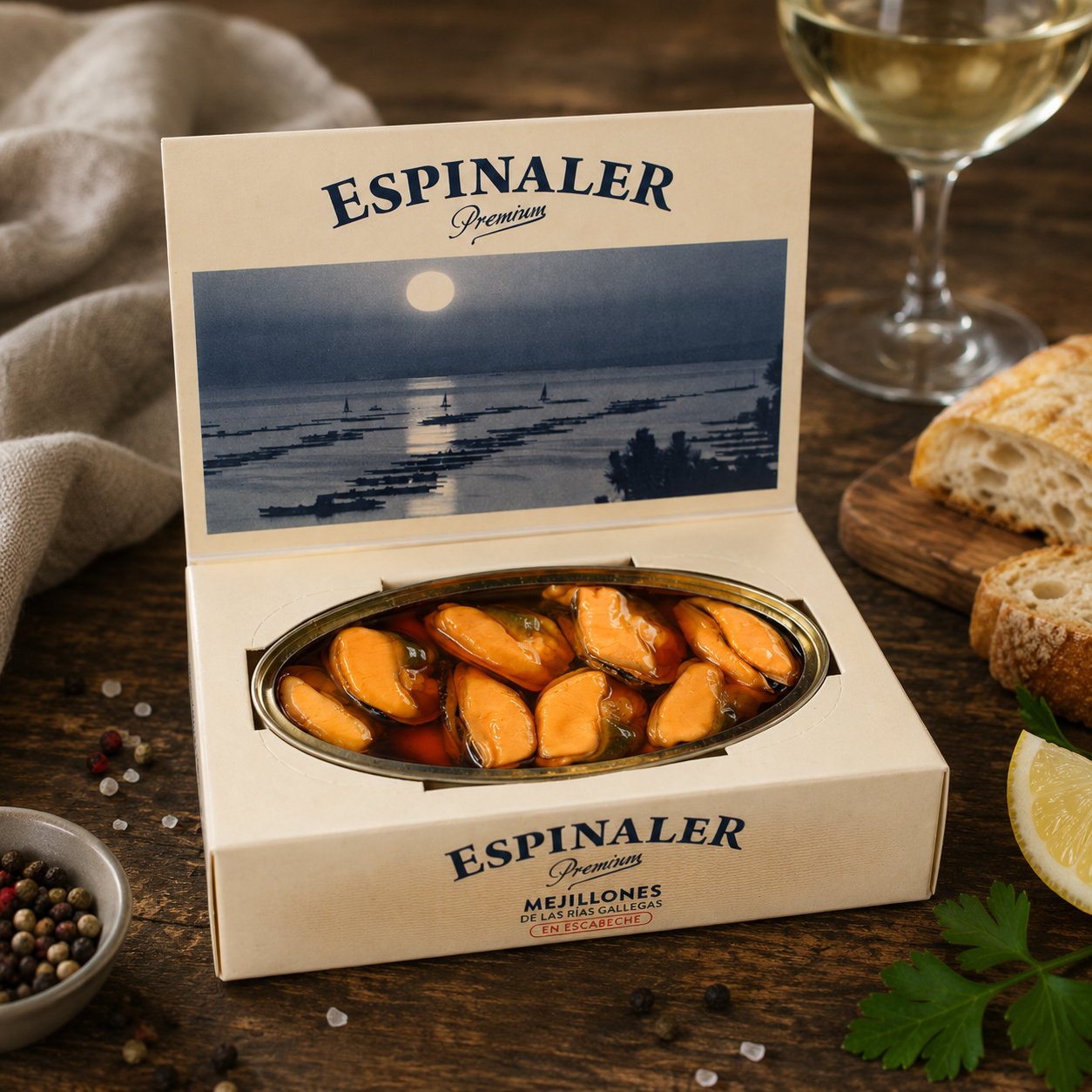
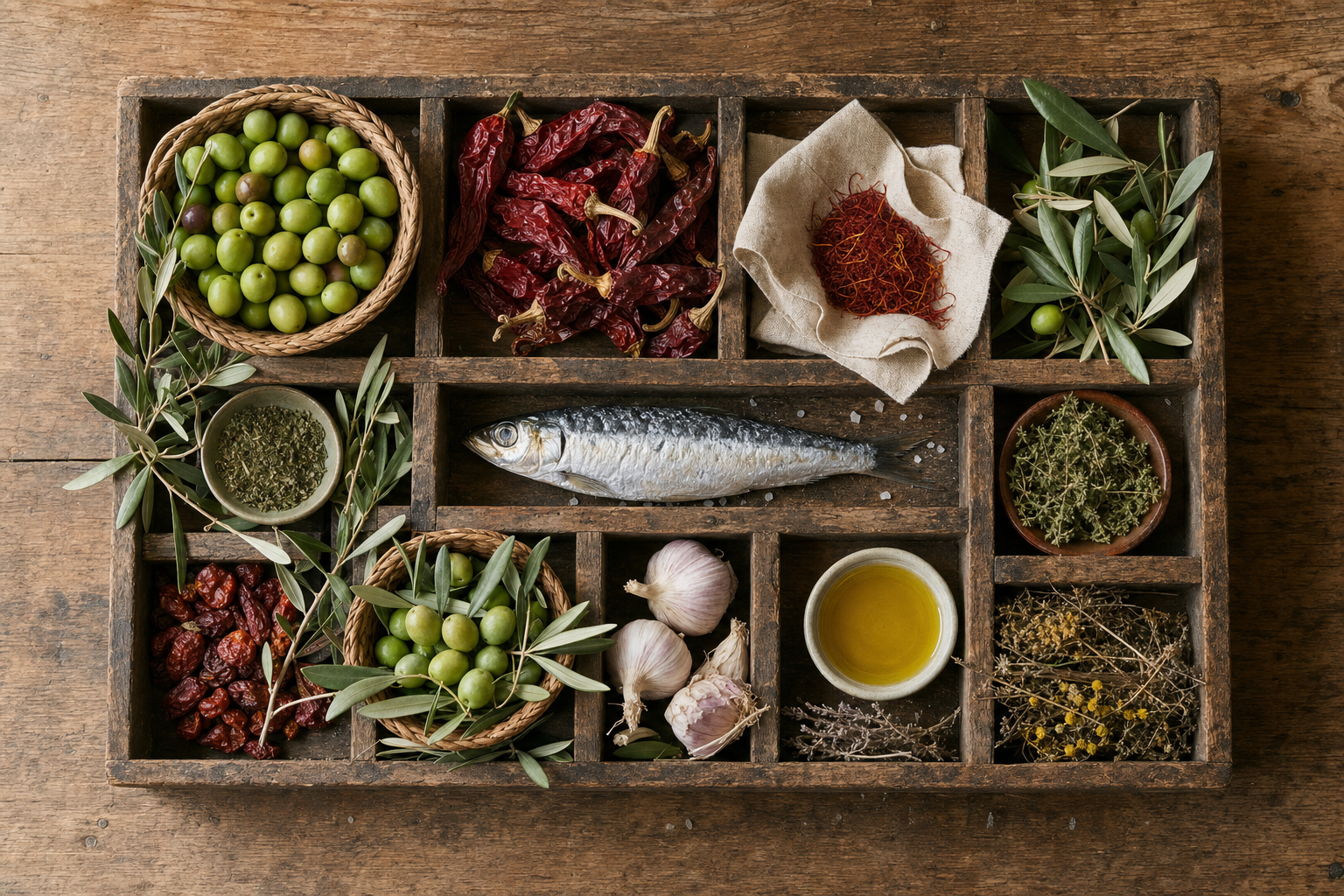
In France, people speak of "tinned food" with a vague contempt — something from the back of the cupboard, opened when nothing has been prepared. In Spain and Portugal, it is exactly the opposite. Tinned fish is a noble product. It is served in the best bars of San Sebastián. It is collected by vintage. And it sometimes costs more than a fresh lobster.
This cultural difference explains everything. Iberian conservas are not a substitute for fresh fish — they are a category of their own, with their masterpieces, their vintages and their cult producers. Here is what you need to know to step into this world.
Why Iberian craftsmanship is unique
Three reasons. The first is geographical: the Galician coast, in the north-west Atlantic, is one of the richest fishing grounds in the world, fed by upwelling cold waters rich in plankton. The second is historical: Galicia and northern Portugal have been canning since the 19th century, and every village has its own techniques — cutting by hand, packing tins one by one, brushing with quality olive oil. The third is about taste: an Iberian tinned fish is better six months after canning than on day one, because the oils, juices and flesh keep melding together.
The five families to know
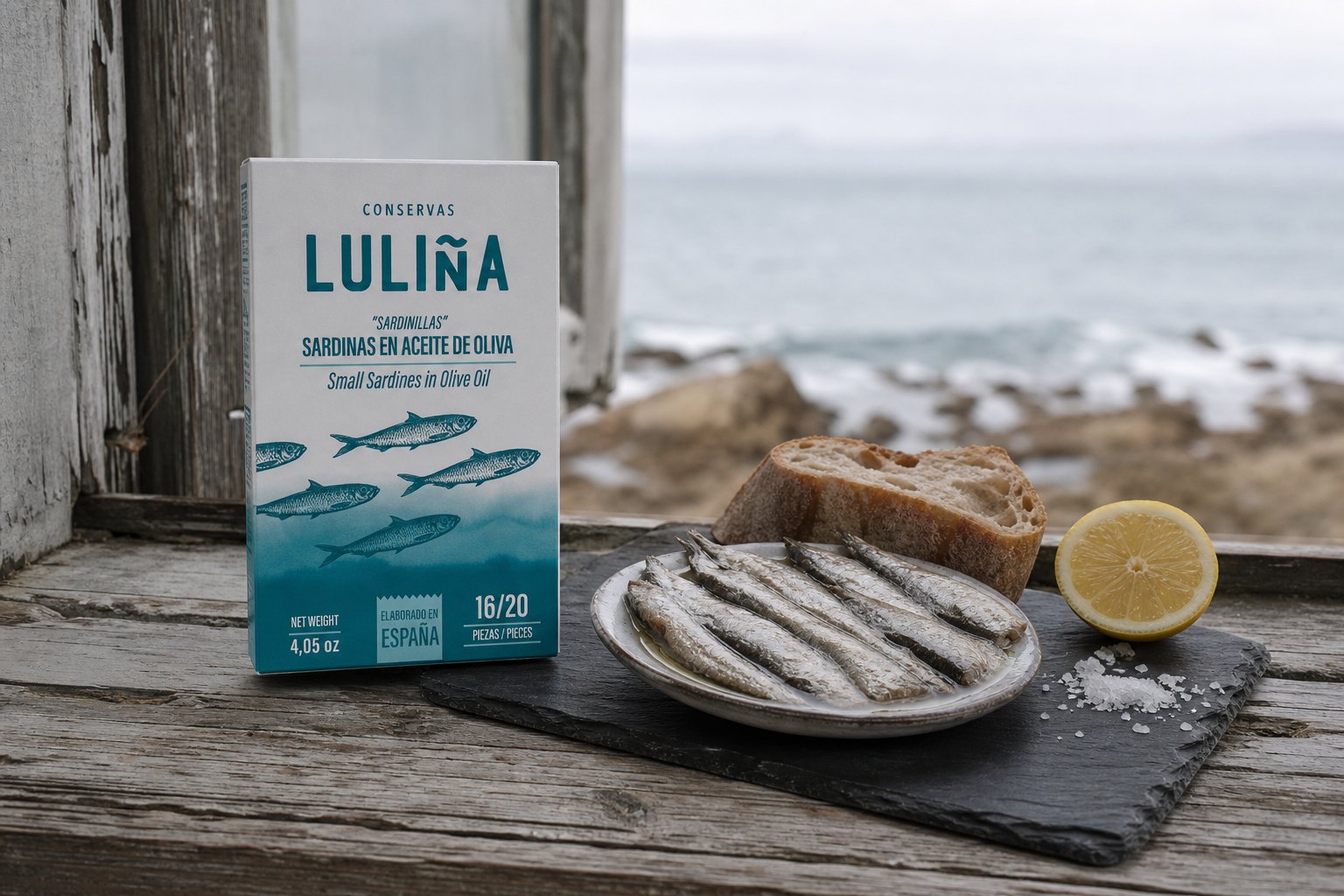
- Sardines in olive oil. The classic. Choose a tin with whole fish, silvery skin, in extra virgin olive oil. The best canneries offer vintage tins to be stored upside down.
- Cantabrian anchovies. Caught in spring, salted for at least twelve months, boned by hand. Melting texture, fine saltiness. The mark of a good house: no bones.
- Bonito del Norte tuna. Pole-and-line caught, in the summer season (June to October). Pale, melting, almost pink flesh. Not to be confused with standard skipjack tuna.
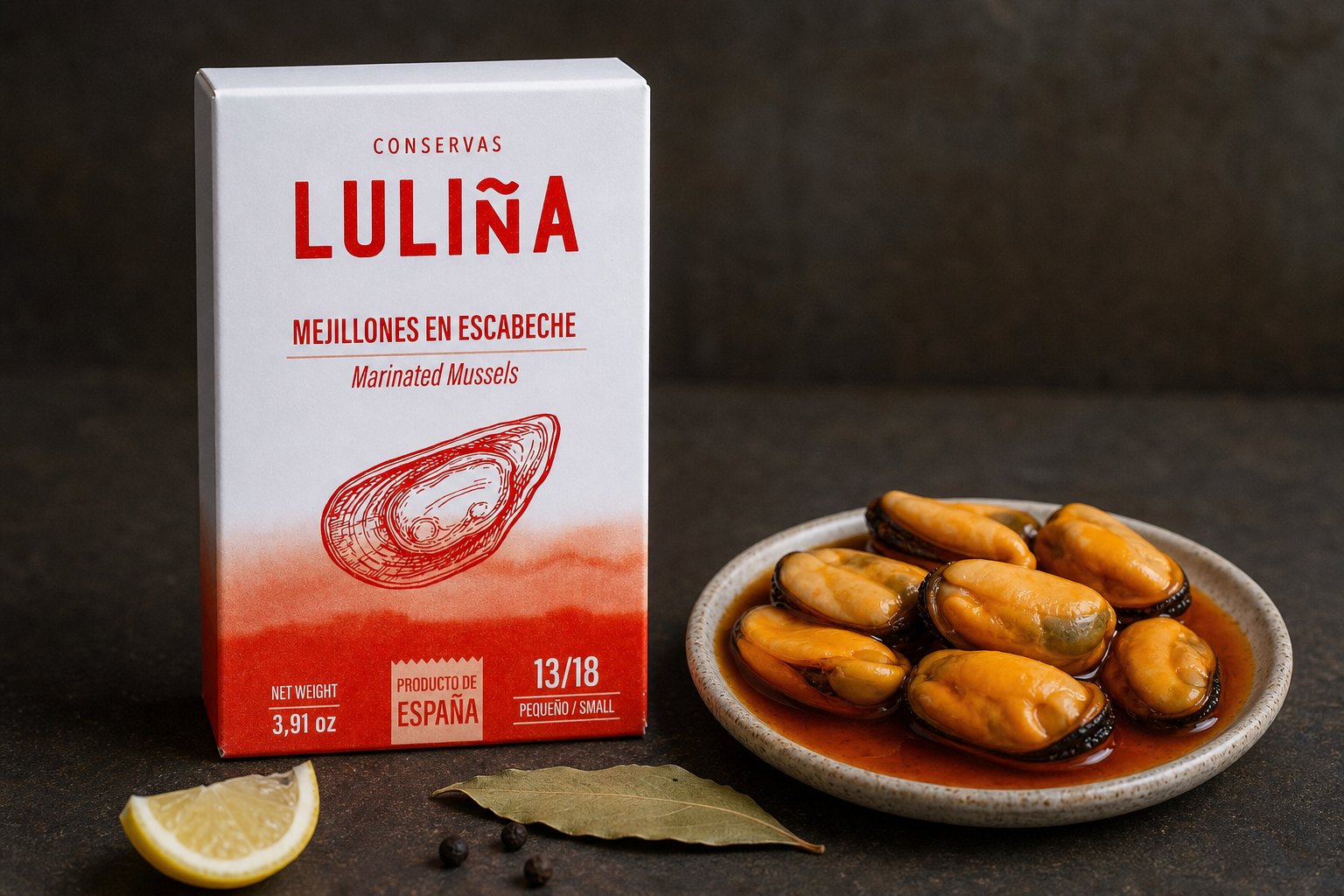
- Mejillones (mussels) en escabeche. Cooked with vinegar, paprika and bay leaf. The tapa par excellence, served simply with a piece of bread and a glass of white wine.
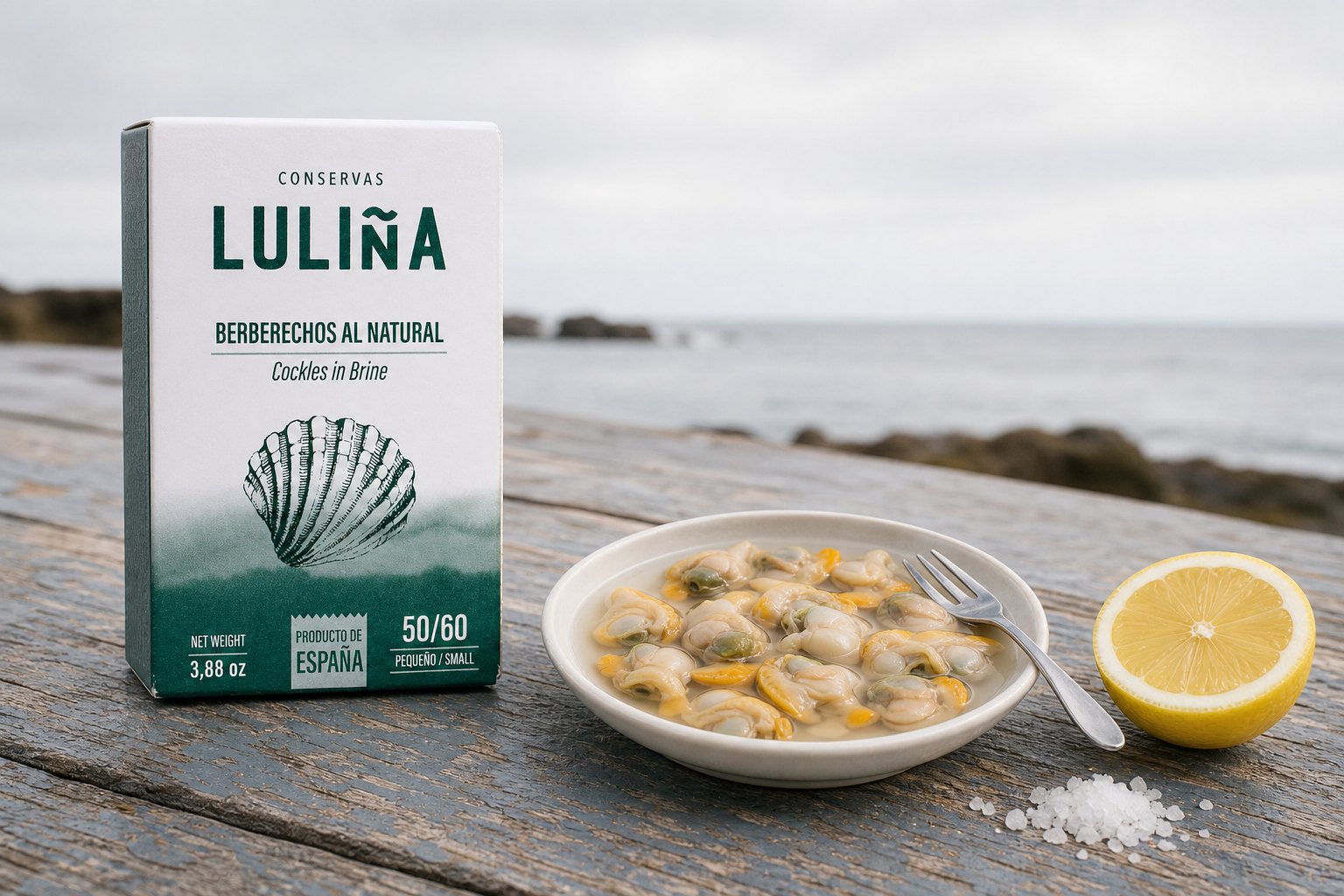
- Berberechos (cockles) au naturel. Large, plump, in their own cooking juices. Eaten straight from the tin with a fork, with a drop of lemon.
When people ask me how to recognise a good conserva, I always suggest the same test: three tins, blind. One industrial (standard French supermarket style), one artisanal from Espinaler (Catalonia), another from Portugal. Immediate difference on opening: the oil in the first is cloudy and greasy; in the other two, clear, golden, fragrant. Difference on tasting: the flesh in the first crumbles; in the other two, it holds together in flakes and releases its juices. Once you have done this test, there is no going back.
On the shelf
Six clues for choosing your tin
Tap a card: what is inside, and how to recognise it.
The art of serving a conserva
Three non-negotiable rules:
- Take the tin out of the fridge thirty minutes beforehand. As you would a cheese. Cold sets the oils and kills the aromas.
- Serve it in the tin or on a bare plate. No decanting into a bowl — the oil is part of the dish.
- Serve with warm rustic bread, a wedge of lemon and a glass of cool, dry white wine (Albariño, Godello, Vinho Verde). That is all. Tinned fish needs nothing else.
The conserva that gets better
A little-known fact: a good tin of fish, like a good wine, ages. Good canneries date all their tins. After six months, the oil has penetrated the flesh, the juices have melded and the flavour has gained depth. After two years, some tins become collector's items. Store them upside down, in a cool, dry cupboard — that way the oil soaks the fish evenly from the top.
A conserva is not a stopgap. It is a cellar.A Spanish master canner
Myths
Four things we think we know
And what people really do in Spain.
What to remember
Iberian tinned fish is a category of its own — not a substitute, not a stopgap. Choose it with as much care as a cheese or a wine: house, vintage, method. A few tins stand out — Espinaler in Catalonia and the best canneries of Portugal — and deserve their place on a Sunday table.
Our selection is in our conservas section. Tinned seafood from Galicia, delivery in Switzerland in 3 to 7 working days, free returns within 14 days.
Quick quiz
Ready for a Spanish-style aperitivo?
Four questions, the answers are in the article.