A tin is judged on the back, not the front. Four pieces of information are enough, and they are always there — you just have to know what they mean. Take the range from Conservas Luliña, made near the ría de Arousa in Galicia, and read them one by one.
1. The species, not just the common name
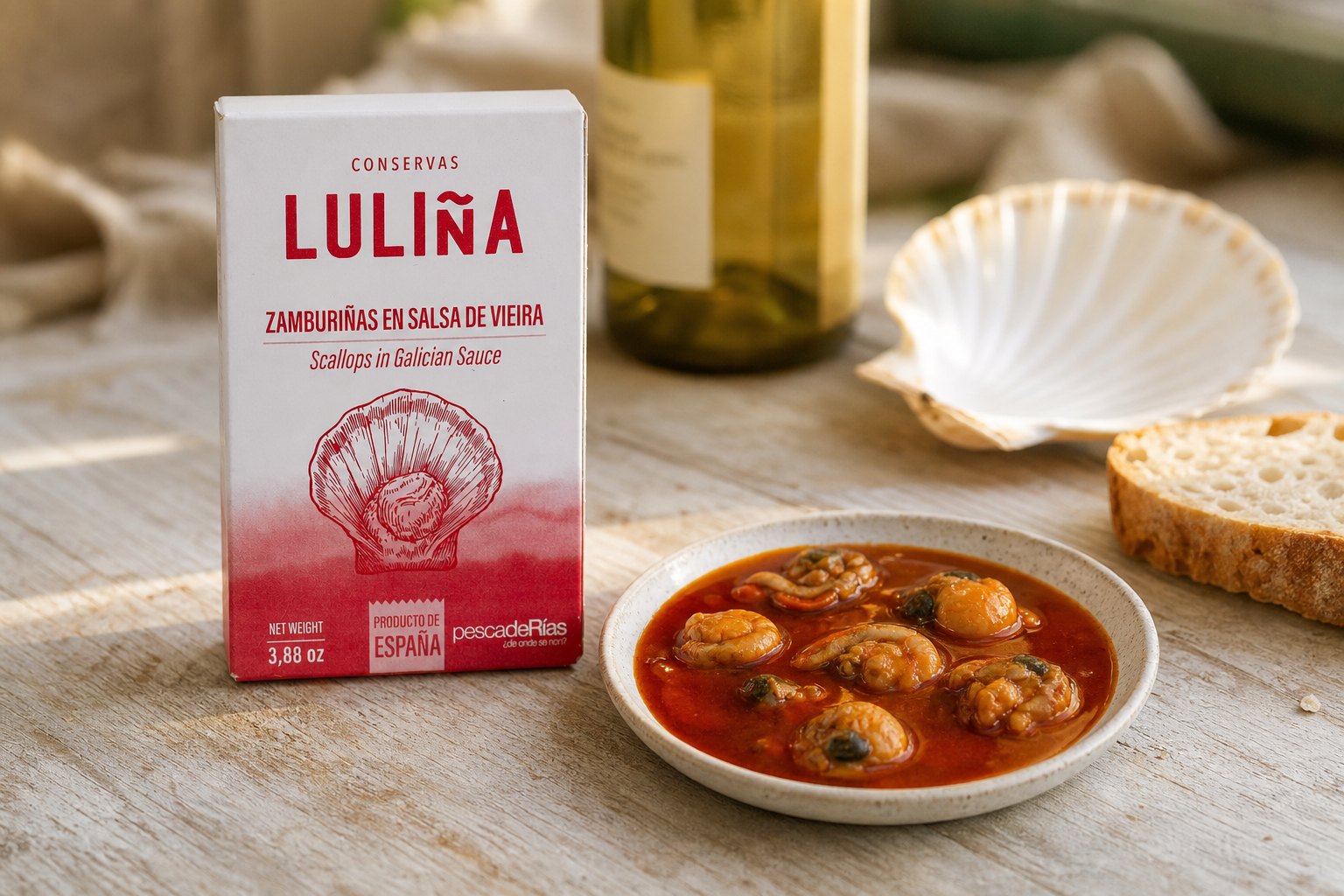
"Zamburiñas" covers several different shellfish at the market. On the label the species is written in black and white: Chlamys opercularis. In the same way, the squid stuffed in their ink declare Patagonian squid, the cockles Cerastoderma edule, the octopus Octopus vulgaris and the mussels Mytilus galloprovincialis. The common name tells you a region; the scientific name tells you what is in the tin.
2. Calibre: the number of pieces, not their size
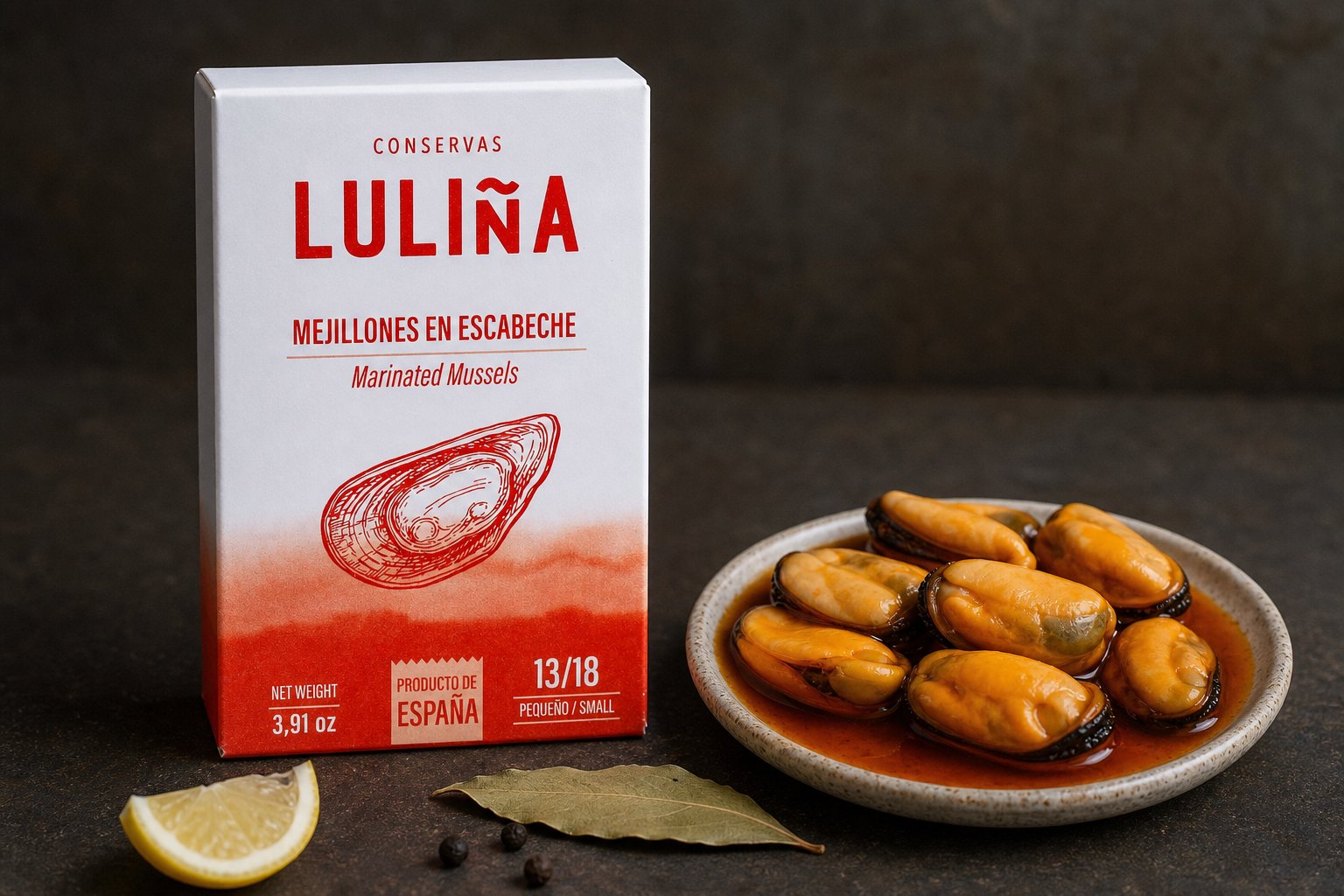
"13/18" on mussels does not mean thirteen to eighteen centimetres, but thirteen to eighteen pieces in the tin. The fewer the pieces, the larger each one — and the dearer the tin at equal weight. So 16/20 sardinillas are smaller than 8/12, and that is a choice of format, not of quality.
3. The covering liquid
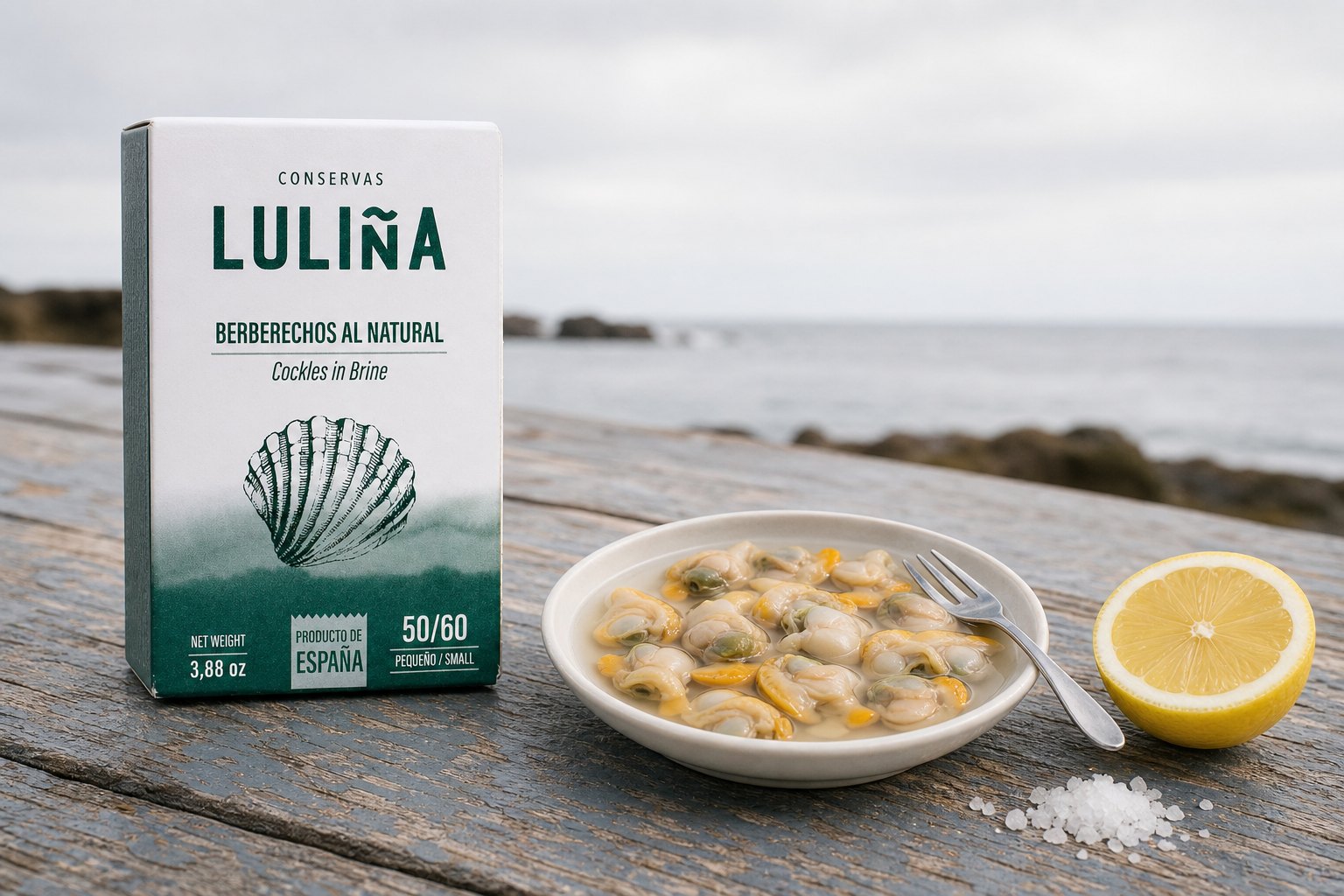
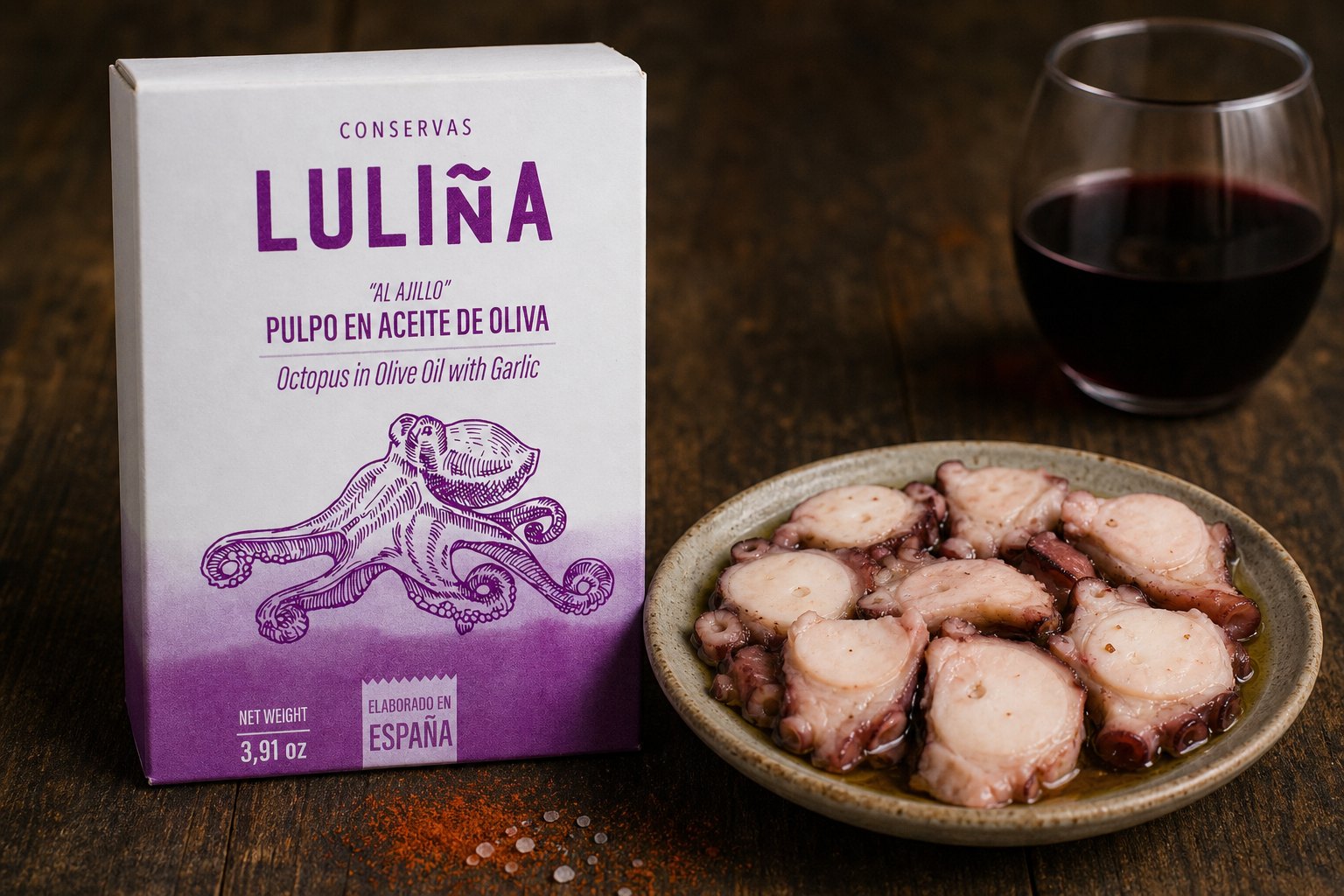
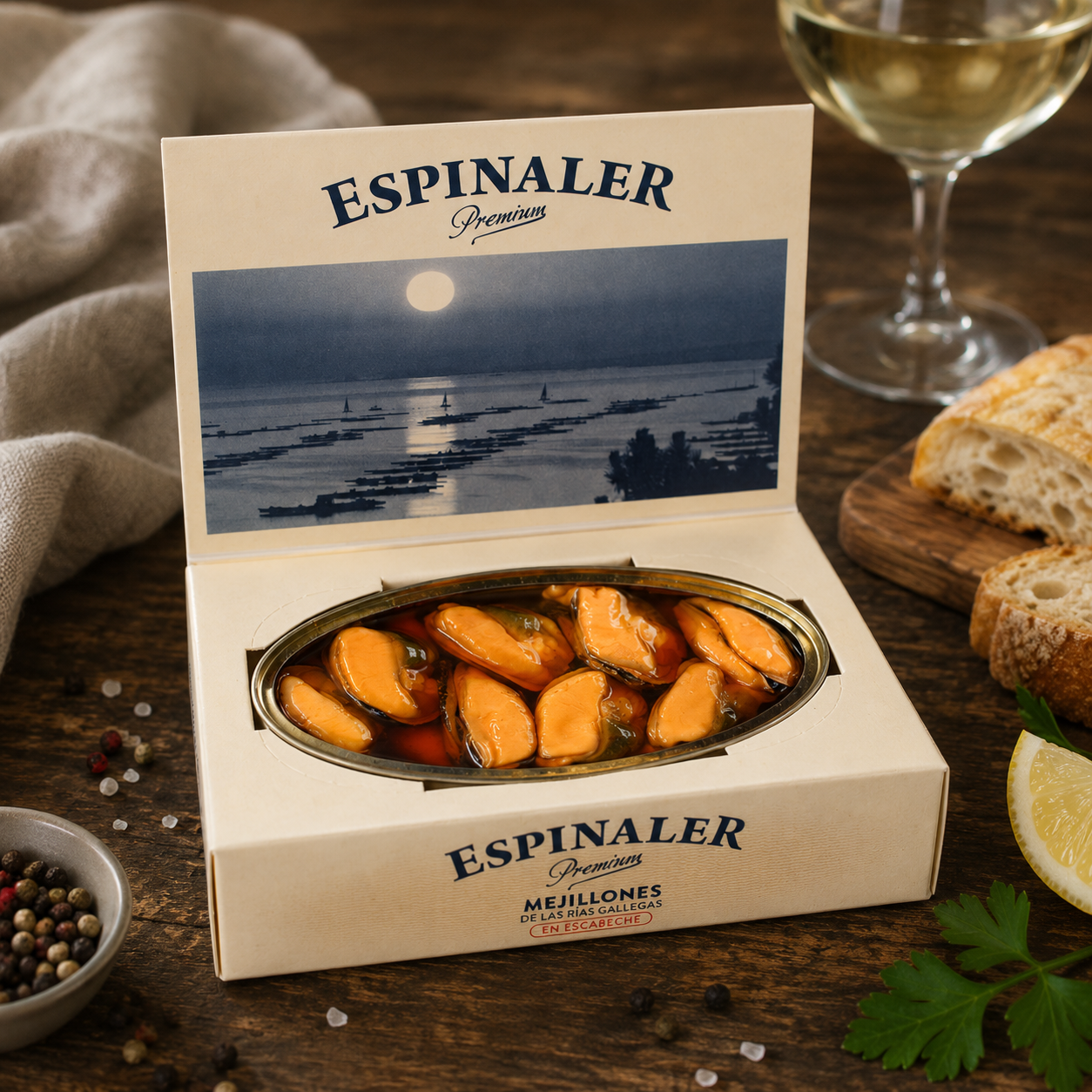
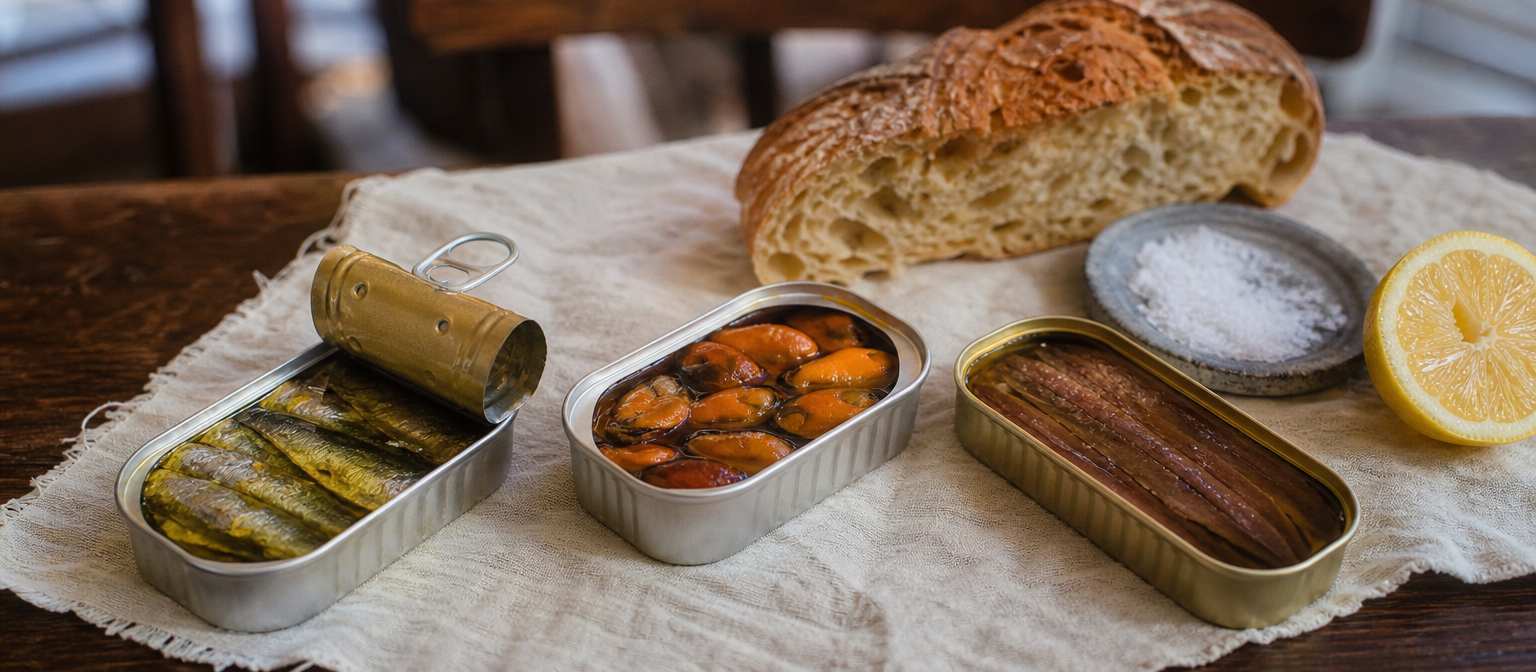
This is the most useful line, and the quickest to read. At Luliña: the cockles are au naturel, meaning water and salt, nothing else. The octopus sits in olive oil, with garlic and salt. The mussels come in escabeche — wine vinegar, salt, spices. The zamburiñas arrive in a sauce, in sunflower oil, with tomato, vinegar, bay and spices.
A short list is no automatic mark of quality, but it says plainly what you are about to taste: au naturel, it is the shellfish; in escabeche, it is the marinade as much as the shellfish.
The liquid
Four ways to pack a tin
One line on the label, and you know what you will taste.
4. Net weight and drained weight
Both figures are always given, and only the second one counts when comparing. A tin of 110 g net and 63 g drained holds 63 grams of shellfish; the rest is liquid. It is the drained-weight-to-price ratio that lets you compare two tins honestly.
Cheat sheet
The four lines to read
Keep them in mind in front of the shelf.
What the label does not say
It says nothing about the hand. At Luliña the mussels come from the bateas of the Galician rías — those farms on ropes suspended in the water — and they are cooked, cleaned by hand, fried, then sorted and laid by hand, piece by piece, into every tin. That appears on no regulatory line.
One last detail, printed on the back of the cartons: for every tin sold, €0.15 goes to the Fundación Ecomar and its coastal clean-up project. The whole range comes in a single format, the 120 ml tin — the one you open for two.
At the shelf
Can you read a tin?
Five questions, the answers are in the article.