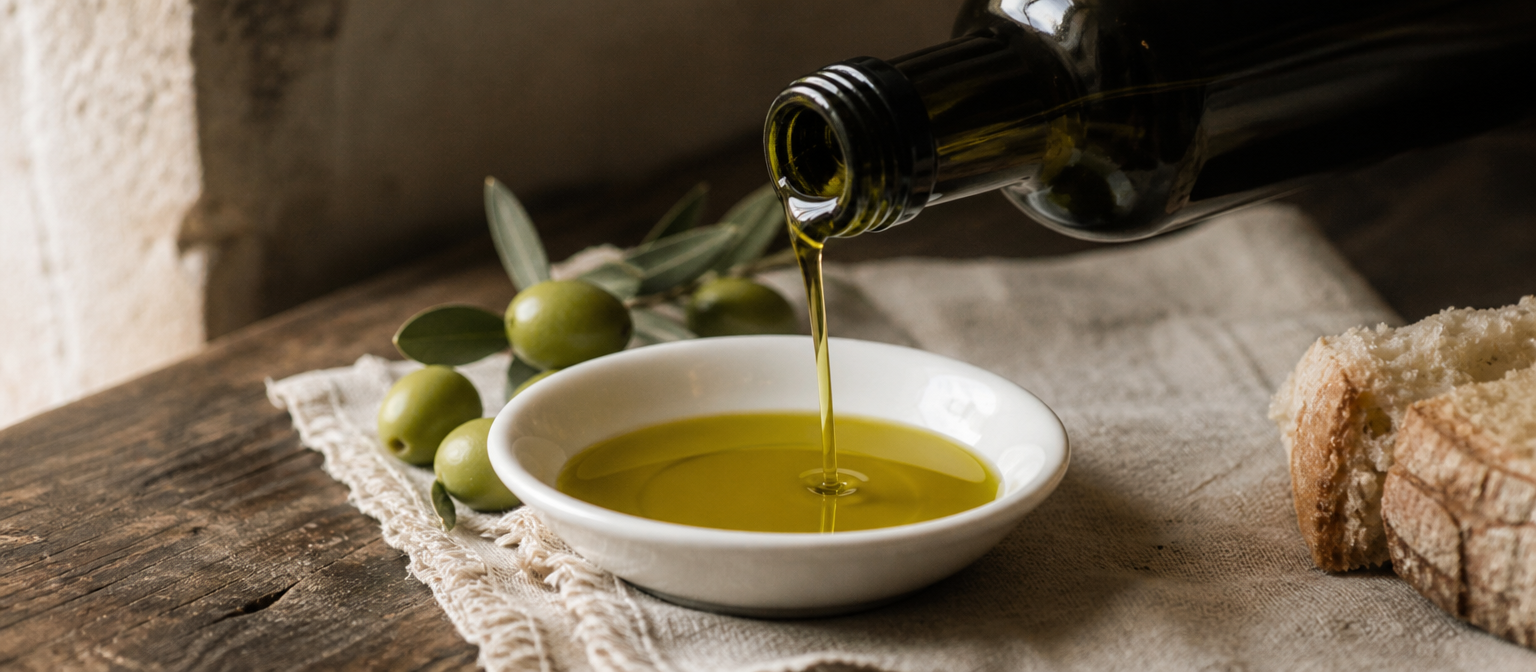
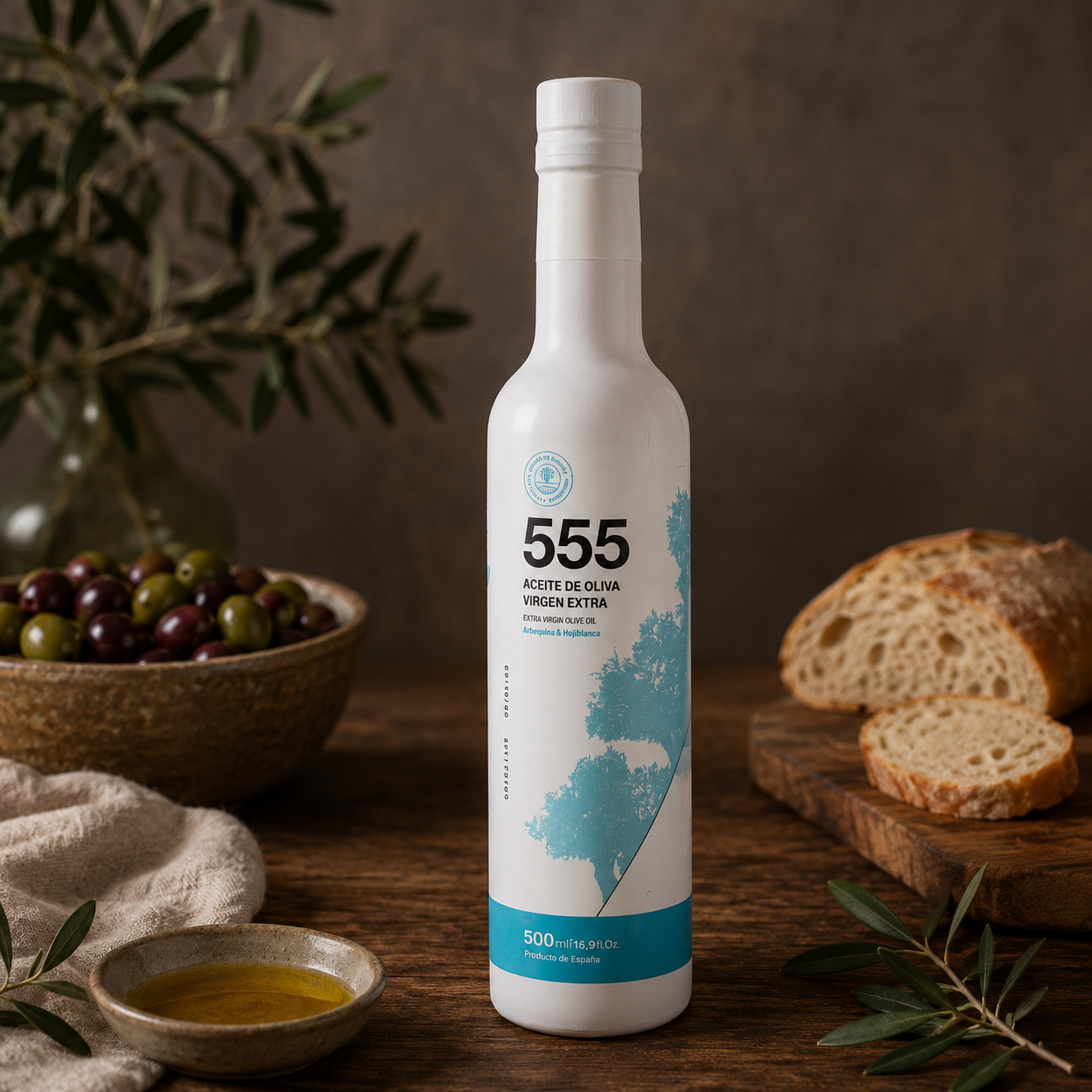
Extra virgin olive oil is not just another fat. It is an ingredient in its own right, one that deserves its own recipes — not just a splash at the end over a salad. A good Spanish oil, cold-pressed, is used raw to keep its aromas, and heated with restraint so as not to burn it. Here are five simple Mediterranean recipes that make it the lead, not the supporting act.
The principle is always the same: few ingredients, uncompromising quality, a precise hand. Authentic Mediterranean cooking is not about complication — it is about respect for the produce. Five dishes, five techniques, five pairings.
1. Pan con tomate — the Catalan breakfast
A three-ingredient dish found on every table from Barcelona to Valencia. The technique is set down to the second.
- A thick slice of sourdough country bread, toasted dry until golden. Take it out while still warm.
- Rub half a clove of garlic over the surface of the still-hot bread. Firmly. The heat melts the garlic into the crumb.
- Cut a ripe tomato in half and rub it in the same way — flesh against crumb, until the bread is soaked with the juice.
- Pour over a generous splash of Spanish extra virgin olive oil and finish with flaky salt. That is it.
The temptation is to add ham, cheese, herbs, pepper. Don't. Pan con tomate is a solo act: bread, garlic, tomato, oil, salt. Five elements. Add Iberian ham and it becomes a different dish — good, but different. For a true pan con tomate, stay at five. Its genius lies in its purity.
2. Patatas a lo pobre — poor man's potatoes
A perfect sleight of hand: a "poor man's" dish that calls for the best olive oil in the house. The potatoes cook gently in a bath of oil over a very low heat, until they are meltingly soft inside and golden outside.
- 500 g of waxy potatoes, in thin 4 mm slices.
- One large sweet onion, thinly sliced.
- 200 ml of extra virgin olive oil — don't skimp, it is the soul of the dish.
- Two cloves of garlic, unpeeled, crushed with the flat of the knife.
- Salt, and a spoonful of sweet pimentón at the end.
Cook over a low heat in a wide pan for thirty-five to forty minutes, turning gently every five minutes. The potatoes must never brown too quickly — they confit in the oil, they do not fry. At the end, lift them out with a slotted spoon and keep the oil for something else (vinaigrette, fried eggs).
3. Eggs fried in olive oil
A Spanish classic that takes two minutes but calls for two precise moves.
- Heat three tablespoons of olive oil in a small pan over a high heat until it shimmers slightly (never let it smoke).
- Crack two fresh eggs straight into the oil. The heat puffs the whites into golden, almost lacy swirls.
- With a spoon, baste the yolks with the hot oil for thirty seconds — without turning them. The white cooks, the yolk stays runny.
- Lift out, add flaky salt, sweet pimentón and two drops of raw oil on top.
If your egg whites don't form golden lace around the edges, the oil isn't hot enough. Not lively enough. The Spanish technique calls for oil at 170-180 °C — hot enough to sear, never hot enough to burn. The edge should spit slightly when the egg goes in. If nothing happens, take the egg out, wait and start again. Without the lace, it is not a Spanish egg — it is just a cooked egg.
4. Salmorejo from Córdoba — the thick gazpacho
Gazpacho's big brother from the south — denser, creamier, with no cucumber or pepper. A tomato and olive oil cream served ice-cold as a summer starter.
- 1 kg of ripe tomatoes, peeled and deseeded.
- 200 g of stale country bread, soaked for ten minutes in cold water and squeezed out.
- 1 clove of garlic, germ removed.
- 120 ml of extra virgin olive oil — the amount is deliberate.
- A spoonful of sherry vinegar from Jerez, salt.
Blend everything together for three minutes — the length of blending is what creates the creamy texture. The colour should turn from tomato red to coral pink as the oil is worked in. Pass through a fine sieve and chill for at least four hours. Serve ice-cold in bowls, topped with chopped Iberian ham and crumbled hard-boiled egg.
5. Tomato tartare with olive oil
A dish somewhere between Catalonia and Nice, a summery fresh starter. Three main ingredients, plated like a beef tartare.
- Cut three ripe tomatoes into very small dice (5 mm) and leave them in a sieve for twenty minutes to drain.
- Mix with one finely chopped shallot, ten shredded basil leaves, a teaspoon of sherry vinegar, flaky salt and pepper.
- Add two tablespoons of extra virgin olive oil when plating — not before, so the tomatoes don't "cook" in the acid.
- Shape in a ring, unmould, and finish with flaky salt and a splash of oil on top.
The move that matters
Five dishes, five moves
For each recipe, the detail that makes the difference. Tap a card.
Which oil to choose — the general rule
For these five recipes, two styles of extra virgin oil work:
- Green fruity oil (Picual, young Hojiblanca). Grassy, slightly peppery notes. Ideal raw — pan con tomate, salmorejo, tartare.
- Ripe fruity oil (Arbequina, mature Hojiblanca). Soft, buttery, slightly almondy notes. Ideal for slow cooking — patatas a lo pobre, fried eggs.
Olive oil is not for drinking. It is for tasting on something that brings it out.Andalusian cooking
Pour a teaspoon of extra virgin olive oil into the hollow of your palm. Warm it for three seconds by rubbing, then smell. You should clearly pick up: freshly cut grass, green almond, sometimes tomato or artichoke. If you smell nothing, or just "fat" with no aroma, the oil is not fresh. A real extra virgin is a living oil — it should hit your nose. If not, it is refined oil, best avoided.
Choosing the oil
Which oil for which dish?
Two styles, and a test that fits in your hand.
The takeaway
Authentic Mediterranean cooking is built around a good-quality extra virgin olive oil, used generously or with restraint depending on the dish. Five recipes are enough to understand the technique — pan con tomate, patatas a lo pobre, fried eggs, salmorejo, tartare. Raw or slow-cooked, never hard-fried. And always plenty of it: the oil makes the dish.
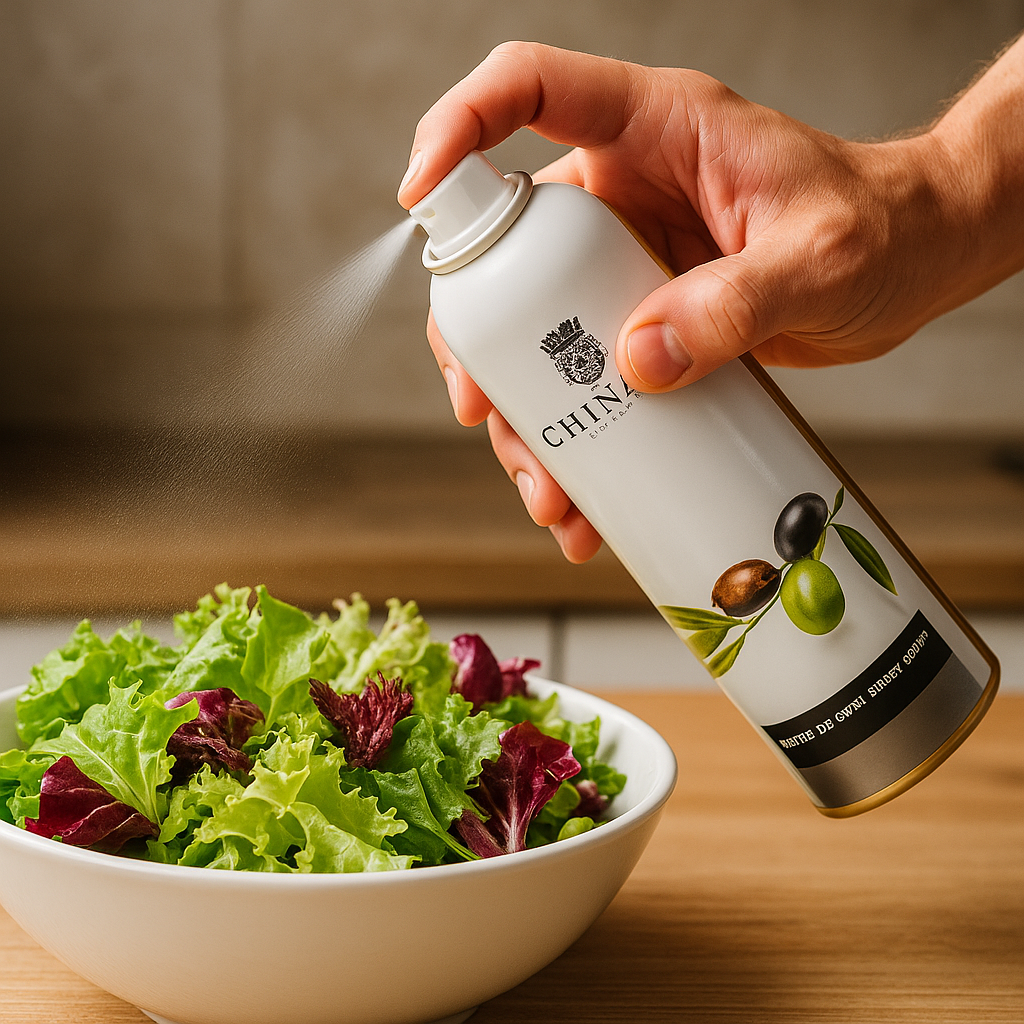
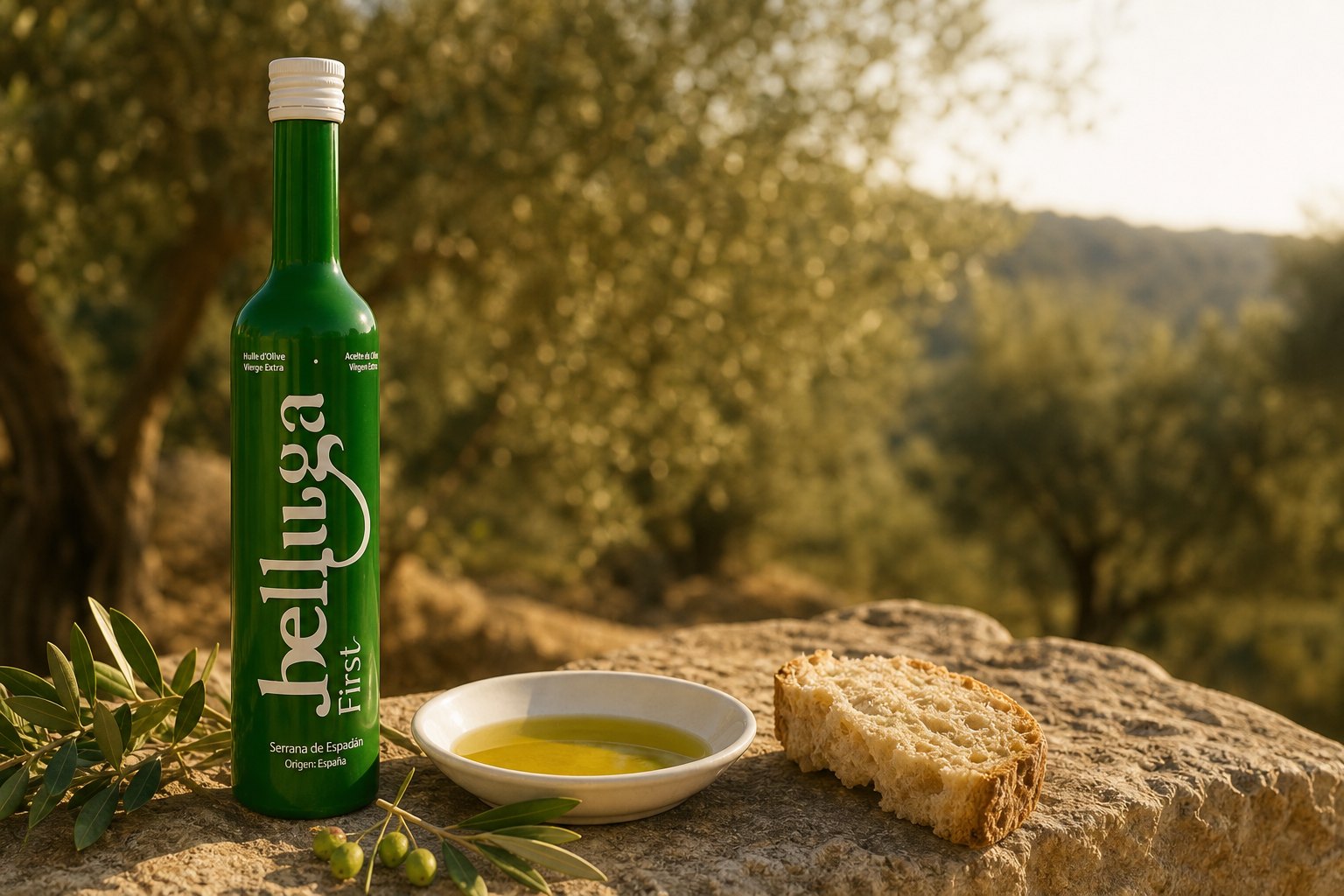
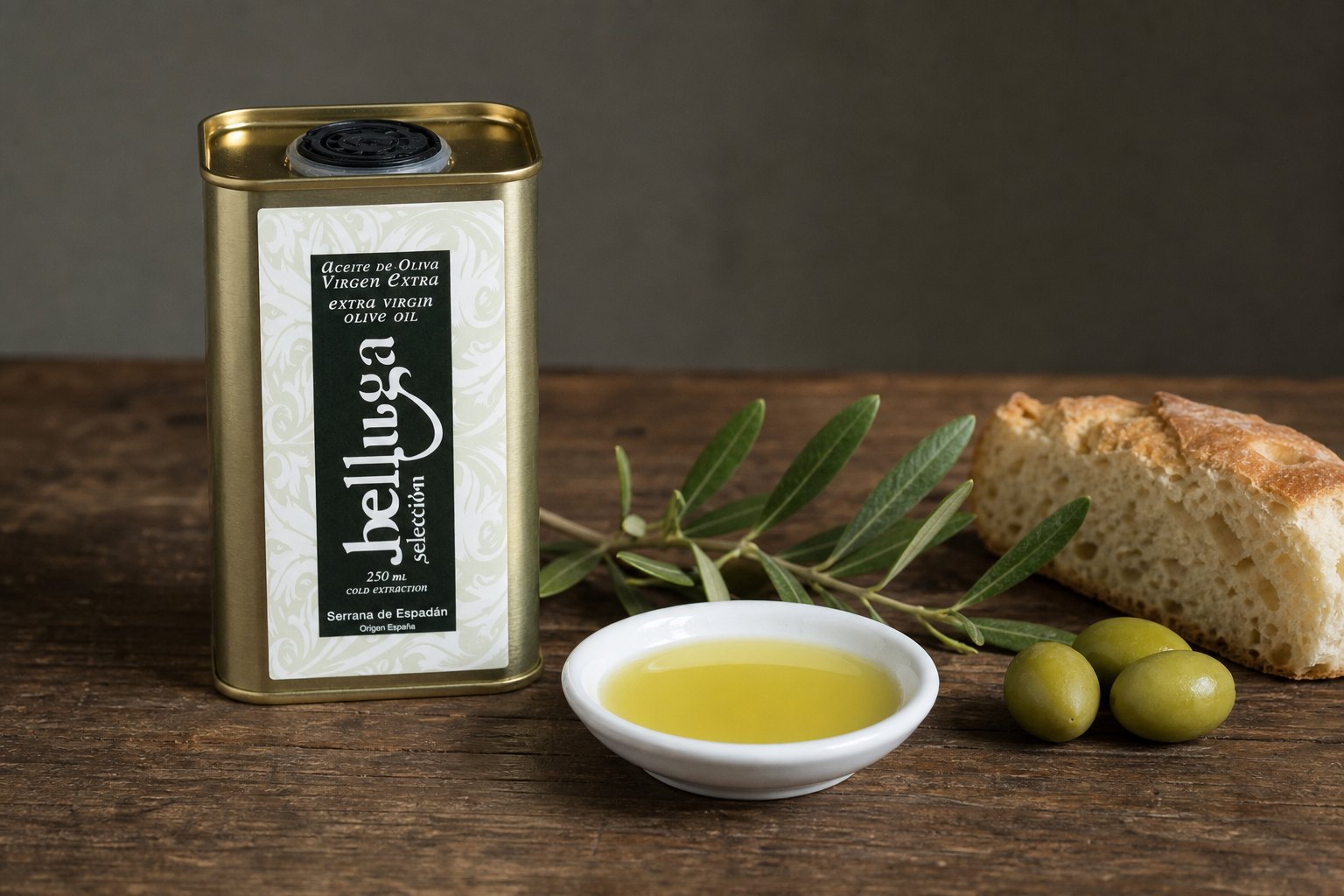
Our selection of Spanish extra virgin olive oils, including La Chinata and Belluga, is in our olive oil section. Delivery in Switzerland in 3 to 7 working days, free returns within 14 days.
Quick quiz
Have you got the knack?
Four questions, the answers are in the article.