Some Sundays smell of golden garlic, saffron, and bread rubbed with tomato. In Spain, the Sunday meal is not an exceptional event — it's simply what happens each week, without fuss, when the family gathers around a table that overflows slightly. This menu follows that logic: a sequence of dishes designed so the cook is also at the table, not just at the stove.
The sequence, in the order it arrives
A Spanish family meal follows a natural rhythm. The aperitif is not a formality — it's the moment when people really settle in. You place fresh vermouth on the table, some marinated olives, two or three slices of Iberian ham. No careful presentation. Just enough to keep hands occupied while the kitchen finishes organizing itself.
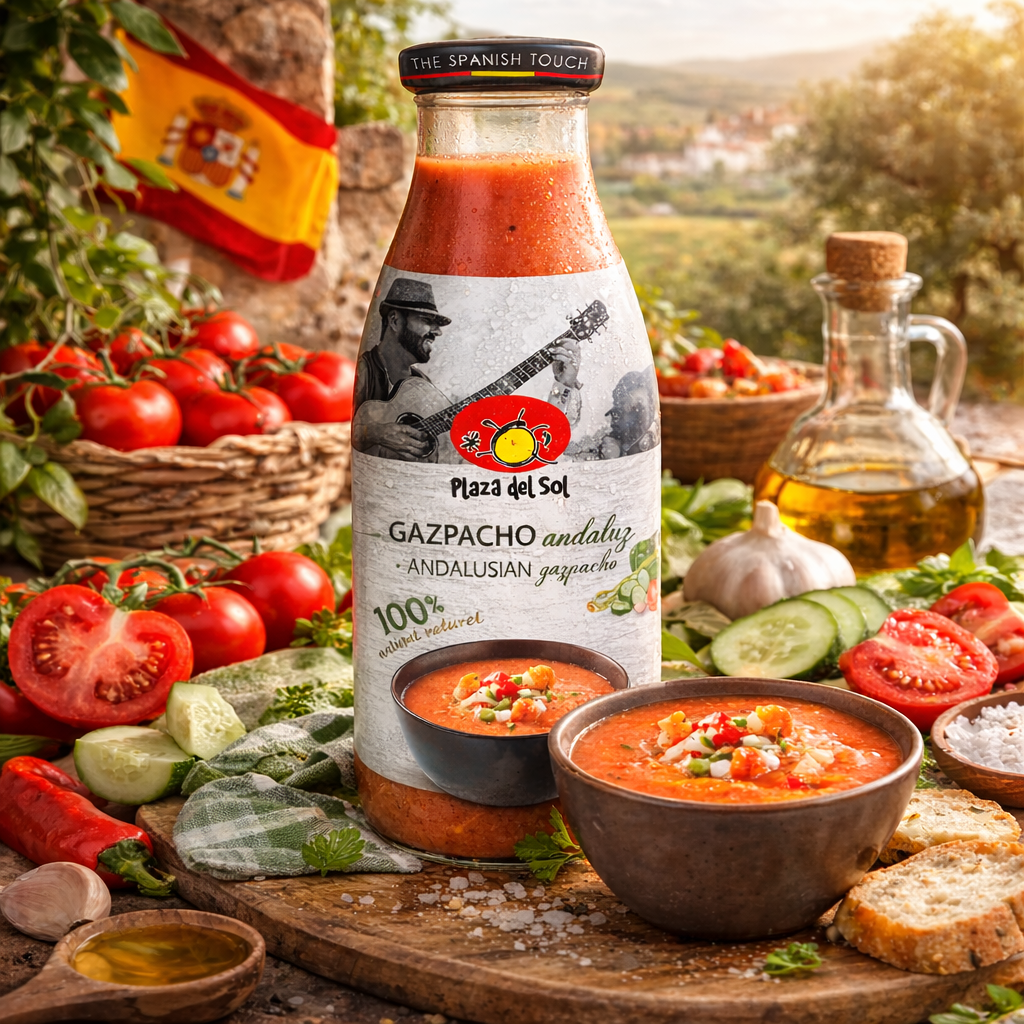
Then comes the gazpacho. Served cold, in glasses or deep bowls, it serves as a light starter that awakens without weighing down. Ripe tomatoes, cucumber, red pepper, garlic, Sherry vinegar, olive oil — the gazpacho is blended the day before and served straight from the refrigerator. This is one of the two dishes that won't ask anything of you on the day itself.
The croquettes arrive hot, just after. Those made with Iberian ham are the most classic: dense béchamel, thin crust, melting interior. If you make them at home, the mixture is prepared two days ahead. If you buy them ready to fry, fifteen minutes in oil is enough. They disappear quickly — plan on a dozen per person if your family is like mine.
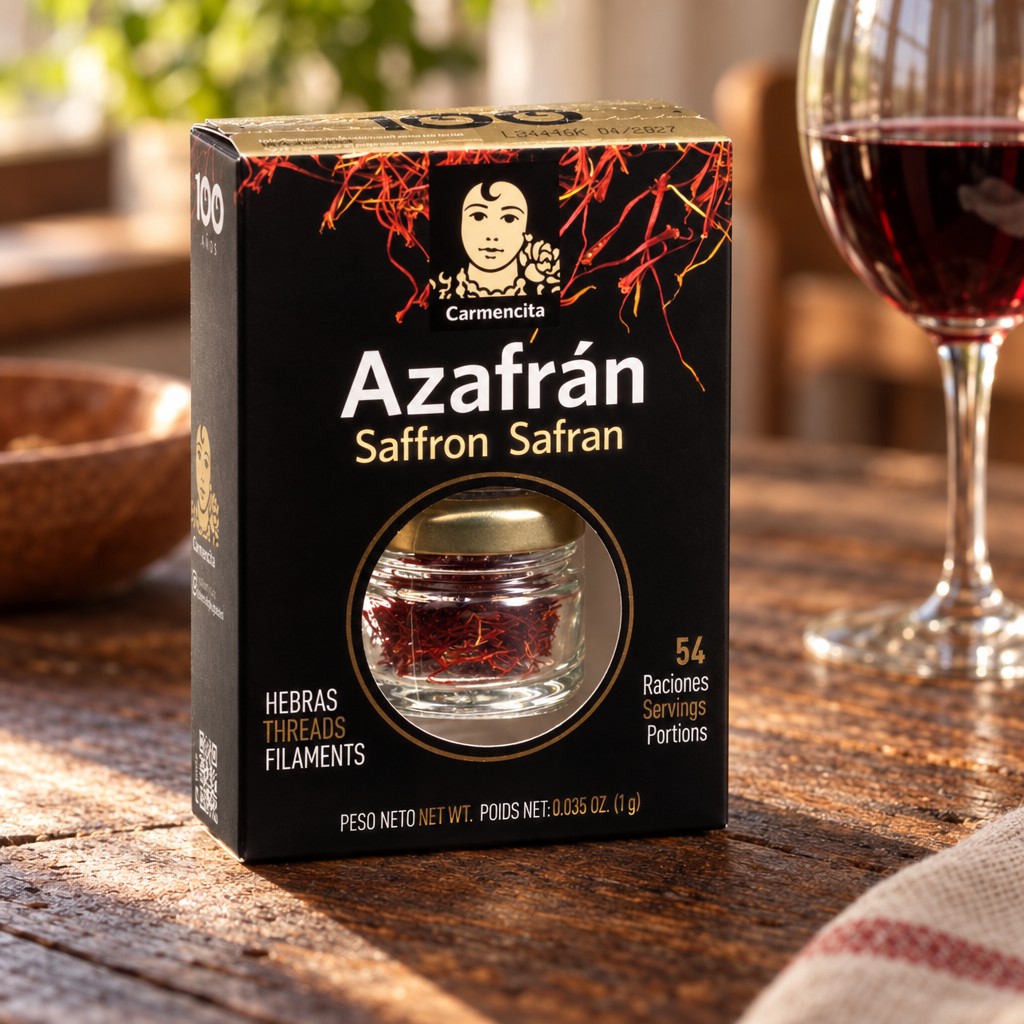
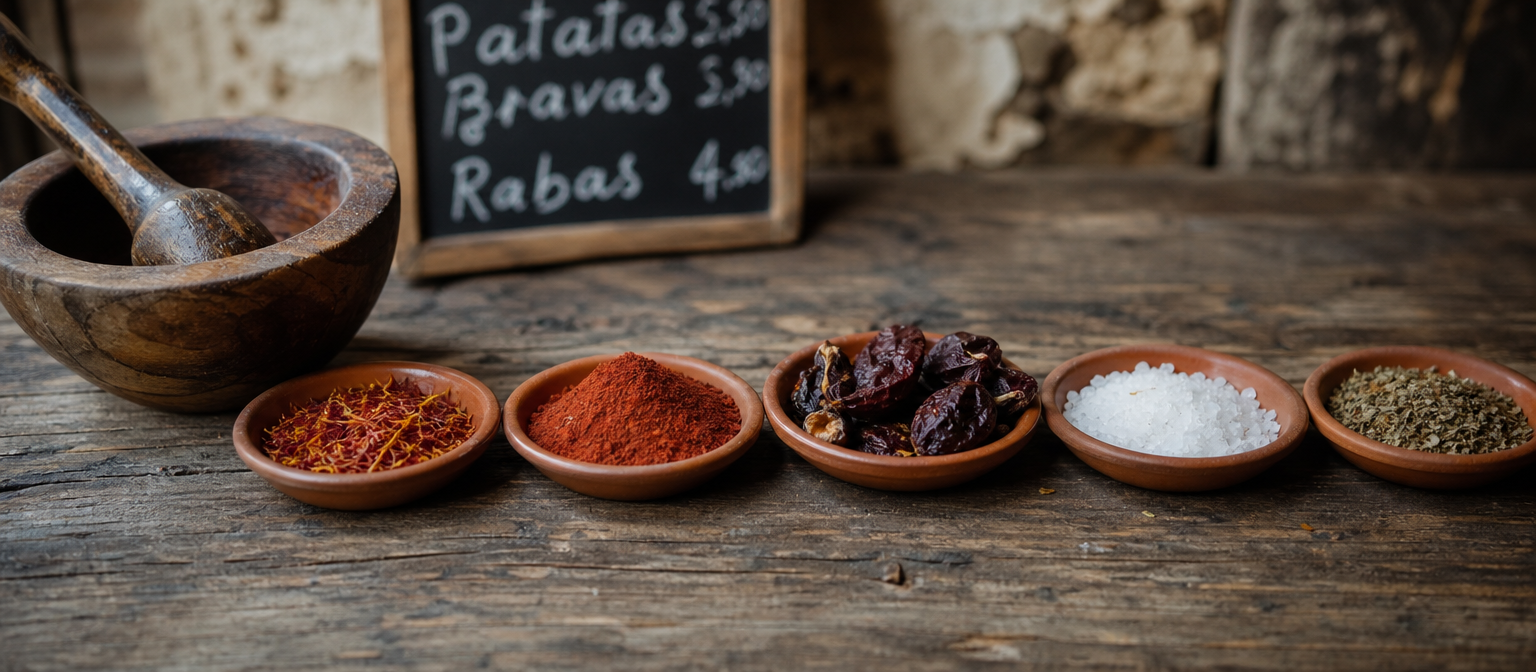
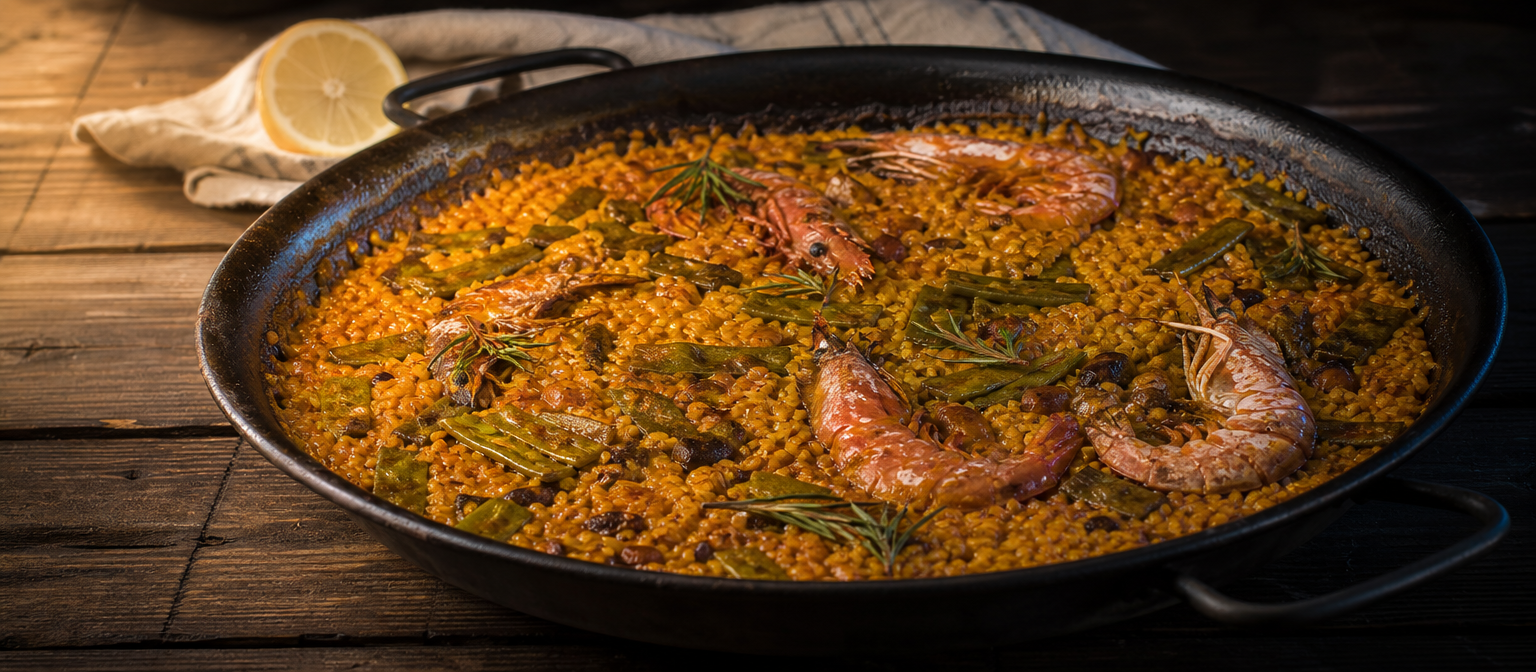
The paella comes next, and it's what structures the meal. You don't need a wood fire to make it succeed, but you do need Spanish round-grain rice — bomba or seña — hot stock, saffron, and the patience not to stir. Serve it with pan con tomate (toasted bread rubbed with tomato and garlic, drizzle of oil, flaked salt) and roasted pepper salad. Both accompaniments can be prepared in advance.
Dessert is Catalan cream. Close to French crème brûlée but more fragrant — cinnamon, lemon zest, sometimes orange. It's made the day before, left to rest overnight in the cold, and the caramel is done at the last moment with a blowtorch or the blade of a heated spoon. Coffee closes the table, strong and short, Spanish style.
The Spanish Sunday meal is a social institution as much as a culinary one. It structures the week and maintains family bonds in a way that few other food rituals have preserved in Western Europe.Joan Roca, Catalan chef and food writer
The menu
Six moments, from vermouth to crema catalana
Tap a dish: what goes in, when to make it, the move that changes everything.
What to prepare when, and why it changes everything
The classic mistake with such a menu is leaving everything for the morning itself. Here's how to spread the work:
- Two days before: croquette mixture is prepared, cooled, shaped, and breaded.
- The day before: gazpacho blended and chilled, peppers roasted and peeled, Catalan cream poured into ramekins.
- The morning: paella stock prepared, bread sliced for pan con tomate, table set.
- 1h30 before sitting down: croquettes in hot oil, paella started — that's all.
- At serving time: pan con tomate rubbed at the last moment, caramel on the Catalan cream.
This breakdown radically changes the experience. Sunday morning, the cook isn't rushing around. He can have a coffee, put on music, welcome guests without stress. The Spanish brunch — if you can call this aperitif that starts at noon by that name — is never stiff because it's never rushed.
Unlike other dishes, bomba or seña rice is never rinsed before cooking. The starch on the surface is precisely what will bind the stock and create the socarrat — that fine golden crust at the bottom of the pan. Add the rice directly to the hot sofrito, toast it for thirty seconds, then pour in the stock all at once. Don't stir again until the end.
The countdown
What to do, and when
Four stages to reach the table relaxed.
What to take away
A Spanish Sunday meal rests on two principles: spread the preparation over two days, and resist the urge to overcomplicate. Gazpacho and roasted peppers are made the day before — non-negotiable if you want to be relaxed at table. Paella asks for only one thing really: don't stir. Croquettes freeze very well if you make too many, which often happens. And Catalan cream forgives imperfections — even an uneven caramel disappears at the first spoonful.
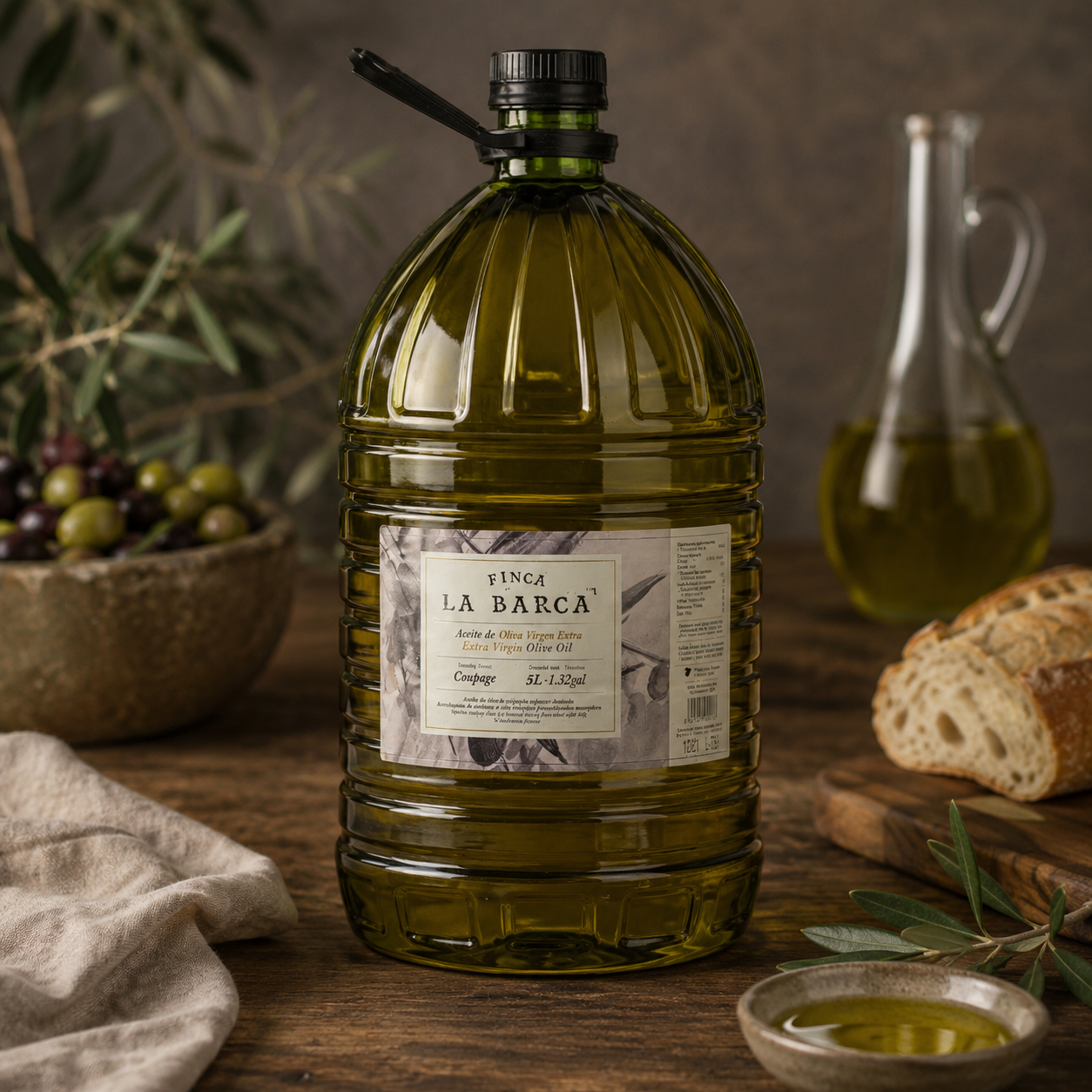
Several products from this menu — olives, paella rice, saffron strands, Spanish olive oil — are available in our catalogue. Delivery to Switzerland within 3 to 7 working days, free returns for 14 days.
Quick quiz
Is your Sunday well planned?
Four questions, the answers are in the article.