Free shipping over 25 CHFTWINT · PayPal · CardsFree returns 14 daysFree shipping over 25 CHF · Free returns 14 days
Le Journal
Vermouth, fino, Albariño: choosing the right wine for your tapas
5 May 2026
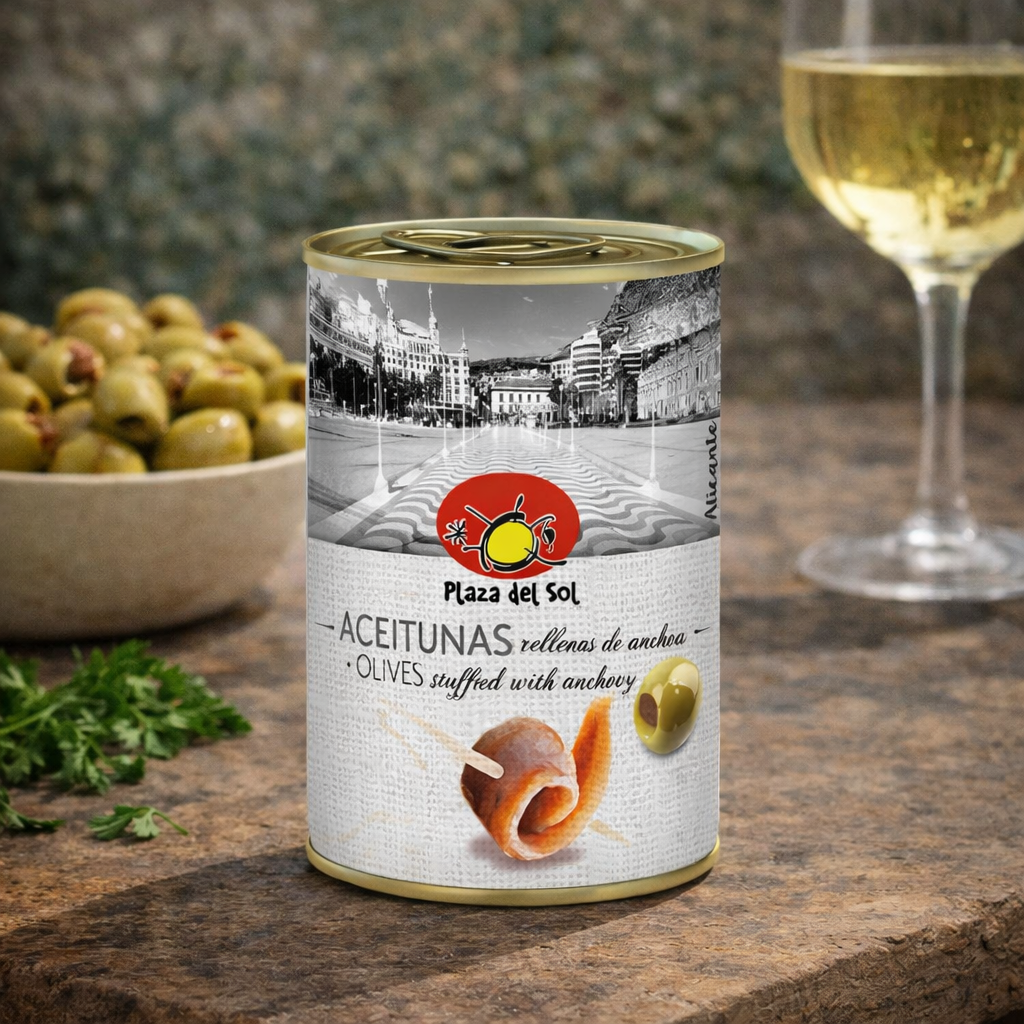
A tapas table builds slowly. You set down the olives, open the ham, take the anchovies from the jar. What's often missing is the glass that matches each moment. Not an absolute rule — a logic of texture, acidity, salt. Iberian wines have this peculiarity of having been shaped precisely for that.
01 / 03
What each wine does on the table
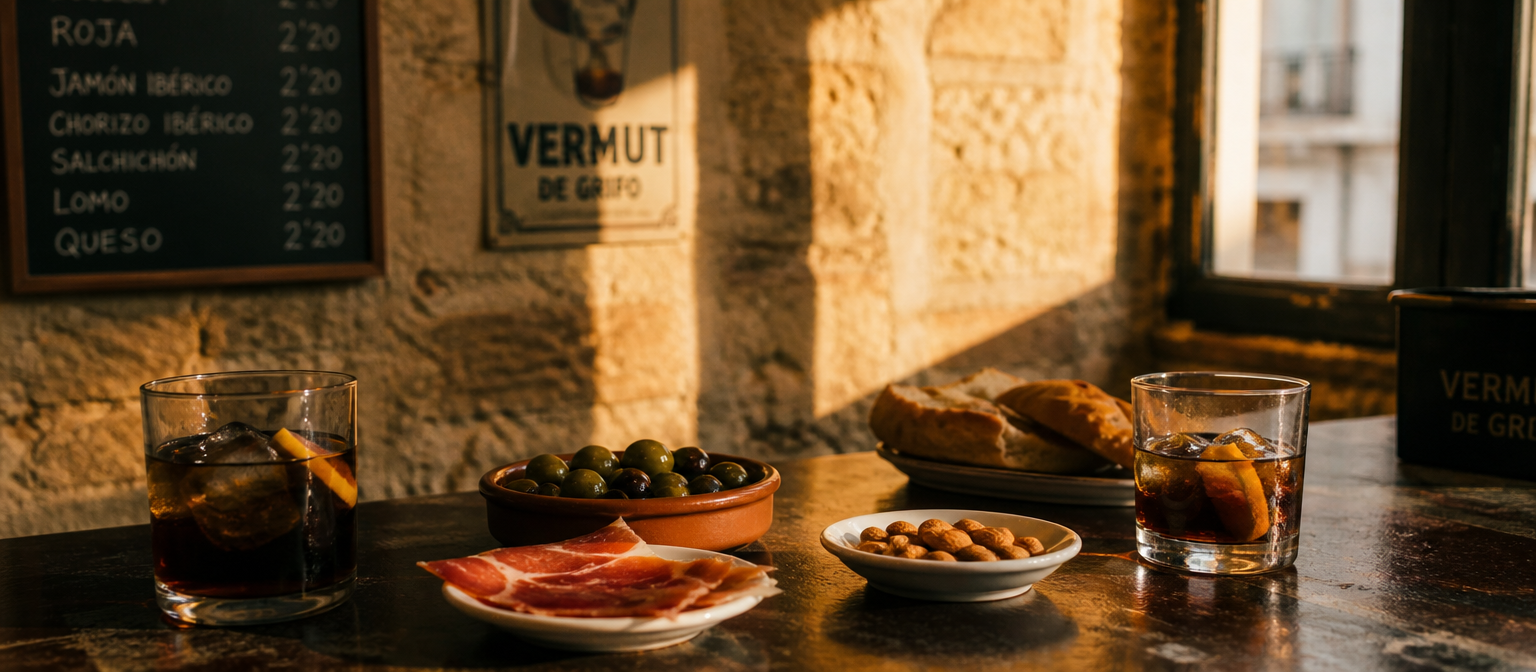
Red vermouth — the kind drunk in Barcelona late morning, la hora del vermut — is a fortified wine aromatised with bitter herbs. Its gentle bitterness cleanses the palate between a manzanilla olive and a slice of ham. It's served chilled, around 10-12 °C, in a wide-rimmed glass with an ice cube and an orange slice. It's not a substitute aperitif: it's a terroir product with its own logic.
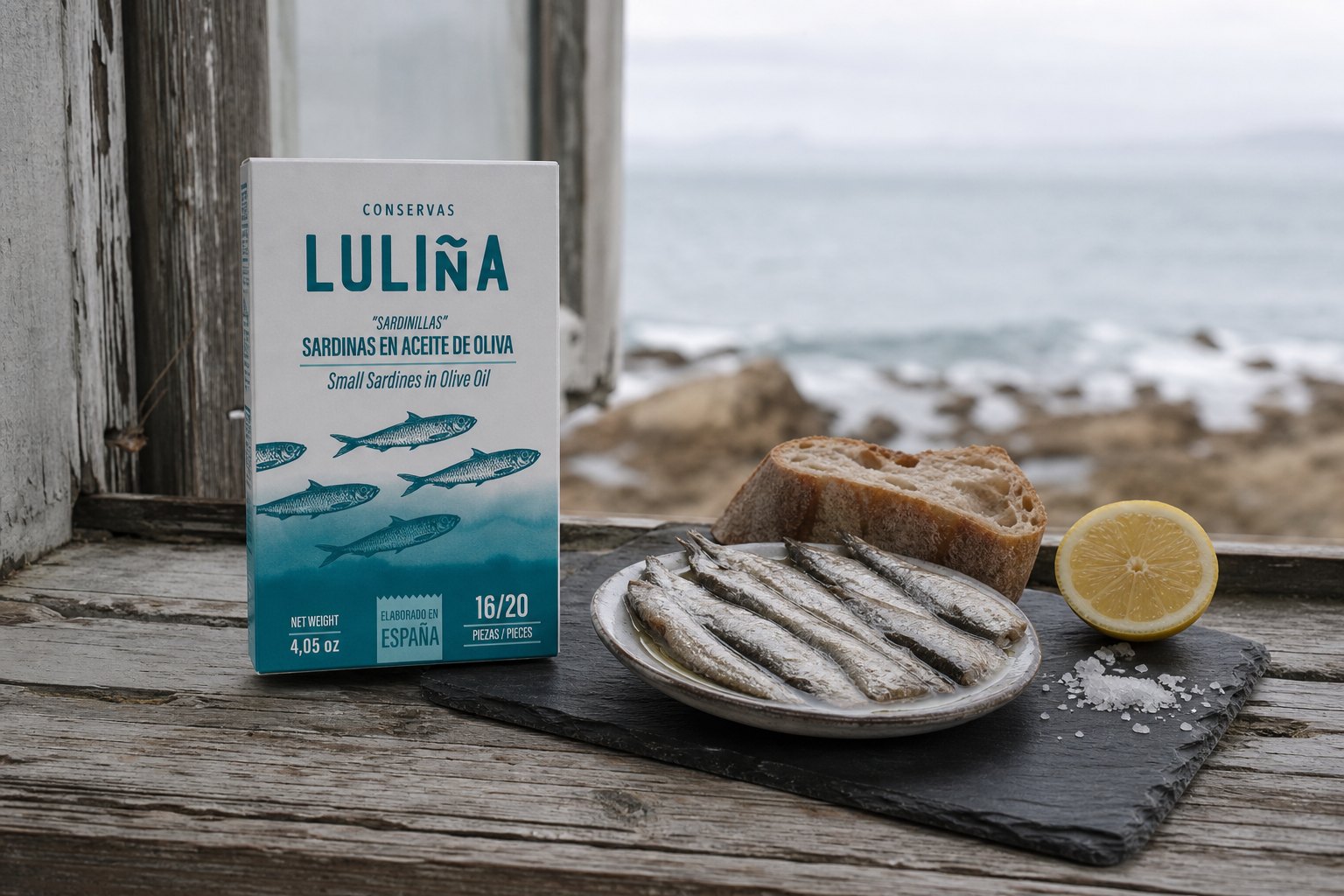
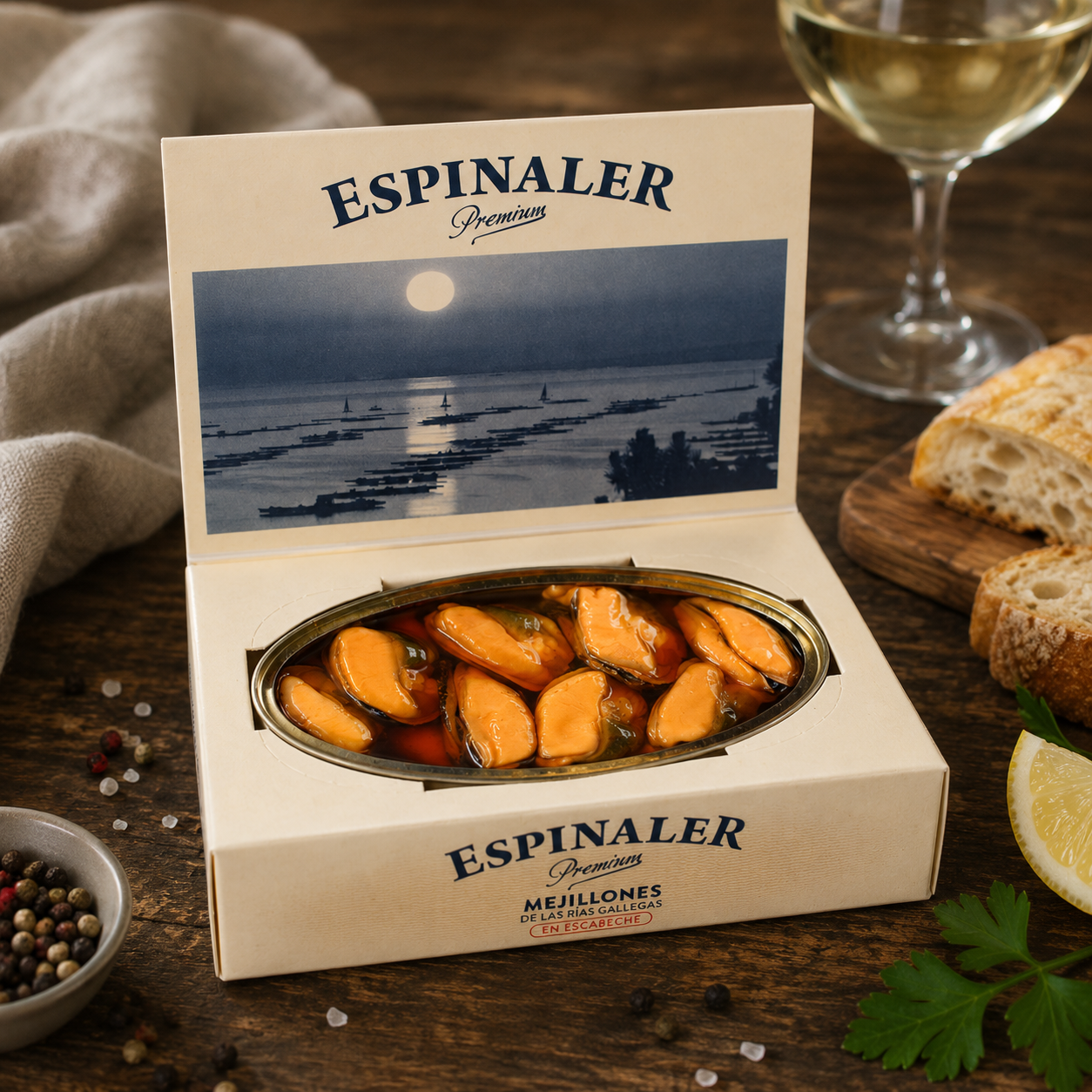
Jerez fino is an organic sherry, protected by a layer of living yeasts called flor. Dry, saline, with a note of green almond, it's the most obvious pairing with canned fish: oil-packed sardines, salt-cured anchovies, vinegared boquerones. The rule is simple — the more iodised the fish, the longer the fino holds its ground. It's served very cold, between 6 and 8 °C, in a sherry glass or a narrow white wine glass. Once opened, it keeps no more than two weeks in the refrigerator.
Manzanilla is technically a fino produced in Sanlúcar de Barrameda, on the Atlantic coast. The sea wind gives it an even saltier character, almost briny. It's the wine for tortilla de patatas — egg, potato, a touch of olive oil fat. Manzanilla cuts through that fat with precision. Same serving temperature as fino.
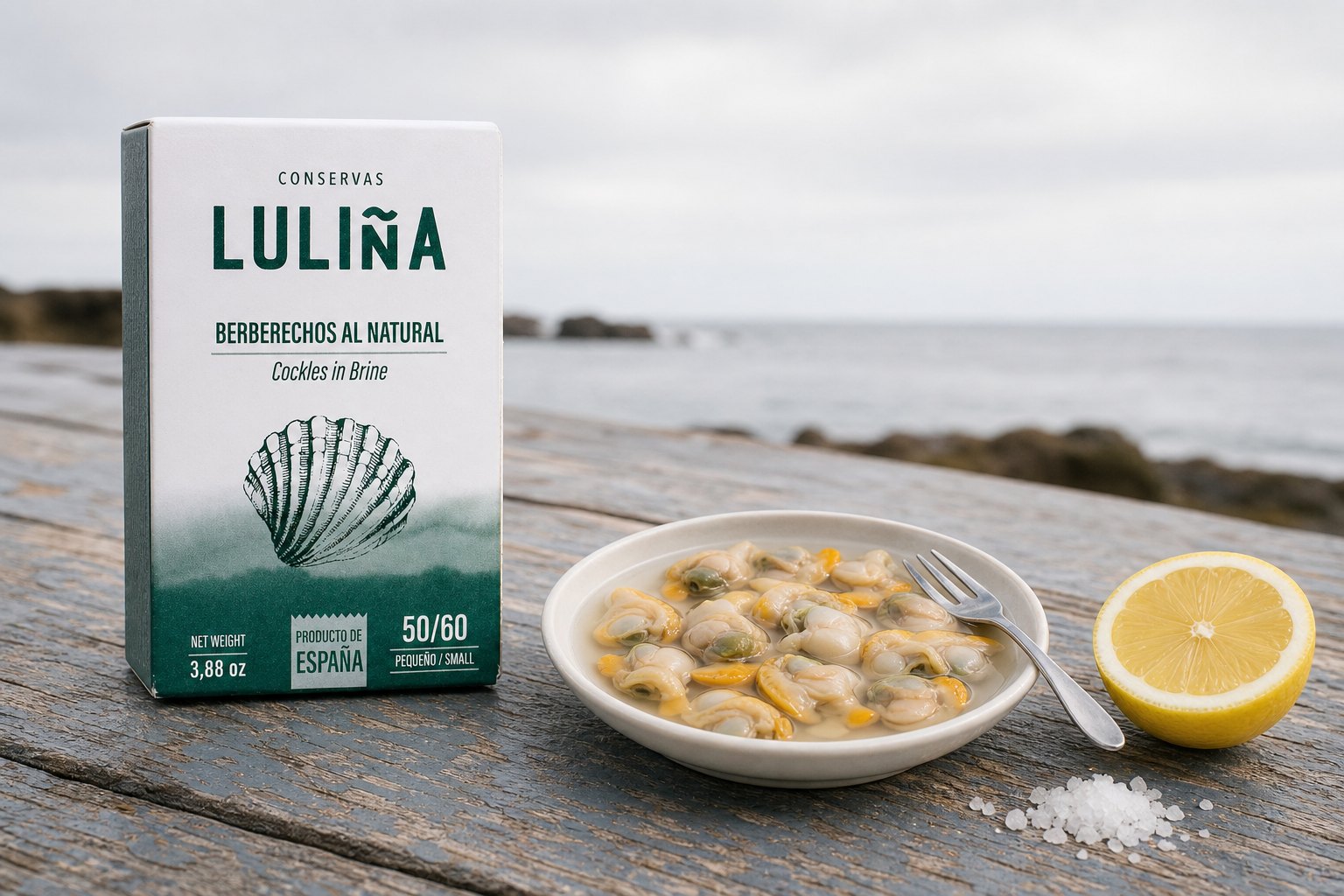
Albariño comes from Galicia, a rainy Atlantic region. It's a bright white, marked acidity, with notes of citrus and sometimes white peach. With shellfish — moules marinières, cockles with lemon, clams simply opened — it has a geographical logic as much as a gustatory one: the sea on one side, the sea on the other. Serve between 8 and 10 °C, in a standard white wine glass.
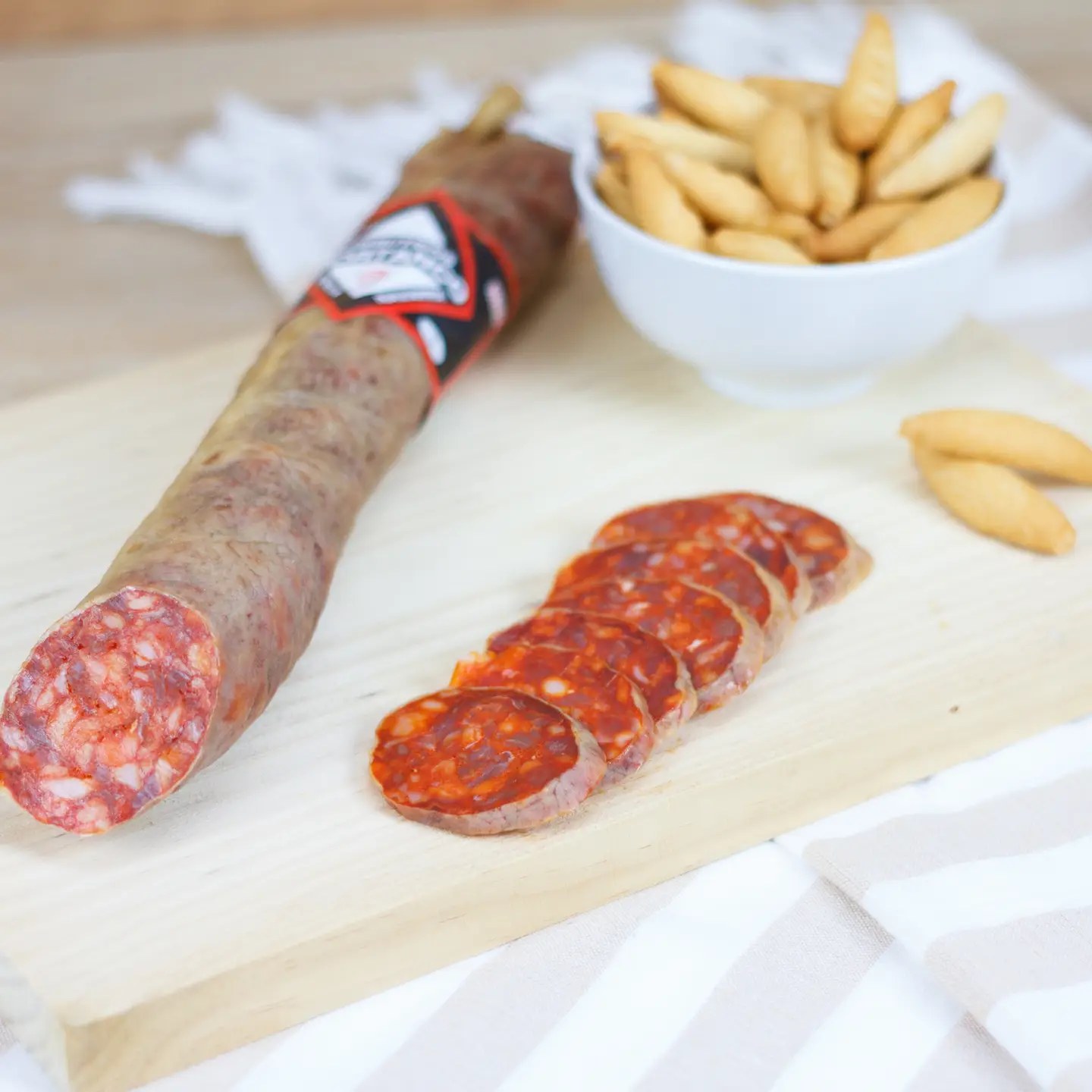
For meats — grilled chorizo, morcilla, lamb skewers — a young Ribera del Duero, based on Tempranillo, brings the necessary tannin structure without overwhelming the spices. Contrary to what one might think, it doesn't need to be served at room temperature: 16-17 °C is enough, what the Spanish call fresco de bodega.
Fino is the only wine in the world whose protection against oxidation is ensured by a living organism.José Peñín, Guía Peñín de los Vinos de España
A short glossary
Four words to know before you pour
Tap a card: what the word means and what it changes in the glass.
02 / 03
How to organise the progression on a table
The most common mistake is putting everything out at once. A tapas table has a sequence logic, even if informal.
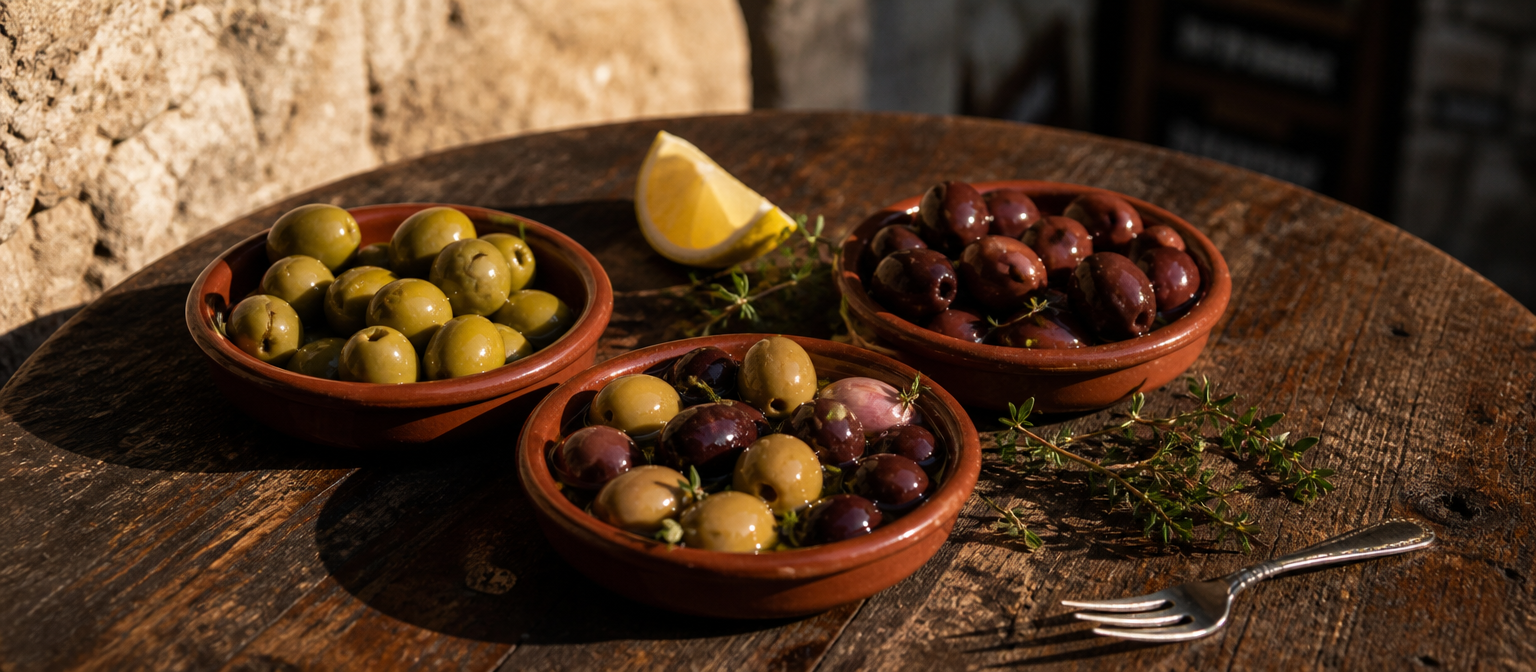
Begin with vermouth with olives, pata negra crisps, first light charcuteries.
Move to fino or manzanilla when canned fish and anchovies arrive.
Open the Albariño when fresh shellfish or mejillones a la marinera appear.
End on a Ribera red if the table turns toward grilled meats or aged cheeses.
This progression follows a logic of power: from lightest and most bitter to most tannic. It also follows the logic of the traditional Spanish meal, where tapas are not a single dish but a conversation that lasts.
On glasses: a clean glass for each wine, even a simple one. A fino drunk from a glass that held red loses its character in thirty seconds. This detail changes everything.
Chef's corner · Hector speaks
Rinse the glass with cold water before fino
Before pouring a fino or manzanilla, I always rinse the glass with a little cold water that I discard, then dry it quickly. This removes any trace of dishwashing or cupboard smell. Fino is sensitive: the slightest residual soap scent is enough to erase its salinity. It's a thirty-second gesture worth more than the finest glass in the world poorly prepared.
6°C
Ideal temperature for serving a Jerez fino
1300
Years of documented wine-growing history in Jerez
3
Atlantic regions: Jerez, Sanlúcar, Galicia — same marine logic
The table in four stages
Which glass, at which moment?
Tap a stage: what to serve, at what temperature, in which glass.
03 / 03
What to remember
Red vermouth calls for bitterness and charcuterie; it structures the start of the meal without weighing it down. Fino and manzanilla are natural companions to everything that comes from the sea, preserved or fresh. Albariño, with its Atlantic acidity, is made for shellfish. A Ribera del Duero served lightly chilled holds its own against spiced meats. In all cases, serving temperature matters as much as the wine choice itself — a warm fino is no longer truly a fino.
The olives, tinned seafood and cured meats that go with these wines are waiting in our catalogue. Delivery in Switzerland within 3 to 7 working days, free returns within 14 days.