There is one hour of the day that Spaniards have protected like an intangible heritage: the aperitivo. Between 1 and 2 pm on Sundays, or around 7 pm on weekdays. A glass of vermouth, two or three small plates in the middle of the table, and a conversation that stretches on. It is a ritual — not a snack, not an abandoned dinner. It is the Spanish aperitif, and it has its rules.
The common mistake, seen from Switzerland, is to confuse the Spanish aperitif with an assortment of tapas. It is not quite the same thing. Tapas are ordered one by one in a bar. The aperitif, on the other hand, is put together at home, with fewer elements, better chosen. Here is how.
The canon of the Spanish aperitif — five elements are enough
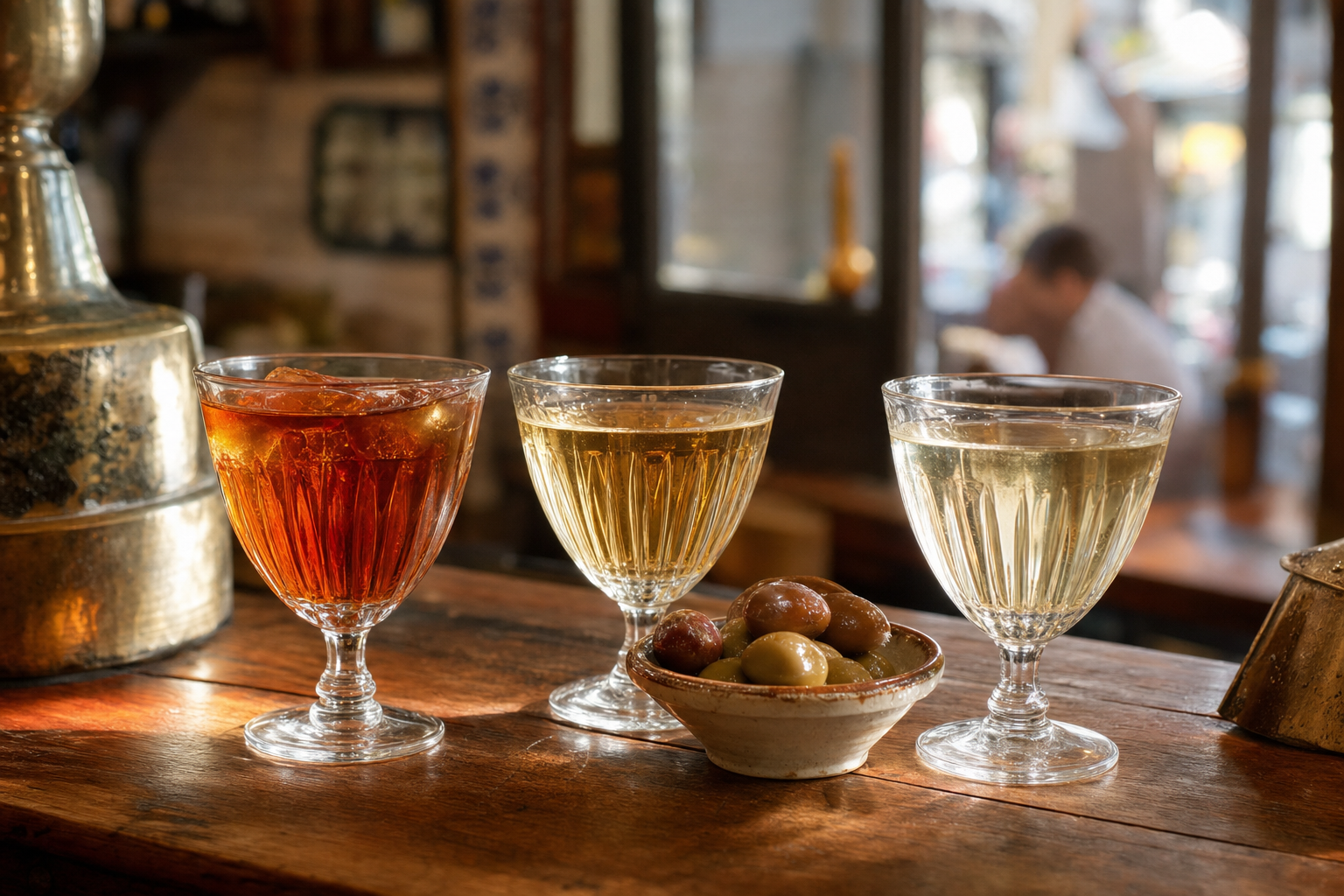
- A drink — chilled glass. Red vermouth over ice (Yzaguirre, Padró), or an ice-cold Fino from Jerez, or a draught beer. Never a complicated cocktail.
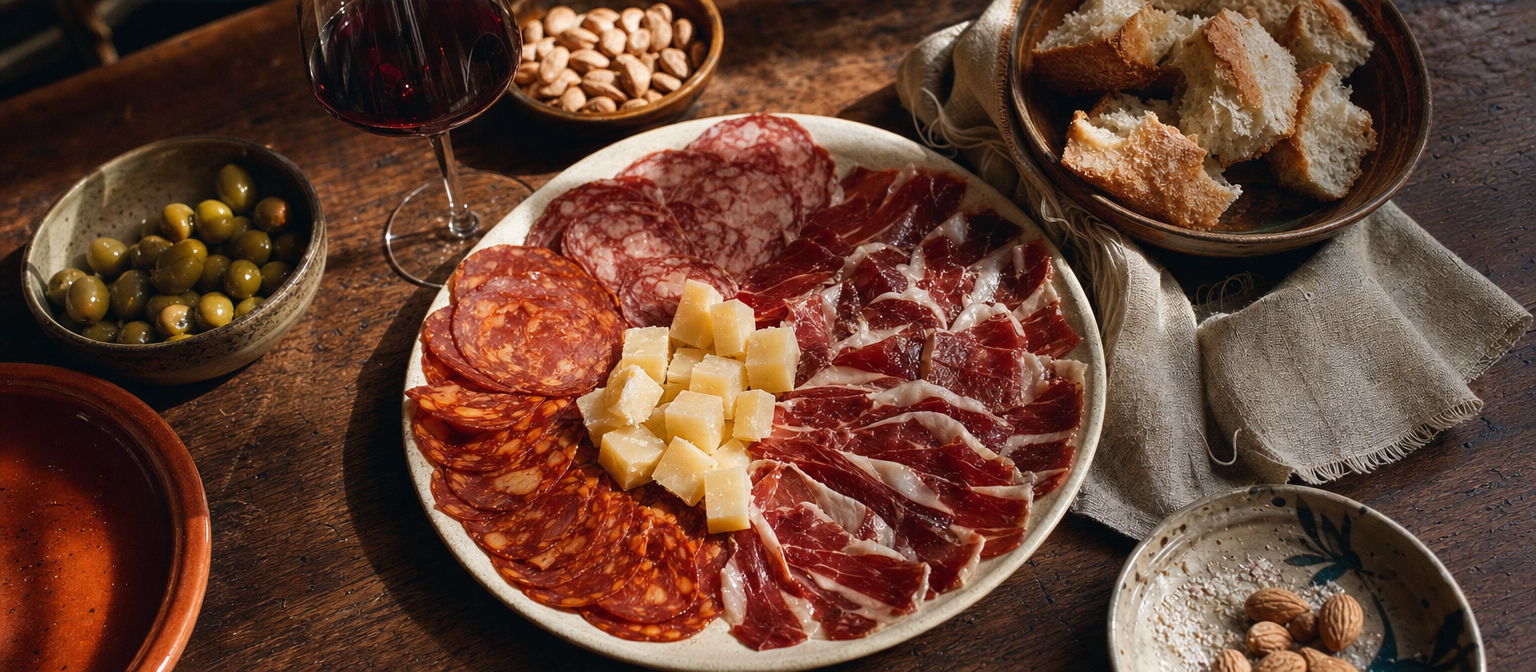
- A cured meat — thin slices. Three or four slices of Iberian Bellota ham. That is all. No need to pile it on.
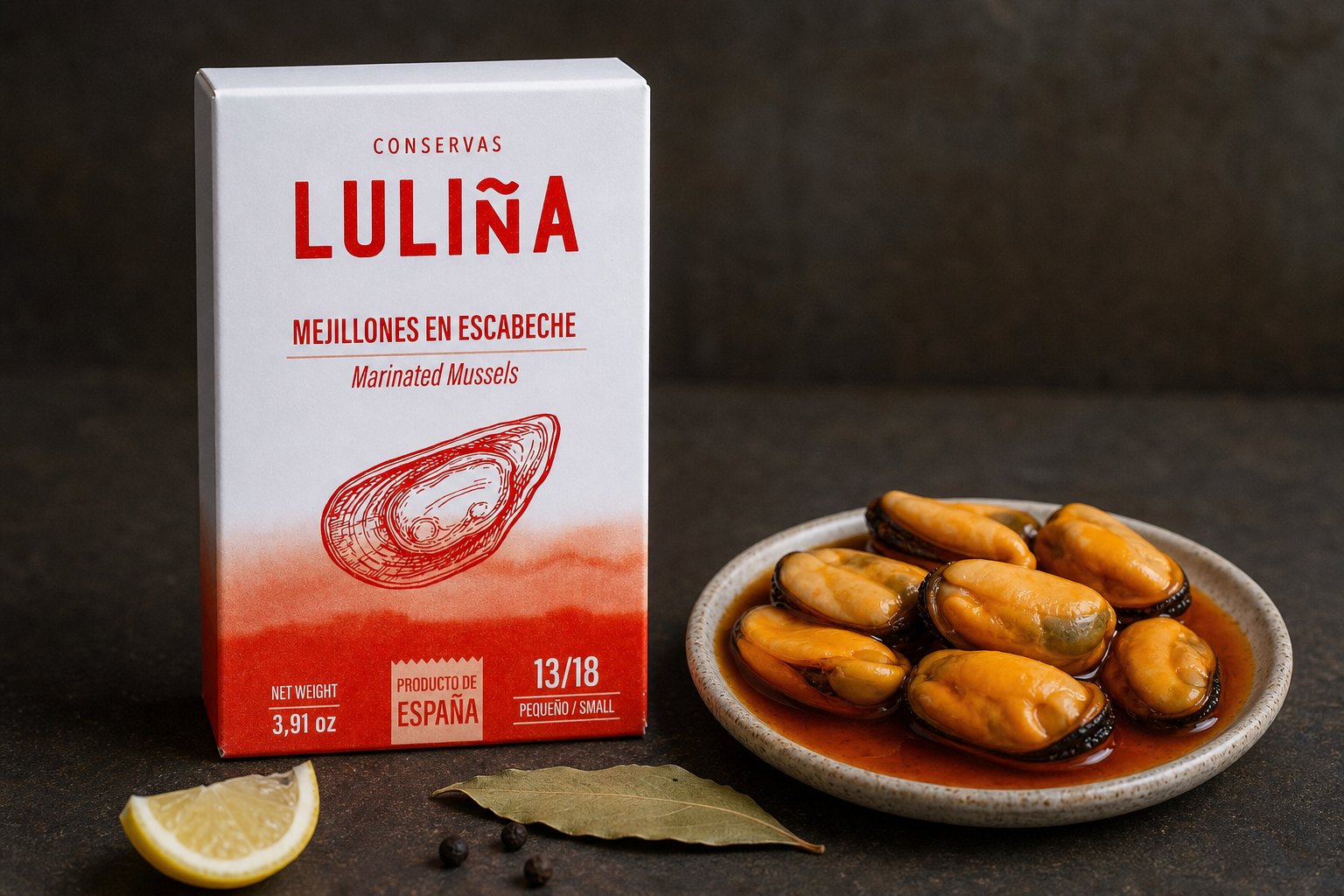
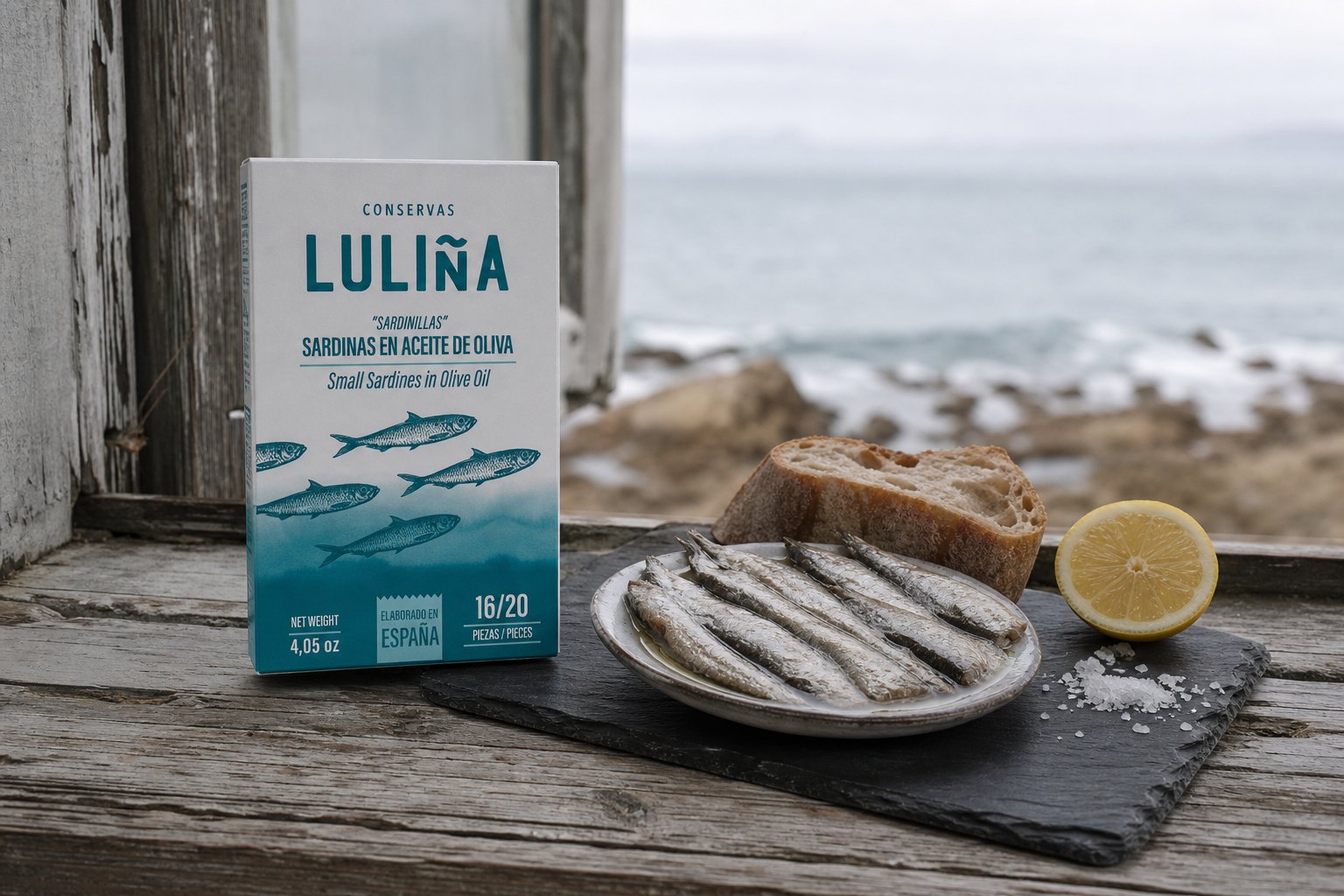
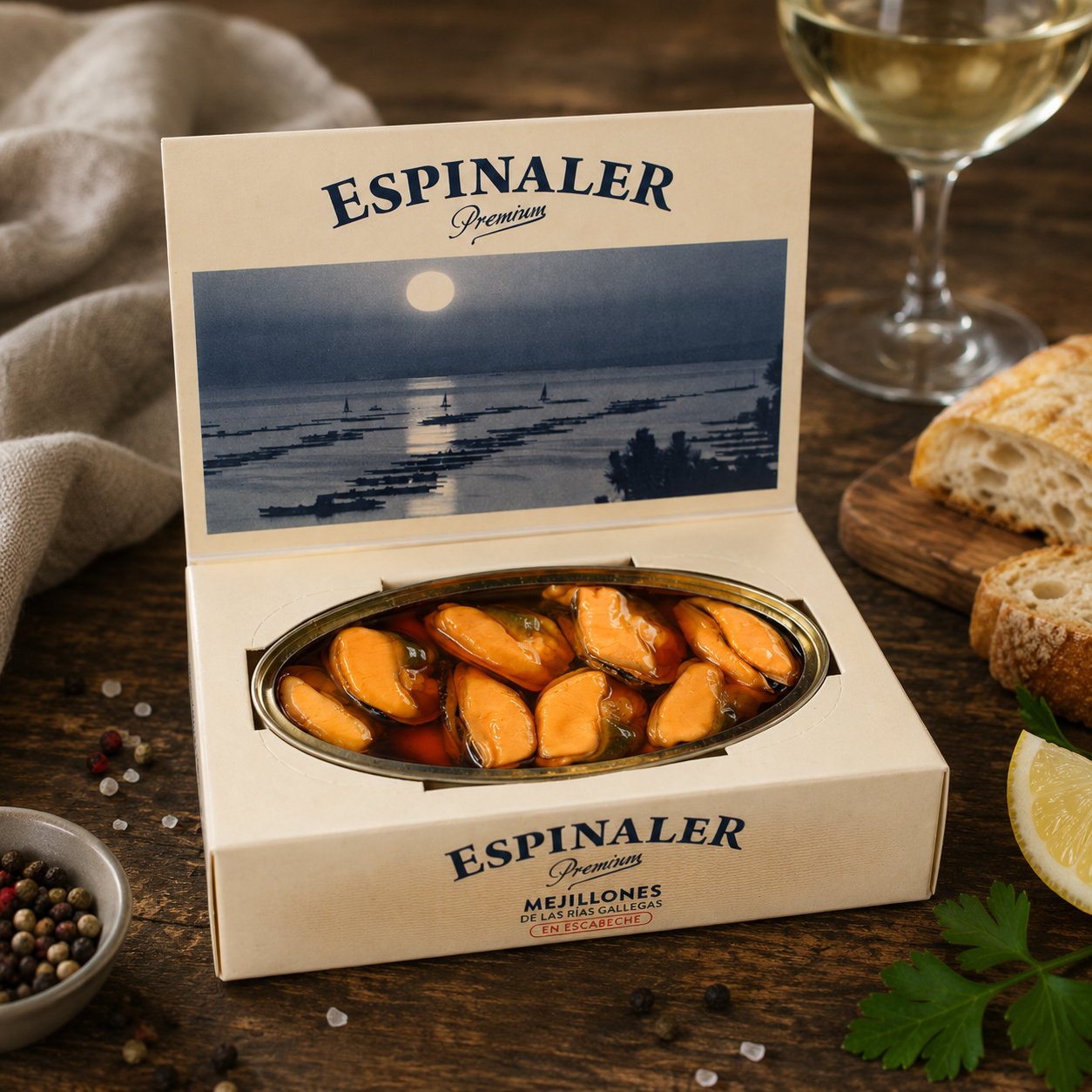
- A tin — opened on the table. Sardines, Cantabrian anchovies or mussels in escabeche. Served in the tin, with their oil.
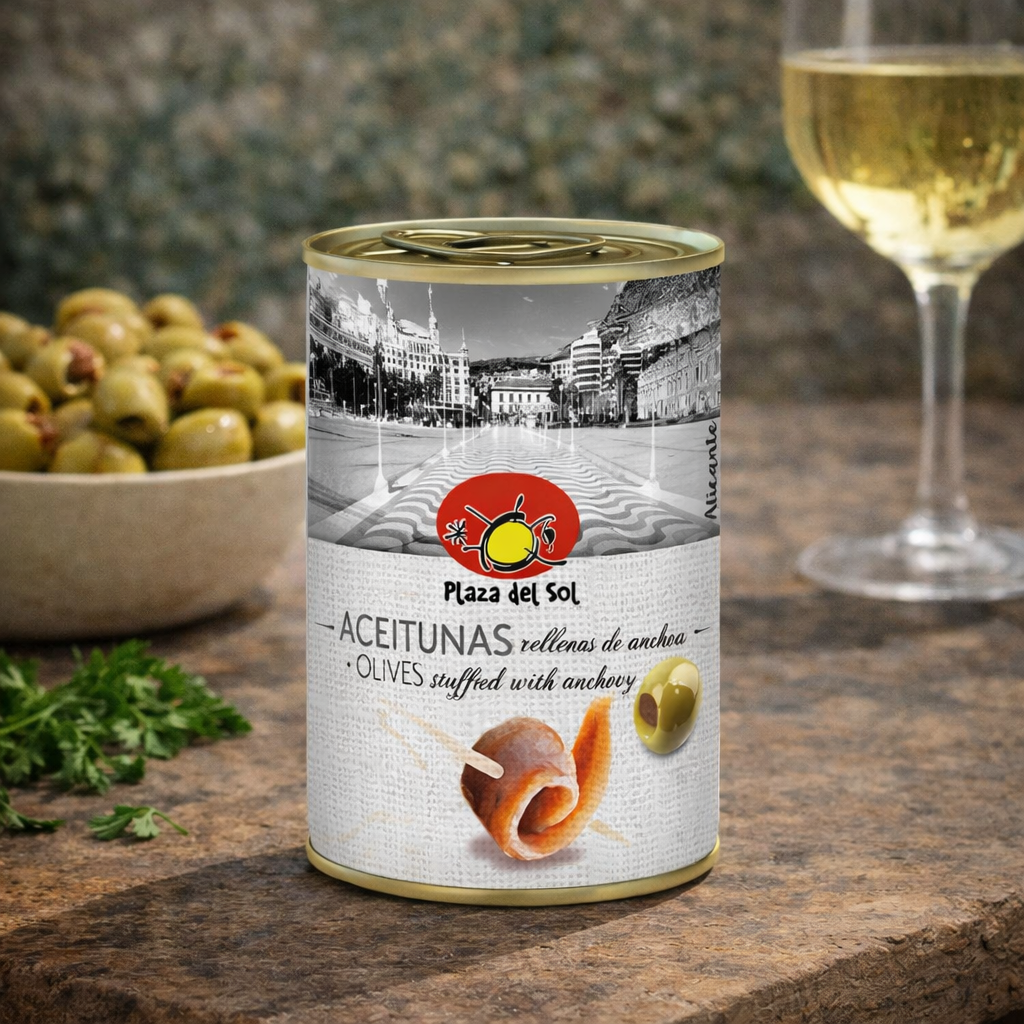
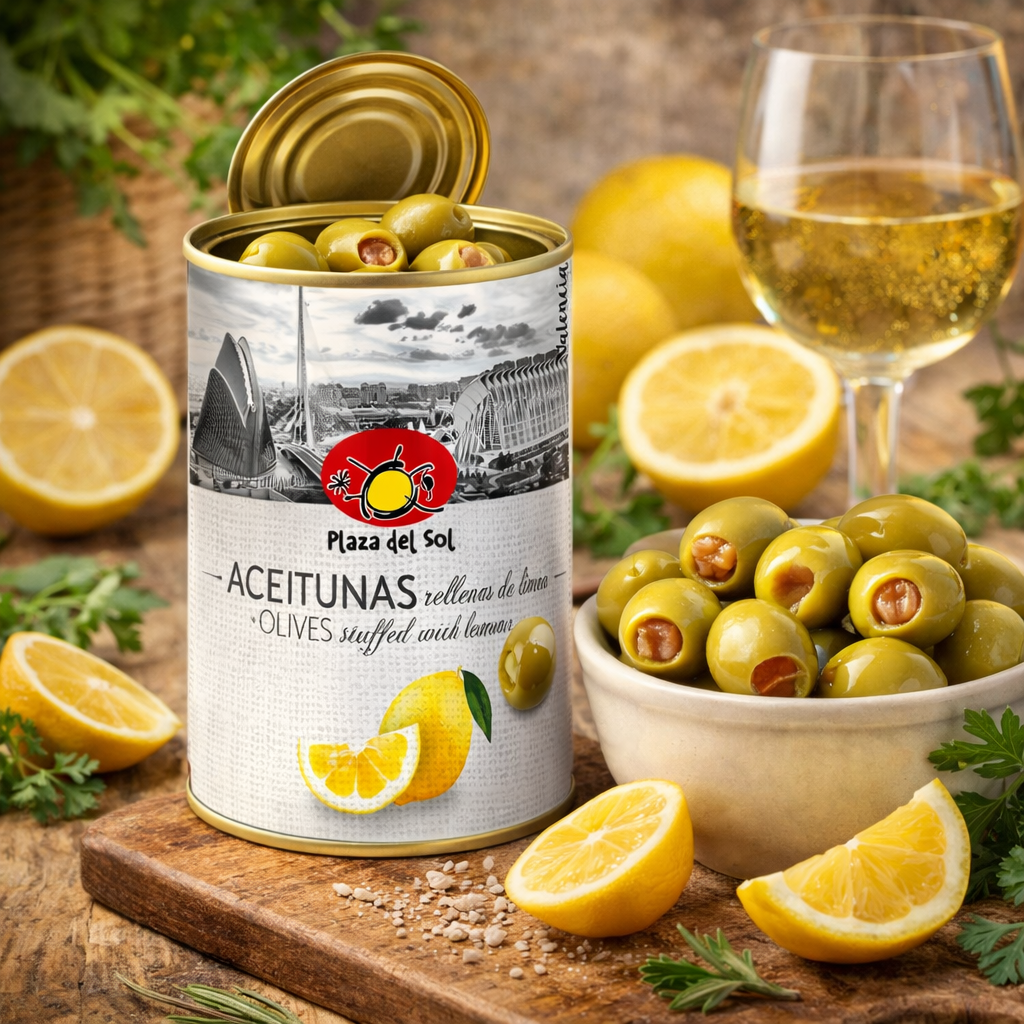
- An olive — fresh from the jar. Manzanilla aliñada or Gordal from Seville. Taken out of the fridge thirty minutes beforehand.
- A bread — rustic, thick crust. Cut into big chunks, never thin slices.
When you have guests, the temptation is to bring everything out. You should do the opposite. Five elements, no more. One cured meat, one tin, one olive, one bread, one drink. Put out ten and nobody tastes anything any more: people nibble absent-mindedly, move on, and the ritual disappears. Less is respect. The Spanish aperitivo table is almost empty — and that is exactly what makes it beautiful.
The rule of five
What goes on the table
Five elements, and one card for what you leave out. Tap to open.
Three variations through the seasons
- Summer. Sardines in oil + Manzanilla olives + warm country bread + an ice-cold Fino from Jerez. The fish, the salt, the freshness of the sherry. Nothing else needed.
- Autumn. Lomo ibérico + toasted Marcona almonds + crisps cooked in olive oil + a red vermouth over ice.
- Winter. Bellota ham + Iberian chorizo + olivas partidas + a glass of Spanish red wine at room temperature (Ribera del Duero, Priorat). The richest aperitif, perfect for a cold Sunday.
Through the year
Three seasons, three aperitifs
The same rule of five, different products.
The move that changes everything: timing
The Spanish aperitif is not a hurried prelude to a meal. It is a forty-five-minute to one-hour pause. You do not eat to fill up — you eat to slow down. Three principles:
- No hot dishes. Everything at room temperature or chilled. Heat breaks the rhythm.
- No cutlery. Fingers for the cured meat, a toothpick for the olives, a knife to open the tin. That is all.
- No rush. One bottle for two people. You top up, you talk, you let time do its work.
Serving — the Spanish table
No full place settings, no napkins folded into fans. A bare wooden table, simple ceramic plates, small glasses (vermouth is served in a 12 cl glass, not a big stemmed one). The tin stays on the table, open. So does the jar of olives. It is a landscape table: what is served can be seen, in its original container.
The aperitivo is the art of not having dinner.Madrid, popular saying
For an impromptu aperitivo for six, this is what I take out of the fridge: a plate of Iberian Bellota ham (about a hundred grams), a tin of Espinaler sardines, a tin of Plaza del Sol stuffed Manzanilla olives, a board of warm country bread, two bottles of red Yzaguirre vermouth with an ice bucket. That is all. Three minutes to set up. An hour of shared pleasure. No cooking.
The takeaway
The Spanish aperitif is not a substitute for dinner — it is a ritual in its own right. Five elements, no more. Everything at room temperature. A simple drink. And above all: time. Forty-five minutes at least. It is in slowness that the ritual finds its meaning.
You will find everything to put it together in our catalogue — Iberian charcuterie, Espinaler tins, Plaza del Sol olives, extra virgin olive oil. Delivery in Switzerland in 3 to 7 working days, free returns within 14 days.
Quick quiz
Does your aperitivo follow the rules?
Four questions, the answers are in the article.