In the province of León, in the north-west of Spain, forests stretch as far as the eye can see: oaks, chestnuts, beeches, heathers. It is one of Europe's great beekeeping territories, little known outside Spain. A land where beekeeping has remained artisanal, where hives are placed in the forest itself, where beekeepers still work hand in hand with their bees.
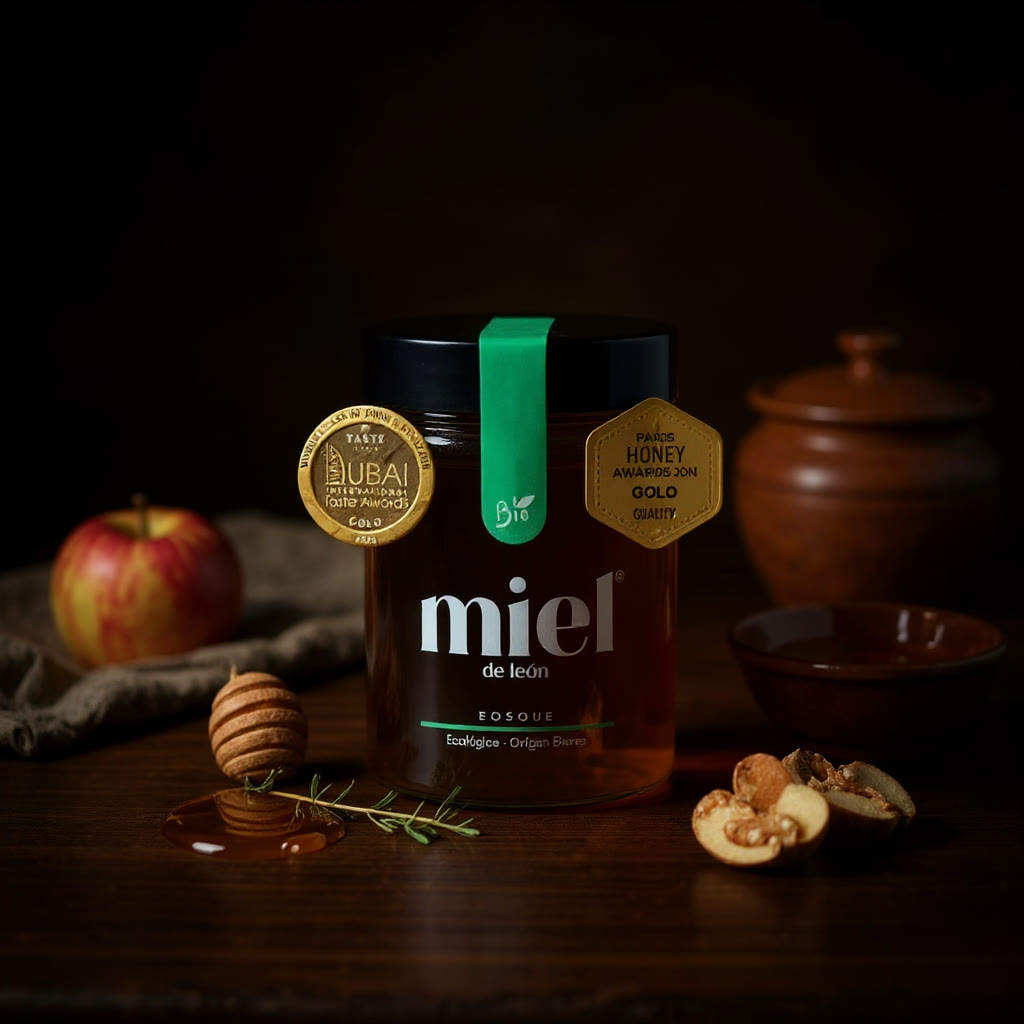
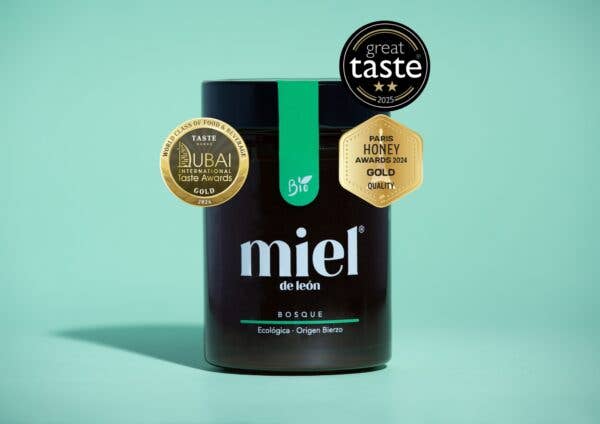
Miel de León is a family business from León with its own production and more than twenty years of experience. Its hives are spread across the forests and hills of the province of León and El Bierzo, on land far from sources of pollution; the harvest is artisanal and natural. Its mission: to make rare honeys known outside Spain, the ones that never reach supermarkets because production is too small.
Why this house is a reference
- A forest floral origin. Forest Honey owes its character to its wild botanical origins: bramble (blackberry), chestnut, heather and oak. A much rarer production than classic flower honey, dependent on the flora of the woods and on precise conditions, impossible to industrialise.
- Forest beekeeping, away from the fields. The hives are placed in forest zones, far from intensive farming; natural feeding of the bees, artisanal harvest, real traceability from the province of León to the jar.
- The 450 g glass jar sealed at origin. No transfer, no re-sampling: the jar leaves the province of León sealed by the beekeeper and arrives sealed with you. Real traceability, not symbolic.
Forest honey is not a honey to spread on a rusk in the morning. It is a honey to serve as one would serve an aged cheese — at the end of the meal, with a blue cheese or a Manchego curado, on a small plate, with a spoon. The aromatic density deserves attention. A teaspoon is enough. And there, the encounter with an Asturian cabrales or a 36-month comté is undeniable: it is one of the great pairings of Spanish gastronomy, little known outside the country.
How to serve a forest honey
- On a blue cheese board. Asturian cabrales, roquefort, fourme d'Ambert, Bleu de Termignon. A teaspoon next to each cheese. The cheese's salinity meets the honey's woody depth.
- In whole Greek yoghurt, pure. One spoon of honey, nothing else. No fruit, no granola, no additional sugar. The whole yoghurt's density supports the honey's complexity without crushing it.
- As glaze on grilled white meats. On roast pork, duck, 40-clove chicken. The honey caramelises in the heat, adds a deep woody note to the crust. Without masking the meat.
A good honey is a fragment of forest in a jar.Leónese saying
When asked how to evaluate a honey without being a professional, I always give the same advice: take a metal spoon, deposit a hazelnut-sized amount of honey on it, observe the colour, smell before tasting, then take the spoon in the mouth and let it melt slowly. An ordinary honey: sugar + one dominant note. A honey like Forest Honey León: sugar, but in the background, then wood, malt, liquorice, earth, sometimes light caramel, long persistence. It is not just a question of cost — it is another category of product.
Hector's tasting
Tasting honey in four steps
A metal spoon is all you need. Tap a card.
Quick test
Do you know your forest honey?
Four questions, the answers are in the article.