Limited edition · 9 bottles · May 2026
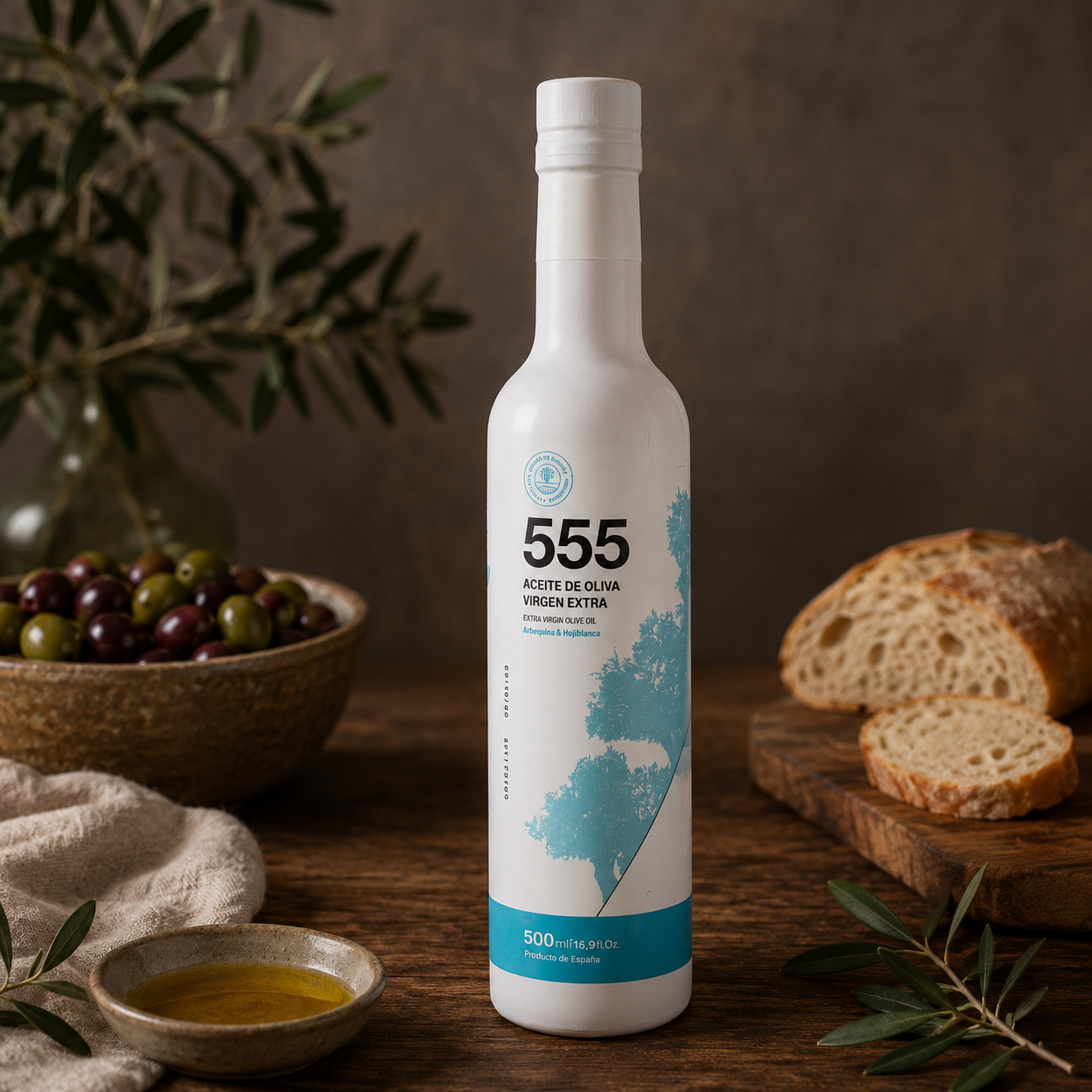
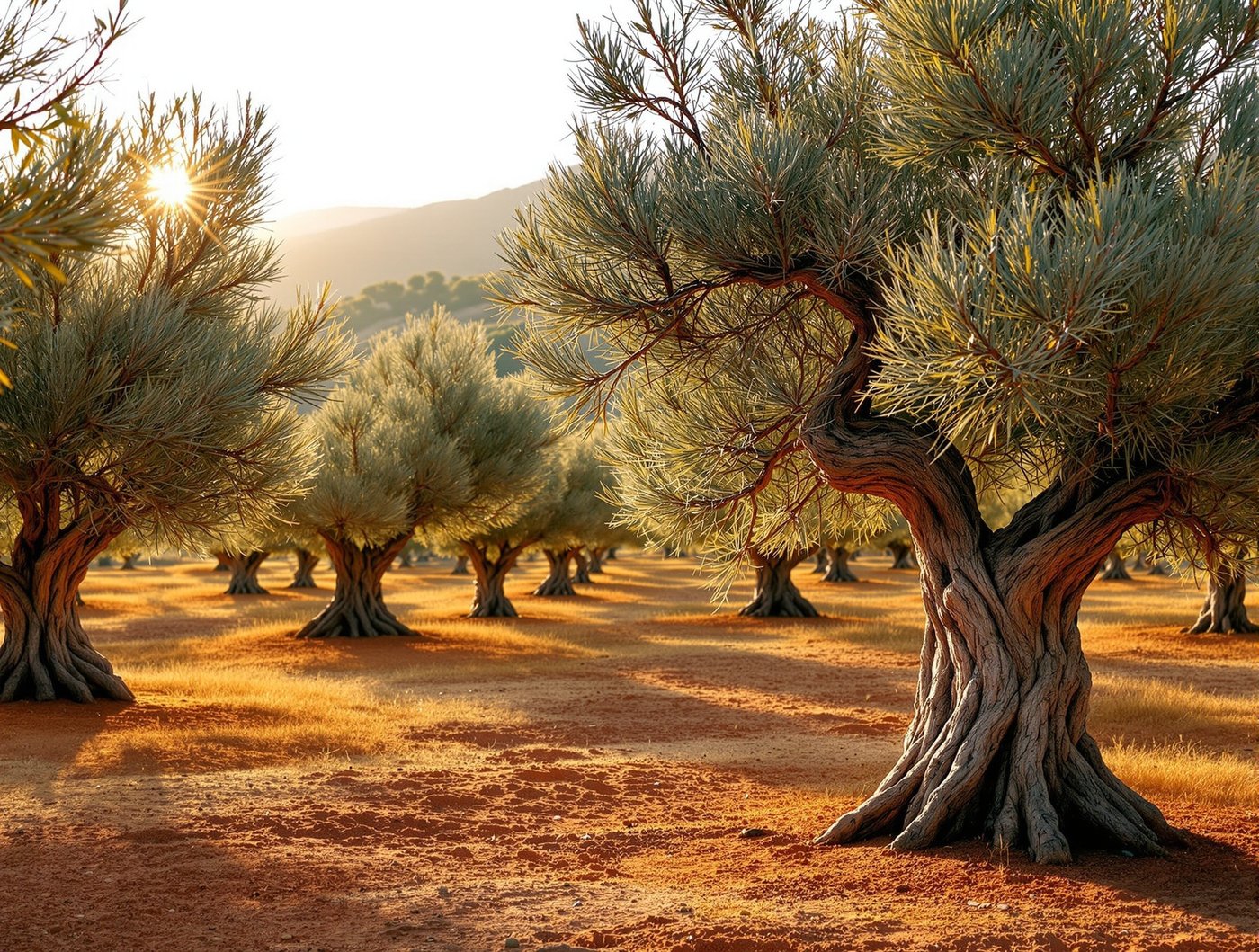
An hour from Málaga, in the Guadalteba district, the village of Teba spreads across rolling hills. It is there, at 555 metres of elevation, that Almazara Terraverne grows its Hojiblanca olive trees. An unusual altitude in Andalusia, where most groves stretch across the plain under a steady sun. Here the climate is different: warm days, cool nights, a strong thermal contrast between day and night. And it is this contrast — this thermal breathing — that changes everything in the glass.
Altitude, a detail that isn't one
An olive from the plain and an olive from mid-mountain do not ripen at the same pace. On the plain, continuous heat speeds maturation: the olive accumulates oil quickly, but also loses its phenolic compounds just as quickly — the molecules that give an AOVE its noble bitterness, its pungent finish and its stability over time. At altitude, ripening slows. Cool nights force the olive to concentrate its aromas. The result is measured at the mill: more polyphenols, more chlorophyll, more aromatic complexity. The pungency on the palate is not a flaw — it is the signature of a young olive, pressed in time.
At 555 metres, Almazara Terraverne sits just above the line where this change becomes perceptible. Lower down, one is on the plain. Higher up, production turns marginal. This altitude band — 500 to 700 m on the Andalusian southern slope — is a little-known olive-oil niche, yet one acknowledged by oil sommeliers as among the most expressive in Spain.
Hojiblanca: the olive of the south, overlooked in France
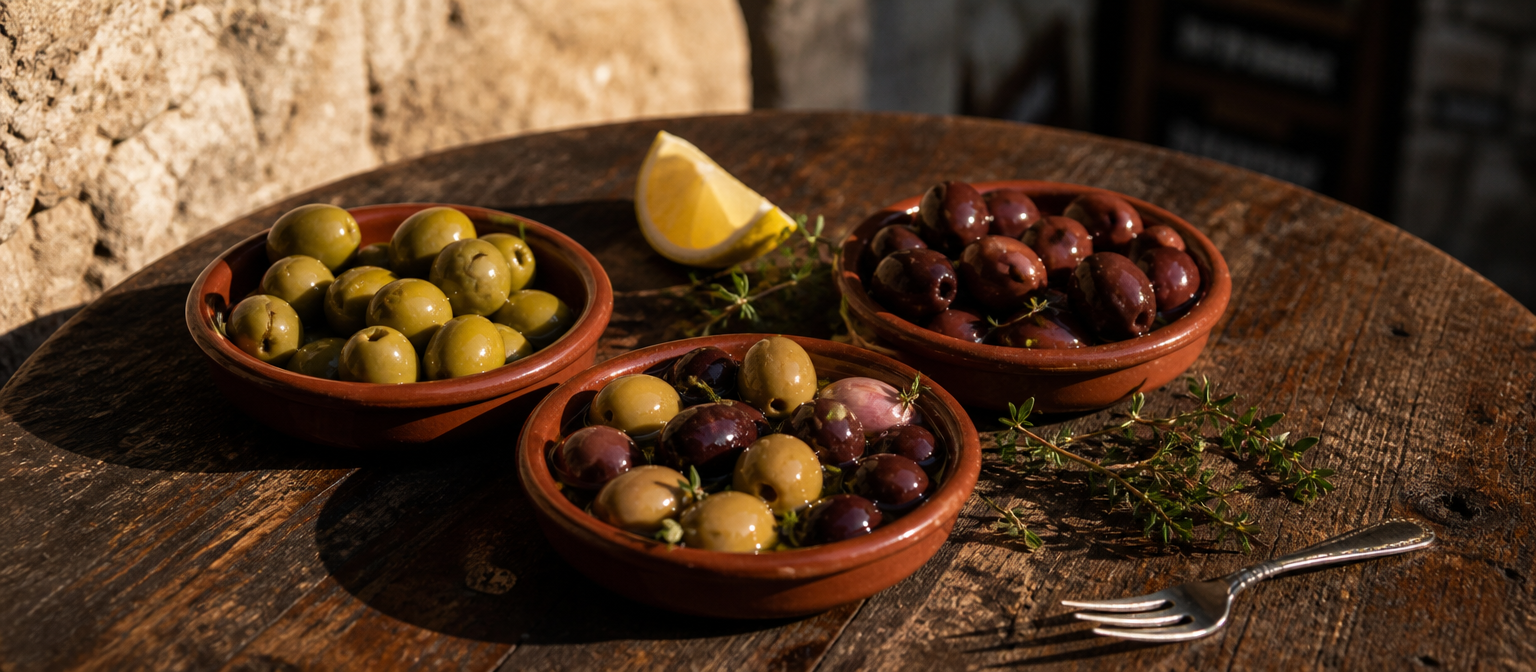
Hojiblanca is the emblematic olive of southern Spain. Its name literally means “white leaf”, after the silvery sheen on the underside of its leaves in the sun. It is also a dual-use olive: it yields oil, but also table olives — the fleshy, bitter ones served with a glass of fino in Seville. As an oil, it has a character that lovers of Italian AOVE do not recognise immediately: less sweetness, more edge. Freshly cut grass. Raw almond. A light note of wild tomato. And above all that mid-palate pungency that surprises, then stretches — never turning aggressive when the olive has ripened well.
Almazara Terraverne harvests in mid-October, what in Andalusia is called aceite temprano — early oil. The olives are still green, sometimes edging into purple. They yield less oil per litre (an extraction rate of 11 to 13%, against 18–20% for a ripe olive), but they give a denser, more aromatic, more stable oil. Pressing happens cold, within hours of picking, without intermediaries. Final acidity falls below 0.2° — well beneath the legal threshold of 0.8° for an AOVE.
The vocabulary
Six words to read this oil
Tap a card: what each word means in the glass.
Two distinctions, and an editorial choice
Almazara Terraverne's Hojiblanca 555 was winner of the 22nd Best AOVE of the Province of Málaga awards (Diputación de Málaga, 2023, medium green fruity category) and finalist of the Mario Solinas Prize of the International Olive Council (IOC), small producers category. Two reference juries, one verdict: this is an AOVE with something to say.
We selected it because it illustrates exactly what we want to put in our catalogue: oils that do not hide. That have a terroir, a producer, a character. And that do not reach us by the container — but by the bottle, nine at a time, because Almazara Terraverne is a small almazara that produces little and well.
How to use it
This oil deserves to be drunk. Pour a spoonful into a small glass, warm it in the palm of your hand, smell it, then taste it neat. It is the only way to grasp what an award-winning AOVE can do. Then, at the table: on toasted bread, on ripe tomatoes with a pinch of fleur de sel, drizzled over barely cooked cod, or to finish a paella before serving. Raw, always — never for cooking. This is an oil one keeps for moments when the oil is the dish.
At the table
Where to pour it?
Always raw, at the last moment.
Why only nine bottles?
Because we work by discovery, not by stock. We buy little, we test, we offer, we replace. If Hojiblanca 555 finds its audience in French-speaking Switzerland, it will return. Otherwise, it will give way to another discovery. This is our way of keeping a living catalogue — and of not betraying producers by ordering more than we can sell.
The Hojiblanca 555 was part of our selection; it is no longer on the shelf today. Our current extra virgin olive oils are in our olive oil section.
Quick test
Have you tasted the altitude?
Five questions, the answers are in the article.