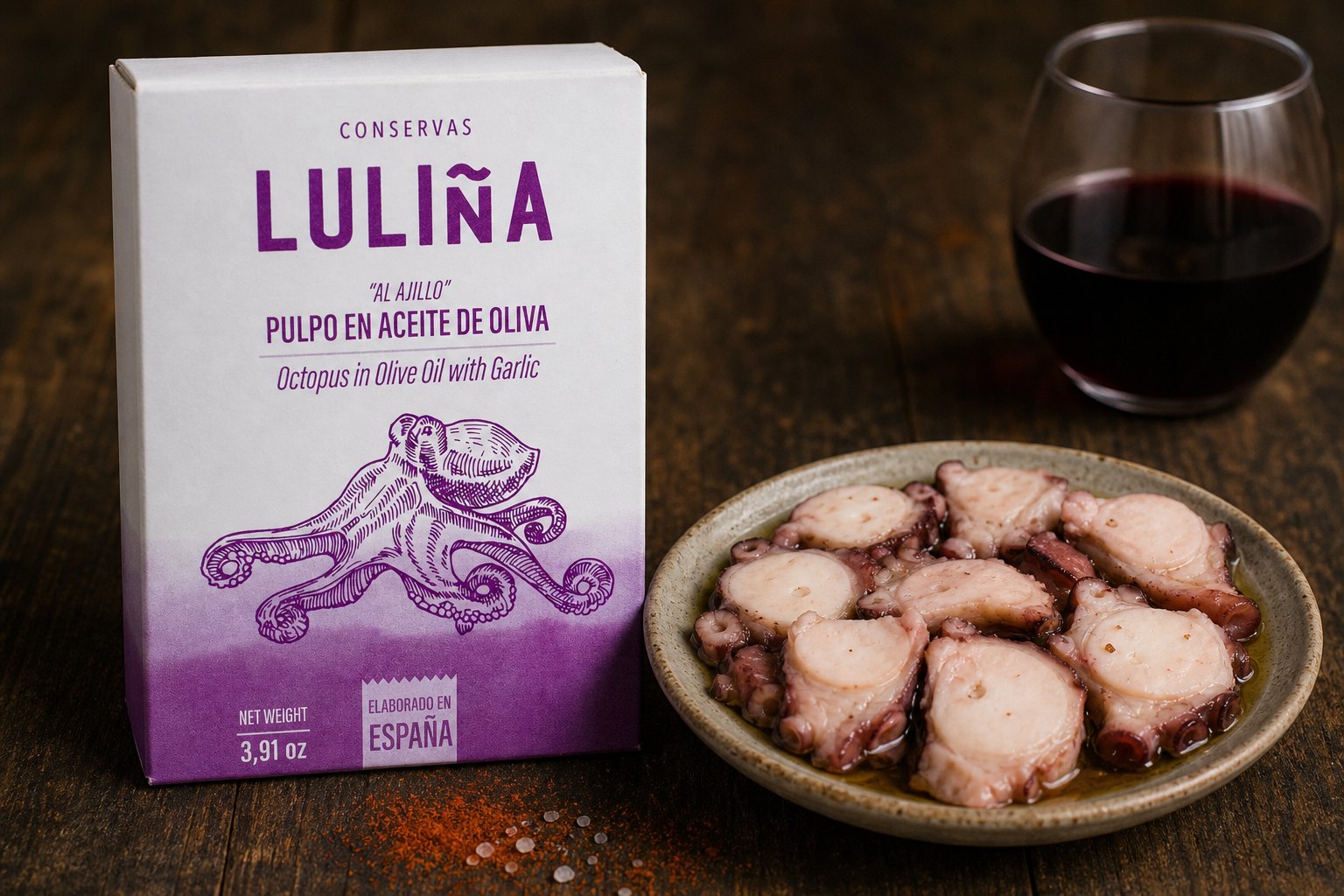
A Galician tin opened on the table is already a dish. But what you put beside it decides the rest. A tin of octopus eaten standing up, straight from the fork, does not taste the same as the same tin poured over a still-warm potato. The covering liquid is not a detail. It is half the recipe, and it tells you itself what it expects.
Four tins from Conservas Luliña, made on the shores of the Ría de Arousa. Four liquids: olive oil, vieira sauce, ink, and water and salt. For each, a simple accompaniment, with almost nothing to cook. Enough to put together a plate on a weeknight or an autumn aperitif, when night falls early and you have no wish to light four rings on the hob.
Reading what is around it
Before thinking about the accompaniment, look at the liquid. It is the one in charge.
- Olive oil (garlic octopus): a fragrant fat looking for something to soak into. Starch, crumb, potato.
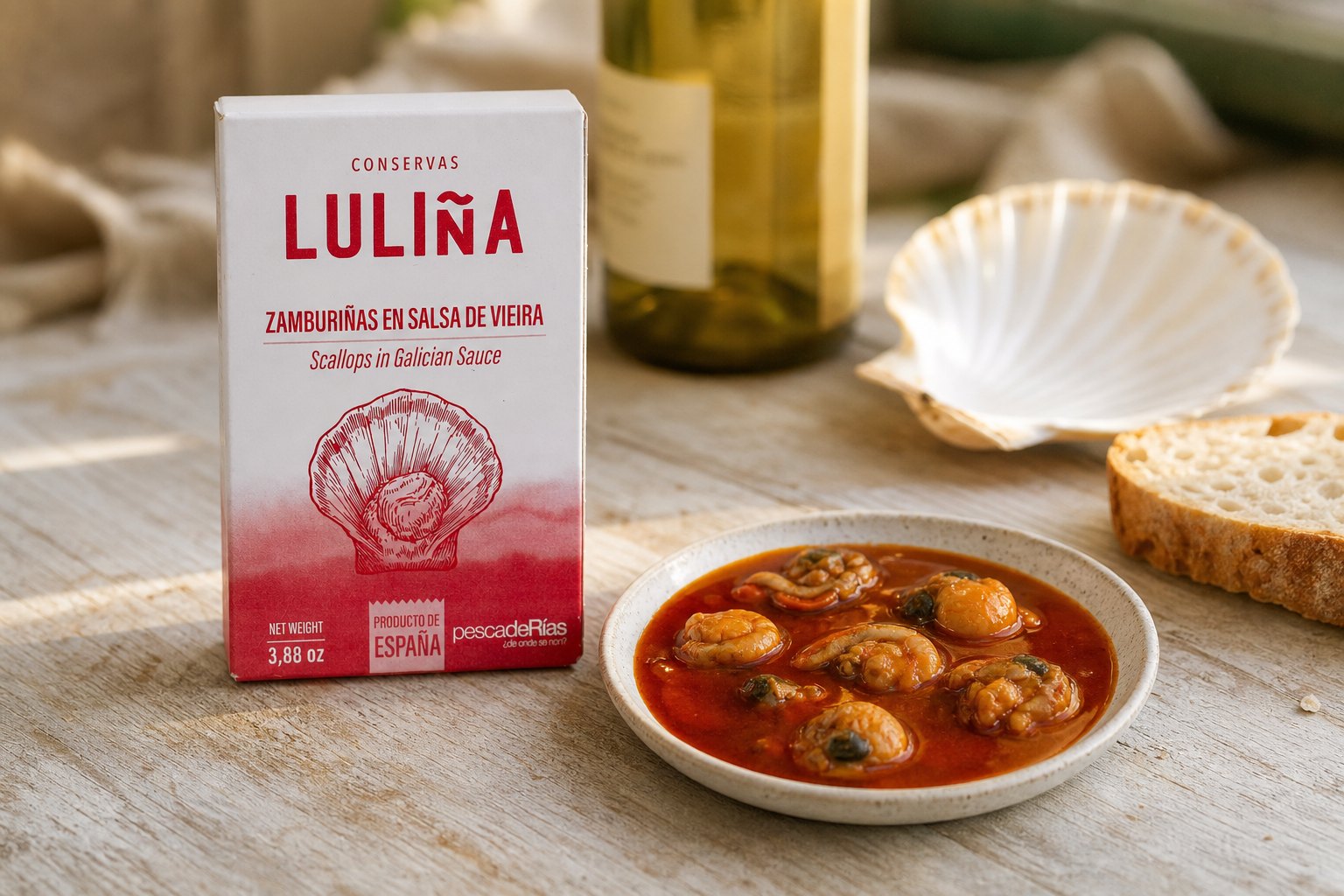
- Vieira sauce (zamburiñas): tomato, wine vinegar, bay leaf and spices, with sunflower oil. It is lively and well seasoned. It wants bread and nothing that competes with it.
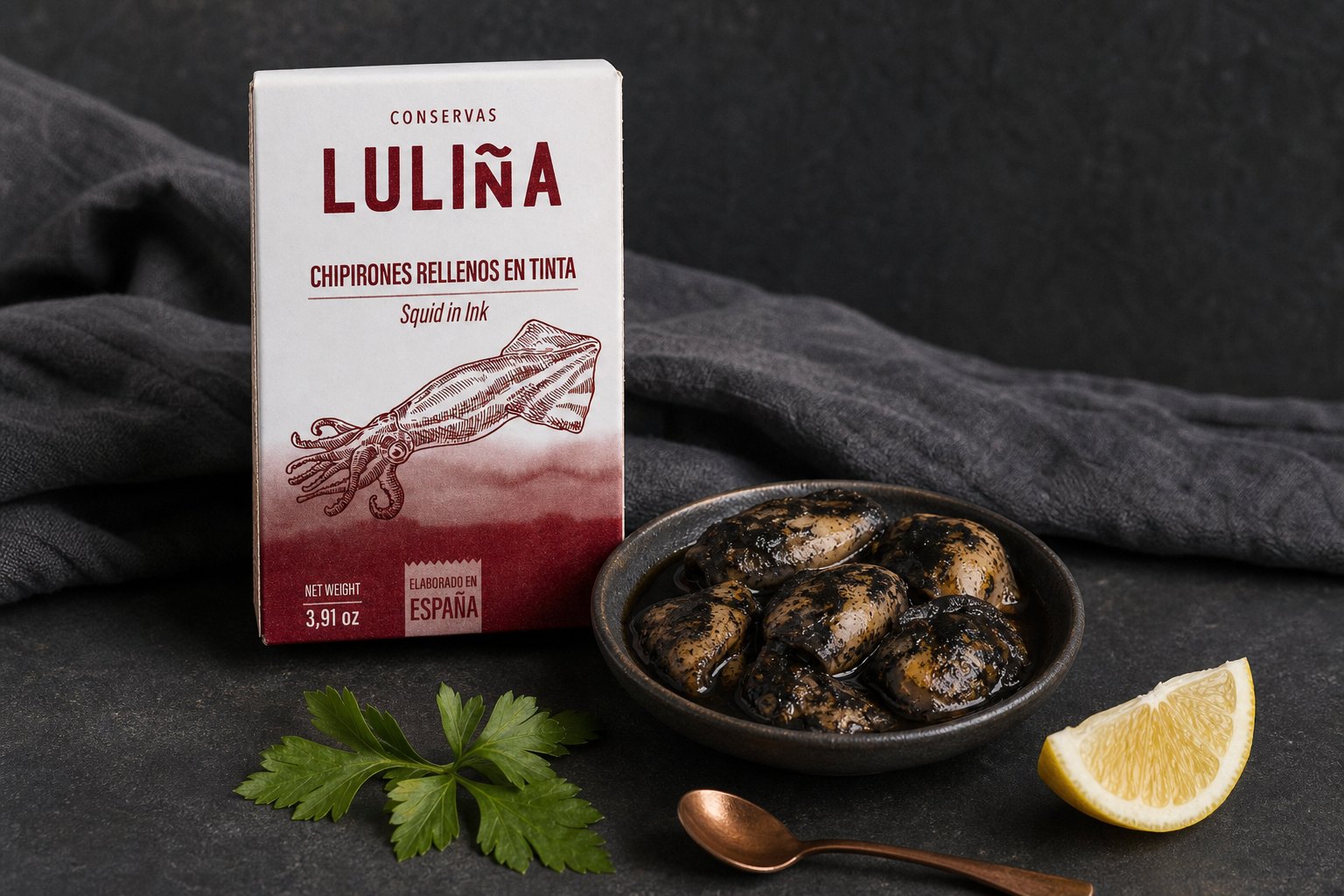
- Ink (chipirones): a dense sauce of onion, tomato purée, wine and cuttlefish ink. It is a whole dish in itself, and needs a neutral base.
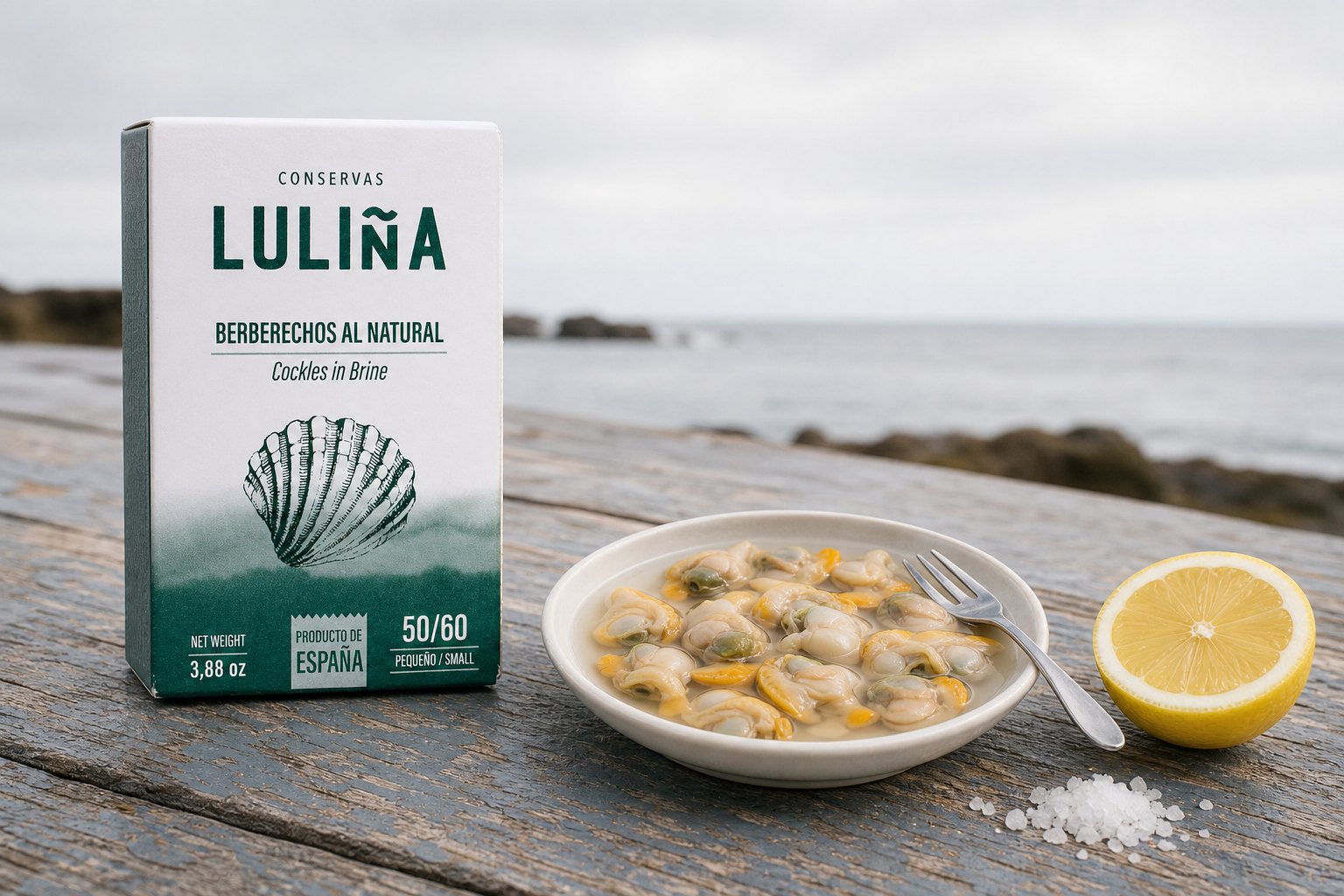
- Water and salt (cockles): neither fat nor spice. The unadorned product, which asks for cold and a touch of acidity.
The rule is simple. The richer the liquid, the more neutral and absorbent the accompaniment should be. The leaner it is, the more you play on freshness.
Four liquids
What each tin asks for
Tap a card: what is in the liquid, and what it wants beside it.
Garlic octopus: a warm potato
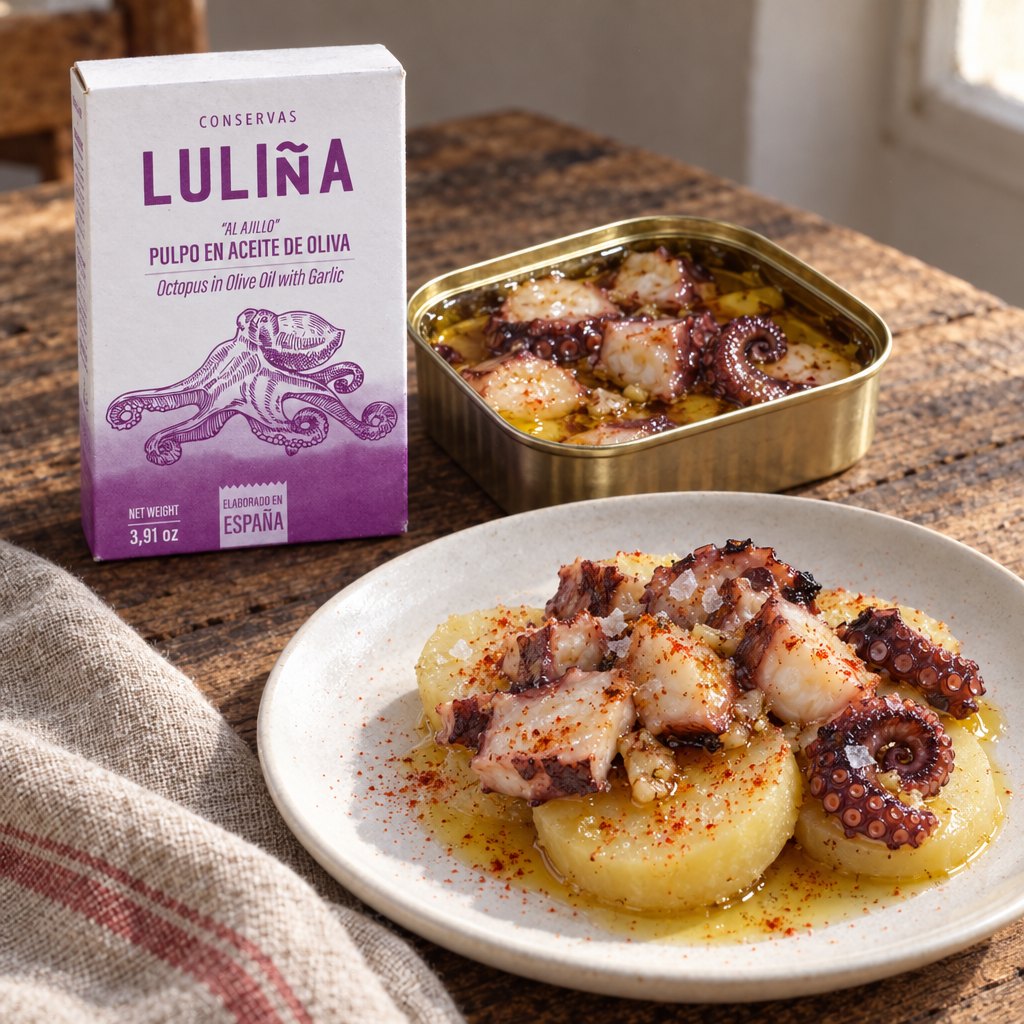
The Octopus with garlic in olive oil comes down to four ingredients: octopus, olive oil, garlic, salt. There is no fifth. The garlic perfumes the oil, the oil carries the octopus. It is this oil that you must not lose.
Potato is the obvious accompaniment. In Galicia, octopus is often served on boiled potatoes. We borrow the idea, without having to cook the octopus.
- Cook two or three waxy potatoes in salted water, with their skins on.
- Peel them while still hot and cut them into thick slices.
- Open the tin a few minutes before serving, so the garlic can unfurl.
- When the slices are warm, pour the octopus and all its oil over them. Add a pinch of coarse salt and, if you like, a dusting of pimentón.
Why warm? Scalding hot, the potato overpowers the garlic. Cold, it absorbs the oil poorly. Warm, it drinks it in. For an aperitif, the octopus can also be set on toasted bread, with a spoonful of oil per slice.
Zamburiñas: bread to the very bottom
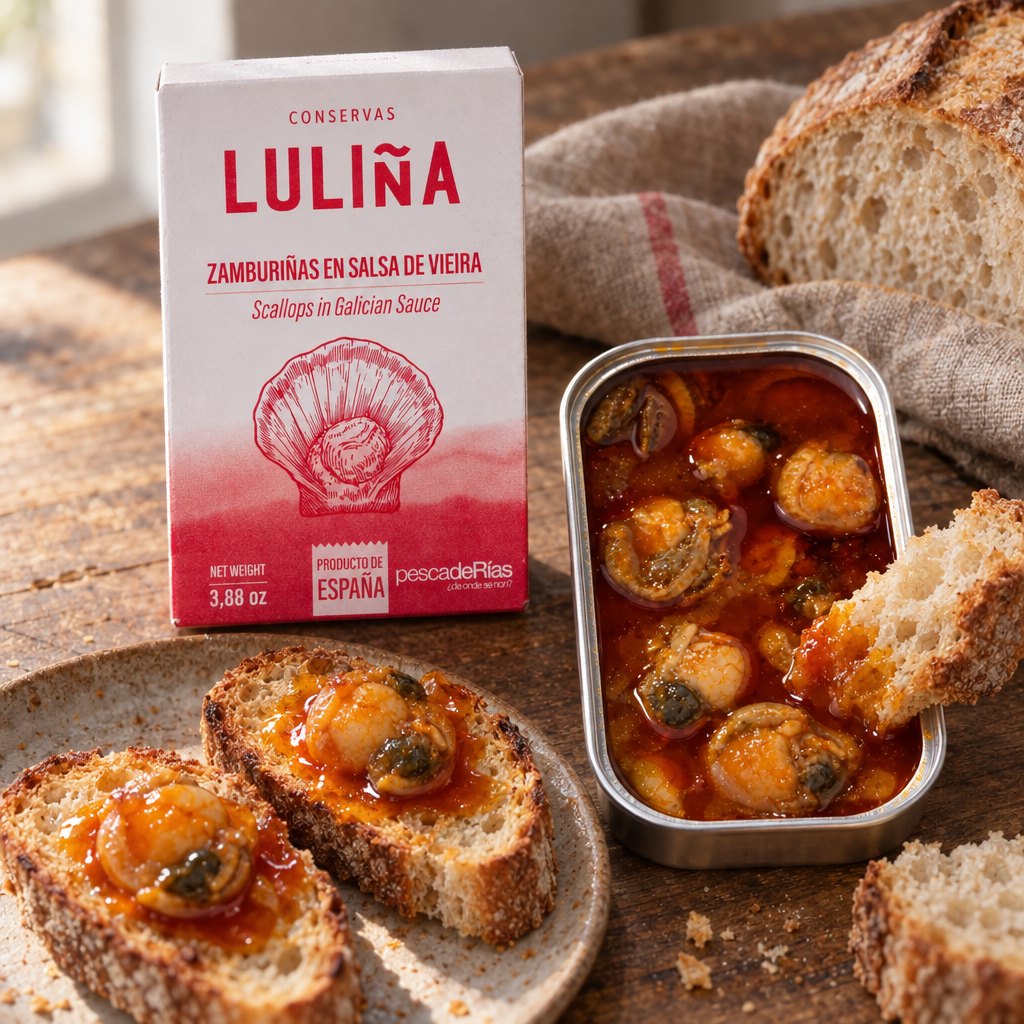
The zamburiña is the little cousin of the scallop: a one-bite mollusc, eaten with a spoon, no fuss. In the Zamburiñas in vieira sauce, it bathes in a sauce of tomato, wine vinegar, bay leaf and spices.
This sauce is a very good reason to open the tin. It is already lively and well seasoned: there is no need to add lemon, herbs or cheese. What it needs is bread.
Which bread
- An open crumb and a proper crust: country loaf, or a day-old baguette refreshed in the oven.
- Thin, toasted slices on which to set a zamburiña.
- A large piece of crumb for mopping up the tin at the end.
If the tin goes back to the kitchen clean, the bread was the right one.
Serve them at room temperature. The cold of the fridge dulls the aromas, and the bay leaf is less noticeable.
Chipirones in ink: white rice, and that is all
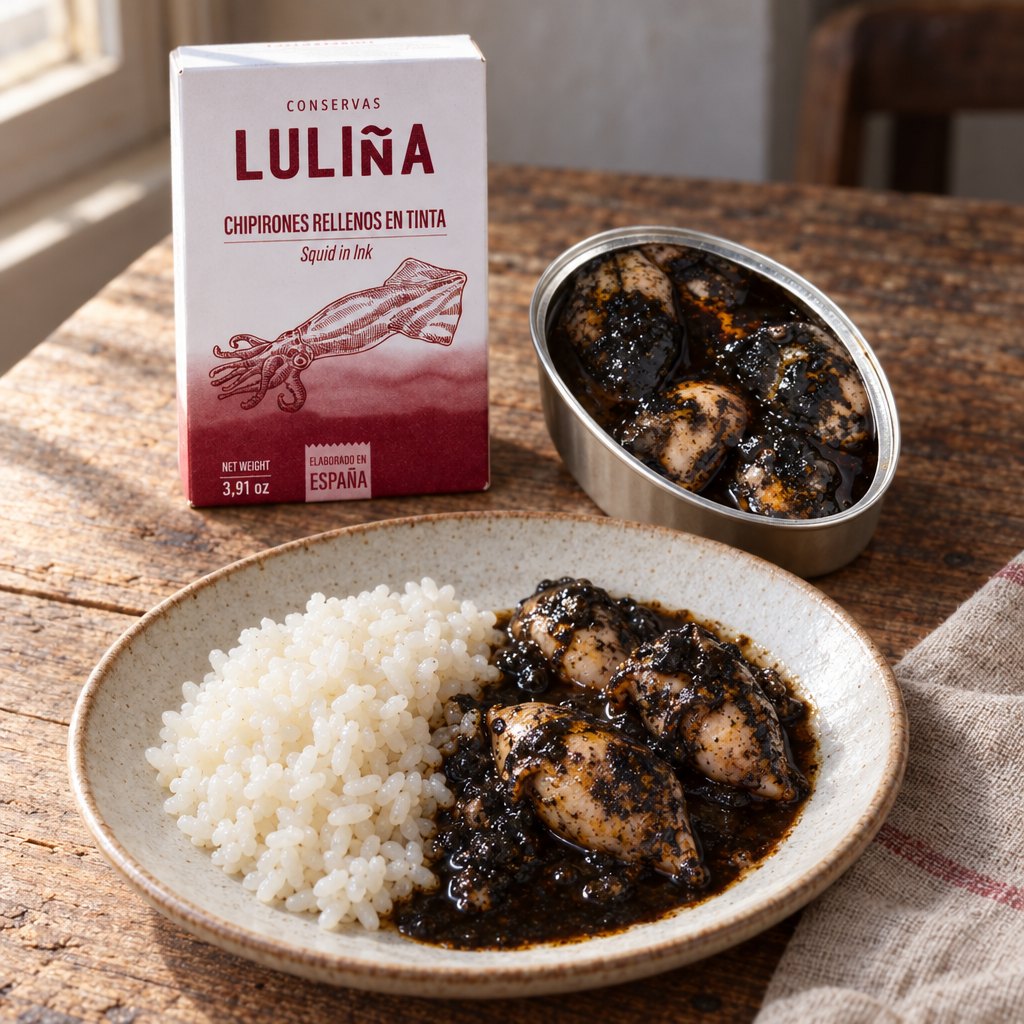
The Stuffed chipirones in ink are a whole dish. They are small stuffed squid, simmered in a black sauce built on onion, tomato purée and wine. The sauce is dense, lightly sweetened by the tomato, and the ink gives it its depth.
Against that, white rice plays the role that potato plays for the octopus: it absorbs and contradicts nothing. Squid in ink served with white rice is a classic of the Spanish table.
- Cook a short- or medium-grain rice in salted water, with no butter or stock. It must stay neutral.
- If you want them hot, pour the chipirones and their sauce into a small saucepan. Warm them gently over a low heat, without letting them boil.
- Plate the rice on one side and the chipirones on the other, letting the sauce run between the two.
As an aperitif, cut a chipirón in half on a slice of toasted bread and add a spoonful of sauce. Nothing else.
Natural cockles: cold and lemon
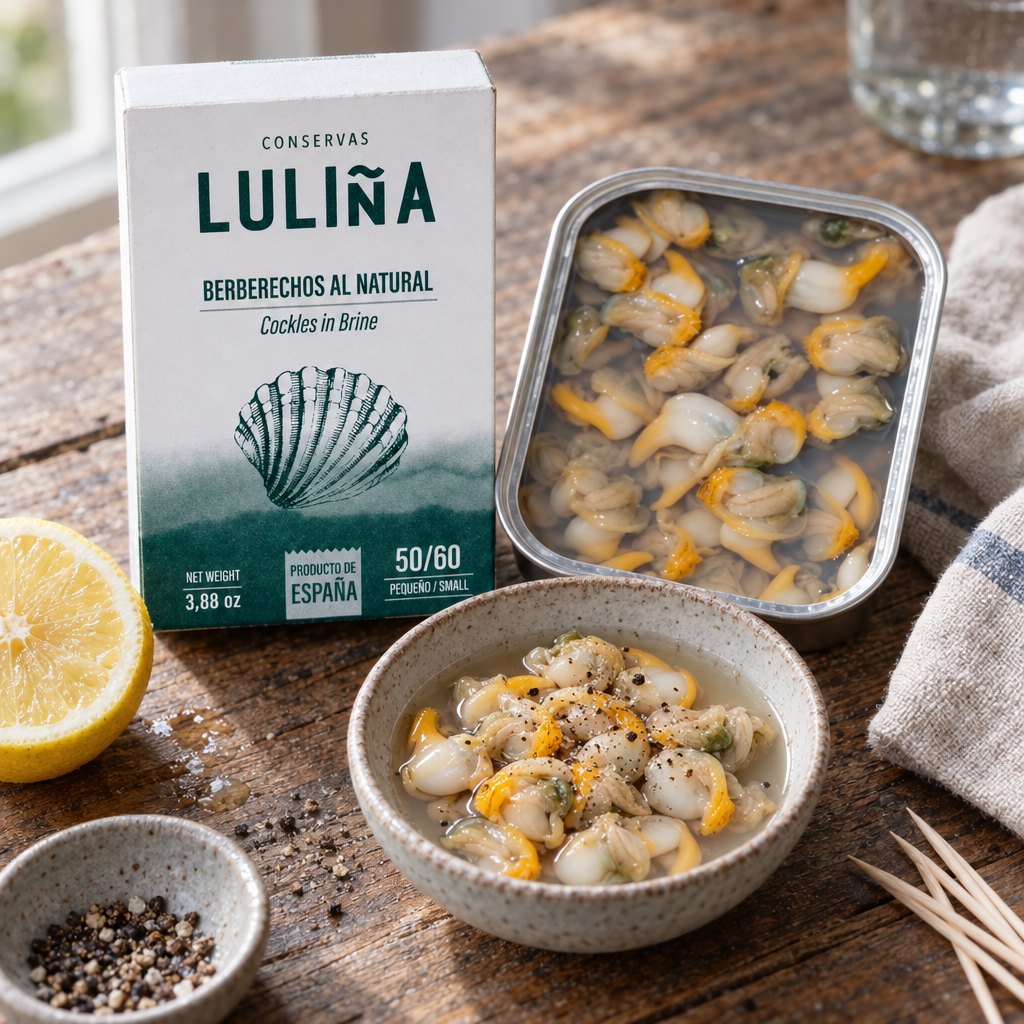
The Natural cockles come fifty or sixty to a single tin. They are tiny pieces, preserved in water and salt. With no oil or sauce, the mouthful is brief and frankly briny.
Two things are enough: cold and acidity. Put the tin in the fridge several hours ahead. Open it just before sitting down and tip the cockles into a small bowl with a little of their water. A few drops of lemon, perhaps a turn of pepper, and cocktail sticks to pick them up. No mayonnaise or hot sauce: anything you add masks the iodine, and that is what you came for.
True or false
Six table myths
Tap a card: the answer, and the right move.
An autumn aperitif with all four tins
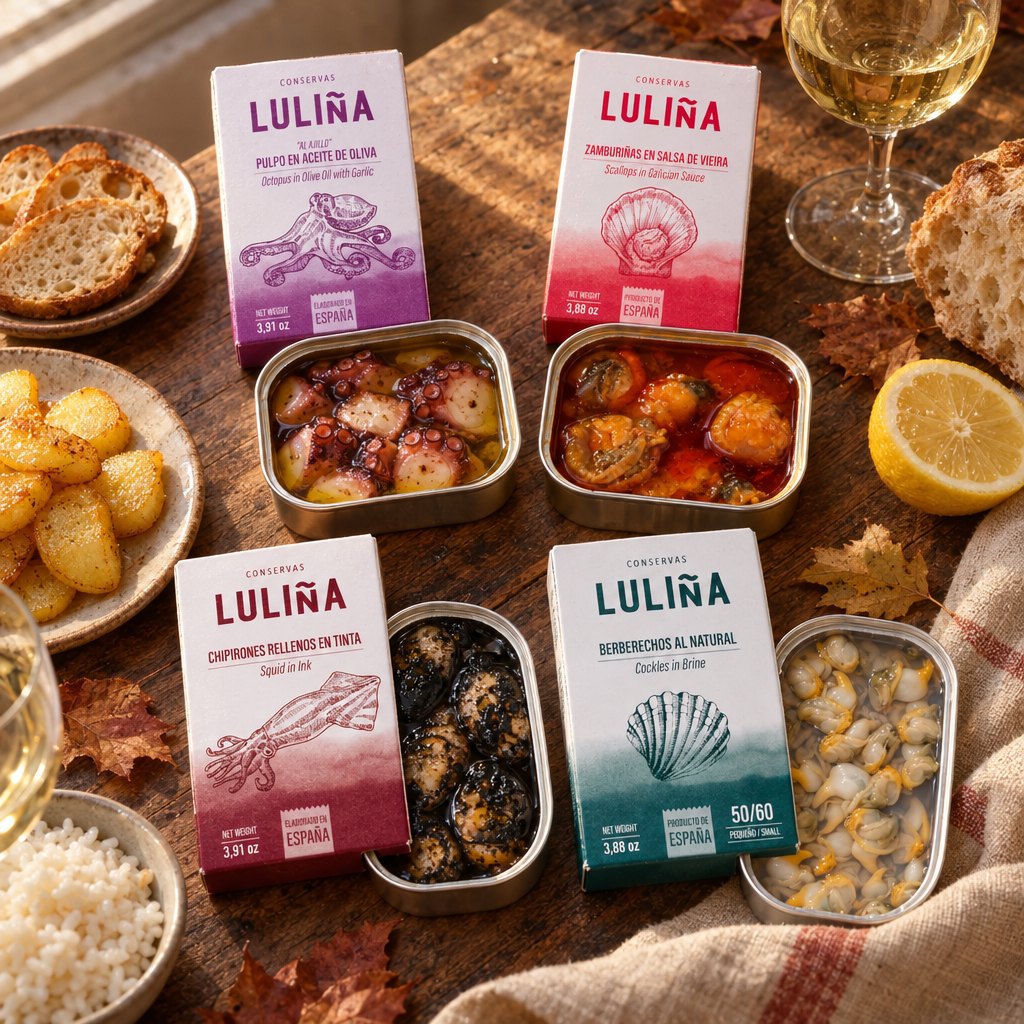
The four tins are served like a little menu, from the lightest to the densest. The order matters as much as the accompaniments.
- The cockles, well chilled, to open the appetite with something clean.
- The zamburiñas and their bread, for the acidity of the sauce.
- The octopus on its slices of warm potato, for the fat and the garlic.
- The chipirones and their rice, to finish on the densest sauce.
As for the glass, a dry, lively white goes well with all four. The only time you really cook is for the potatoes and the rice, and both can be done while you lay the table.
In practice: what you need, what to avoid
To have to hand
- Waxy potatoes.
- A country loaf or a day-old baguette.
- A short- or medium-grain rice.
- A lemon, coarse salt, a pepper mill.
The mistakes that spoil everything
- Throwing away the octopus oil. It is what seasons the potato.
- Serving the cockles lukewarm. Without the cold, the iodine turns flat.
- Adding lemon to the zamburiñas or the chipirones. Their sauce already has its balance.
- Heating the tin itself on the hob. Always pour the contents into a saucepan.
- Opening the cockles too early. They are opened at the last moment, unlike the octopus, which benefits from breathing for a few minutes.
After opening
Whatever is left should be transferred to a small lidded glass container, kept in the fridge and finished quickly. All four products contain molluscs and may contain traces of fish and crustaceans. Finally, for every tin sold, Luliña gives a contribution to the Fundación Ecomar for its coastal clean-up project.
Quick test
Ready to open the tins?
Five questions; the answers are in the article.