In Spain, people don't just talk about 'paella'. They talk about arroces secos, arroces melosos, arroces caldosos. Three words, three textures, and almost three different cuisines. The same stock, the same vegetables, the same fish can produce a paella with a crisp base, a creamy plate that coats the spoon, or a rice that swims in its broth. What changes is the amount of liquid, the way you stir… and the grain.
Autumn lends itself to the two textures that are often forgotten: the meloso, when the mushrooms arrive, and the caldoso, when you want a hot dish to eat with a spoon. Here is how to tell the three apart, and which rice to choose for each from our catalogue.
Three textures, three approaches
Arroz seco: the paella
Arroz seco is cooked in a thin layer, in a wide, shallow pan. The stock evaporates and is absorbed entirely. At the end, each grain is separate, tender but whole, and the base may caramelise slightly: this is the socarrat. Here, you do not stir. You are looking for a grain that absorbs a lot of flavour without breaking down.
Arroz meloso: the creamy one
Meloso is cooked in a casserole or a saucepan, with more liquid. The result is velvety and bound, a little like a risotto but without butter or cheese: it is the starch of the rice and the stock that make the cream. It is served straight off the heat, and the spoon should glide through it.
Arroz caldoso: the brothy one
Caldoso keeps plenty of liquid. The rice cooks in it as in a thick soup and is served in a shallow bowl. It is often made with seafood, lobster or rock fish. It cannot wait: the grain keeps drinking the broth on the plate.
Three textures
Seco, meloso or caldoso?
Tap a card: stock, technique and serving for each texture.
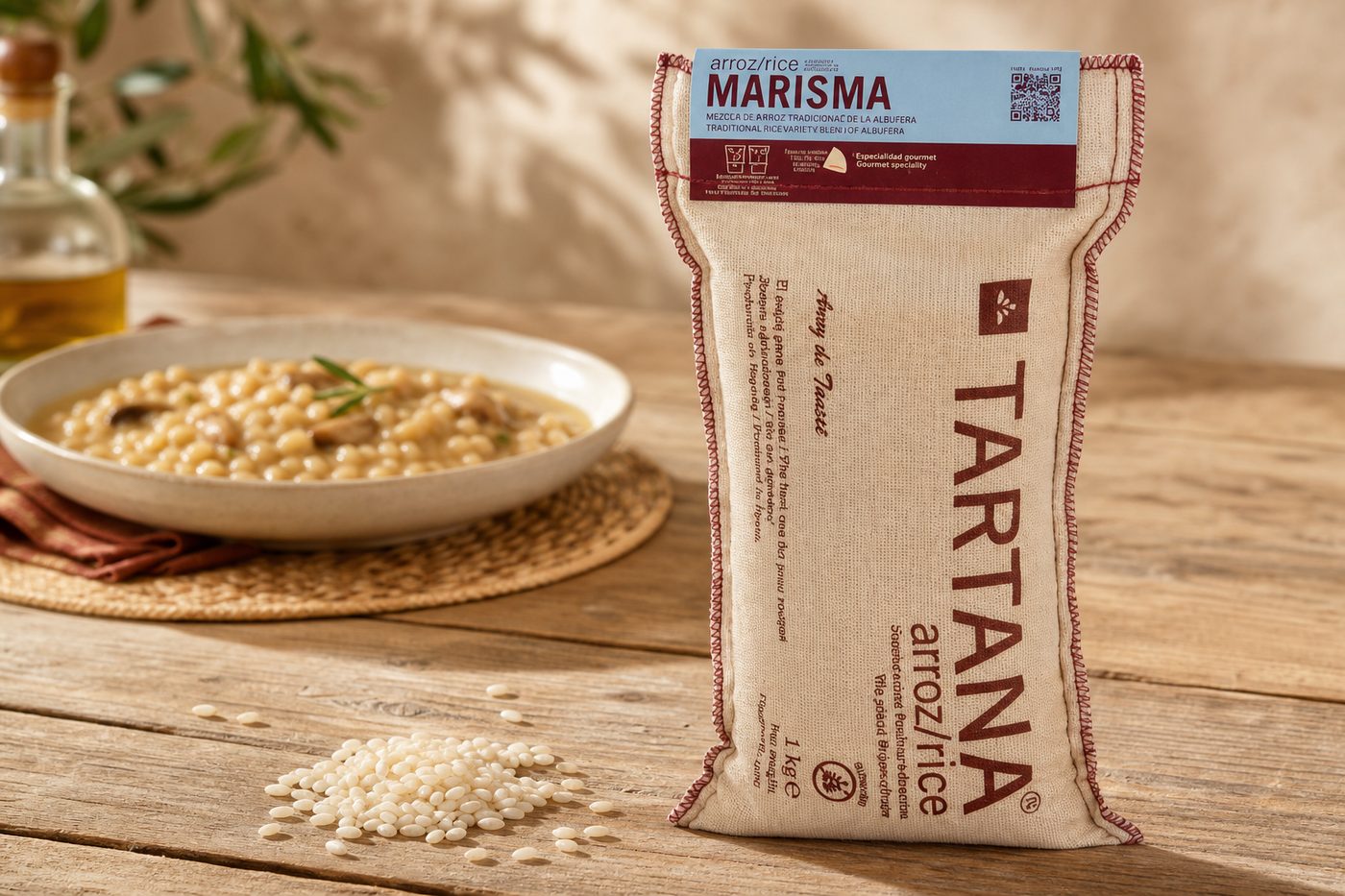
Tartana Marisma: the grain of creaminess
The Marisma Rice · Tartana is the creamiest rice from Tartana. The Marisma variety was born in the Ebro delta. Its grain is large, very pearly and low in amylose. In the kitchen, this gives a grain that absorbs the flavours of the stock very well: it is what gives arroces melosos their creaminess.
It is made for meloso, caldoso and risotto. It also suits paella. One thing to remember: it cooks quickly. Keep a close eye on the end of cooking.
Tartana is the 'els Gorets' family, rice growers in the Albufera Natural Park, near Valencia, since the late nineteenth century. The Marisma comes in a 1 kg cloth bag.
For a meloso with autumn mushrooms, this is the grain we would choose.
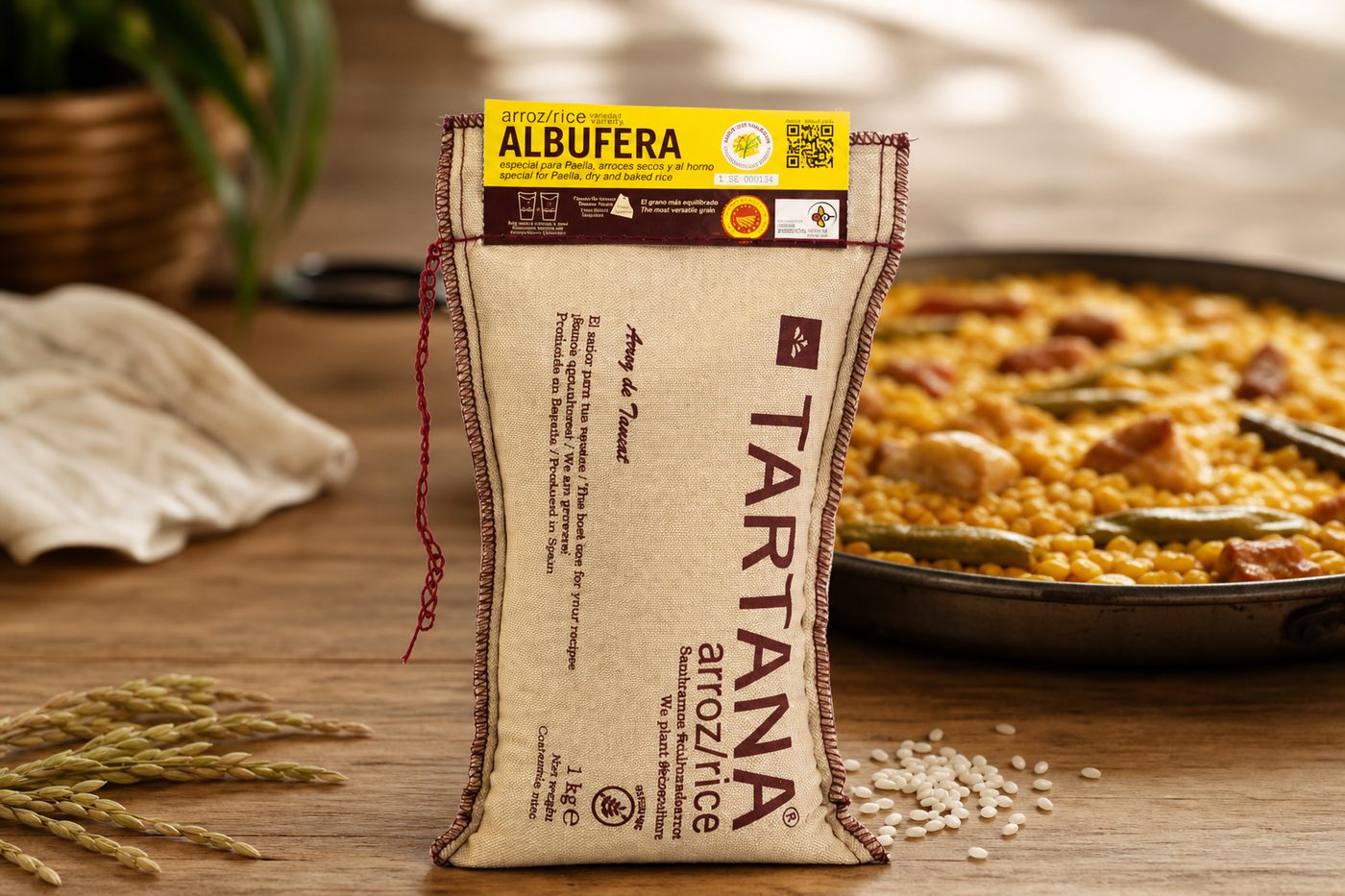
Tartana Albufera D.O.: the grain that holds
The Albufera D.O. Rice · Tartana comes from the same family, now in its fifth generation. Transplanting and weeding are still done by hand.
The Albufera variety was developed in Sueca, at the Valencian Institute for Agricultural Research (IVIA), from a cross between Bomba and Senia. Its compact grain stays firm when cooked while still absorbing the stock well. According to the producer, it is their most balanced grain.
Its natural territory is paella, arroces secos and baked rice dishes (arroz al horno). It also lends itself to creamy and brothy rice dishes, with a grain that stays firmer than the Marisma. It carries the Protected Designation of Origin D.O. Arroz de Valencia.
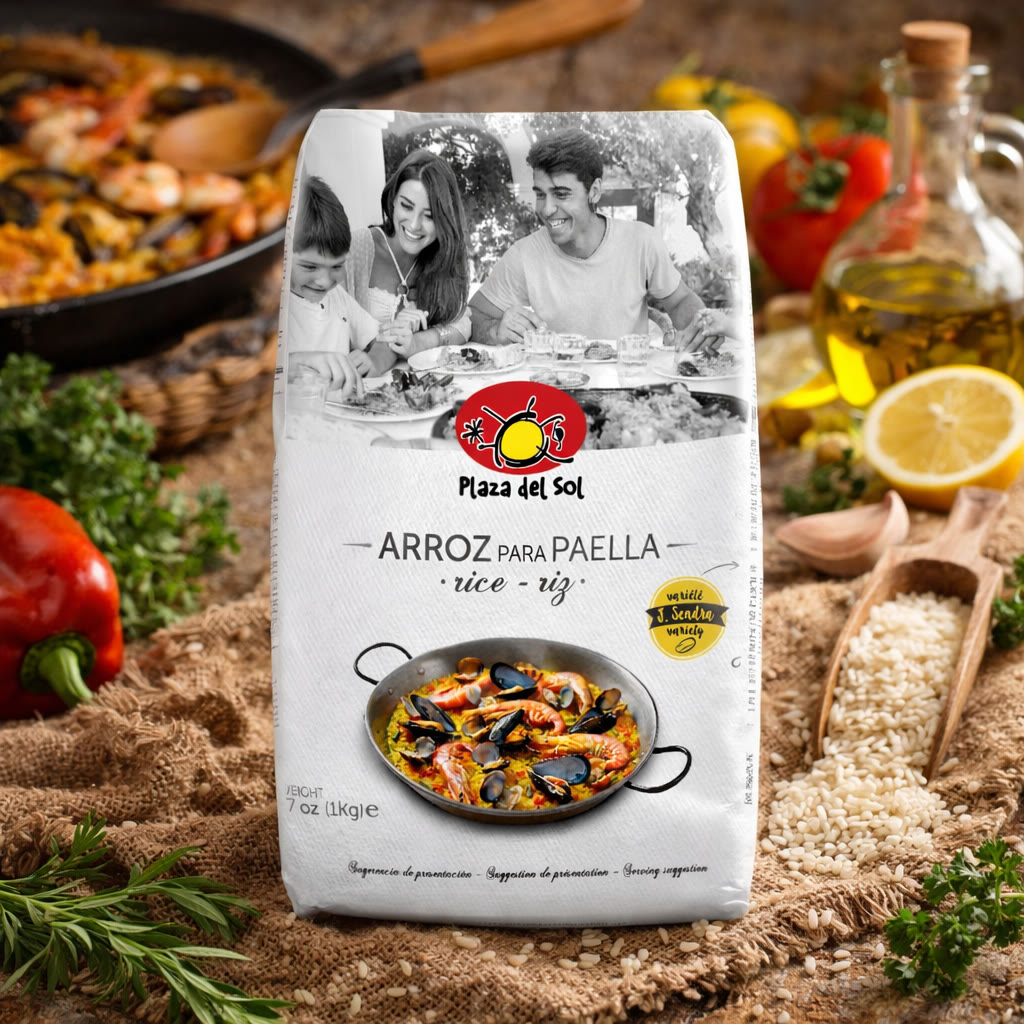
Plaza del Sol J. Sendra: the everyday round-grain rice
The Special paella rice, J. Sendra variety – Plaza del Sol is a round-grain rice, the kind used for paella and simmered rice dishes. Plaza del Sol is a company from Alicante, based in San Vicente del Raspeig, devoted to Spanish aperitif products.
This is the no-fuss Sunday rice, for the impromptu paella, for the Tuesday-night chicken rice. The producer's advice: pour the rice into the boiling stock, spread it out, then do not stir it again. Let the paella rest for 5 to 10 minutes before serving.
Three grains
Which rice for which dish?
Variety, uses and each producer's advice.
The comparison at a glance
- Arroz seco (paella, baked rice): the Albufera D.O. as first choice, the J. Sendra for every day. The Marisma also works; watch the end of cooking.
- Arroz meloso: the Marisma, no question. The Albufera also works, with a firmer grain, if that is what you like.
- Arroz caldoso: the Marisma for a more bound broth, the Albufera for a grain that stays firm in the liquid.
- Price: the J. Sendra at 5.50 CHF, the Marisma at 10.90 CHF, the Albufera D.O. at 13.90 CHF, each in 1 kg.
In the kitchen: the techniques that shape the texture
The quantity of stock
It depends on the dish, the heat, the rice and the width of the pan. Take these figures as a simple starting point, in volumes of stock to one volume of rice:
- Seco: around two and a half to three volumes. The wider the pan and the fiercer the heat, the greater the evaporation.
- Meloso: noticeably more, around four volumes, added in two or three goes.
- Caldoso: more still; the rice must stay covered in liquid until serving.
Always keep a saucepan of hot stock alongside. You can rescue a rice that is too dry, never one that is drowned.
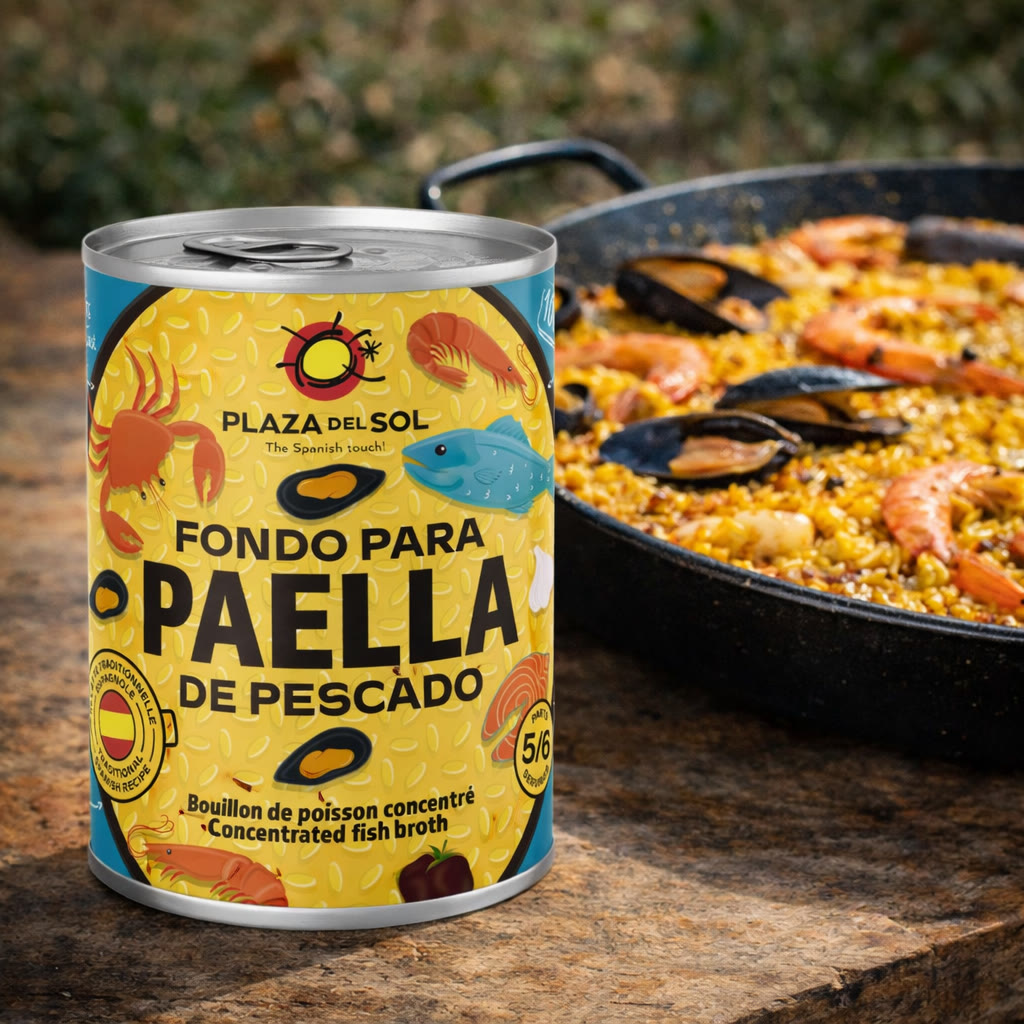
For a fish and seafood base without spending the afternoon reducing bones, the Concentrated fish stock for paella – Plaza del Sol is diluted with three times its volume of water, for 5 to 6 servings. It contains rock fish from the Alicante coast, monkfish, redfish and brown crab (allergens: fish, crustaceans; may contain molluscs).
When to stop stirring
- Seco: you stir the sofrito, pour in the stock, spread out the rice. After that, nothing. Stirring releases the starch and turns the paella into sticky rice.
- Meloso: you stir from time to time, without frenzy, especially towards the end, to help the starch bind the sauce.
- Caldoso: a few movements of the spoon so that nothing sticks, no more.
Watching the end of cooking
Taste it. It is the only real timer. The grain should be tender, with a core that barely resists the tooth. With the Marisma, start tasting early: it cooks quickly. With the Albufera, whose grain stays firm, rely on your teeth rather than on appearance.
Think about residual cooking. Arroz seco rests for a few minutes off the heat, covered with a cloth. Meloso and caldoso are served immediately, a little looser than you would like: they will drink up more between the pot and the table.
What to remember before you buy
How to choose
- You mostly make paellas: the Albufera D.O. for special occasions, the J. Sendra for the week.
- You want to explore meloso and caldoso this autumn: the Marisma.
- You are only taking one to do everything: the Albufera D.O., made for paella and also suited to creamy and brothy rice dishes.
Mistakes to avoid
- Pouring the rice into lukewarm stock. It must be boiling.
- Stirring a paella. Once the rice is spread out, you do not touch it again.
- Adding all the stock at once to a meloso. Add it in several goes and you keep control of the texture.
- Letting a caldoso wait. It is served straight off the heat, otherwise it becomes a meloso in spite of itself.
- Forgetting to taste. The guidelines given here remain guidelines; your heat and your pan have the final say.
Store your rice in a cool, dry place, and keep a good stock close to hand. The rest is practice, and autumn is long.
Quick test
The right grain, the right move?
Five questions; the answers are in the article.