When the evenings draw in, you want a rice dish you can eat with a spoon. Not a dry paella with a crisp socarrat, but an arroz meloso: whole grains bound by a creamy stock that coats the plate without drowning it. It is a generous, simple dish from Spanish home cooking, and above all it asks for your attention.
This recipe for four rests on one small dried pepper: the ñora. It adds no heat, just a gentle sweetness that links the sofrito to the fish stock. Around it are three products chosen for their precise roles: a rice that gives creaminess, a concentrated stock and a pre-measured saffron.
Ingredients for four people
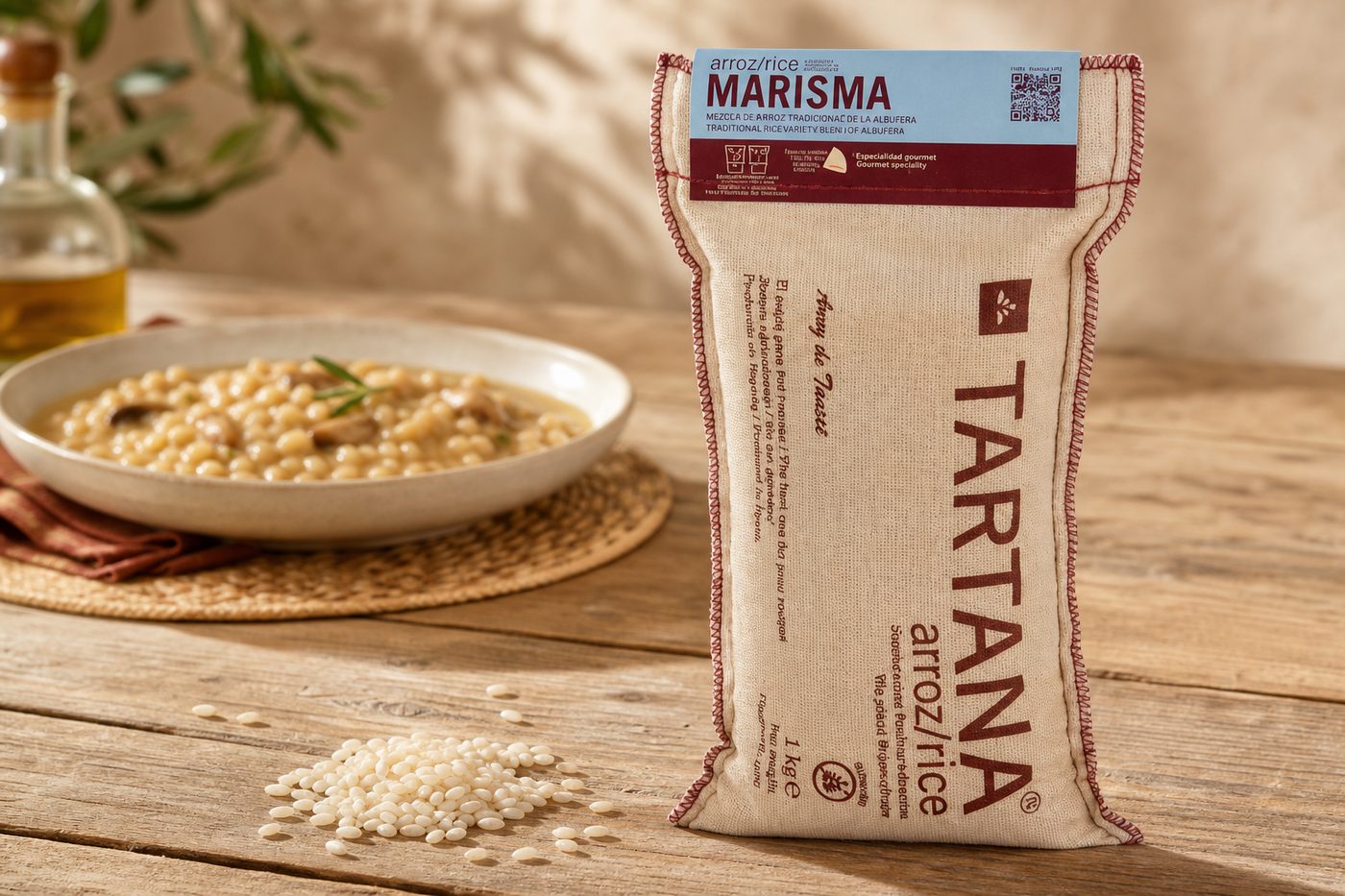
- 350 g of Marisma rice · Tartana
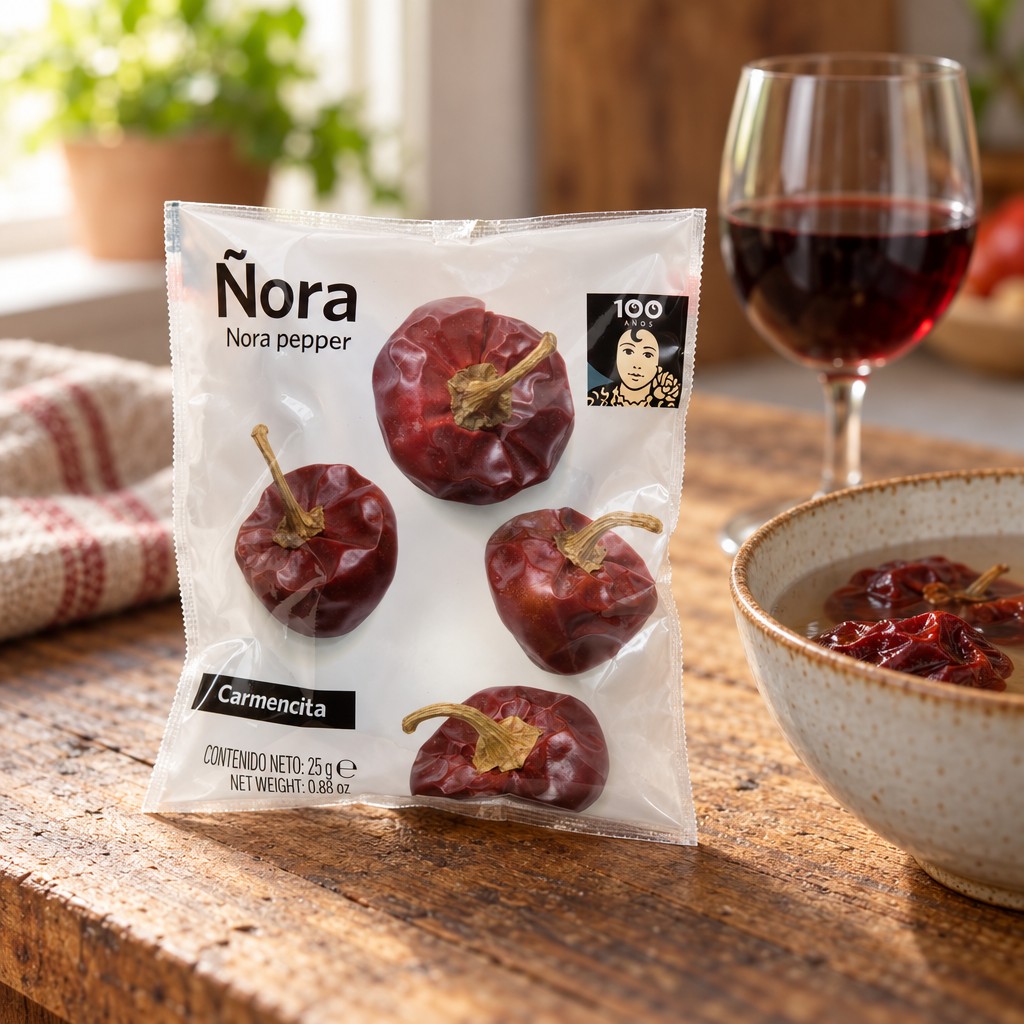
- 4 ñoras, taken from a bag of Whole Ñora peppers Carmencita
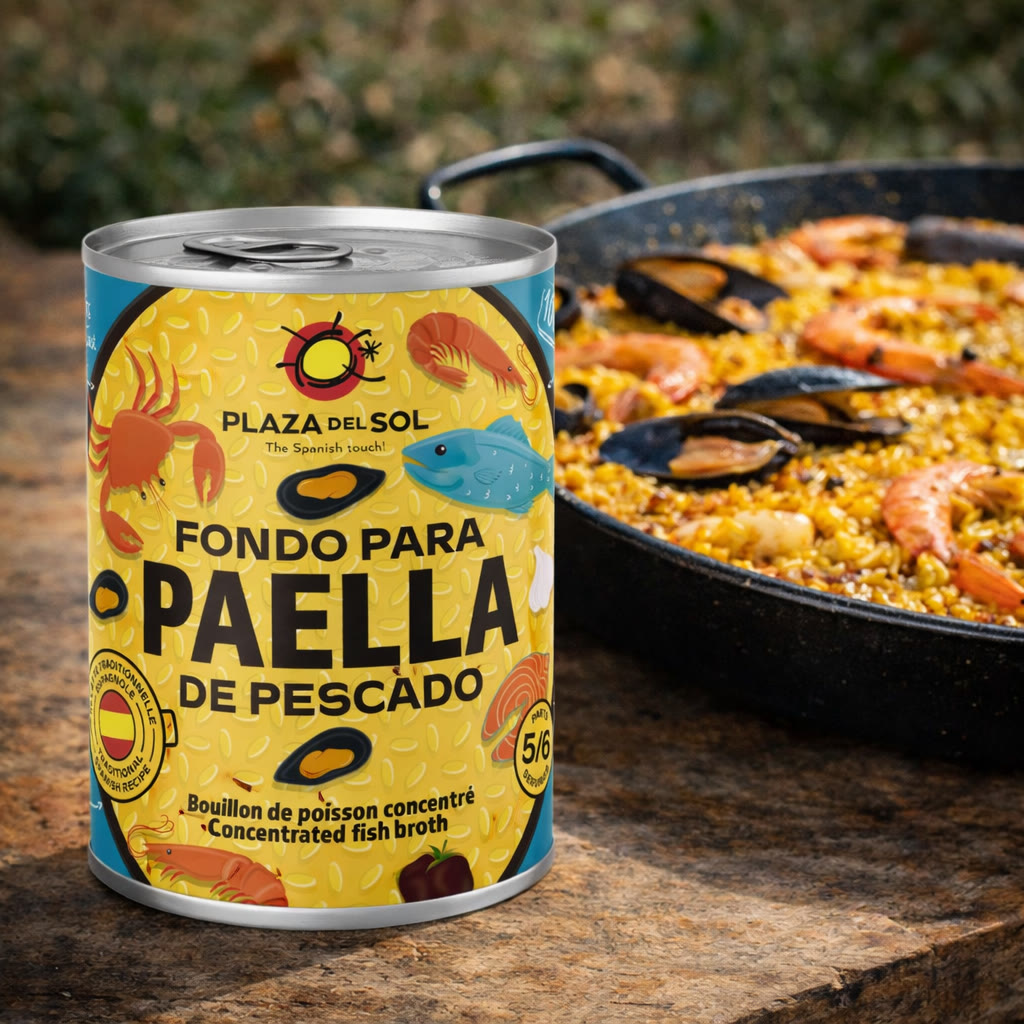
- 1 tin of Plaza del Sol concentrated fish stock and three tins of water
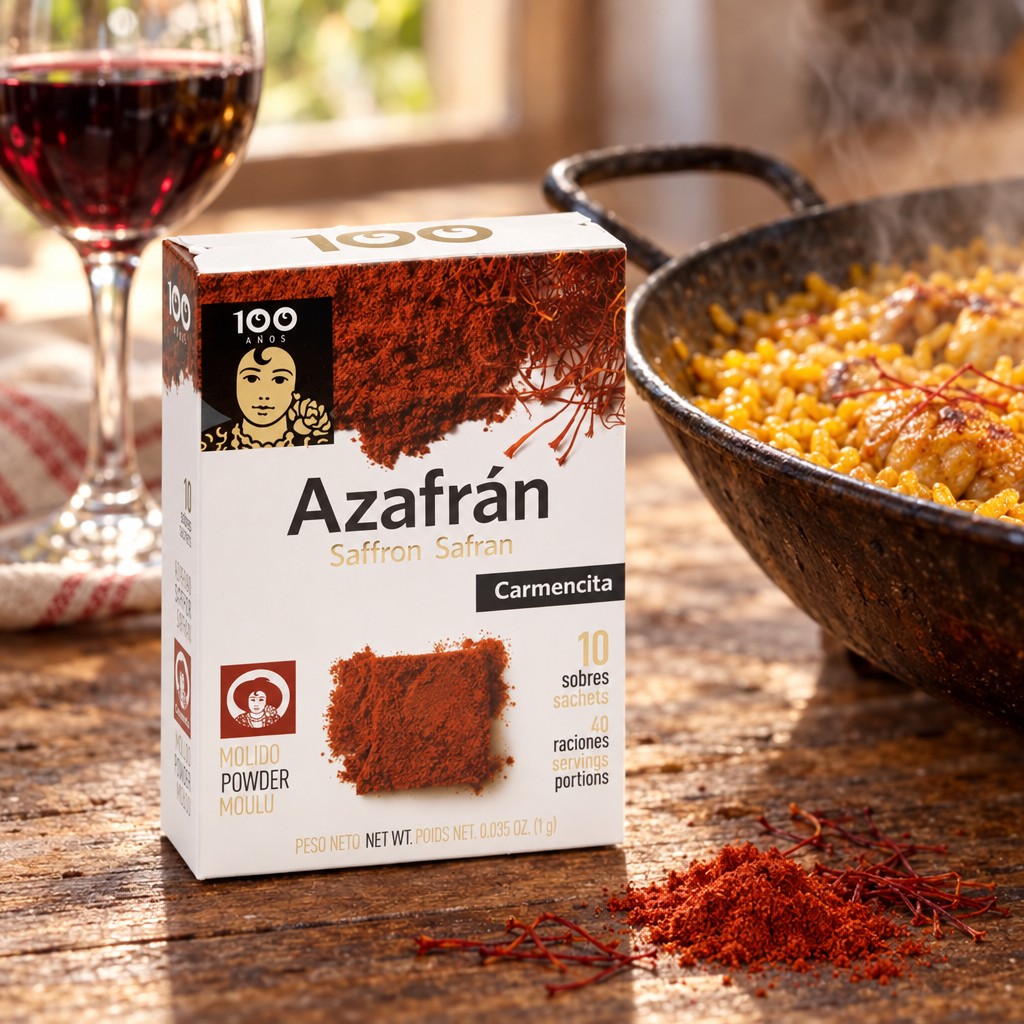
- 1 sachet of Carmencita ground saffron
- 300 g of cuttlefish or squid, diced
- 8 whole prawns
- 2 cloves of garlic, 2 very ripe tomatoes
- Olive oil, salt with caution
You will need a wide, deep sauté pan or a cast-iron casserole. A meloso is cooked with more liquid than a paella, so it needs sides.
Calculator
Quantities for your table
Move the slider: the article's recipe adjusts.
| Marisma rice | 350 g |
| Ñoras | 4 |
| Concentrated stock (410 g tins) | 1 |
| Water (measured with the tin) | 3 |
| Ground saffron (0.1 g sachets) | 1 |
| Cuttlefish or squid | 300 g |
| Whole prawns | 8 |
| Garlic cloves | 2 |
| Very ripe tomatoes | 2 |
Quantities from this article's recipe, scaled to your table.
The ñora: rinse, soak, scrape
The ñora is a small, round pepper, dried whole. Most of its flavour lies in the thin layer of flesh clinging to the inside of the skin. The skin, tough and parchment-like, is of no use to us here. The work is therefore all about recovering that flesh.
- Rinse. As Carmencita advises, rinse the ñoras before using them: a quick pass under cold water is enough.
- Open. Remove the stalk and shake out the seeds. A few leftover seeds do no harm, but they add nothing either.
- Soak. Put them in a bowl of warm water for about twenty minutes, until the skin is as supple as thin leather.
- Scrape. Open each ñora out flat, inside facing you, and scrape off the flesh with the back of a knife or a small spoon. You will get a dark red paste, not much of it, but fragrant.
Keep the soaking water: it has taken on the colour and a little of the flavour of the pepper. One ladleful will go into the stock.
Carmencita is a Spanish company founded in 1923 in Novelda (Alicante) by Jesús Navarro Jover and Carmen Valero. It was the first Spanish company to pack spices in glass jars.
The ñora
Four moves to get at the flesh
Tap a card: each step, in detail.
The sofrito, where everything is decided
Heat a generous glug of olive oil in the sauté pan. Sear the prawns for one minute on each side, then set them aside: they will come back at the end. In the same oil, fry the cuttlefish until it loses its water and begins to brown.
Add the chopped garlic and let it barely turn golden, then add the ñora flesh. Stir for thirty seconds, no more: like paprika, ñora burns quickly and turns bitter. Immediately add the grated tomatoes and let them reduce over a medium heat until you have a jammy paste that comes away from the base of the pan.
A well-reduced sofrito is half the rice. If it stays watery, the stock will have nothing to rest on.
The Plaza del Sol stock already contains fried tomato, garlic, dried pepper and salt. There is no need to weigh down the sofrito: two tomatoes are enough. And only add salt when you taste, towards the end of cooking.
Why Marisma gives this creaminess
A question of starch
Rice starch is made up of two families: amylose and amylopectin. A rice rich in amylose gives firm, well-separated grains. A rice low in amylose releases, as it cooks, a starch that thickens the liquid around the grain. This is exactly what you want in a meloso.
The Tartana grain
Marisma is a variety born in the Ebro delta, with a large, very pearly grain that is low in amylose. It absorbs the flavours of the stock very well. It is Tartana's creamiest rice, the one suited to arroces melosos, arroces caldosos and risotto. Tartana is the “els Gorets” family, rice growers in the Albufera Natural Park, near Valencia, since the end of the 19th century.
The flip side
This grain cooks quickly. That is both its quality and its trap: a few minutes of inattention and the meloso turns to mush.
The vocabulary
Six words to talk rice
The ones that keep coming back in this recipe.
The stock and the saffron: getting the measure right
One 410 g tin and three tins of water make about 1.6 litres of stock. That is the amount intended for a paella with 500 g of rice. For our 350 g meloso you will use a good part of it, or even all of it, and the ratio of liquid to rice will be higher: that is what makes the difference between the two dishes.
- Mix the tin with three tins of water in a saucepan and add a ladleful of the ñoras' soaking water.
- Bring to a simmer, then stir the sachet of saffron into the hot stock before adding the rice. A 0.1 g sachet is intended for four portions.
- Keep the stock at a gentle simmer throughout the cooking. A cold stock halts the cooking and makes the grain uneven.
The base contains rockfish from the Alicante coast, monkfish, redfish and brown crab. Plaza del Sol is an Alicante company, based in San Vicente del Raspeig.
Cooking step by step, and a finish that comes quickly
- Coat. Add the rice to the sofrito and stir for a minute to coat every grain.
- Add the stock. Pour in about a litre of hot stock in one go. Stir once, then let it bubble briskly.
- Stir with moderation. Stir from time to time, but not too much: enough to stop the rice sticking and to release its starch, not so much that the grains break.
- Adjust. When the liquid drops below the level of the rice, add a ladleful of stock. The meloso must always stay loose.
- Taste early. Marisma cooks quickly: taste early and often. The centre of the grain should still offer a little resistance to the bite.
- Finish. Lay the prawns on the rice for the last two minutes. Adjust the salt. Off the heat, give it one last vigorous turn of the spoon: the sauce comes together.
The right point: a spoon drawn through the pan leaves a furrow that closes slowly. Serve straight away, in shallow bowls. The rice keeps drinking the stock while it waits: a meloso that is left standing becomes a dry rice.
In practice: what to buy, mistakes to avoid
For this recipe
- A 25 g bag of Carmencita ñoras, for this rice, then for sofritos and sauces.
- A 1 kg cloth bag of Marisma rice · Tartana: nearly three melosos for four.
- One tin of Plaza del Sol concentrated stock per recipe.
- One box of Carmencita ground saffron: ten sachets, ten dishes of four portions.
Mistakes to avoid
- Burning the ñora. Thirty seconds in the oil, then the tomato. Beyond that, bitterness sets in.
- Salting too early. The stock already contains salt. Taste before adding any.
- Adding cold stock. Keep the stock simmering beside the pan.
- Forgetting the rice. Marisma cooks quickly: stay close to the pan for the last few minutes.
- Making it wait. A meloso is served the moment it is ready, not after.
Good to know
The stock contains fish and crustaceans, and may contain molluscs. Once opened, it keeps for 48 hours in the fridge. Store the ñoras and the saffron in a cool, dry place.
Quick test
Ready to eat?
Five questions; the answers are in the article.