An autumn cheeseboard often arrives at the end of a meal. The bread comes out, the cheese is cut, everyone tastes. And a jar of honey is set down alongside, almost by reflex. Yet not all honeys do the same job. Some sweeten. Others converse.
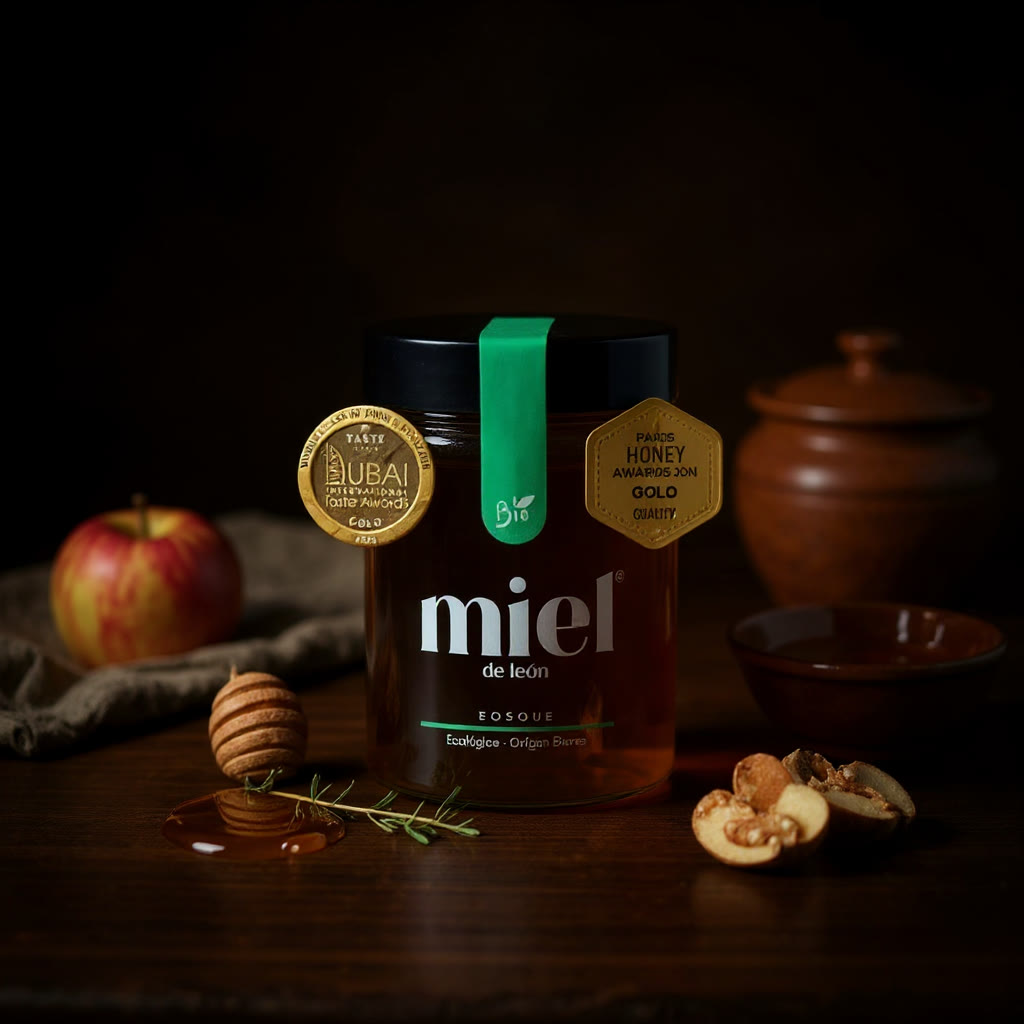
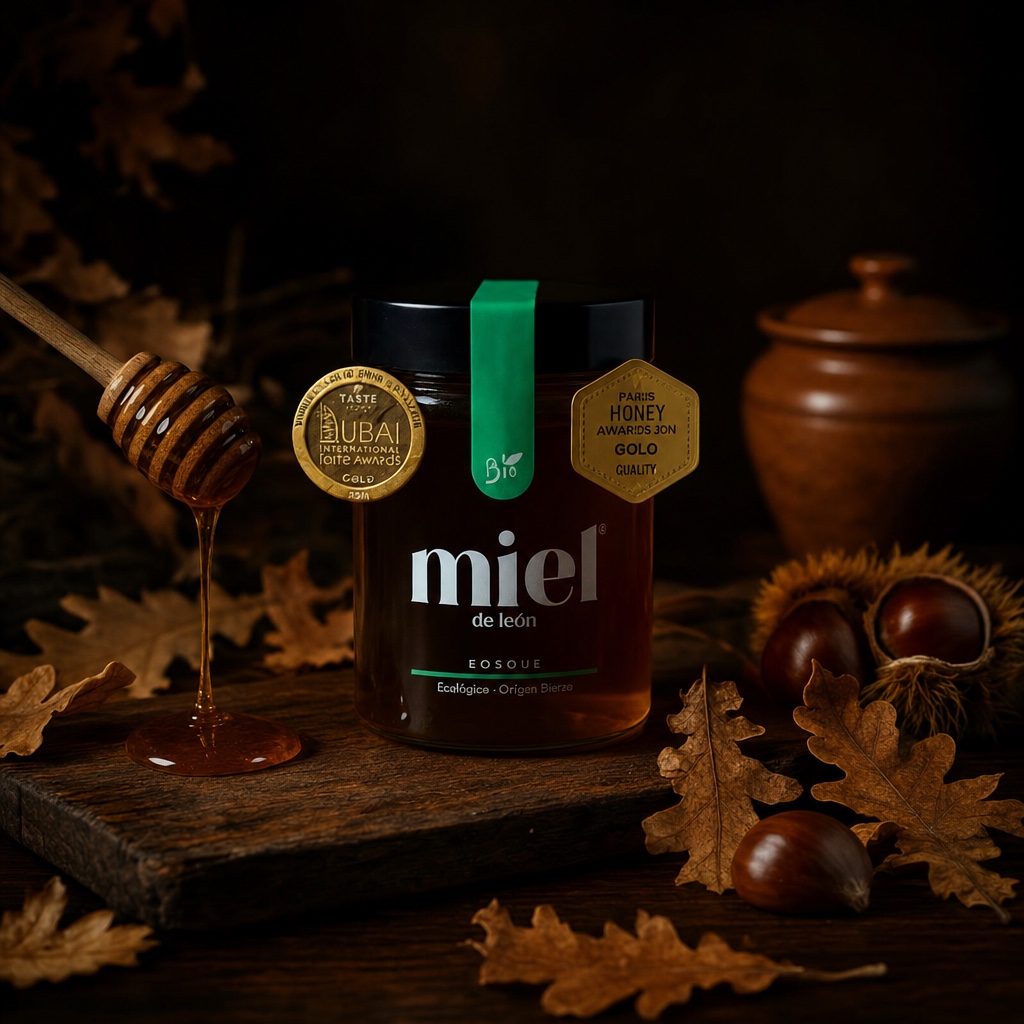
The Forest Honey from Miel de León belongs to the second family. Dark amber, toasty and less sweet, it doesn't smother the cheese: it answers it. Here is which cheeses to serve it with, how much to use, at which point in the meal, and three companions to round off the board.
A forest honey, not a flower honey
Miel de León is a family business in Pobladura de Fontecha, in the province of León. It has been practising the craft for more than twenty years. Its apiaries are set in the forests and hills of the province of León and the Bierzo, and the harvest, produced by hand, comes from its own hives.
The floral origin explains the character of the jar: bramble, chestnut, heather and oak. This is a long way from a pale, floral honey. The colour is dark amber, the aroma intense and lingering, the flavour strong and toasty. And above all, it is less sweet.
In the kitchen, the difference is felt straight away. A flower honey brings sweetness first. This one brings definition, a grilled note that stays in the mouth. It holds its own against powerful cheeses. It can also overwhelm a delicate cheese if you are heavy-handed. Hence a simple rule:
Honey accompanies the cheese. It does not coat it.
The jar
Profile of a forest honey
Tap a card: the house, the flowers, the taste, the rule.
With a blue cheese: the most obvious pairing
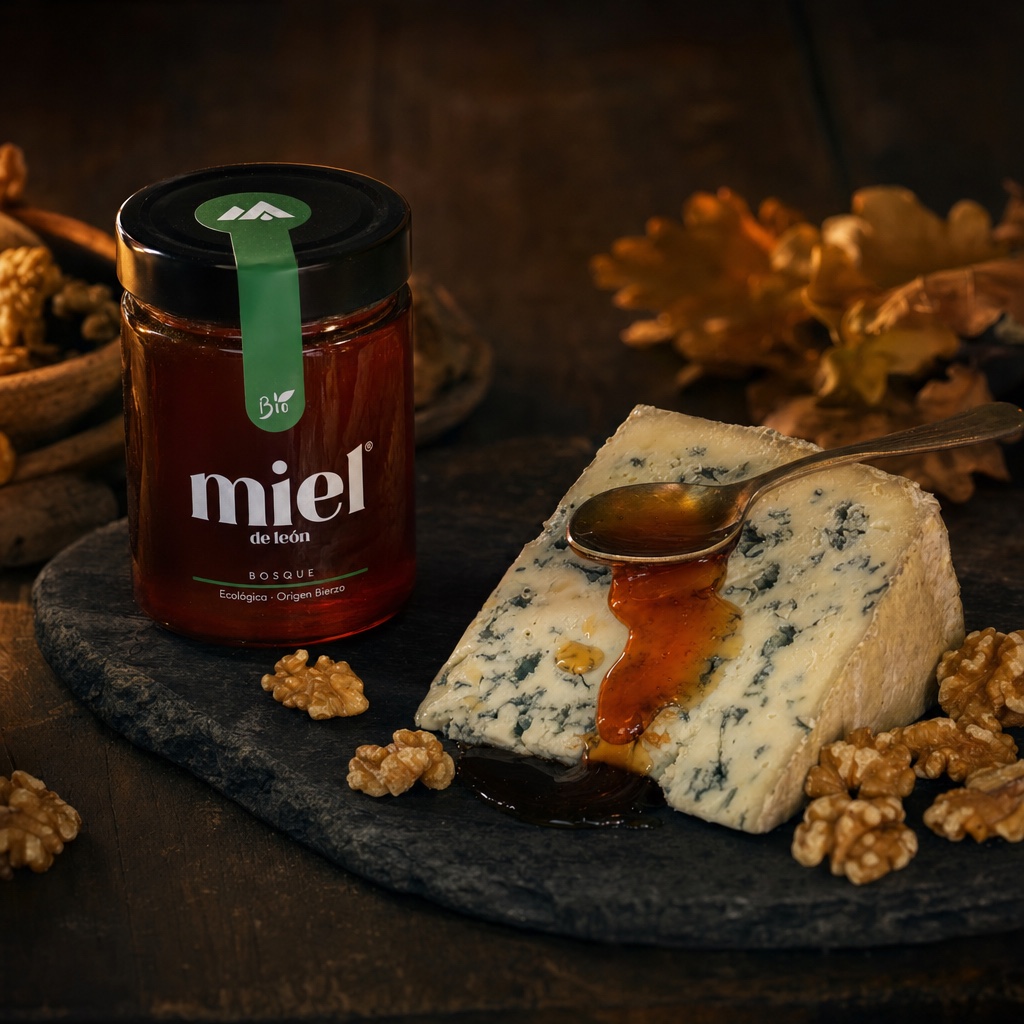
A blue cheese means salt, sharpness and blue veining that leaves its mark on the palate. It calls for sweetness in response. A very sweet honey provides it, but rather erases the cheese. A forest honey, darker and less sweet, strikes a better balance: the saltiness of the blue and the toastiness of the honey stand up to each other.
A Spanish blue with character works very well. But any well-made blue from your cheesemonger will play the game.
- Take the cheese out in advance: cold, a blue cheese is closed and the honey stays on the surface.
- A thread, not a puddle: a few drops on the slice, from the tip of a teaspoon.
- Plain bread: a slice of sourdough, barely toasted, is enough.
With a mature hard cheese: honey, oil, or both
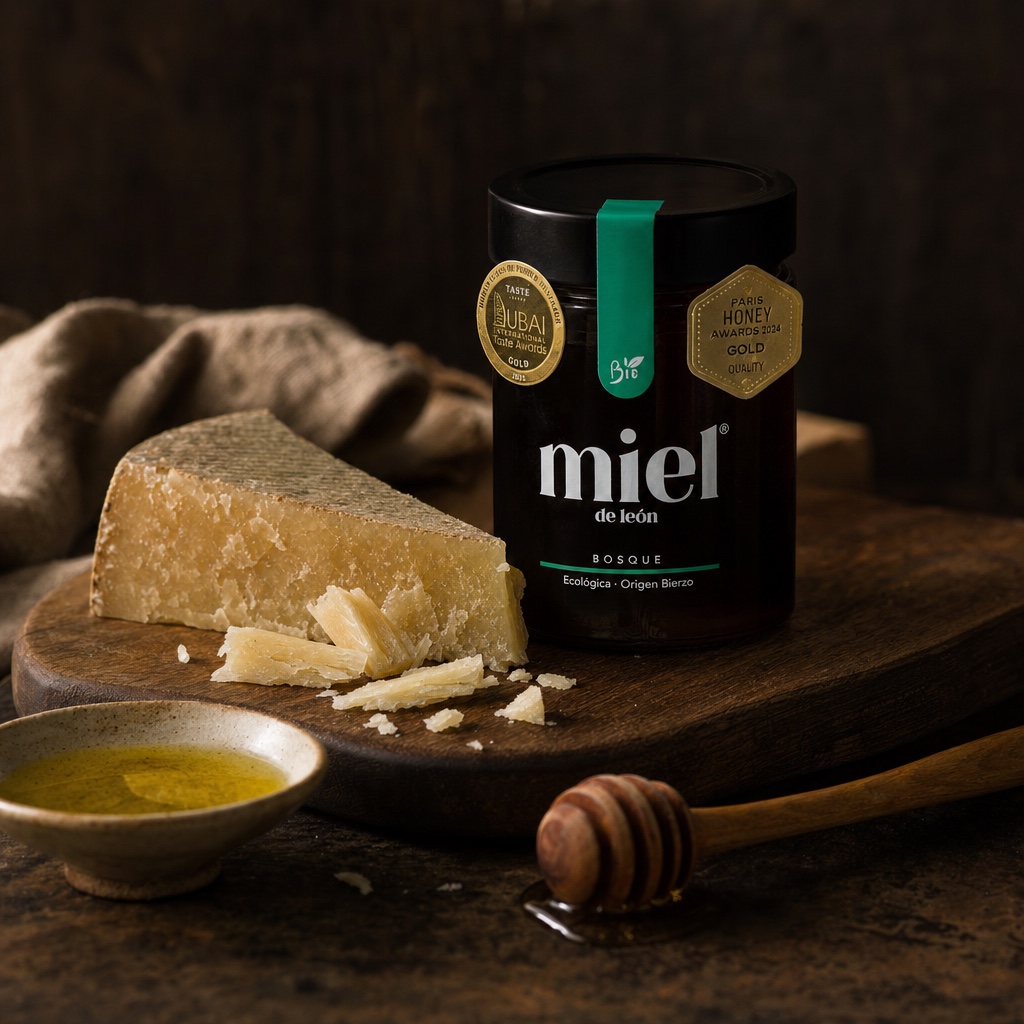
A well-matured Spanish sheep's-milk cheese, or an old mountain cheese from home: these hard cheeses have grain, sometimes small crystals, and notes of dried fruit and nuts that lengthen with maturation. The toasty side of the forest honey extends them. Here again, use little honey: the tip of a knife for each piece.
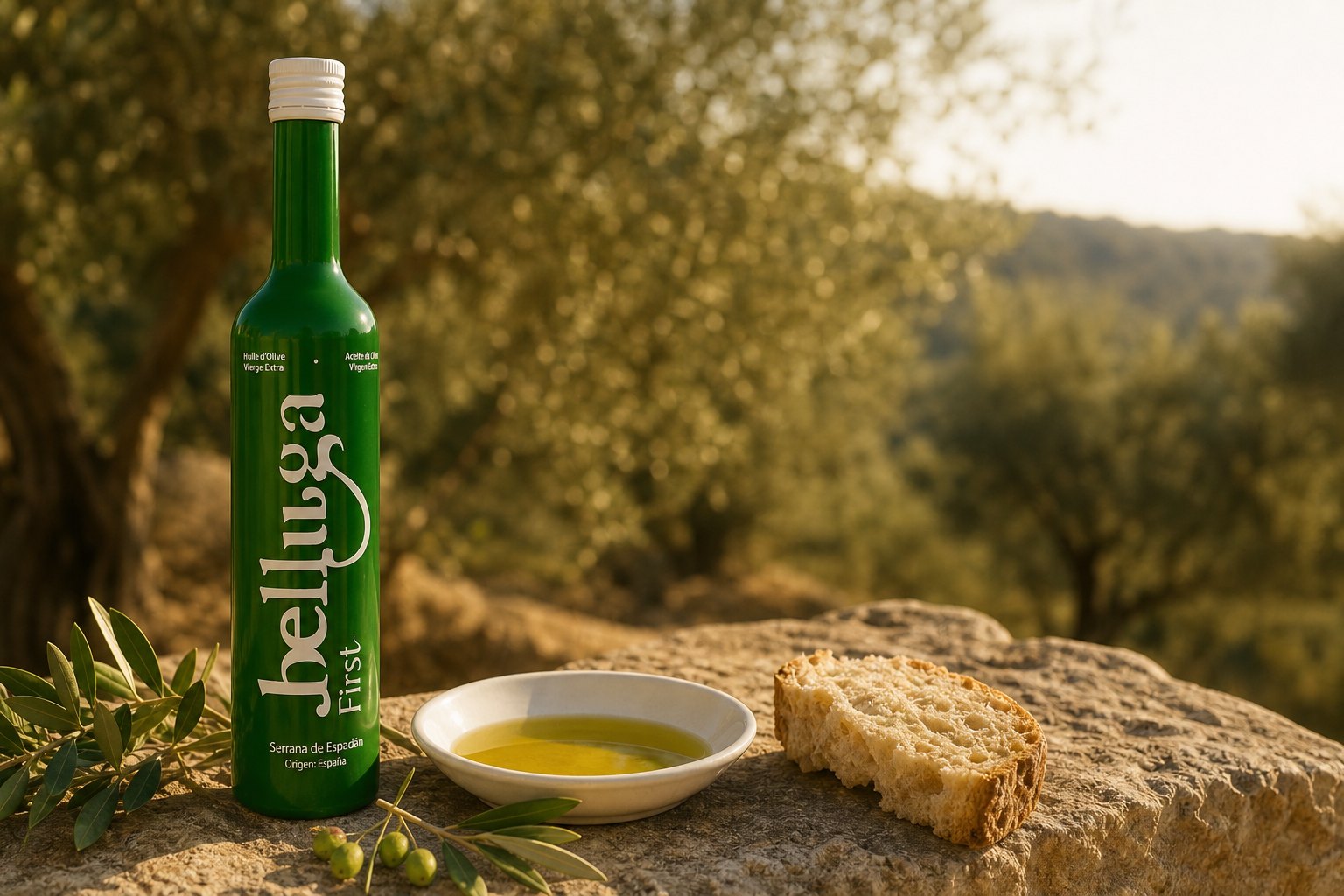
This is also the cheese that best welcomes a drizzle of oil. Belluga First from Belluga Gourmet is an extra virgin olive oil made from Serrana de Espadán olives, a native variety of the Alto Palancia and the Alto Mijares, almost impossible to find outside those mountains. The house is in Segorbe, in the province of Castellón, and its shop is inside the town's Oil Museum. It is used raw, and mature cheese is among its recommended uses, along with toasted bread, flame-cooked vegetables and white fish.
Honey or oil? Make both plates
Cut thin slices of the same cheese. On one plate, a drizzle of oil. On the other, a thread of honey. The oil lengthens the cheese and makes it rounder in the mouth. The honey pulls it towards the toasty and the sweet. Taste the oil on its own on a piece of bread first: you will know what it brings.
With a goat's cheese: playing on sweetness, or acidity
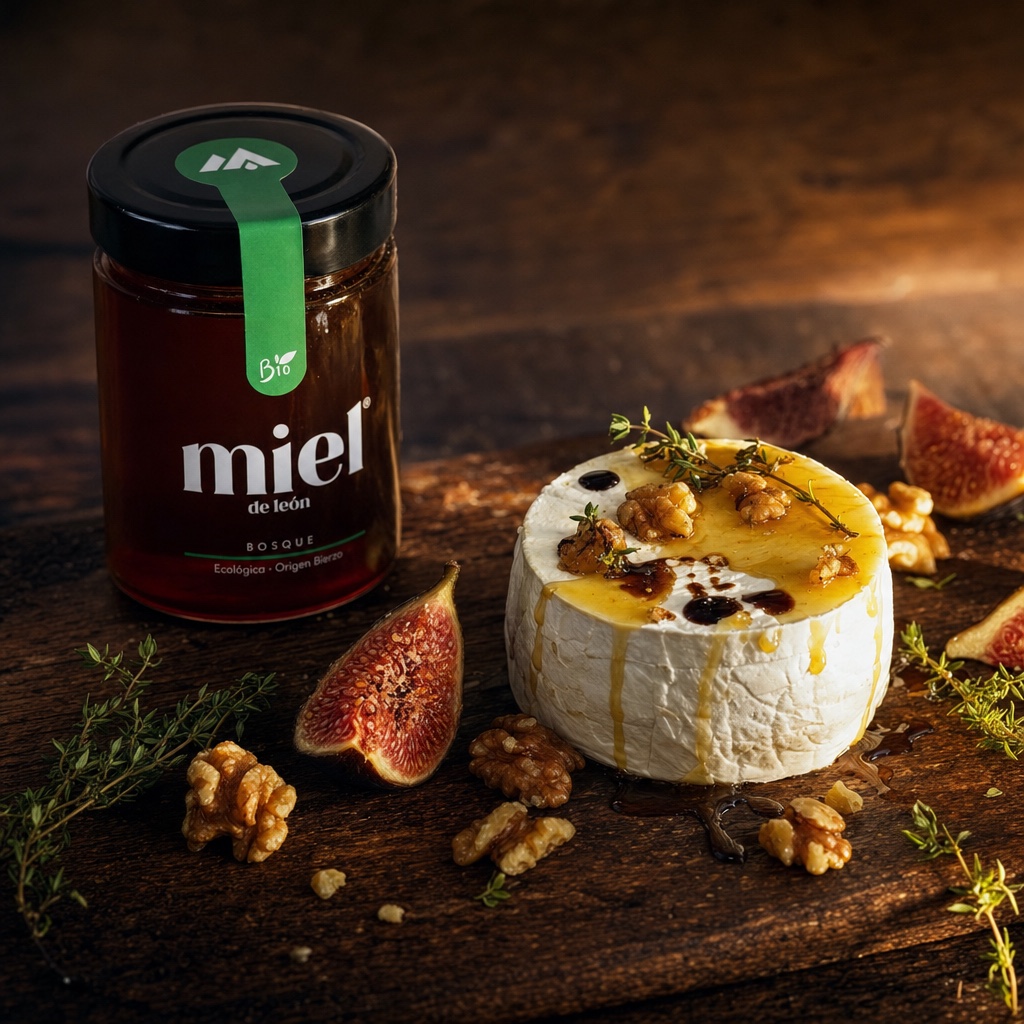
Goat's cheese is the one most readily associated with honey. Here, a distinction is needed. A mature, slightly dry goat's cheese copes with forest honey easily. A fresh goat's cheese, all milk and freshness, calls for more caution: a single drop of this honey is enough, otherwise it takes over.
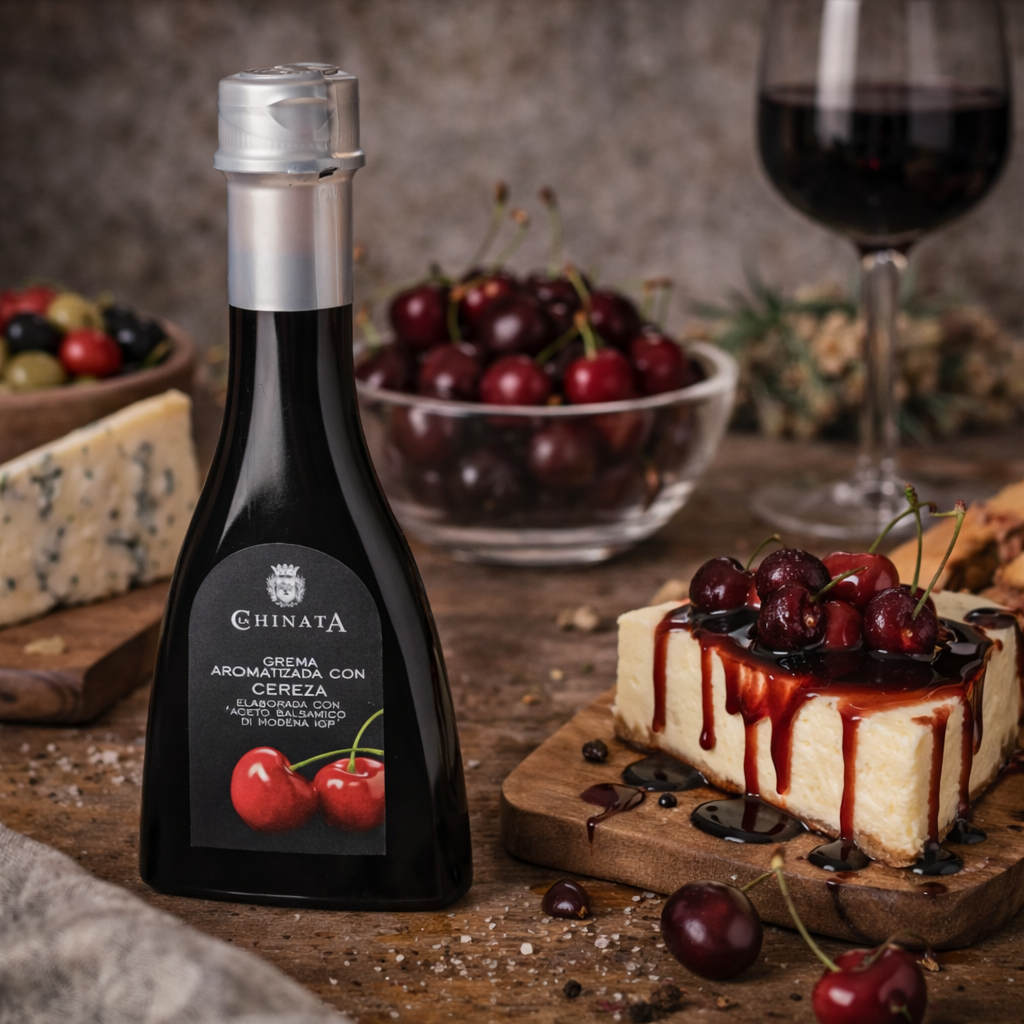
For a milder cheese, fresh goat's cheese or a soft-rind cheese, another route works better: the cherry-flavoured balsamic cream from La Chinata. Its texture is dense, its flavour both sweet and slightly tangy, with the fruity note of cherry. It wakes up a tender cheese without overwhelming it.
- In dots: a few drops placed beside the cheese, not on top. Everyone doses for themselves.
- In a line: its density lets you draw a clean line across the plate.
- Not on the blue: the acidity and the blue veining fight each other. Keep it for mild cheeses.
The crunch: fried almonds
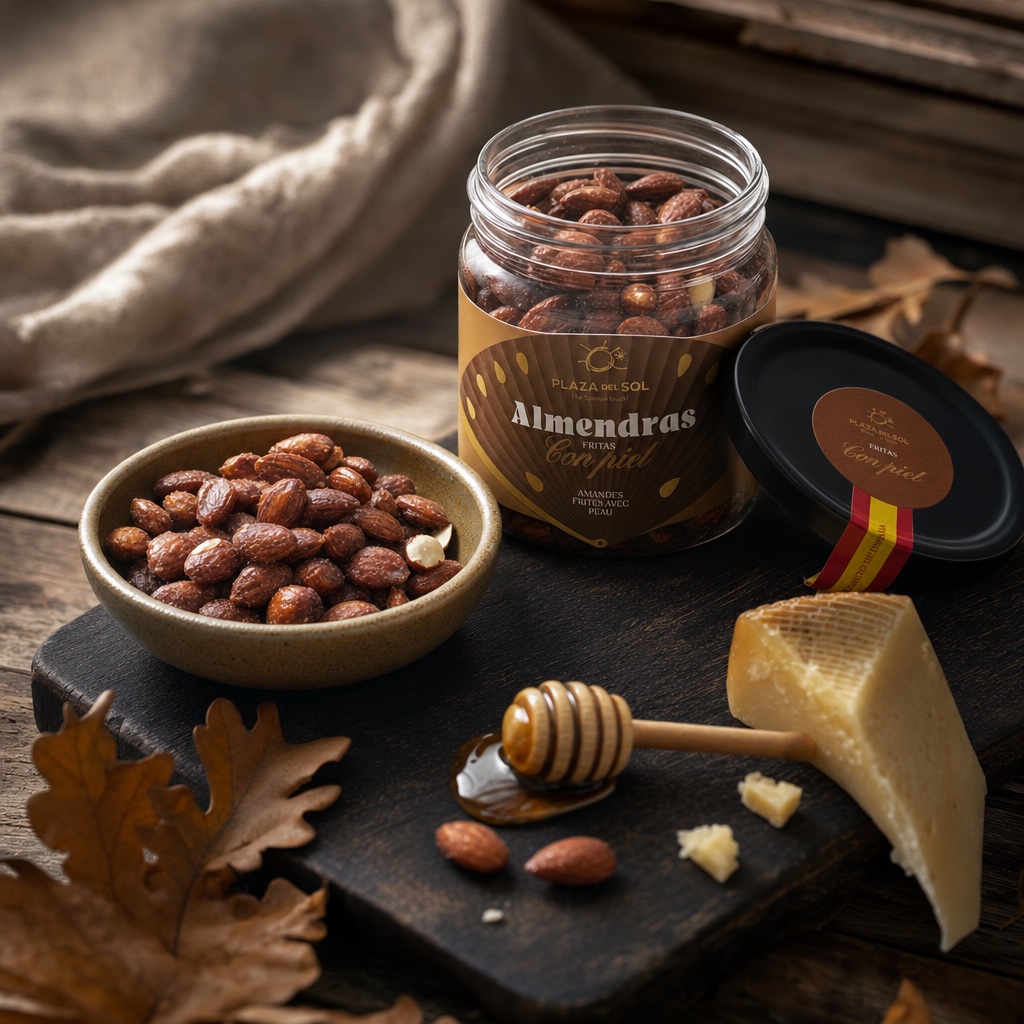
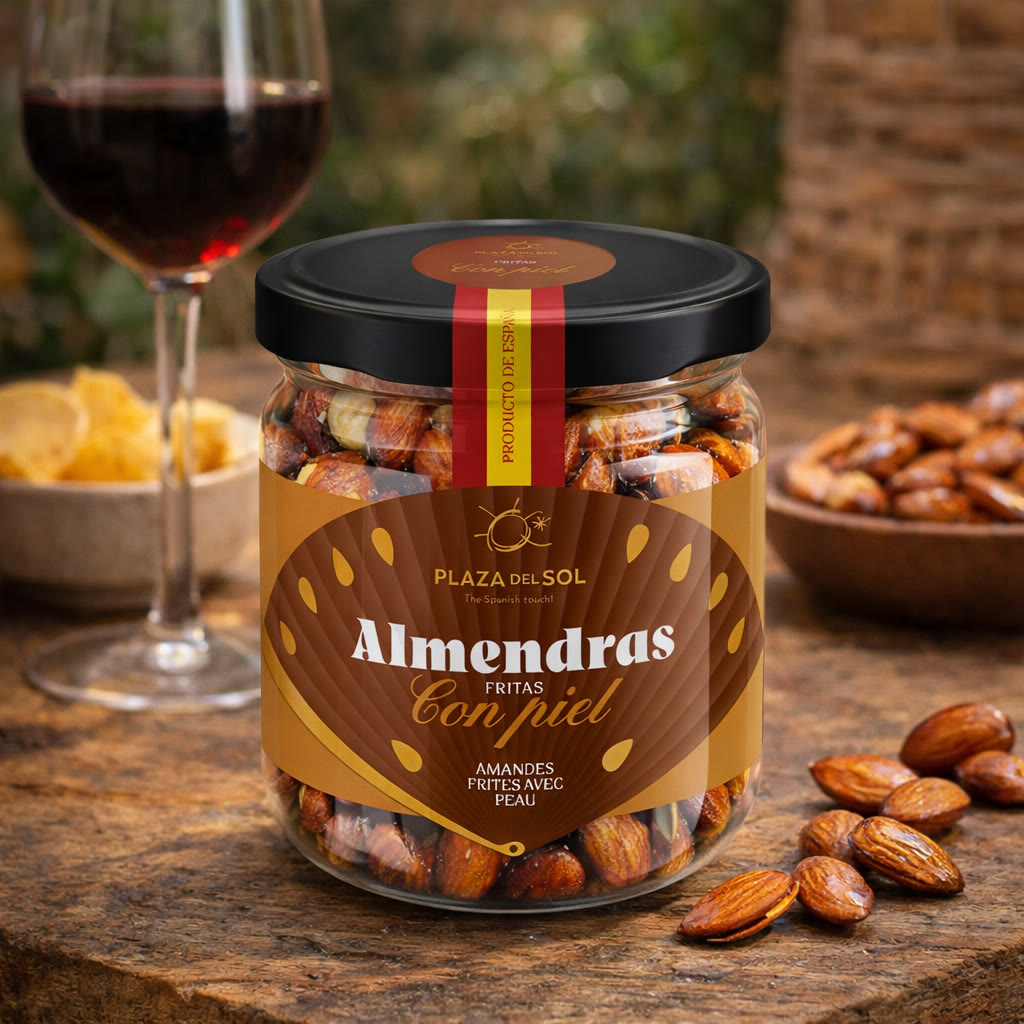
A cheeseboard often lacks texture. Everything is soft or firm, nothing crunches. A small dish of fried almonds with skin from Plaza del Sol settles the matter. The house is in San Vicente del Raspeig, near Alicante, and devotes itself to Spanish aperitif products. The almonds come in a resealable jar.
Their flavour of fried nuts echoes the toasty honey. Crunch one between two mouthfuls of blue, or place one on a piece of hard cheese with a thread of honey. A small handful per person is enough.
What goes with what
Three cheeses, and the crunch
The right companion for each cheese on the board.
How much, and at what point in the meal
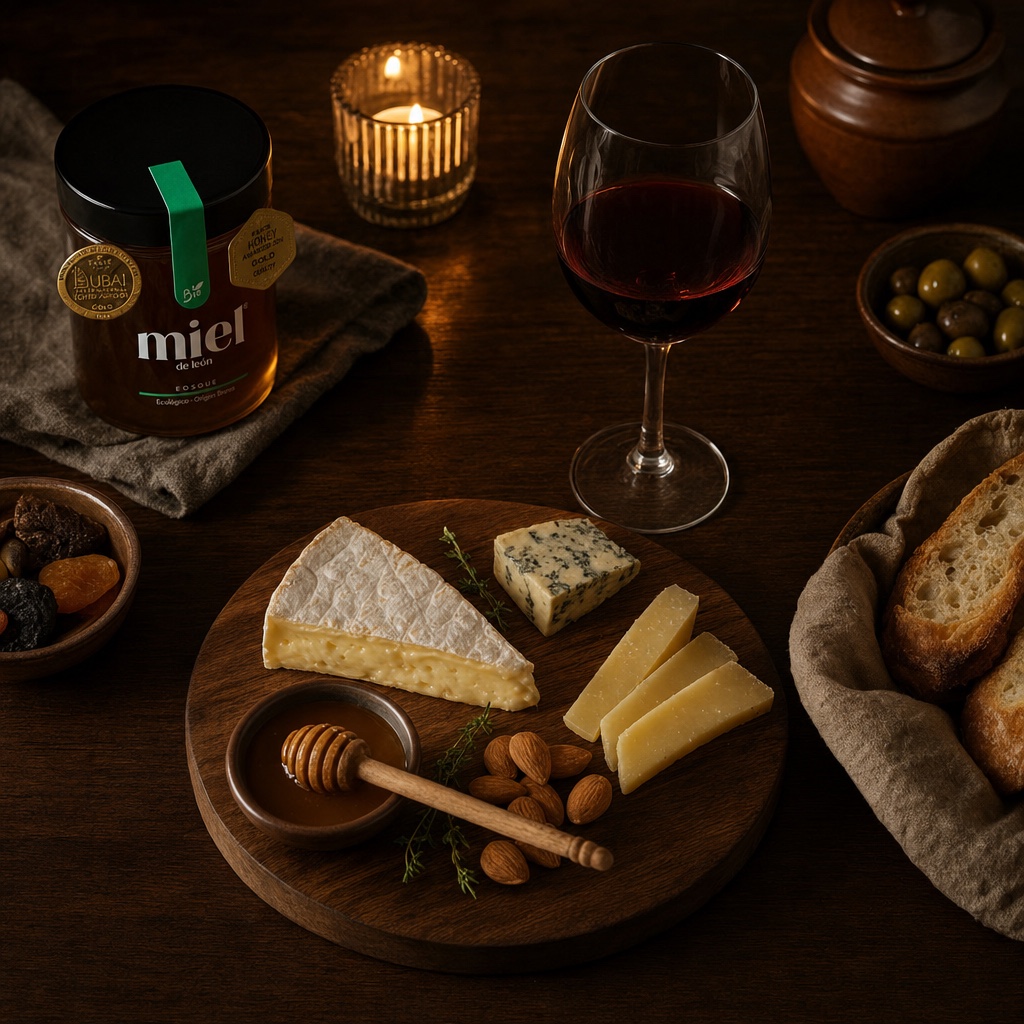
Cheese with honey is happily served as a dessert, or just before. That is the right moment for this board: after the main course, when there is still a glass of wine to finish and not much appetite for sugar. It can also open the evening, as an aperitif, with the almonds in the centre of the table.
For quantities, think by mouthful rather than by jar. Half a teaspoon of honey covers several pieces of cheese. It is better to top up than to drown.
The order of tasting matters. Go from the mildest to the strongest, so as not to tire the palate:
- The fresh goat's cheese or mild cheese, with a few dots of cherry balsamic cream.
- The mature hard cheese, with a drizzle of oil, then a thread of honey.
- The blue, with the forest honey.
The almonds stay on the table from start to finish.
In practice: what you need, and the mistakes to avoid
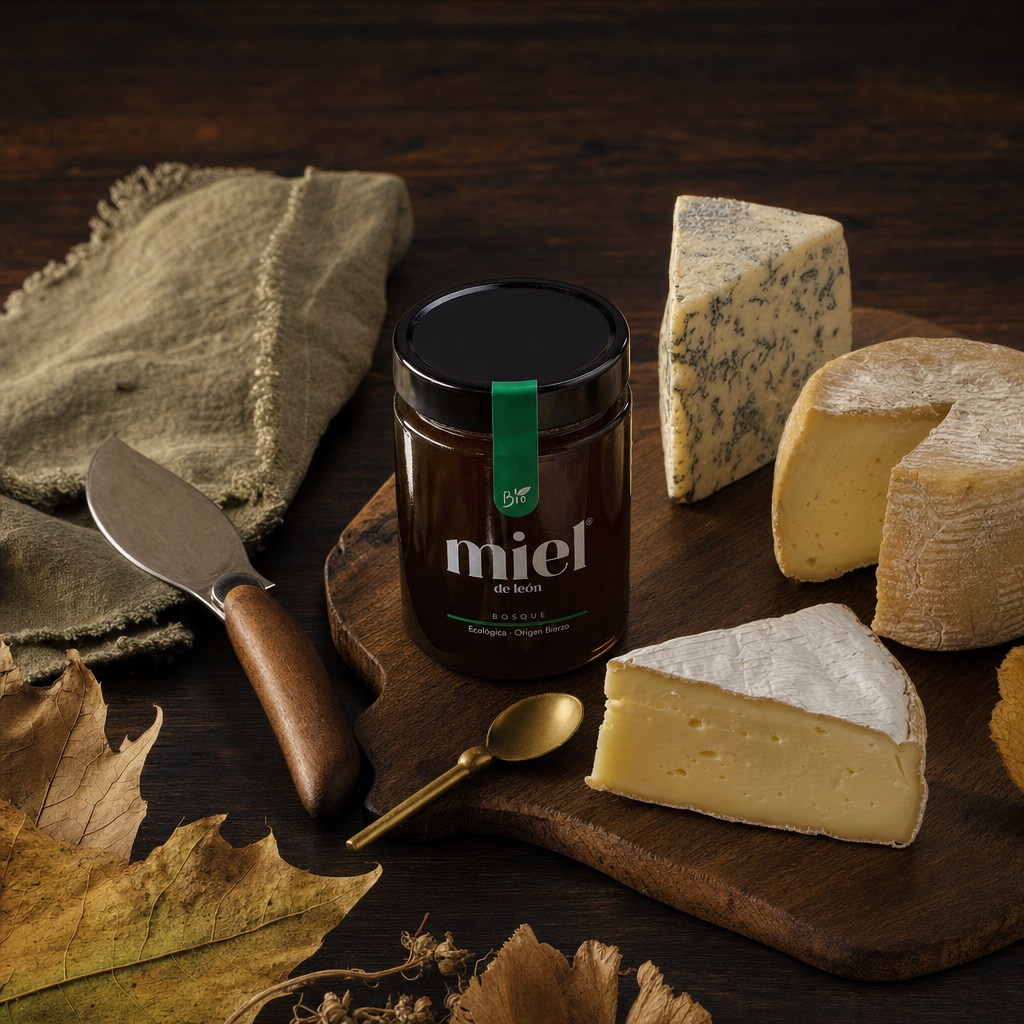
What you need for the board
- Three cheeses: a blue, a mature hard cheese, a goat's cheese or a mild cheese.
- The Forest Honey from Miel de León, for the blue and the hard cheese.
- Belluga First, raw, on the hard cheese.
- The cherry balsamic cream, for the mild cheese.
- The fried almonds with skin, for the crunch.
- A sourdough loaf, and small spoons for serving.
The mistakes to avoid
- Serving the cheeses cold: take them out of the fridge a good while beforehand. A cold cheese tastes of almost nothing.
- Pouring honey over the whole board: put the jar or a small dish alongside, and serve with a spoon, cheese by cheese.
- Using the same condiment everywhere: each cheese has its companion. On fresh goat's cheese, forest honey is measured out by the drop; the balsamic cream does not go on the blue.
- Heating the oil: here, it is tasted raw. Keep the bottle somewhere cool and dry, away from the heat and the window, and finish it within a few months of opening.
- Mixing the almonds with the honey: they lose their crunch. Serve them separately.
- Leaving the almond jar open: reseal it and keep it in a cool, dry place.
The rest of the jar of honey won't go to waste: a spoonful in plain yoghurt, or on a slice of sourdough the next morning, and it quickly finds its place in the kitchen again.
Quick test
Ready to build the board?
Five questions; the answers are in the article.