In Spanish bars, patatas bravas arrive quickly on the counter. A plate, golden cubes, a red sauce with just the right amount of heat. You share them standing up, with a drink, and the plate empties fast. Nothing complicated on paper. Yet at home, we often miss the essential: the potato goes soft, the sauce smothers it, and all that is left is a lukewarm, limp dish.
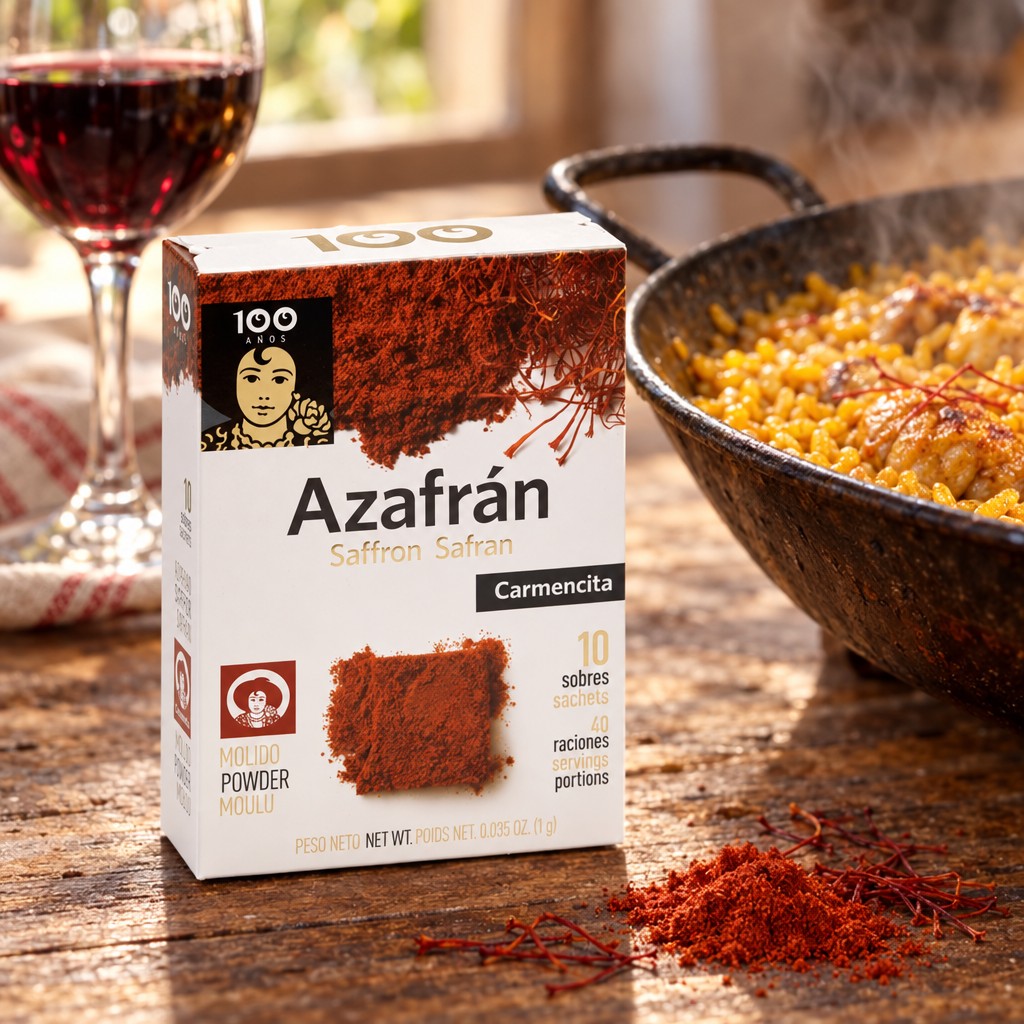
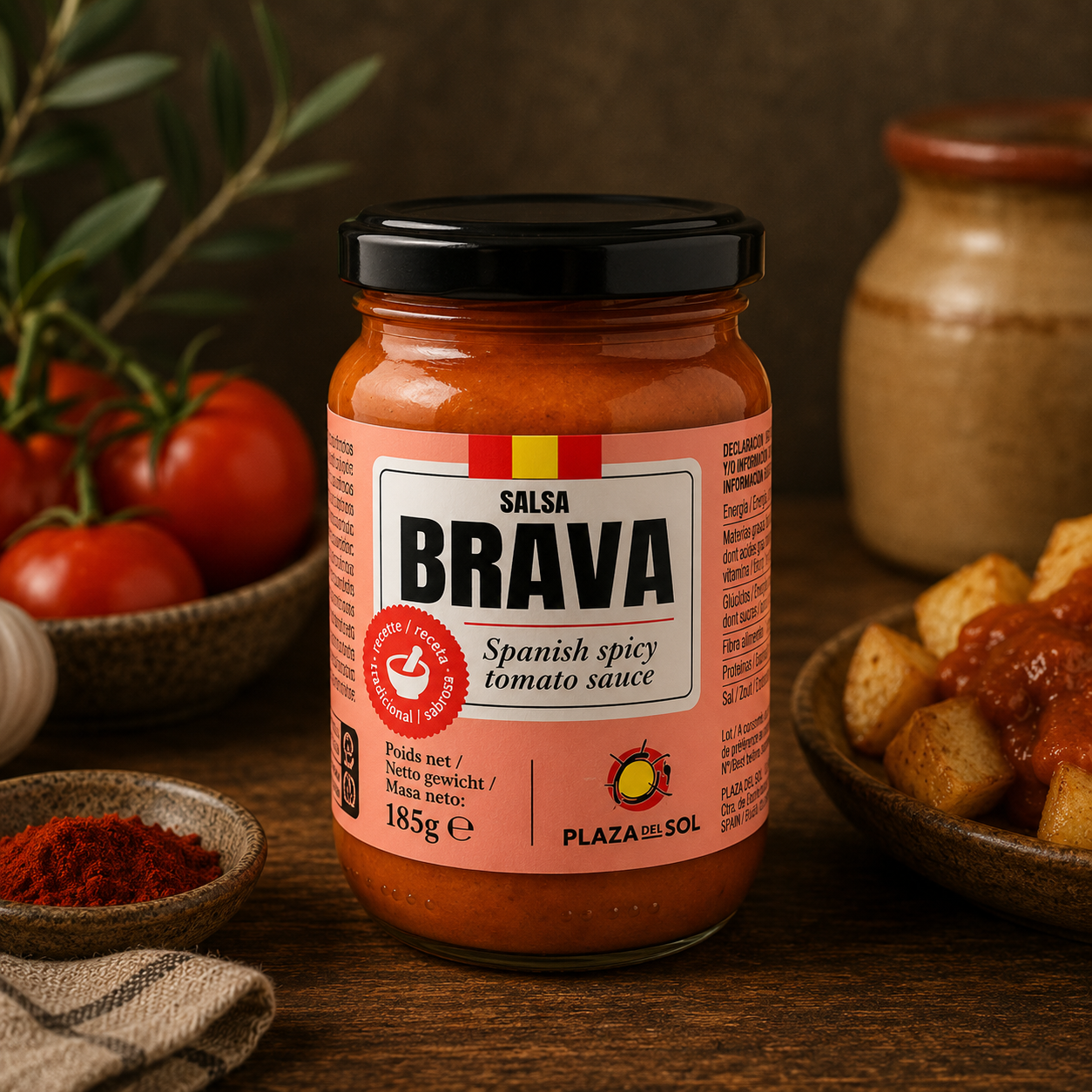
This recipe takes the tapa step by step. First the potato: how to cut it, and how to cook it in two stages so that it stays crisp outside and tender inside. Then the sauce, the Plaza del Sol spicy brava sauce, and how to serve it without drowning the plate. Finally, a touch suggested by the Carmencita product sheet: a little chopped ñora sprinkled over at the last moment.
The potato: the right choice, the right cut
Everything starts here. A floury-fleshed potato, or at least an all-rounder, gives a tender centre and a surface that cracks as it cooks. A very firm variety, the kind kept for salads, stays smooth and browns without ever really crisping.
To peel or not to peel
Most of the time, we peel them. Without the skin, the surface dries better and the crust forms more evenly. Peel, then give them a quick rinse.
Cut them irregularly
Aim for bite-sized pieces, about three centimetres. There is no need for perfect cubes. The corners and broken faces are exactly what catches the heat and turns crisp. Cut instead into slightly irregular pieces, turning the potato between knife strokes.
Then rinse the pieces in cold water to remove the surface starch. The water turns cloudy: that is normal, and it is exactly what you want to get rid of.
Two cooking stages for a truly crisp result
It all comes down to two stages. First you cook the centre, then you deal with the surface. If you try to do everything at once, the outside burns before the inside is ready.
Stage one: parboil
- Put the pieces in a large pan of cold, well-salted water.
- Bring to a simmer and cook until the tip of a knife goes in without resistance, but before the pieces fall apart.
- Drain, then give the colander a shake. The edges get a little battered: it is this rough surface that will become the crust.
- Leave to dry uncovered for a few minutes. The steam must escape. A damp potato does not turn golden, it steams.
Stage two: brown
Two options, depending on your kitchen and your mood.
- In a frying pan or deep-fried. This is the bar-counter method. A bath of very hot neutral oil, pieces that do not touch too much, and you lift them out when they are golden all over. Drain on kitchen paper.
- In the oven. Simpler at home. Toss the dry pieces with a drizzle of olive oil and a pinch of salt, spread them in a single layer on a very hot baking tray in a hot oven. Turn halfway through. They are ready when the corners are brown and brittle.
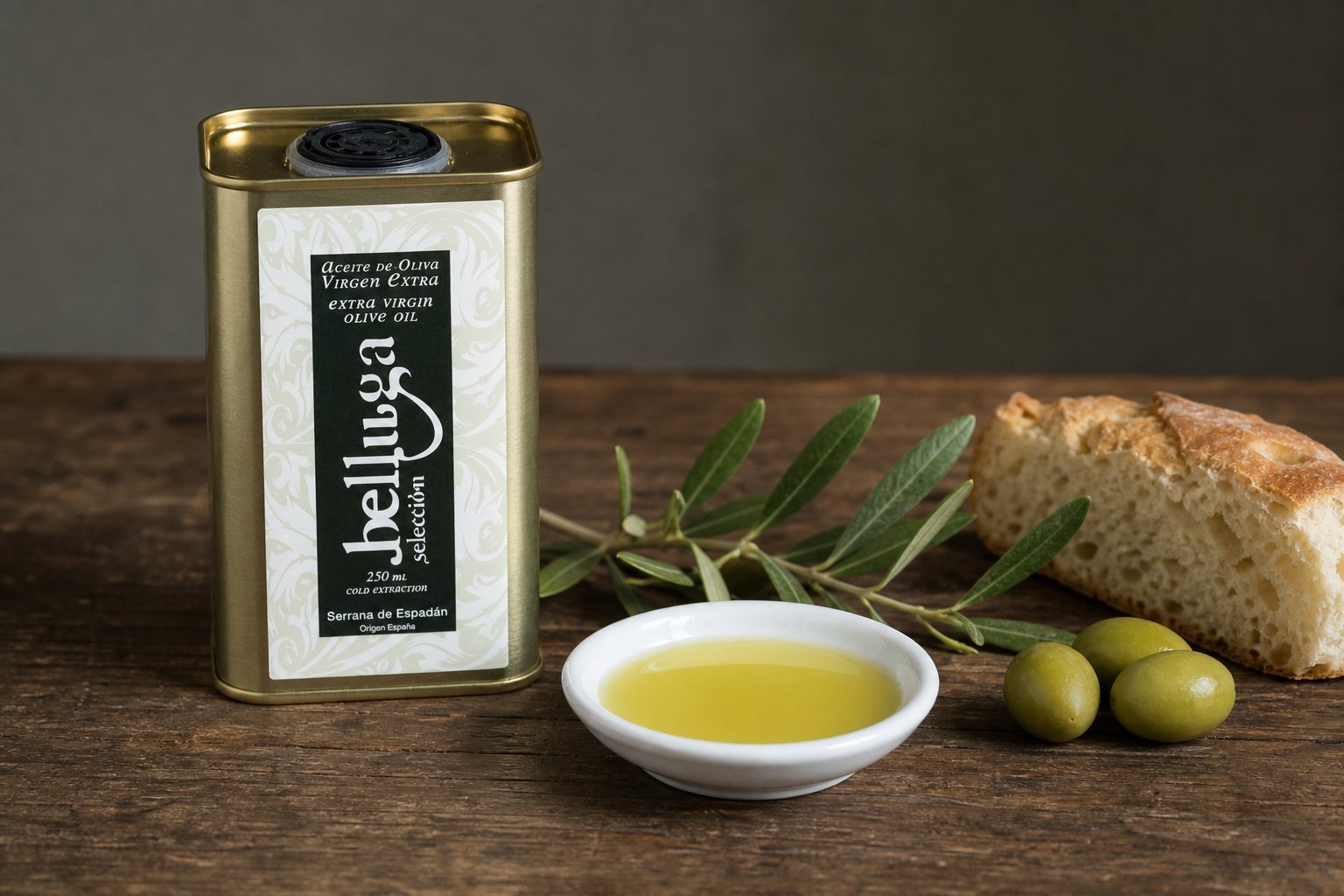
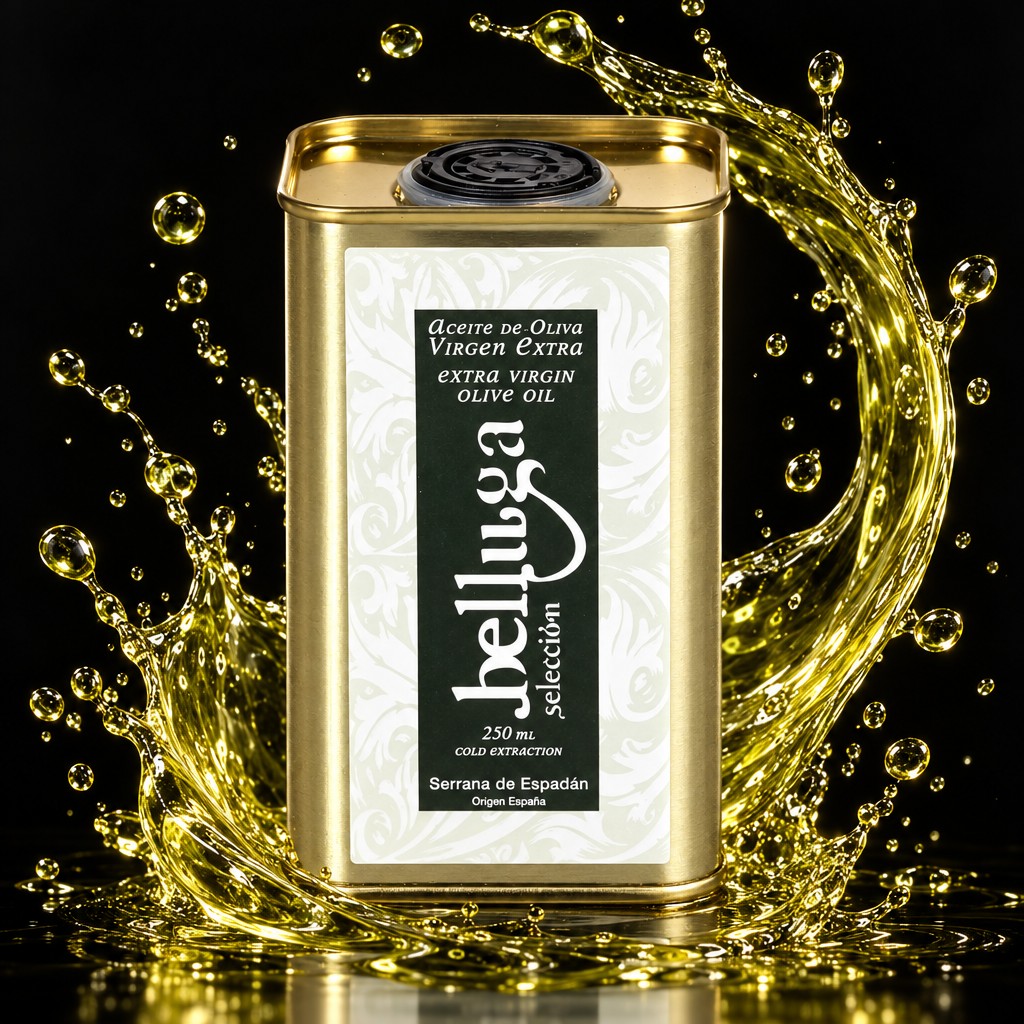
For coating the potatoes before baking, an oil you keep close to the hob is enough. Belluga Selección from Belluga Gourmet, the home of José Luis and Teresa in Segorbe, in the Alto Palancia (Castellón), is a filtered, clear extra virgin olive oil in an opaque metal container: no light reaches the oil. A table-size format, to hand when you are cooking.
The moves behind the crunch
Four steps before the sauce
Tap a card: each move in detail, without leaving the recipe.
The brava sauce: spoon it on, don’t drown
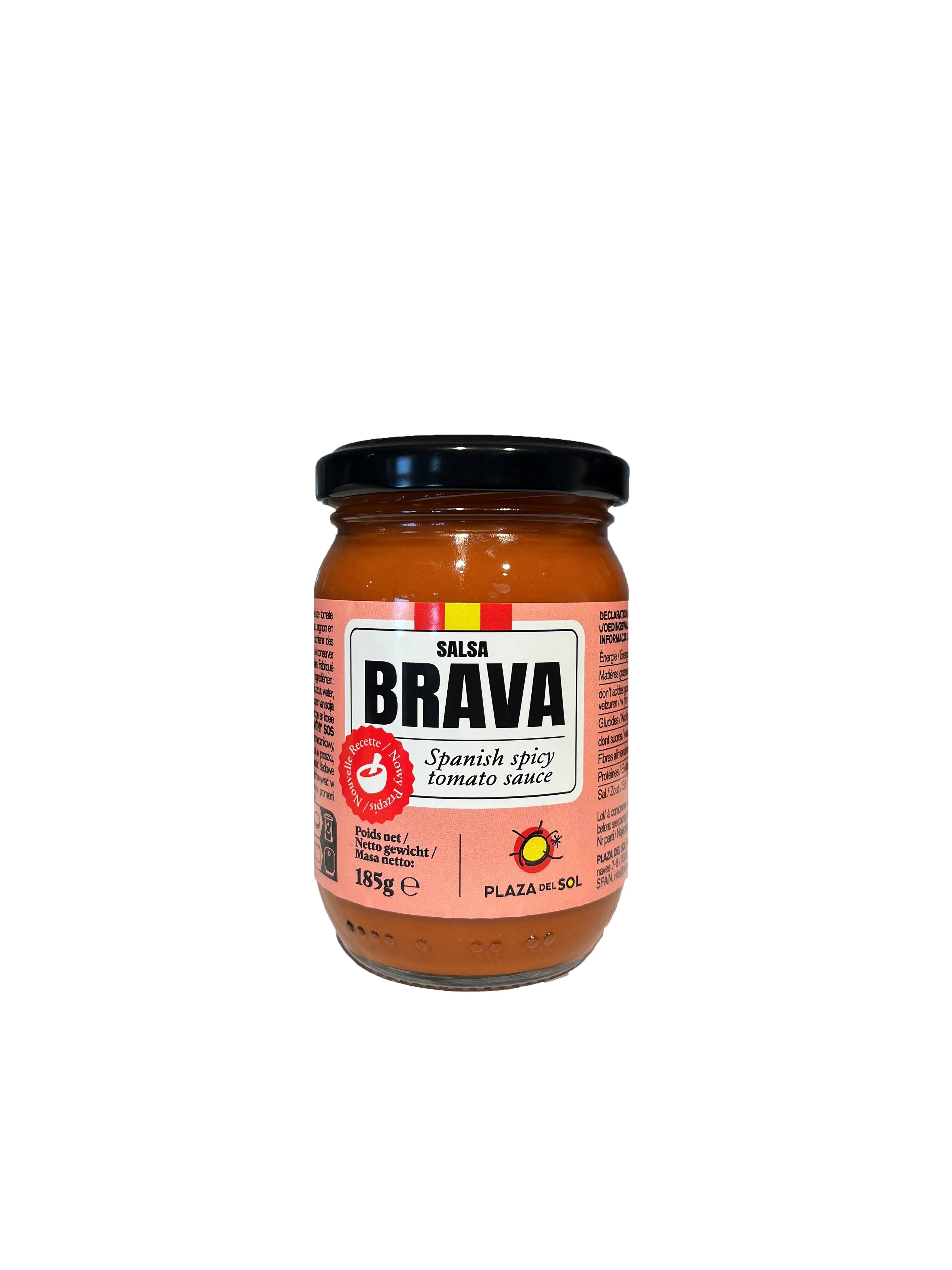
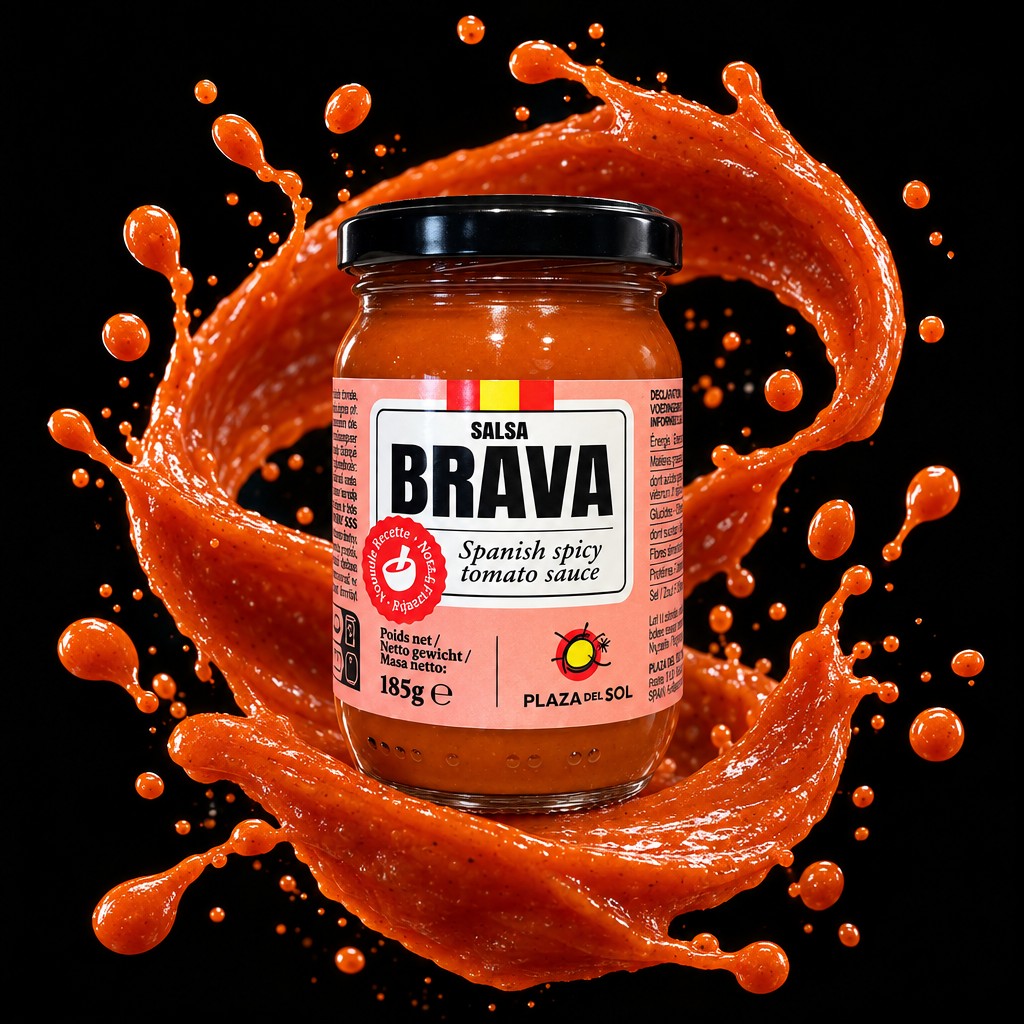
The Plaza del Sol brava sauce comes from Alicante, from San Vicente del Raspeig, from a house devoted to Spanish aperitif products. Tomato, spices and a measured heat, ready to serve. It asks for nothing more than the right gesture.
The three rules
- Never toss everything in a mixing bowl. If you stir the potatoes into the sauce, the crust soaks it all up and goes soft within minutes.
- Sauce on top, at the last moment. Arrange the very hot potatoes on the plate, then spoon the sauce over in stripes or small spoonfuls. Some of the pieces stay bare and crisp.
- Or on the side. In a small bowl, so that everyone dips to their own taste. This is the safest solution if the plate has to wait.
The potato is the dish. The sauce accompanies it. If you can no longer see the golden colour, there is too much.
If the jar has already been opened, take it out of the fridge a little before serving: ice-cold sauce on scorching potatoes is too sharp a contrast. Once opened, it keeps in the fridge, and the jar will also come in handy for croquetas, fried eggs or grilled meat.
In some bars, bravas are also served with an aioli alongside the red sauce. If you like, add a dash of well-garlicked mayonnaise. But start with the simple version.
The final touch: a pinch of ñora
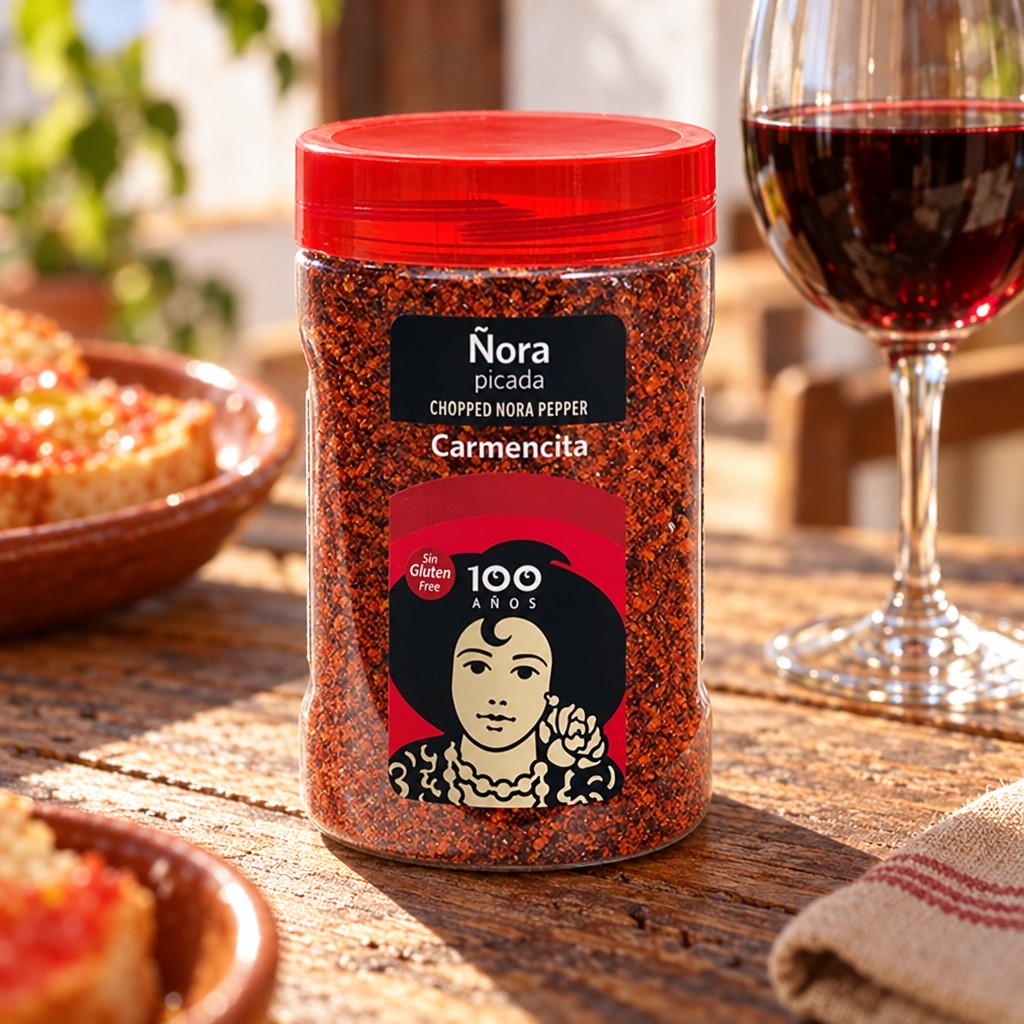
This is the finishing touch. The product sheet for Carmencita chopped ñora says it in one sentence: sprinkled over patatas bravas, it surprises.
The ñora is a small round pepper from the Spanish Mediterranean coast, dried and then chopped. It brings a smoky aroma and a powerful flavour. On bravas, it extends the sauce without adding liquid: the crust stays dry.
How to do it
- Serve the potatoes and spoon over the sauce.
- Take a small pinch of ñora between three fingers.
- Sprinkle from a height, so that it spreads in fine flakes.
- Serve straight away.
Go gently the first time. The flavour is bold, and you can adjust at the table. Carmencita is a house founded in 1923 in Novelda (Alicante) by Jesús Navarro Jover and Carmen Valero, the first Spanish company to package spices in glass jars. This catering jar is a large format: it will also serve for seafood, fish and rice dishes, and for salmorreta or romesco.
On the plate
What goes with the potato
The sauce, the ñora, the aioli and the oil: what each one is for.
Around the plate
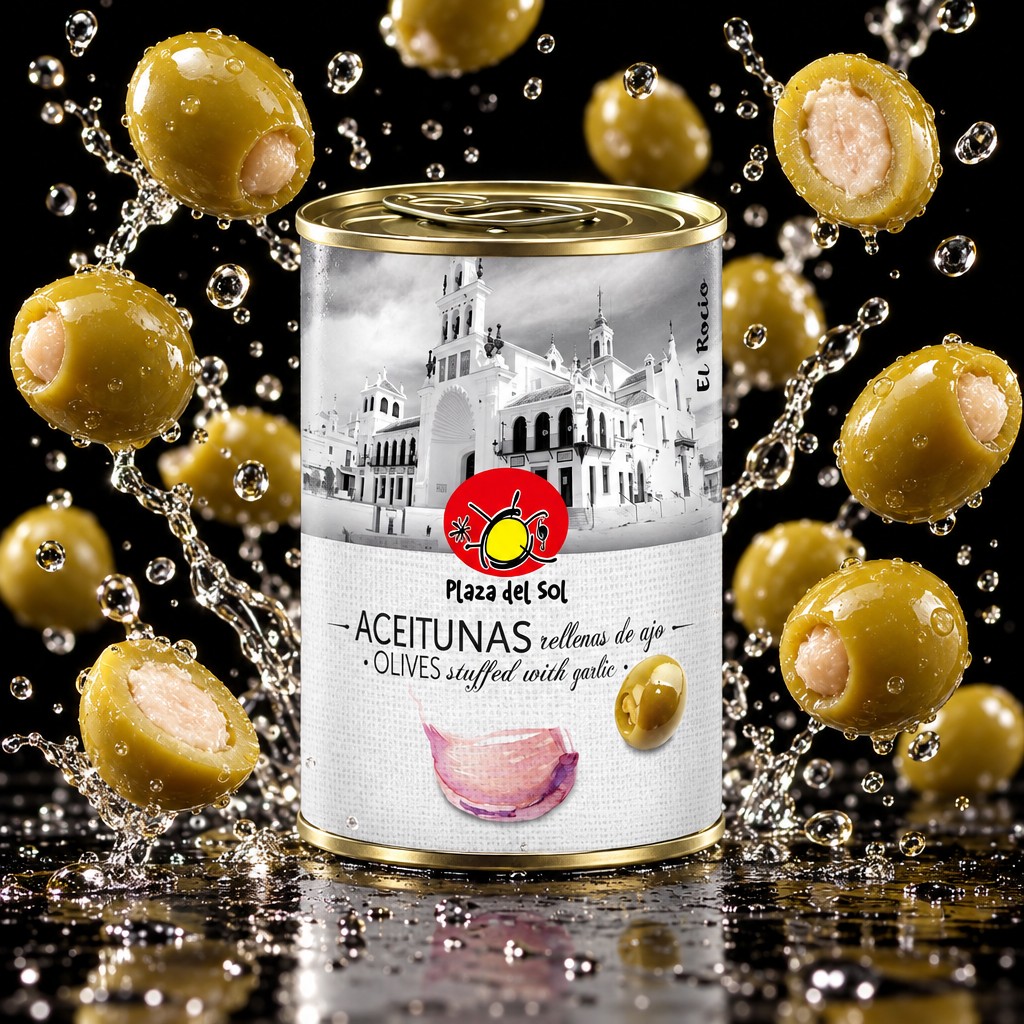
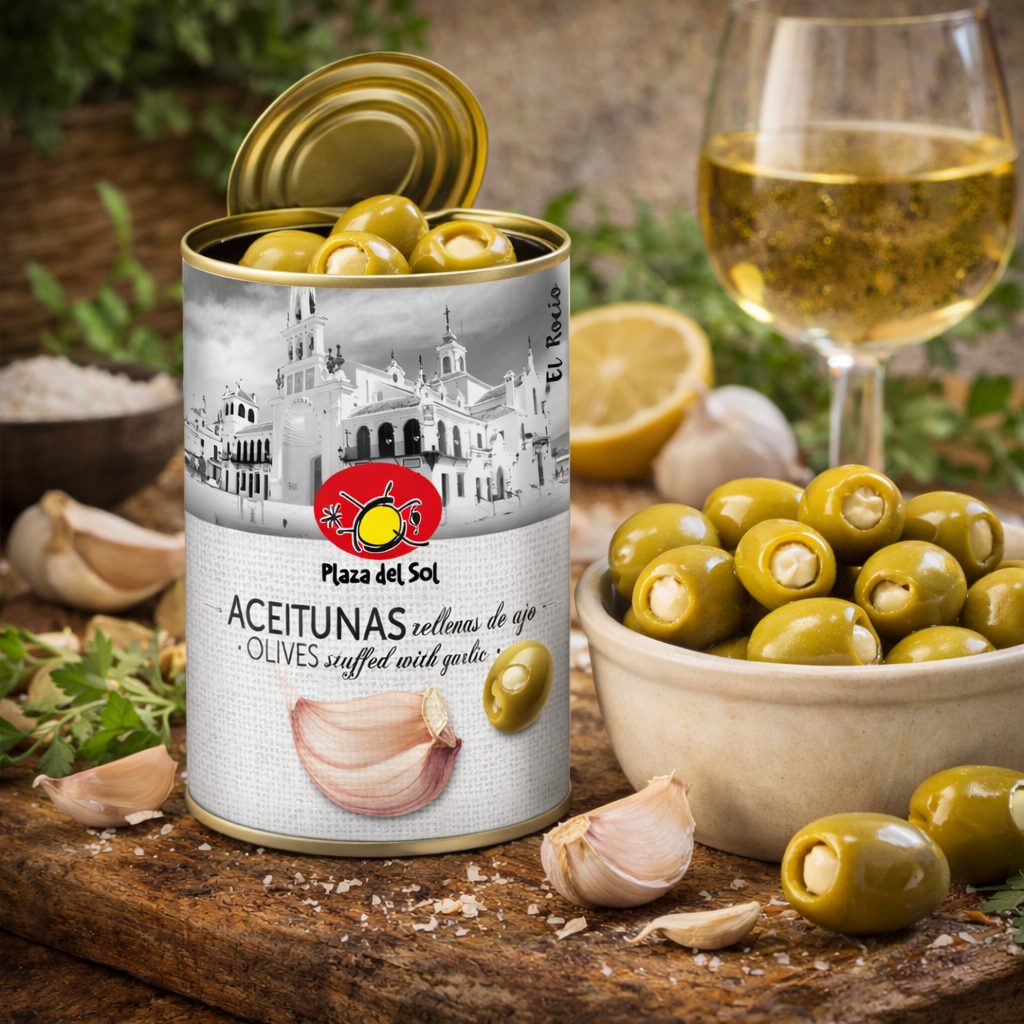
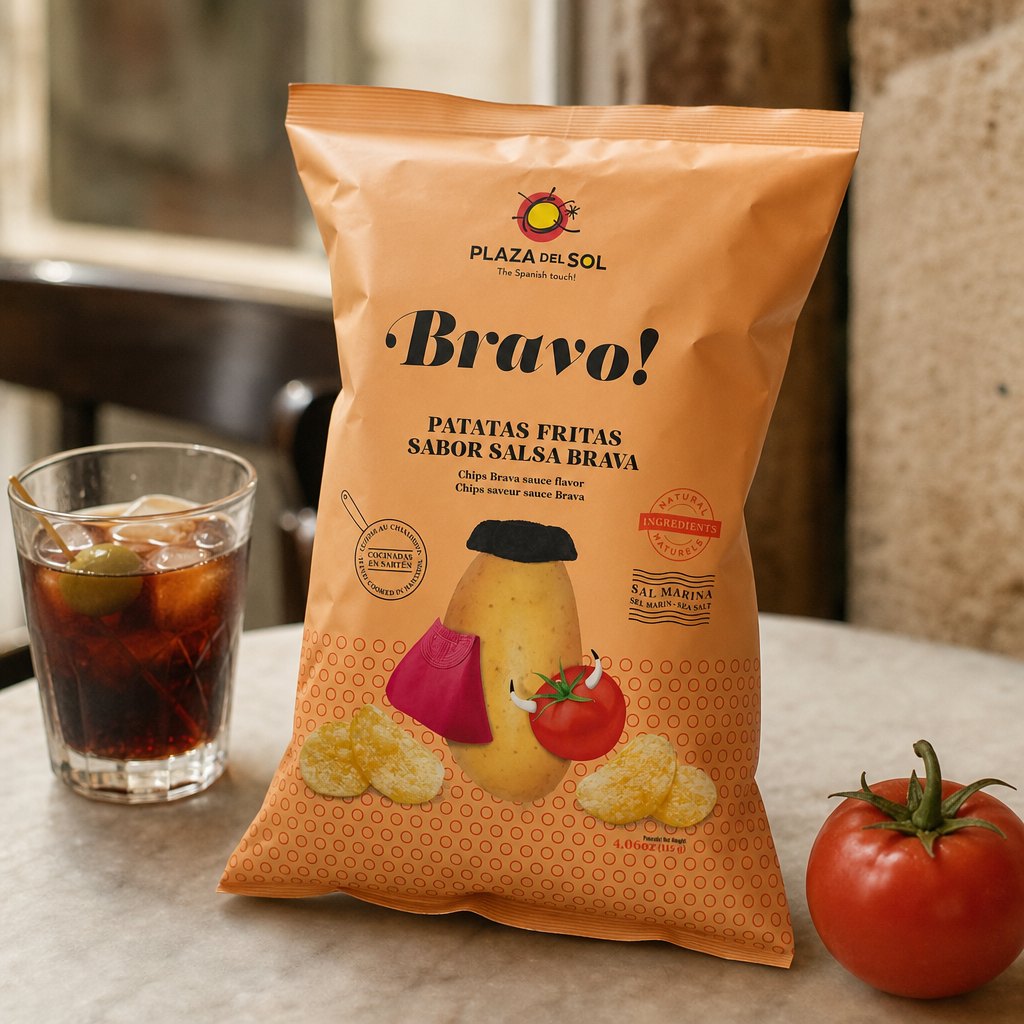
At the counter, bravas rarely travel alone. For a tapas evening, set out alongside a few Plaza del Sol green olives stuffed with garlic paste, stoned, simple and direct. Add crisps, a few almonds, a vermouth on ice, a cold beer or a glass of wine. It is not a meal, it is a table to share.
Calculator
Bravas for your table
Move the slider: the article's tapa quantities adjust.
| Floury or all-round potatoes | 1 kg |
| Plaza del Sol brava sauce (185 g jar) | 1 jar |
| Chopped ñora (pinch) | 1 |
Quantities from this article's recipe, scaled to your table.
In practice: what you need and the mistakes to avoid
For four people as a tapa
- About one kilo of floury or all-round potatoes
- Coarse salt for the cooking water, fine salt to finish
- A drizzle of olive oil for the oven, Belluga Selección; or a neutral oil for frying
- One jar of Plaza del Sol spicy brava sauce
- A pinch of Carmencita chopped ñora
- To go with them: garlic-stuffed olives
The mistakes that soften everything
- Skipping the parboiling. Without it, you get a hard crust over a centre that is still firm.
- Not drying. Moisture is the enemy of crispness.
- Crowding the tray or the pan. Pieces that touch each other steam. Cook in two batches if need be.
- Mixing the sauce into the potatoes. Spoon it over or serve it on the side.
- Too much ñora. A pinch is enough. You can always add more.
- Letting them wait. Bravas are eaten hot, straight away, as at the counter.
The rest is something the hand learns. By the second batch, you will know by eye when the corners are ready.
Quick test
Will your bravas stay crisp?
Five questions; the answers are in the article.