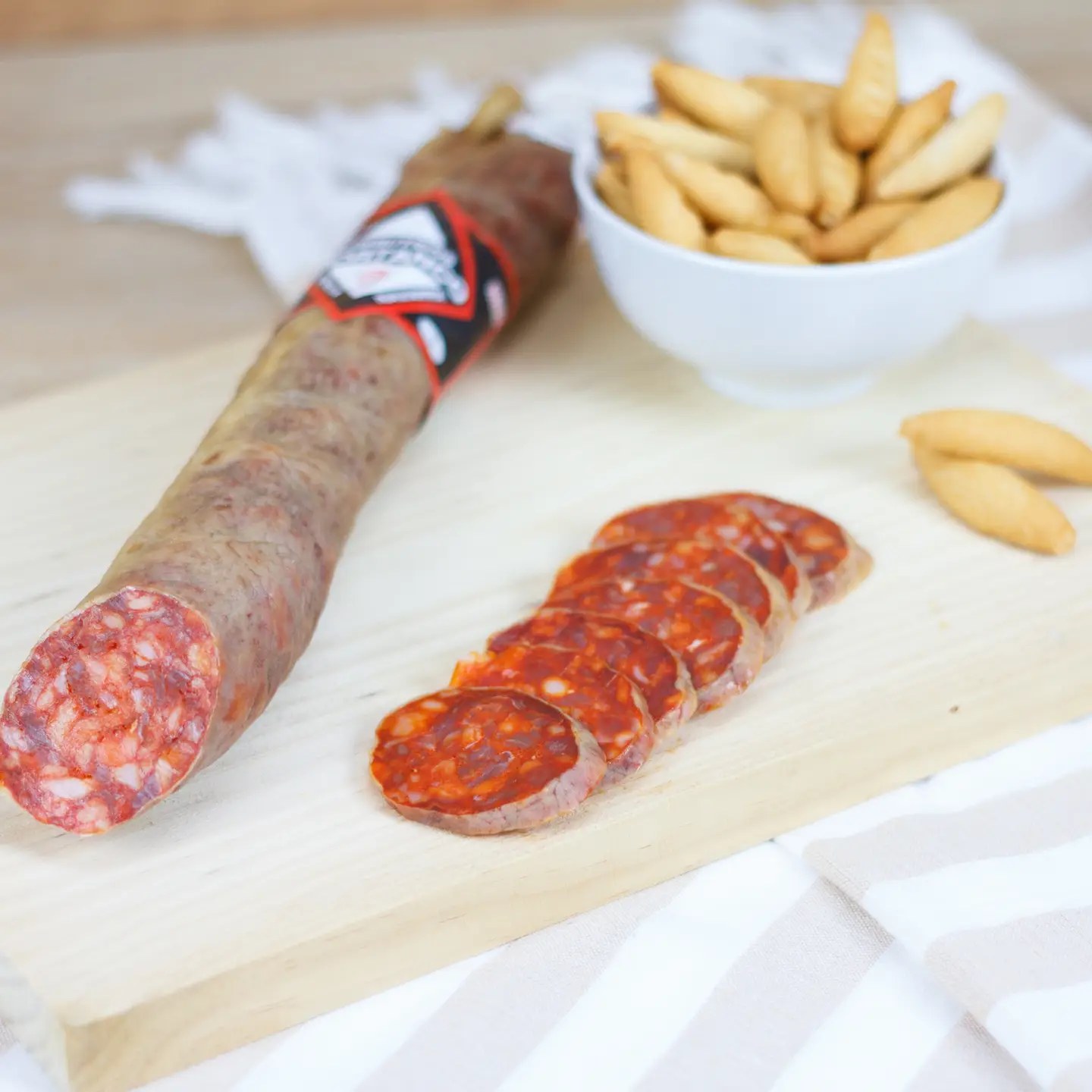
On a winter board, two Spanish cured sausages often sit side by side without much thought as to what sets them apart. One is red, the other is not. At Embutidos Hortanco, in Tafalla, Navarre, that is the first difference that strikes the eye. The chorizo cular and the salchichón cular come from the same house. They are stuffed into the same wide casing, coarsely chopped, and spend at least fifty days in the drying room.
What sets them apart first is the seasoning. The chorizo takes paprika, which gives it its colour and its flavour. The salchichón does without it and is lifted by a blend of peppercorns. That one choice is enough to make two very different pieces. Here is how to recognise them, cut them, serve them together, and choose which one to slip into the bread.
The same starting point
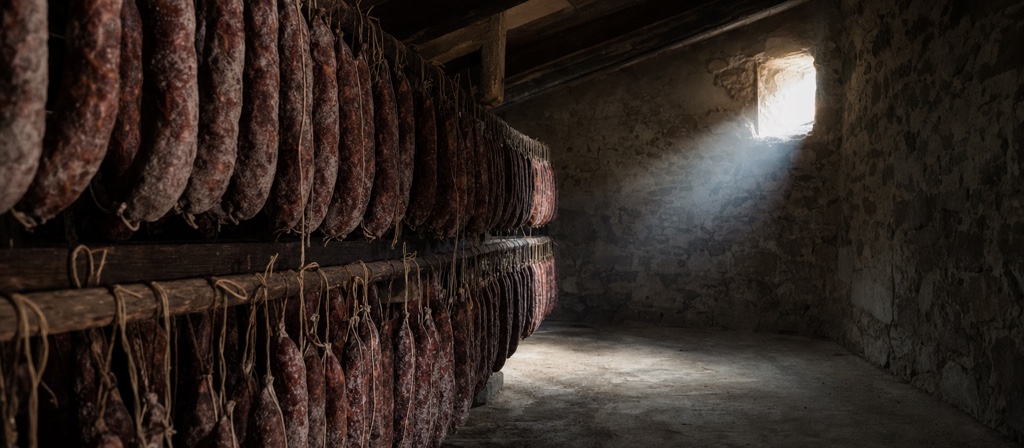
‘Cular’ refers to the bung, the large intestine of the pig. It is the wide calibre, the one that gives a generous slice. A casing of this diameter cannot be rushed: it demands a much longer drying. Here, that means at least fifty days, at controlled temperature and humidity.
In both pieces you find lean meat and belly, coarsely chopped. When cut, you can tell them apart: the lean is darker, the fat paler. This is a charcuterie that is read as much as it is tasted.
The chorizo cular has a particular history in the house. According to what Hortanco recounts of its beginnings, its very first cured embutidos were the chorizo cular and the chorizo en sarta. The cular is still today one of the pieces that stay hanging the longest.
The vocabulary
Four words before you slice
Tap a card for the detail, without leaving the article.
On the slice: red or pale
Place a slice of each side by side. You do not need to be a specialist.
The chorizo
It is red right through to the fat. The paprika colours the whole mass: the lean leans towards brick, the fat towards orange. This is the hallmark of a chorizo, and you can spot it from a distance.
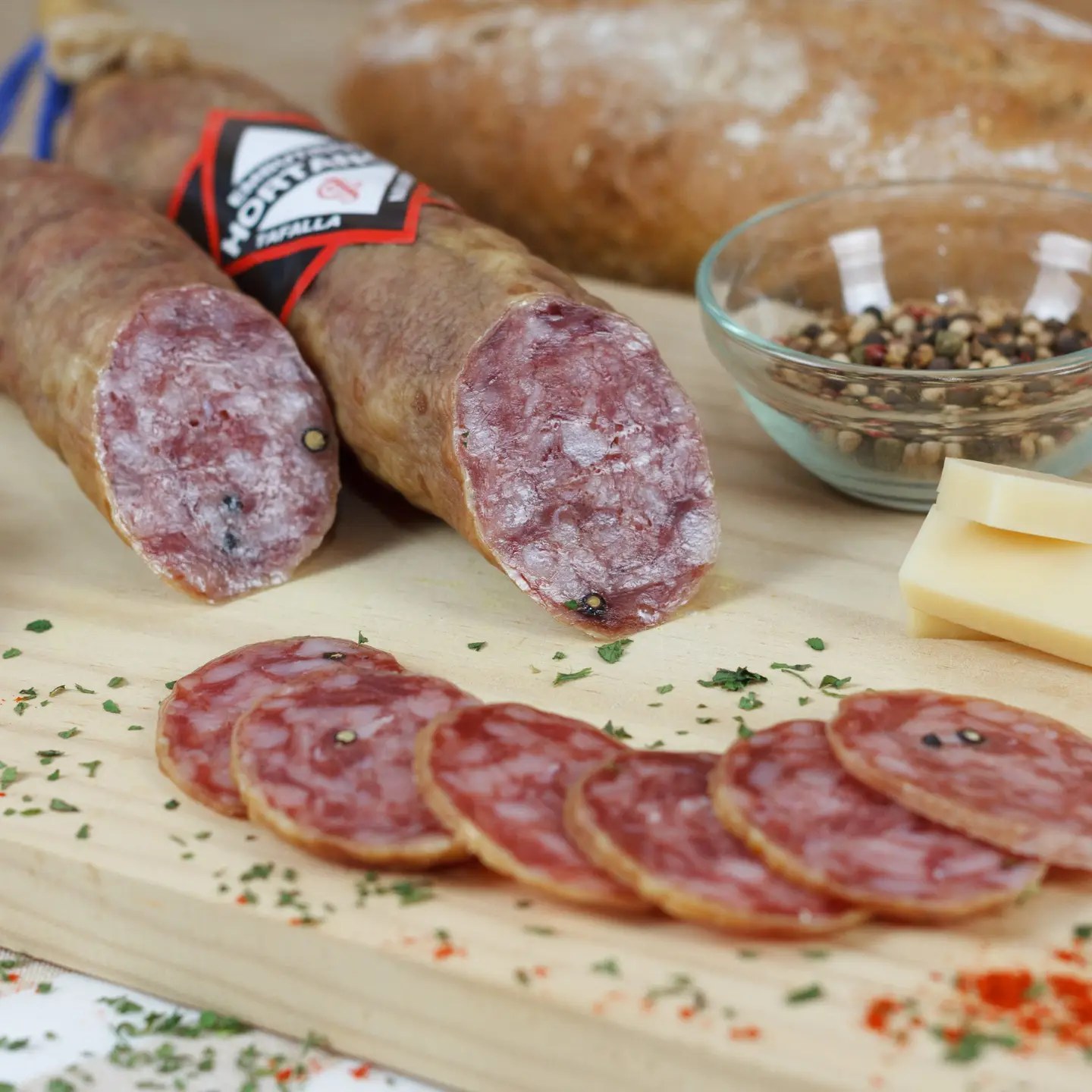
The salchichón
The cut is pale. The lean keeps the dark shade of dried meat, the fat stays light. No paprika red: here, it is the pepper that sets the tone. The slice also looks drier.
In both cases, the slice is wide and the chopping visible. That is what separates them from a fine sausage with a tight grind.
In the mouth: warmth or bite
Taste them in this order: first the salchichón, then the chorizo. The paprika marks the palate; the other way round, it would drown out the pepper.
- The salchichón lets the pork speak. Without paprika, it is the dried meat you hear first, then the pepper arrives and settles in. It is a straight, almost restrained flavour.
- The chorizo is rounder and more enveloping. The paprika blends with the fat and colours the taste as well. The pork is there, but behind the colour.
In short: the salchichón cuts, the chorizo envelops. Neither is better than the other. They simply do not do the same job.
Slice thinly, slice well
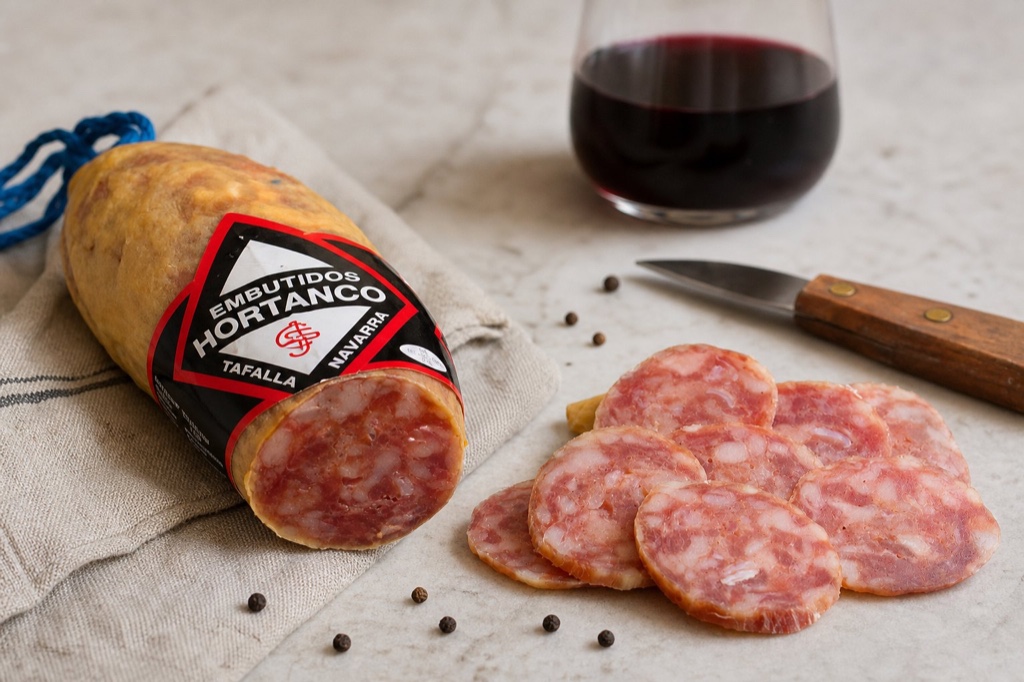
A long-cured piece is made or broken by the thickness of the slice. Too thick, and the slice turns firm and the flavour closes up. Thin, it melts and releases its fat.
- Take the piece out of the fridge a little while beforehand. Cold fat stays mute. At room temperature, it softens and releases its aroma.
- Peel off the casing only along the length you are about to slice, no more. Score the skin, then pull.
- Take a long, well-sharpened knife. Slice with a back-and-forth motion, without pressing down. A knife that crushes tears the fat away from the lean.
- Cut slightly on the diagonal for an even wider slice. Aim for near transparency.
- Slice only what will be eaten. Then cover the cut face and keep the piece somewhere cool.
Side by side on the board
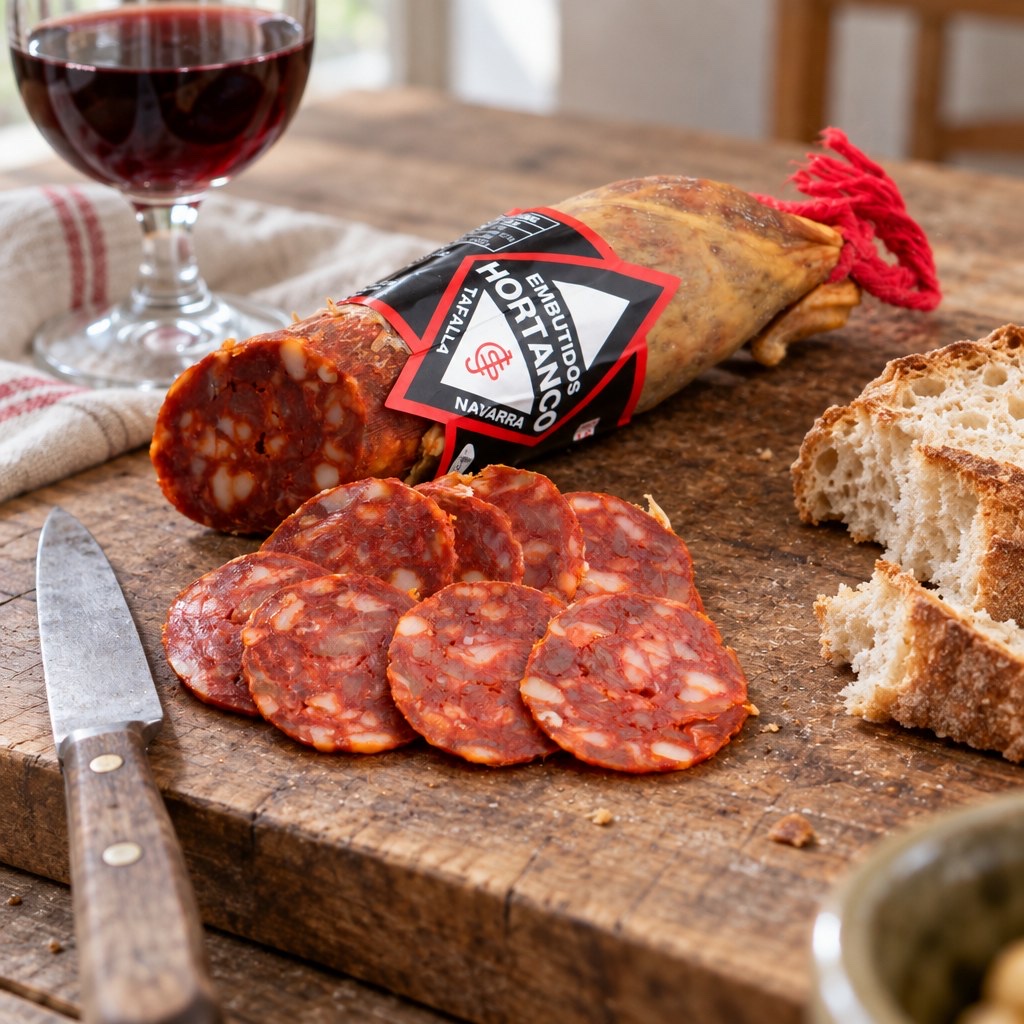
The two pieces answer each other, provided you give them room. Arrange them in two distinct rows: the red on one side, the pale on the other. Do not mix them in a fan. Paprika stains whatever it touches, and the eye needs to be able to compare.
Let the slices overlap slightly, without stacking them. Add thickly cut or toasted bread. A few simple extras go well: gherkins, a mature sheep’s cheese, olives. Avoid anything very sweet or highly scented: it drowns out the pepper.
On a board, the salchichón is the straight line and the chorizo the warm note. You come back to the first between two mouthfuls of the second.
Which in the bread, which with the oil
Here is our view. It rests on the slice of each.
The salchichón in the bread
Its slice is drier and wider, and its flavour stays clear even with plenty of bread around it. It is a piece made for the sandwich more than for nibbling. Good bread, a few thin slices well overlapped, and nothing else. The pepper runs through the crumb. A little butter is possible, but no sauce: it would soak the bread and muddy the spice.
The chorizo with a thread of raw oil
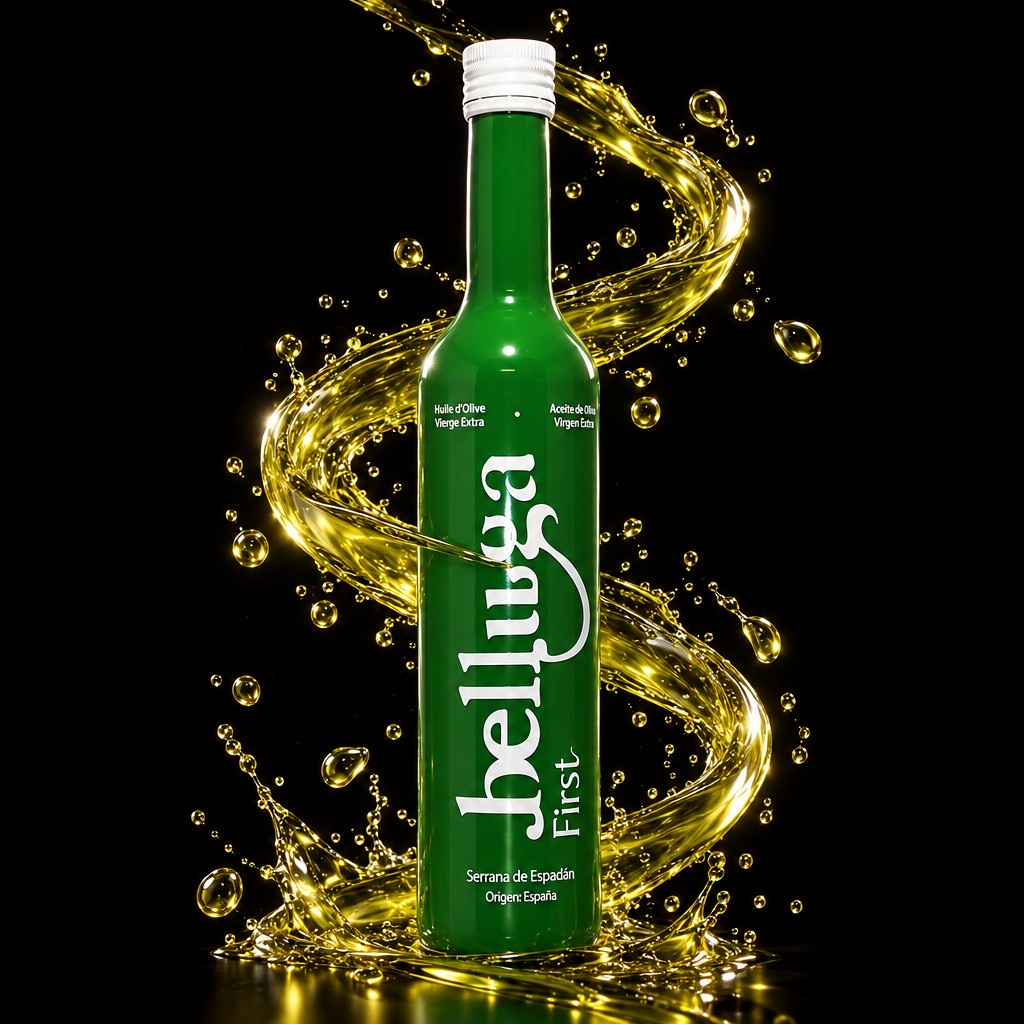
The chorizo, too, works very well slipped into the bread. But it can also be served on a plate, with raw olive oil. A few drops over the thin slices make them gleam and go well with the paprika. Alongside, put a slice of toasted bread drizzled with the same oil.
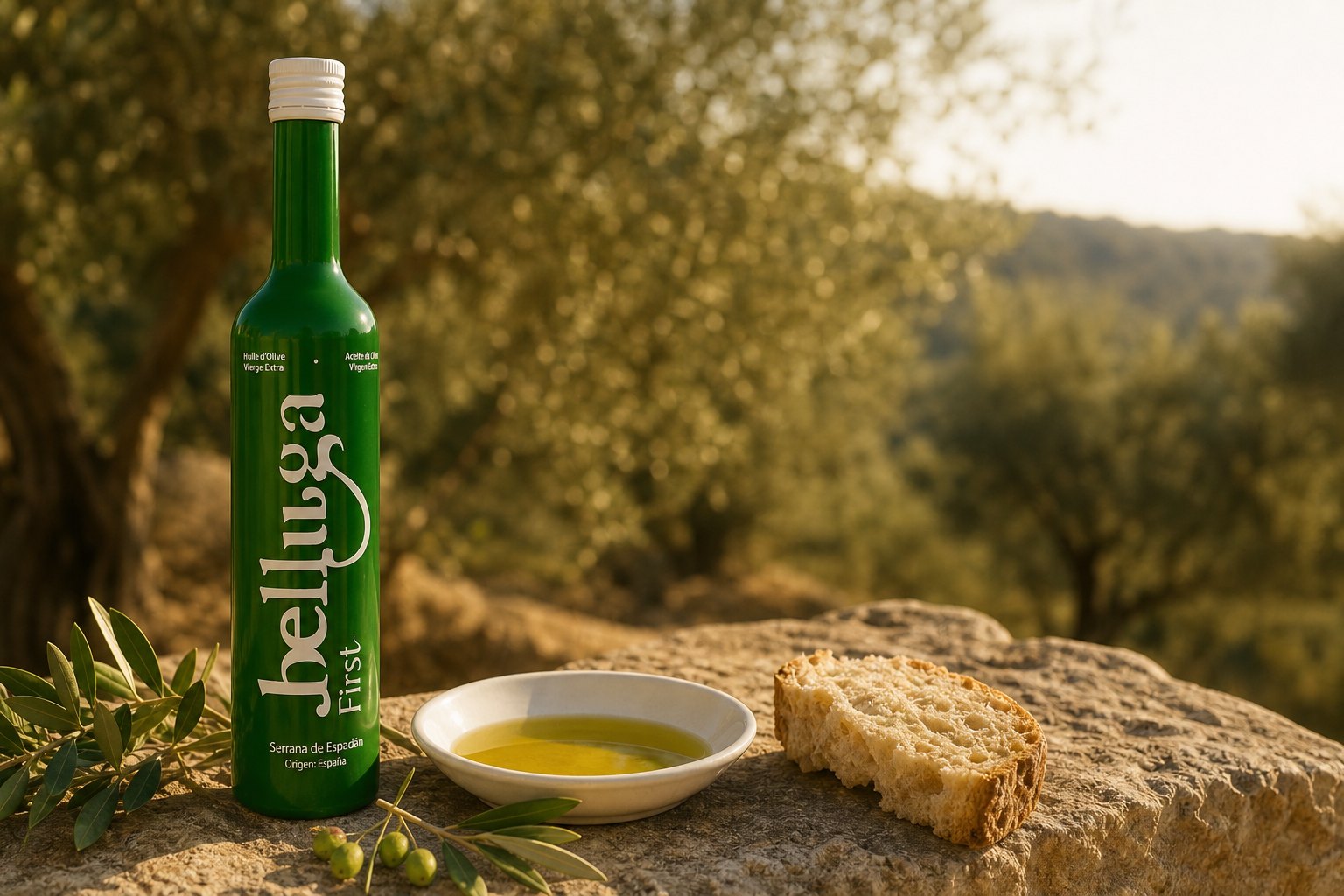
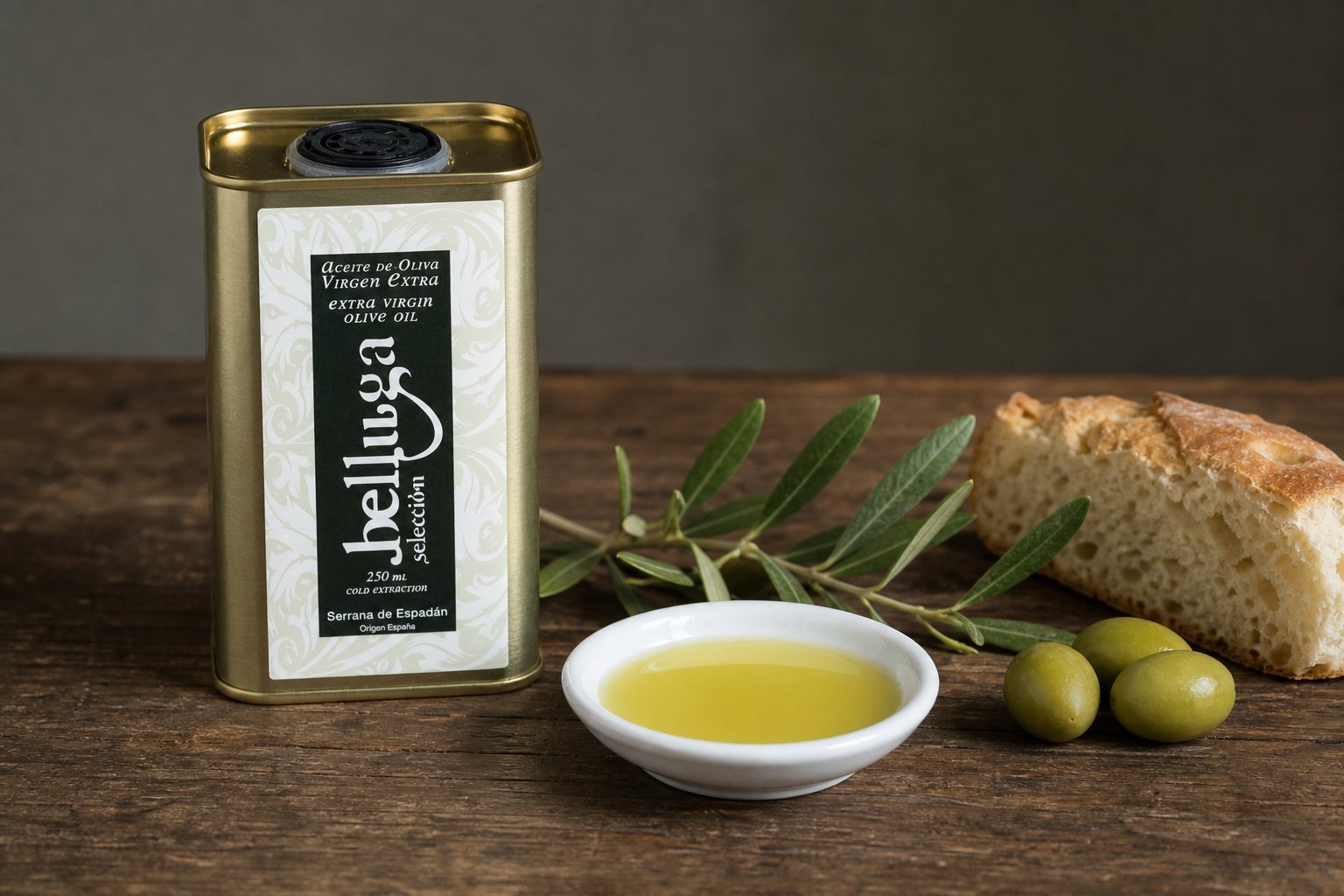
For this, you need an oil designed to be used raw. Belluga First from Belluga Gourmet, in Segorbe (Castellón), is made from the Serrana de Espadán olive. It is a native variety of the Alto Palancia and the Alto Mijares, almost impossible to find elsewhere. It is used raw, on toasted bread or a mature cheese, and that is exactly what is asked of it here. Keep it somewhere cool and dry, away from the hob and the window.
Depending on the occasion
Which one to bring out?
Four situations, four answers taken from the article.
In practice: choosing, serving, avoiding
What to buy?
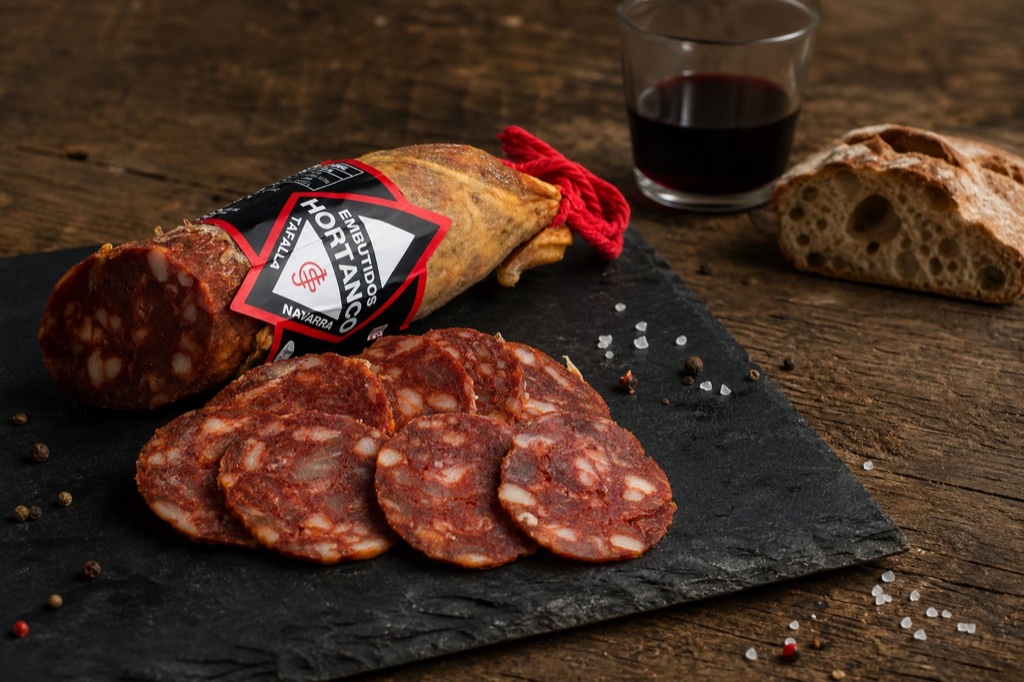
- For a board to share: both. The comparison is part of the pleasure.
- For the week’s sandwiches: the salchichón cular.
- For drinks where oil has its place: the chorizo cular and the Belluga First.
Mistakes to avoid
- Serving it ice cold. Straight from the fridge, the slice has neither flavour nor texture.
- Cutting thick. A dry, wide piece calls for finesse, otherwise it turns tough.
- Slicing the whole piece in advance. The slices dry out quickly in the air. Cut as you need.
- Cooking these pieces. They are eaten raw. For the frying pan, choose a cooking chorizo.
- Heating the oil. It is poured raw, at the last moment, over slices at room temperature.
- Mixing the slices on the board. The paprika bleeds, and you no longer know what you are tasting.
Good to know
Both of Hortanco’s bung-cased pieces contain milk, milk derivatives and soya. Bear this in mind if you are entertaining.
Quick test
Red or pale: ready to slice?
Five questions; the answers are in the article.