Forest Honey from León: when Spanish forests reveal themselves in a jar
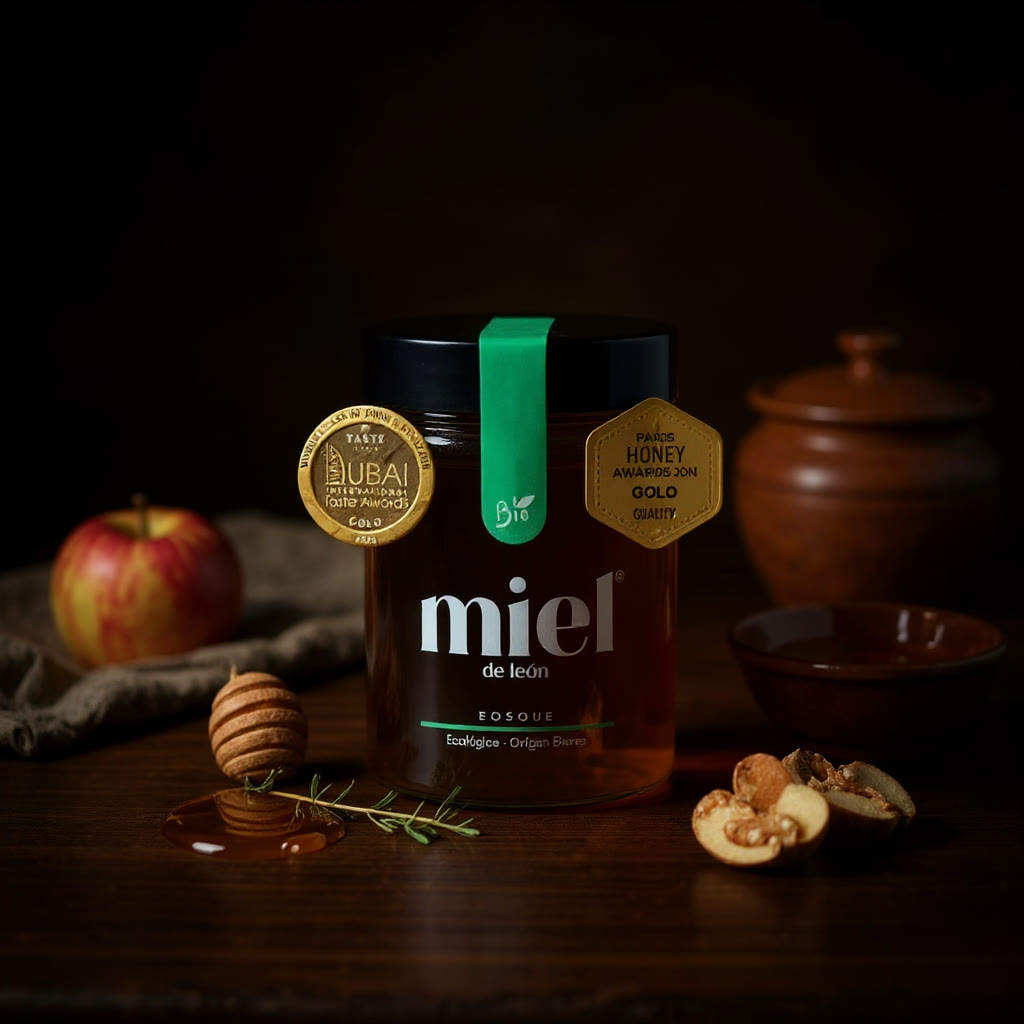
There are honeys that tell the story of a territory with almost cartographic precision. The Forest Honey from León is one of them. Behind this 450g jar lie dense forests of oak, chestnut and heather, beekeepers who know their hives one by one.
Organoleptic profile: what you smell, see and taste
A forest honey does not have the crystalline sweetness of acacia honey or the sugary roundness of wildflower honey. It is darker, denser, more complex. This one presents a deep amber dress, almost mahogany, with golden reflections when light passes through it. Its texture is creamy and slightly thick, which signals a high concentration of minerals — a characteristic of forest honeys, which often incorporate honeydew, that sweet substance secreted by certain insects on trees and harvested by bees in addition to nectar.
To the nose, the first impressions are woody and resinous, with a note of slightly smoky undergrowth. You sense the heather — that slight floral bitterness that quickly fades — and something sweeter, almost caramelized, evoking chestnut. On the palate, the attack is frank, sweet but without excess, and the aftertaste reveals real aromatic complexity: a tannic touch from oak, a hint of soft spices, and a subtly bitter finish that balances the whole. This is not a shy honey. This is a honey that asserts itself.
Its high viscosity makes it ideal for spreading cold, but it also handles gentle heat very well, which opens up many possibilities in cooking.
Tasting
What you see, smell and taste
Tap a card: the honey, sense by sense.
Pairings and uses: from cheese boards to marinades
In Spain, honey has accompanied cheese for centuries. This is not a recent gastronomic trend — it is a table habit rooted in rural culture, where meals would end with what the farm produced: sheep or goat cheese, honey from the neighbor's hive, a few nuts. The Forest Honey from León naturally fits into this tradition.
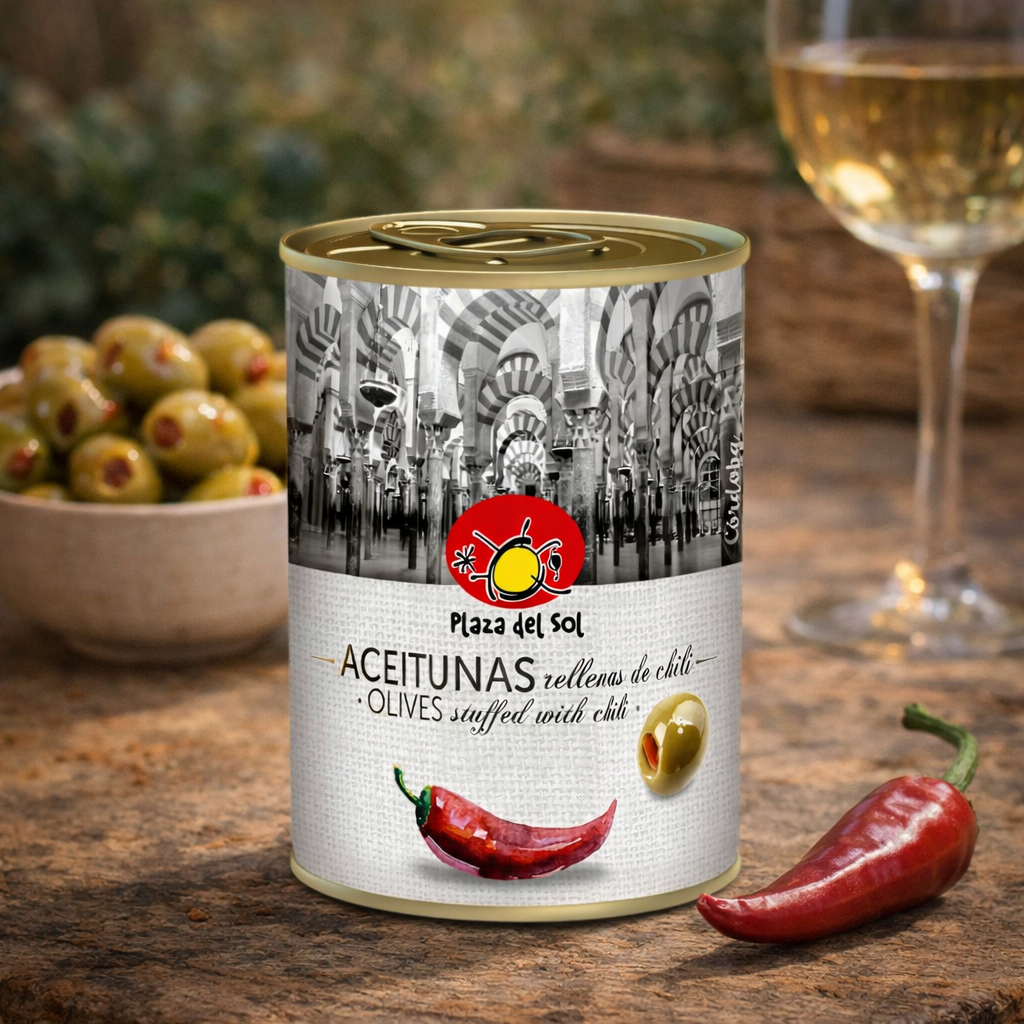
On a cheese board, it excels with semi-hard and aged cheeses. Its restrained bitterness and woody notes pleasantly contrast with the fat of sheep's cheese, and its sweetness balances slightly acidic cheeses. For a Swiss-style aperitif — where the demand for product quality is a cultural given, not an option — it can be paired with a few green olives stuffed with chili paste Plaza del Sol to create a contrasting Mediterranean board: the sweet-bitter of honey, the bite of olives, the richness of cheese.
In cooking, this honey deserves to be used in marinades for white meats or fish. Mixed with a drizzle of Extra Virgin Olive Oil Finca La Barca, some dried herbs and salt, it gives a chicken fillet or pork cheeks remarkable caramelization when cooked. The honey's natural sugars brown in heat and form that slightly glazed crust you often seek without always achieving.
It can also enhance bonito belly in extra virgin olive oil Espinaler: a slice of toasted bread, a few slices of bonito, a drizzle of forest honey and some black pepper make an appetizer of absolute simplicity and surprising gustatory richness. The bonito's fat and the olive oil's umami meld with the honey's woody notes to create something unexpected.
Pairings
Four ways to serve it
From the cheese board to the marinade.
Taking care of what we consume — and those who produce it
Choosing artisanal forest honey is also taking a stance on a question that goes beyond the table. Bee populations are under pressure throughout Europe for several decades. Pesticides, crop uniformity, destruction of natural habitats: the causes are known, the consequences too. Supporting beekeeping established in preserved forests, practiced by artisans focused on quality rather than volume, is a concrete way to commit to a coherent approach.
This is equally true for the Lausanne consumer filling their basket on Origenes.shop as for one in Barcelona or Madrid. Delivery to Switzerland of this type of product is not incidental: it allows a demanding clientele, sensitive to questions of origin, to access authentic Spanish artisanal products with no compromise on traceability or taste.
And to complete your order, think of Carmencita food coloring — useful for coloring honey and saffron rice, or for echoing the golden tones of this honey in a refined presentation.
Conclusion
The Forest Honey from León is not simply one honey among many. It is a product that carries within it the León forest, the expertise of committed beekeepers, and the recognition of international judges who knew how to identify it for what it is. In a 450g jar, it has everything needed to establish itself durably in a kitchen, whether for breakfast, an evening cheese board or Sunday marinades.
Discover it, along with our entire selection of Spanish artisanal products, on origenes.shop — shipped from Villeneuve (VD).
Quick quiz
Do you know this honey?
Five questions, the answers are in the article.