The story of this house
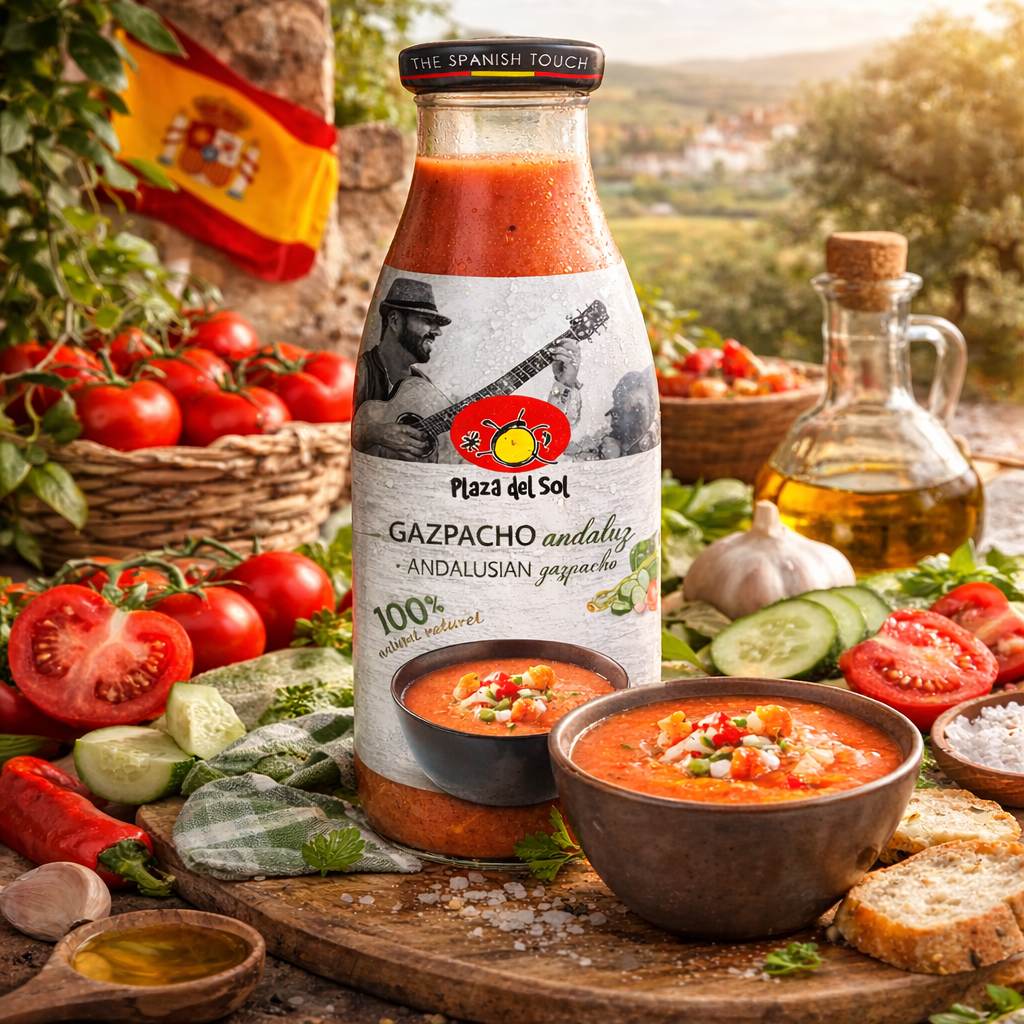
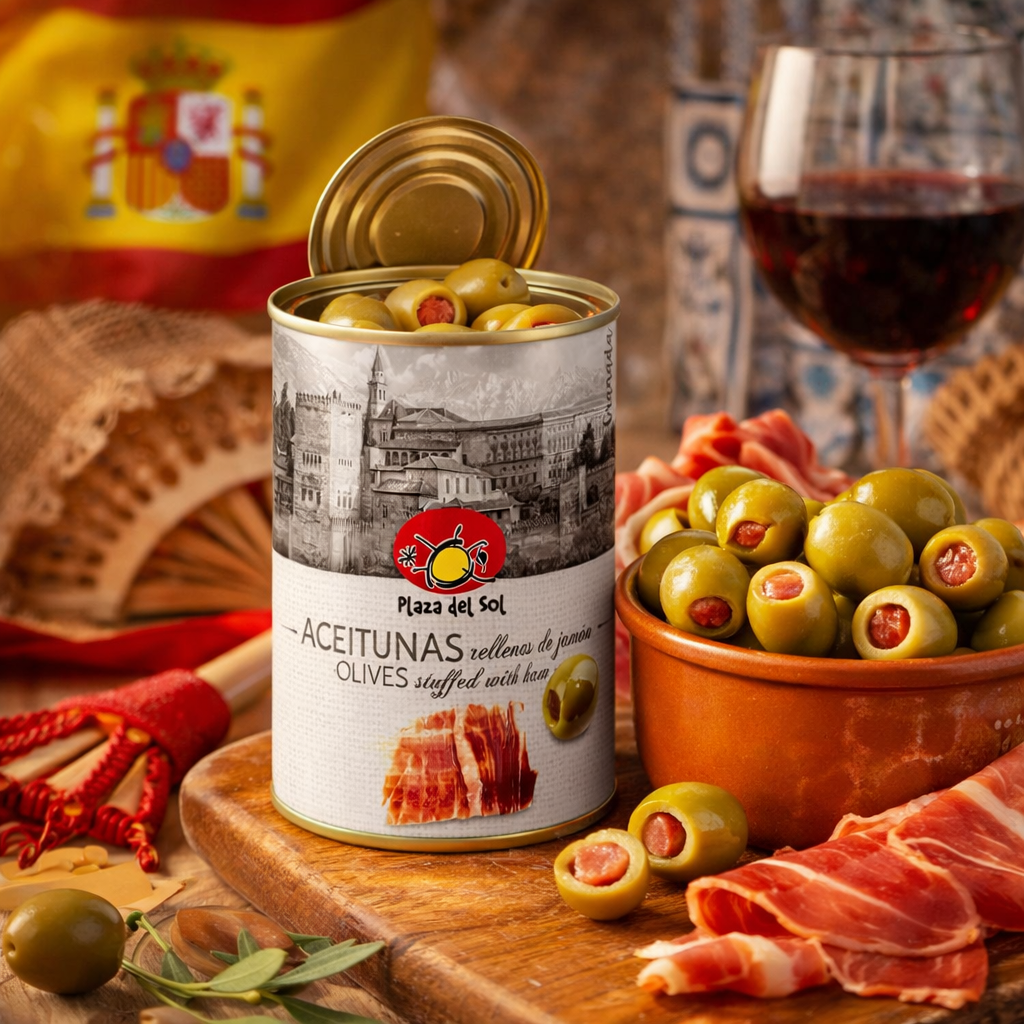
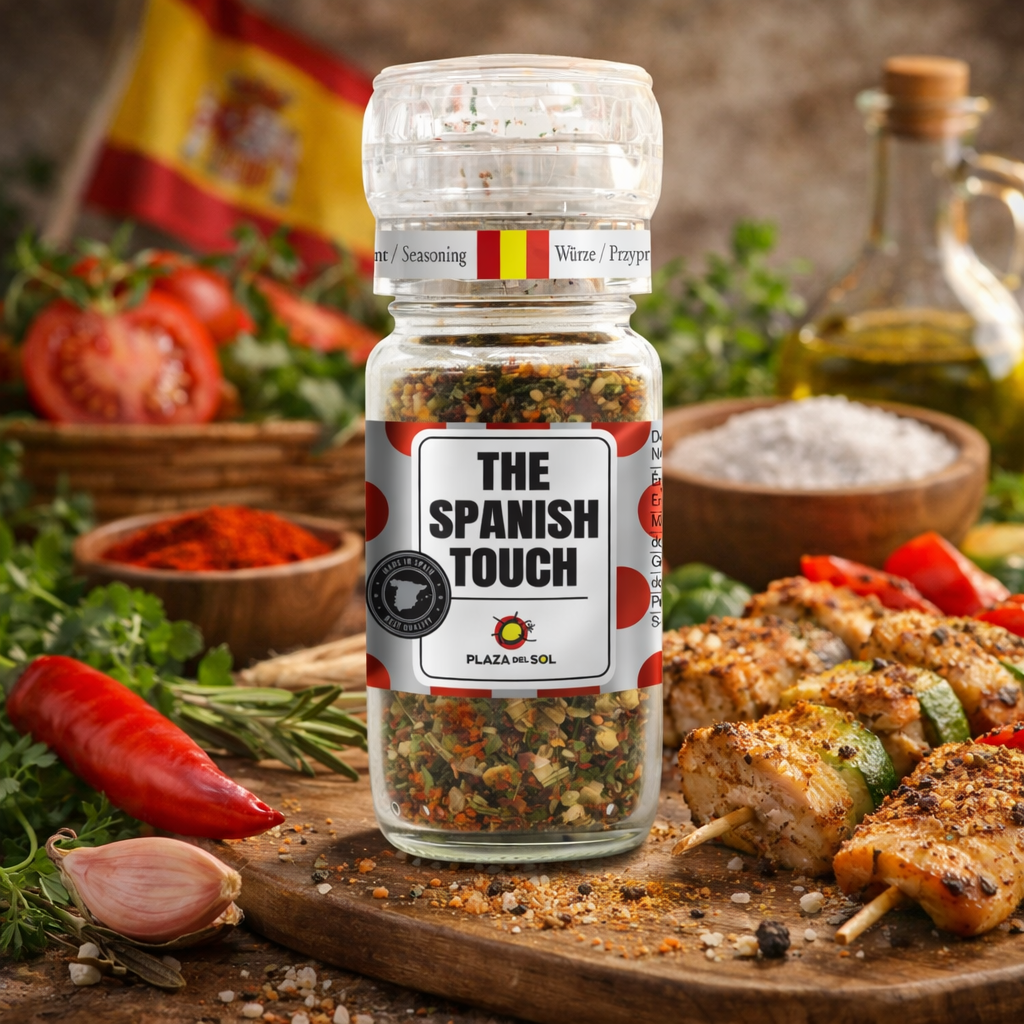
Plaza del Sol is a house from San Vicente del Raspeig, near Alicante, that brands and distributes Spanish aperitif products. Its idea of the table: "cooking without artifice," where each ingredient must speak of its origin.
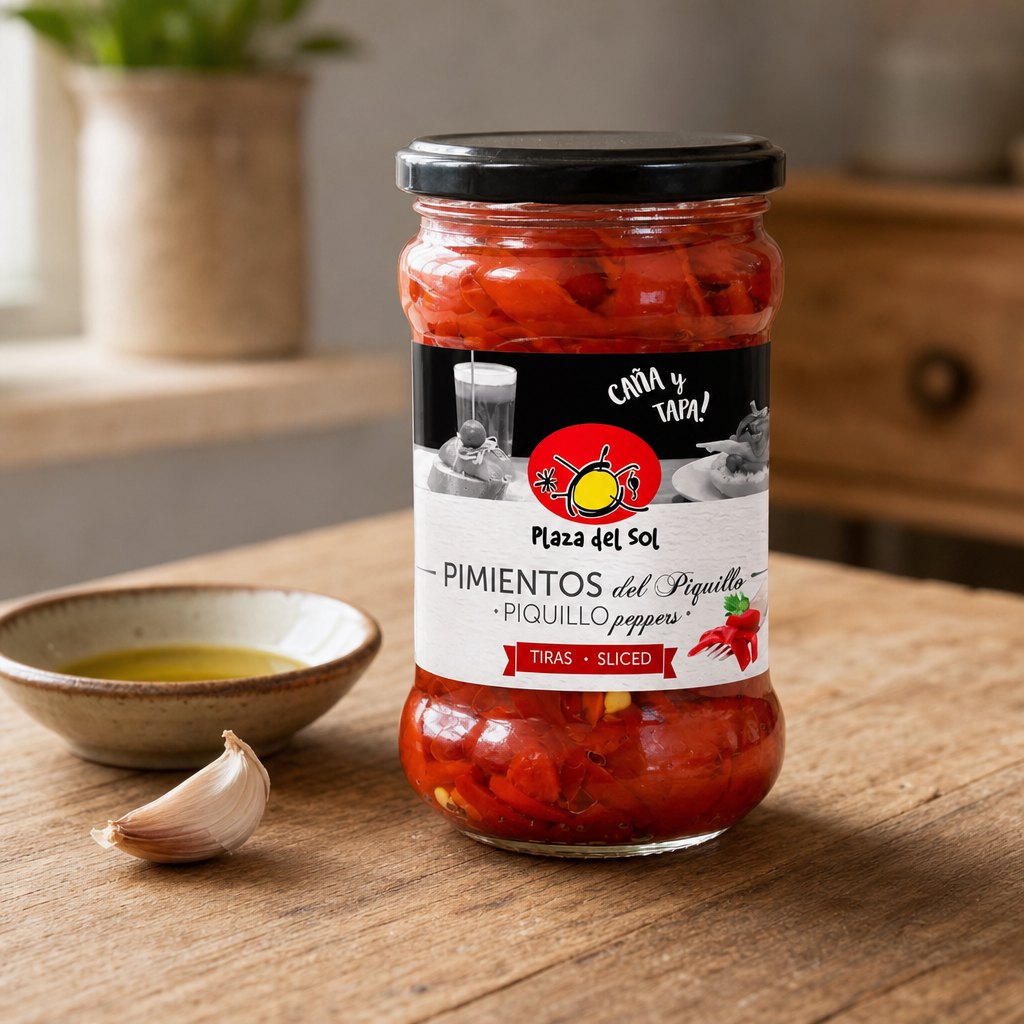
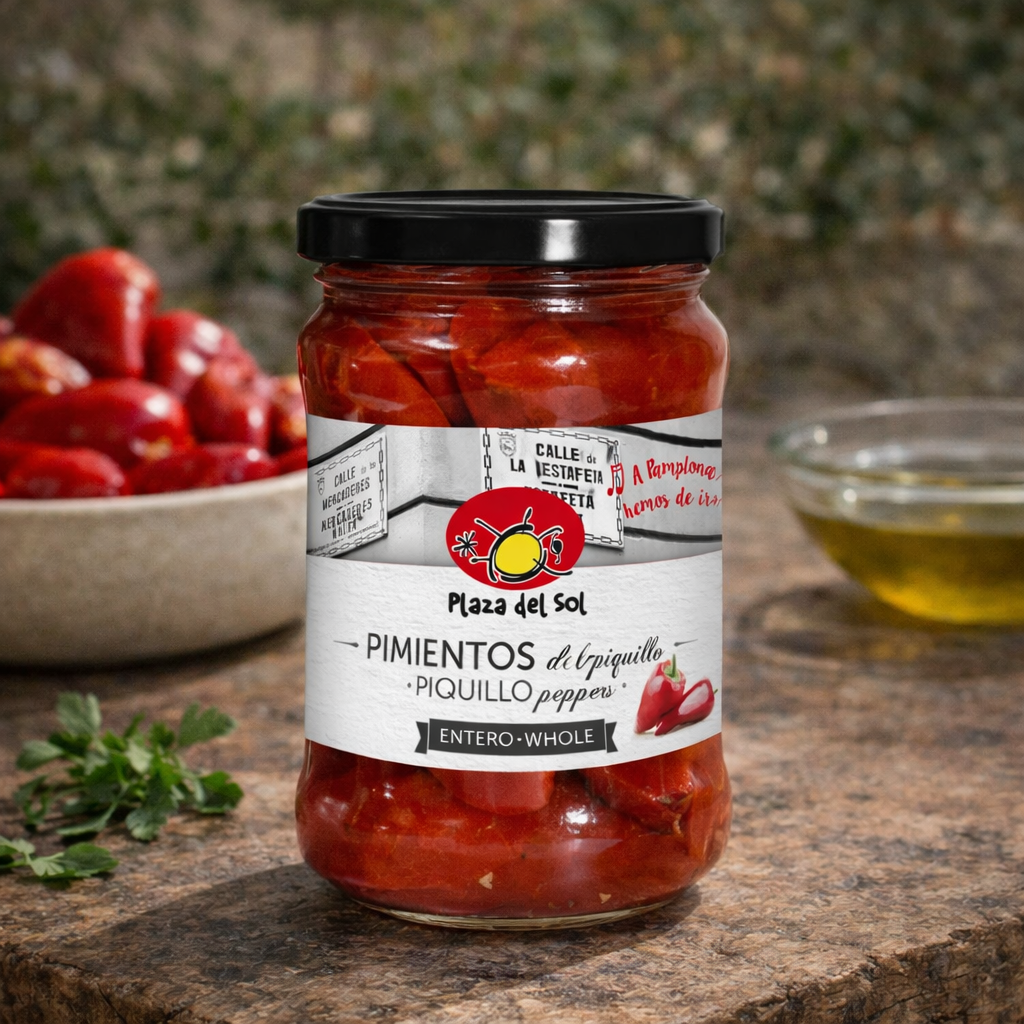
The piquillo itself — this small pointed pepper with thin walls — originates from Lodosa, in Navarre, a region that obtained its Protected Designation of Origin in 1986. These whole piquillos did not seek to transform the product, but to preserve it just as it emerges from the earth.
The piquillo
Three words to understand it
Tap a card to learn more.
What made this product singular
The whole piquillo — not reduced to paste, not cut up — tells a story of delicacy. Its fine flesh, almost translucent in the light, melts on the tongue without astringency. Unlike meatier or spicier peppers, the piquillo cultivates a natural sweetness, slightly sugary, which recalls notes of ripe red fruit well before any heat. This taste signature makes it a bridge between condiment and noble ingredient.
Plaza del Sol's work consisted of preserving this integrity: not overcooking them, respecting their melting texture, maintaining this tender membrane that cuts with a fork. 290 grams — a cellar weight, neither too abundant nor meager — allowed one to explore them without overcommitment.
How we served it
On the table, the whole piquillo unfolds without strict protocol. It was served as a raw accompaniment, warmed or at room temperature, to explore its own flavor — a simple gesture, almost ascetic, alongside a glass of white wine from neighboring Rioja.
The homemade filling was obvious: fresh cheese and honey, crab meat or salt cod brandade, pine nuts and raisins. The piquillo accepts generous fillings without losing its lightness.
In salad, it sat well alongside crisp raw vegetables, anchovies, artichokes. Its sweetness created a balance with vinegar's acidity.
Finally, torn into strips over a fried egg or escalope, it brought a sweet and graphic note, without overwhelming the rest of the plate.
At the table
Four ways to serve it
The article's gestures, card by card.
Why it left our Cellier
The rotation of archives is a natural cycle at the Cellier. Plaza del Sol had its time of presence; we explored this house and this format. Other pepper preserveries call to us, other regions and other interpretations of the same fruit. This is how the Cellier breathes: welcome, knowledge, passage, memory.
To go further
If you miss the piquillo, explore our selection of Iberian sauces & condiments: we regularly offer other whole or creamed peppers, from other houses on the peninsula. Also consult our tapas & fillings to rediscover this spirit of the <board>. Finally, lovers of sweet-savory flavors can turn to our preserves of red bell peppers and grilled vegetables from other producers in our catalog.
Le Cellier is a living notebook: we archive out of respect but the active catalog evolves. See our current selection in this category → · or browse the complete Cellier.
Quick quiz
Do you know the piquillo?
Four questions, the answers are in the article.