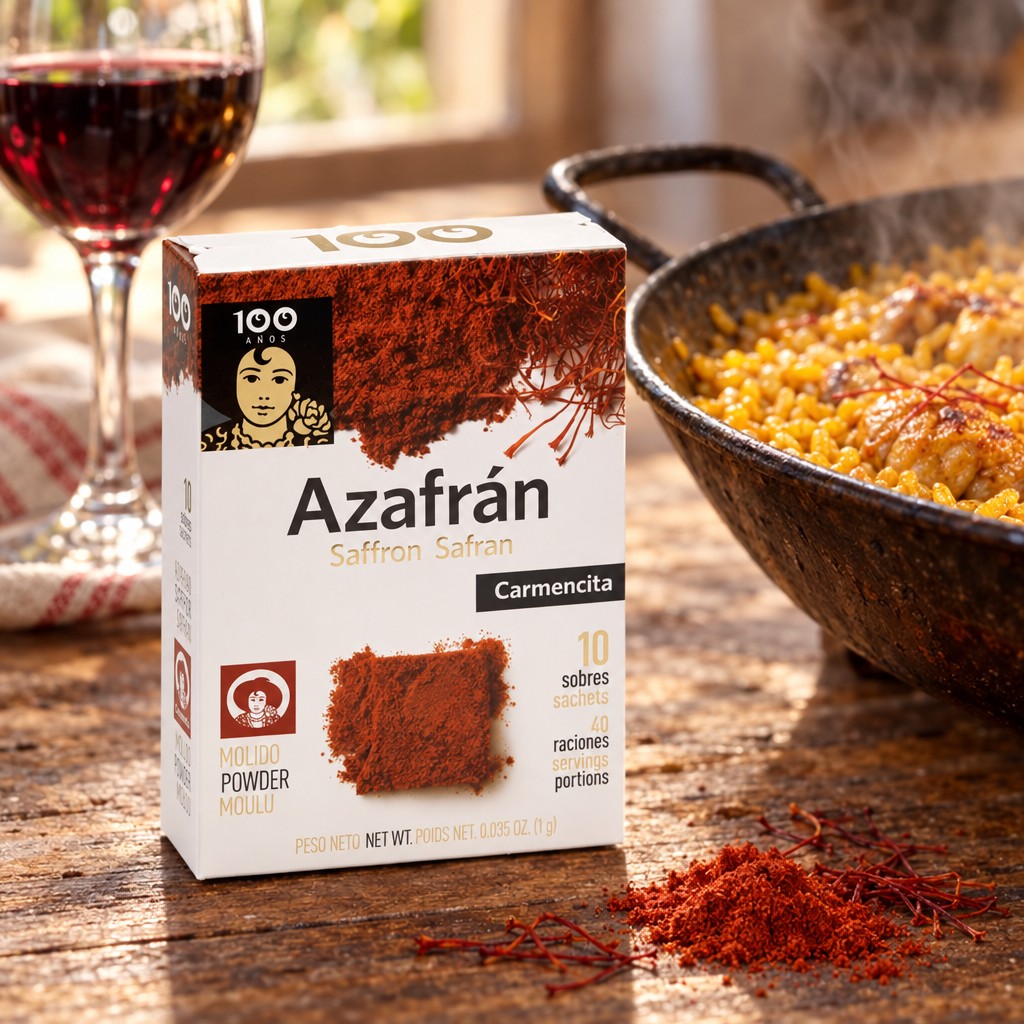
Saffron makes people hesitate. You buy some, keep it carefully, then when it comes to cooking you wonder whether it needs a pinch or two, whether it goes into the pan or the stock, and why your neighbour's rice is more yellow than yours. These questions come up often as soon as you start cooking rice.
Here are our answers, short and practical. They cover the formats we stock at Carmencita, a house founded in 1923 in Novelda (Alicante), where saffron is the original trade. By the end, you will know how to measure it, how to choose between pure saffron, colouring and Paellero, and you will no longer mistake a golden colour for flavour.
How much saffron for four people?
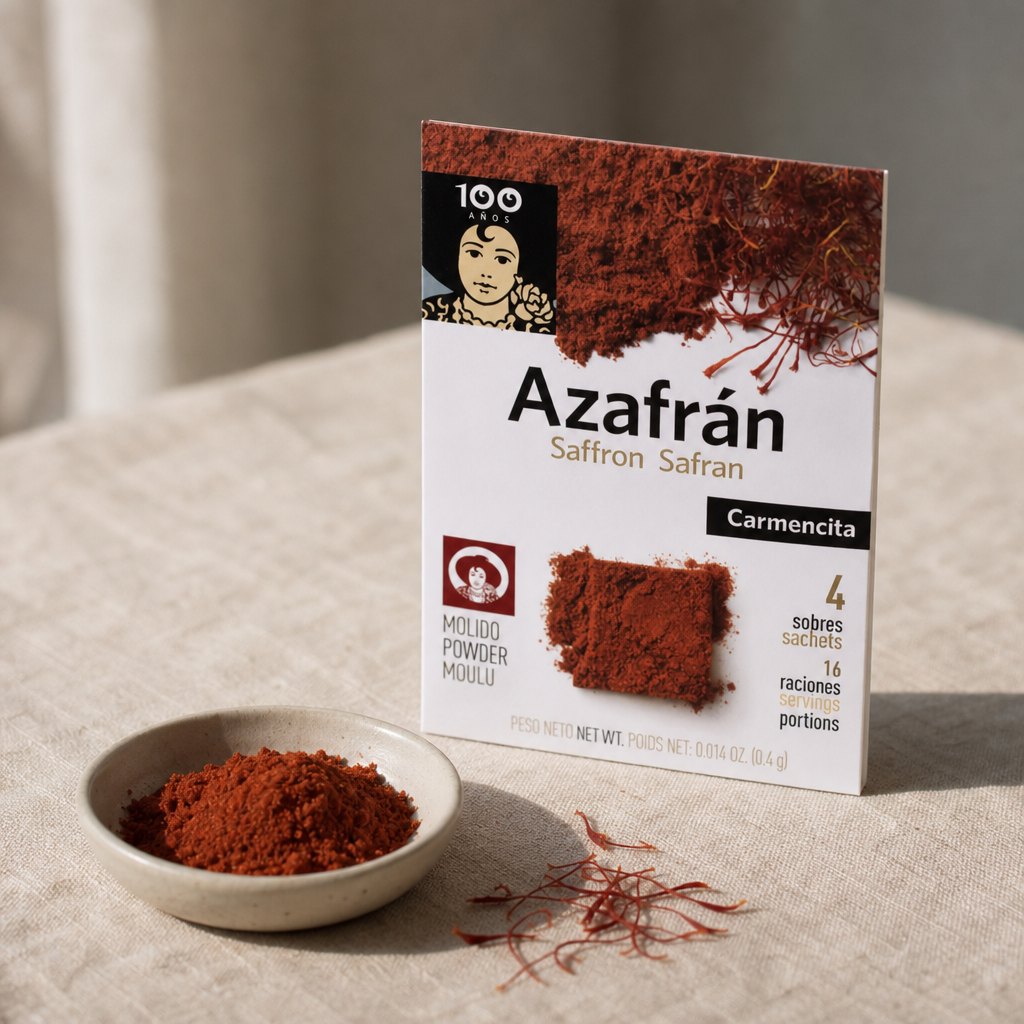
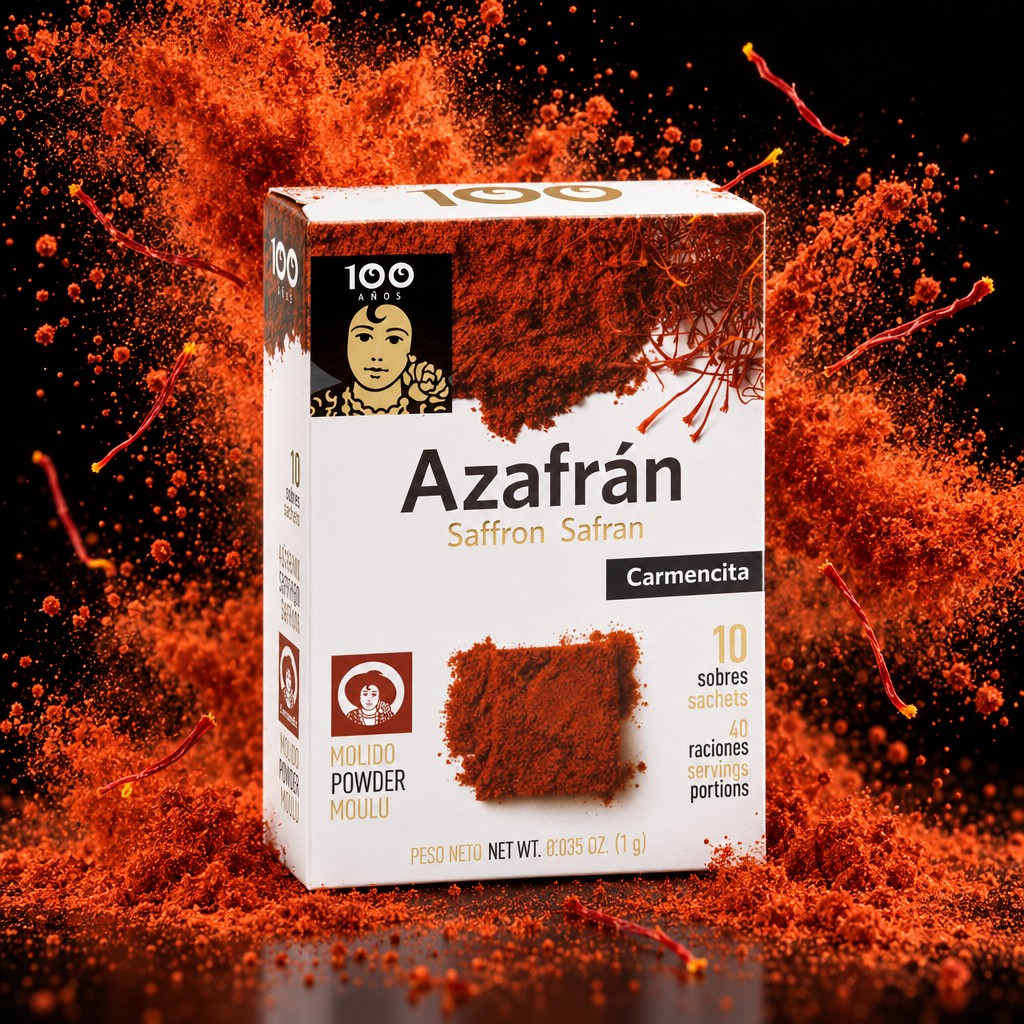
With ground saffron, the answer is simple: 0.1 g for 4 portions. That is exactly the contents of one Carmencita sachet. No need for precision scales, no need to guess.
- Carmencita ground saffron – 4 sachets (0.4 g): four 0.1 g sachets, making 16 portions. The right format for trying it out, or for anyone who makes rice now and then.
- Ground saffron – 10 sachets of 0.1 g (1 g): ten 0.1 g sachets, making ten recipes of four portions each. For those who cook rice often.
For eight people, two sachets. For a number in between, taste the stock before opening another sachet, rather than doubling straight away. Saffron is more noticeable when it is properly measured than when too much is used: beyond that point, it can overpower the stock and turn slightly bitter.
One sachet, four portions. That is the rule to remember; the rest is a matter of taste.
When should you add it to the stock?
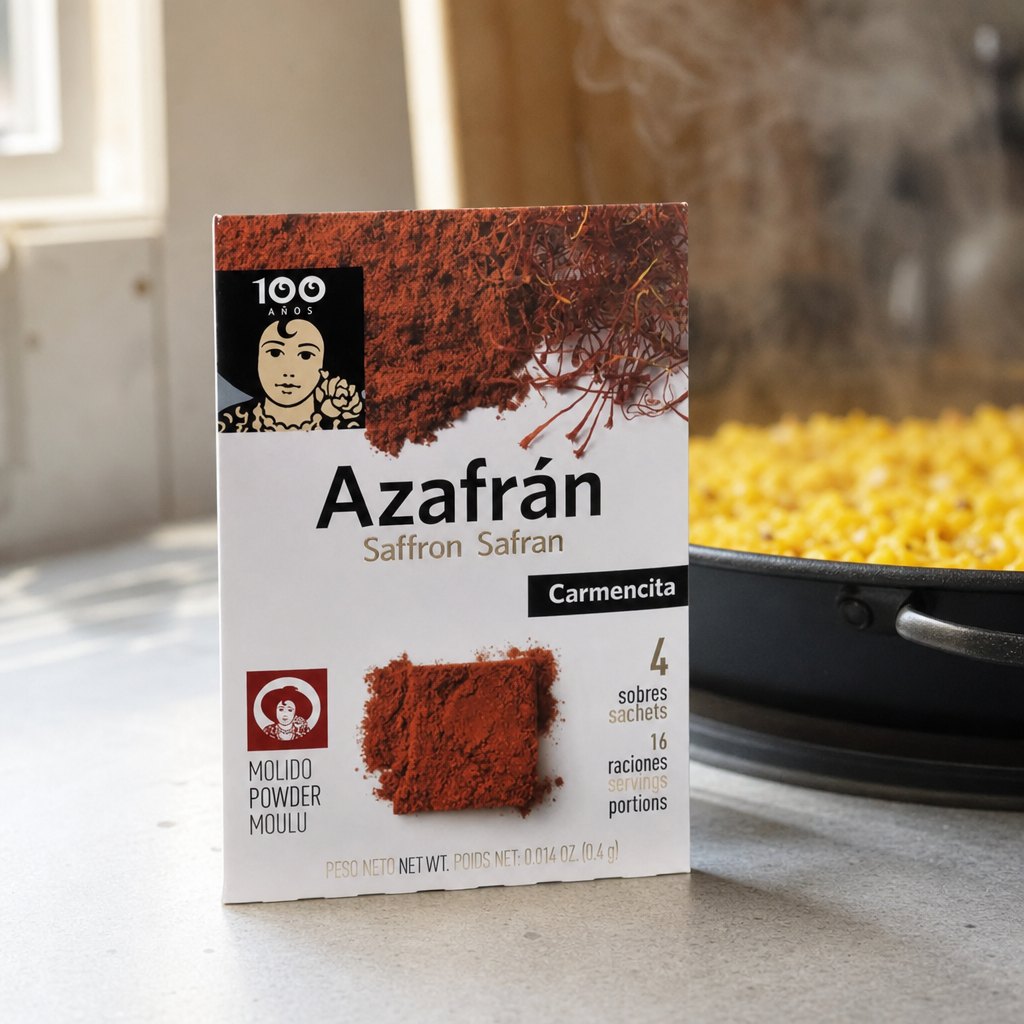
Saffron needs liquid and heat to release its colour and aroma. The right moment is therefore in the hot stock, before adding the rice.
- Make your sofrito, then add the stock.
- When it starts to simmer, pour in the sachet and stir.
- Leave for a minute or two: ground saffron dissolves quickly, and the colour spreads through all the liquid.
- Add the rice. The saffron is already distributed throughout the stock, so every grain benefits in the same way.
Two common mistakes. The first: throwing it dry into a very hot pan, where it may burn. The second: adding it at the end, to rice that is almost cooked. It then colours in patches and has no time to flavour the dish.
Ground saffron is not limited to paella. It goes into rice dishes in general, soups, pasta, stews, fish, white meats and sauces. The same logic applies every time: into the cooking liquid, not at the last minute.
Ground saffron, colouring, Paellero: what is the difference?
Three products that all give golden rice, but that do quite different things.
Ground saffron
Saffron, and nothing else. It brings both colour and aroma. It is what gives that slightly floral, faintly bitter taste you recognise in a well-made paella. Ground saffron has a practical advantage over threads: no need to infuse it beforehand, as it can be added straight into the cooking.
Food colouring
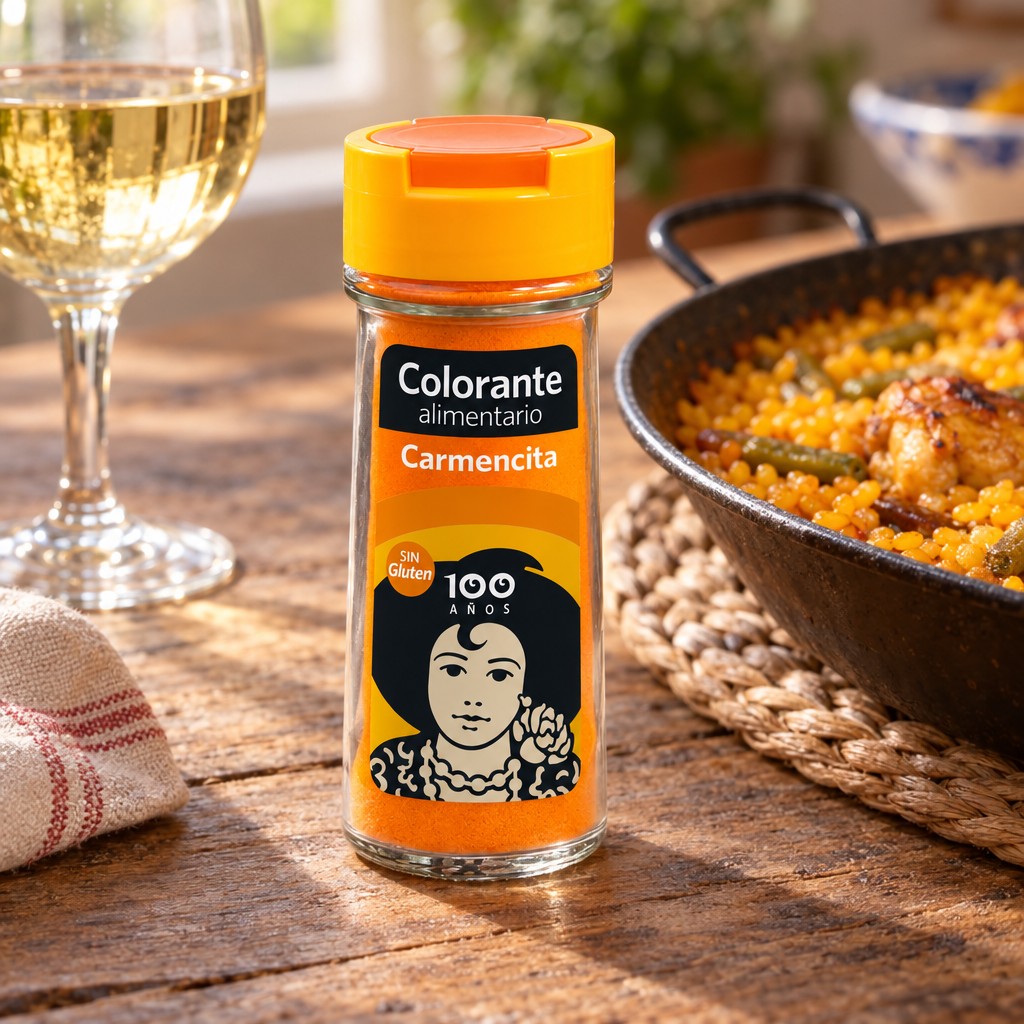
Carmencita's Food colouring – 65 g glass jar gives the rice in paellas and fideuás its golden colour, without adding any flavour. It is made from maize flour, tartrazine (E102) and salt. One teaspoon is enough for a recipe of four portions. It is useful when you want the colour without the taste, or to colour rice that you are flavouring in another way.
Paellero
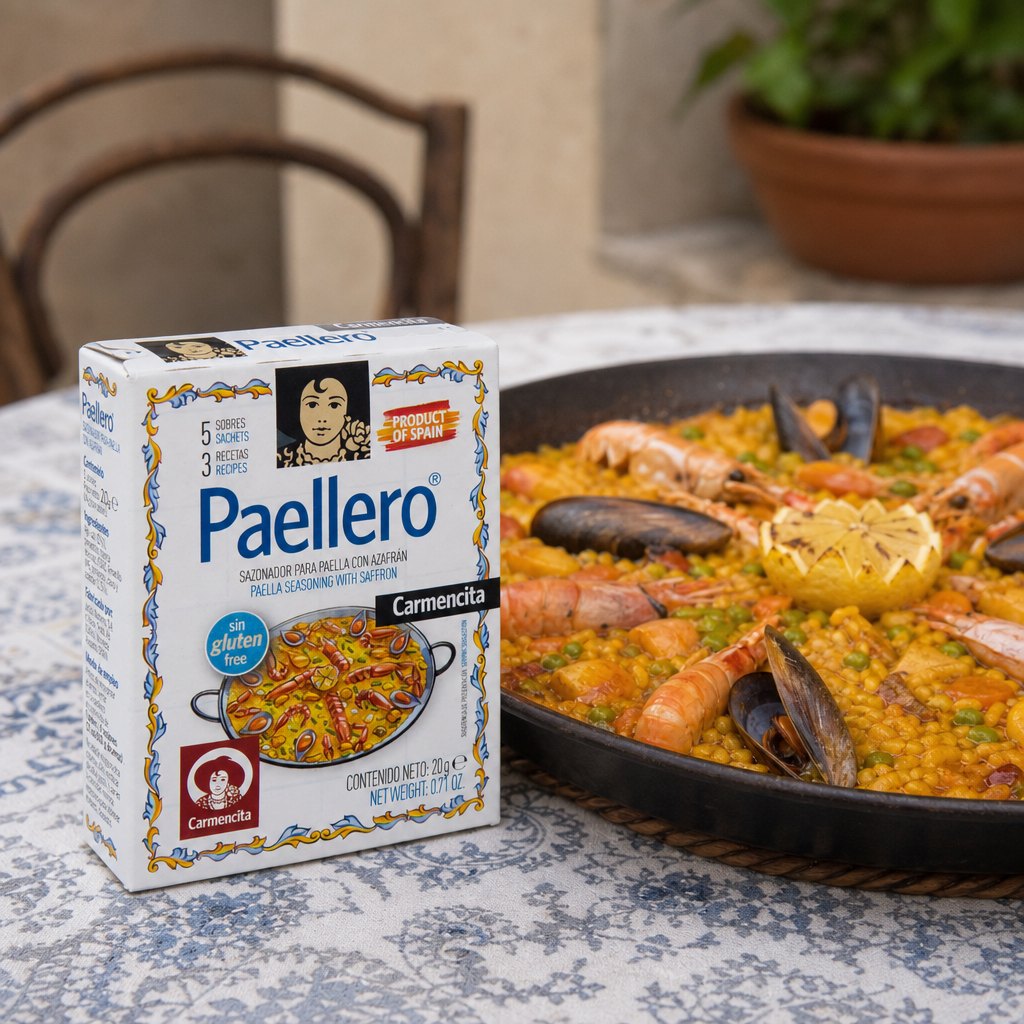
Paellero Carmencita – Seasoning for saffron paella is the house's flagship product, a registered trademark. It is a blend: garlic, salt, paprika, maize flour, E102 colouring, pepper, clove and saffron. It therefore provides both colour and a complete seasoning. One 4 g sachet is enough for six portions, or 600 g of rice.
Two points to watch: it contains salt, so season the stock cautiously. And it already contains colouring, so there is no need to add any.
Three products
Which one for your rice?
Tap a card: what is in it, what it brings, how much to use.
Does bright yellow rice taste of saffron?
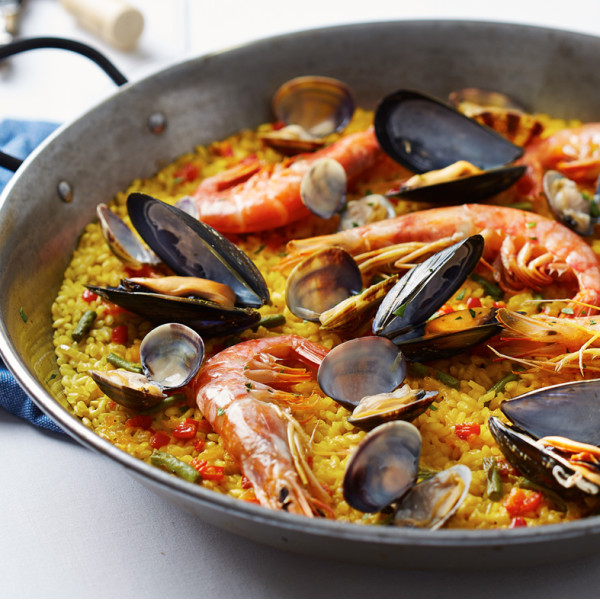
No, not necessarily. This is a common confusion, and it comes from our eyes. We associate golden yellow with saffron, yet this colour can be achieved without a gram of saffron.
- With colouring alone: a vivid yellow, but no saffron flavour at all.
- With Paellero: a strong yellow and a taste of spices, garlic and paprika, in which the saffron is present but shared with the rest of the blend.
- With pure saffron: a softer colour, sometimes more orange, with the aroma of saffron at the forefront.
Rice made with pure saffron can therefore look less vivid than rice made with colouring. That is not a flaw. Taste before judging by colour.
How to store it so it keeps its aroma
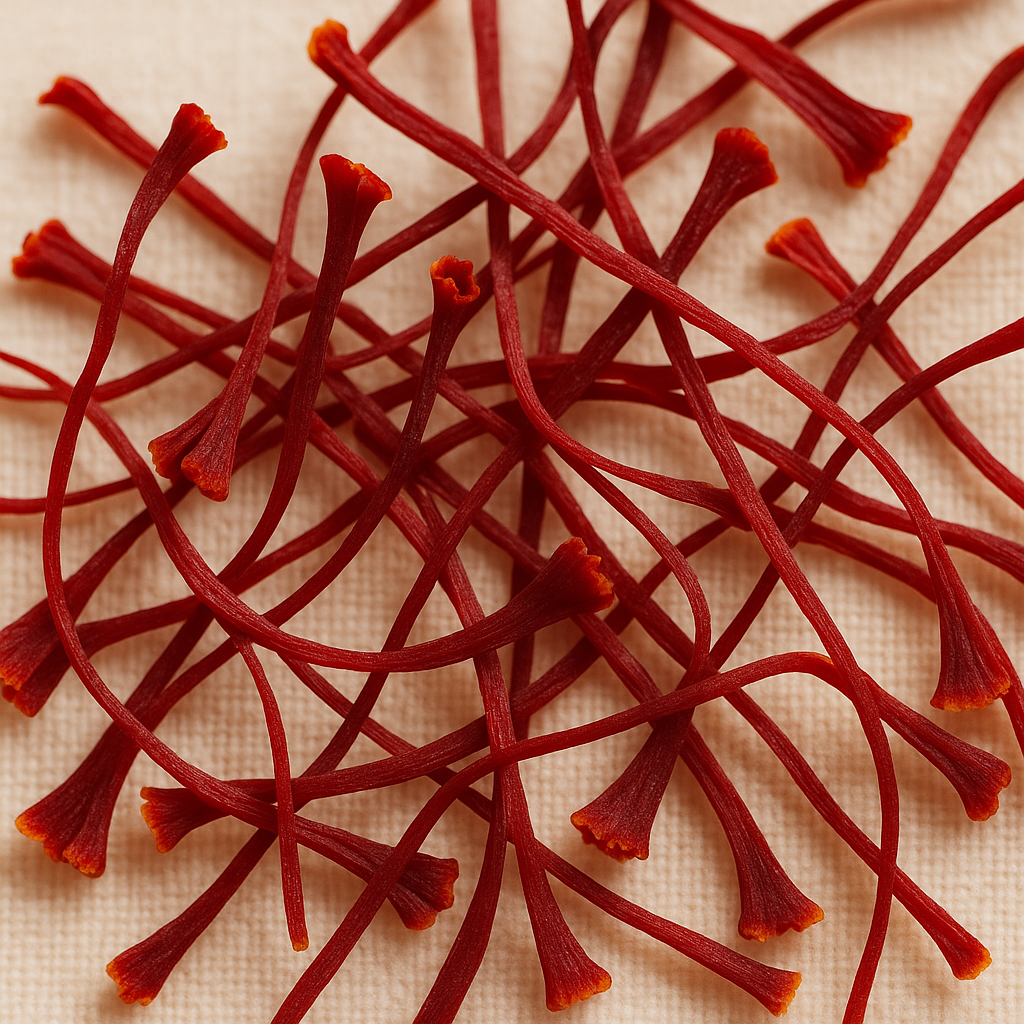
Saffron fears three things: damp, heat and light. It keeps its aroma when it is kept away from all three.
- A cool, dry place, away from the light: a closed cupboard will do.
- Not above the hob or next to the oven, where steam and heat rise.
- Closed after use, always.
This is also where pre-measured sachets are useful: you open only what you are going to use. The others stay sealed until the next recipe. The same goes for Paellero. The colouring, for its part, keeps in its glass jar, tightly closed, in a dry place.
True or false
Four myths about saffron
Tap a card to read the answer.
In practice: which format to choose, and mistakes to avoid
Héctor, who has been making paellas in Switzerland for years, has always stuck to one rule: bring over from Spain the right rice, the right spices and the oil, so that the paella is as authentic as possible. The right format then depends on how you cook.
Choosing according to your cooking
- You want the flavour of saffron, with no compromise: ground saffron in sachets. Four sachets to begin with, ten sachets if rice often appears on your table.
- You want a simple, consistent paella, seasoning included: Paellero. One sachet, six portions, and the seasoning is already measured.
- You only want the colour: food colouring, for example for a fideuá or for rice that is already well flavoured by other means.
Mistakes to avoid
- Using too much saffron: one sachet for four, no more to begin with.
- Adding it too late: it goes into the hot stock, before the rice.
- Combining Paellero and colouring: Paellero already contains it.
- Salting as usual with Paellero: it is salted, so taste the stock first.
- Judging by colour: a bright yellow says nothing about flavour.
- Storing spices near the heat: a cool, dry, dark cupboard.
With these few guidelines, saffron becomes what it should be: a simple gesture, at the right moment, in the simmering stock.
Quick test
Ready to measure it right?
Five questions; the answers are in the article.